Category: Events

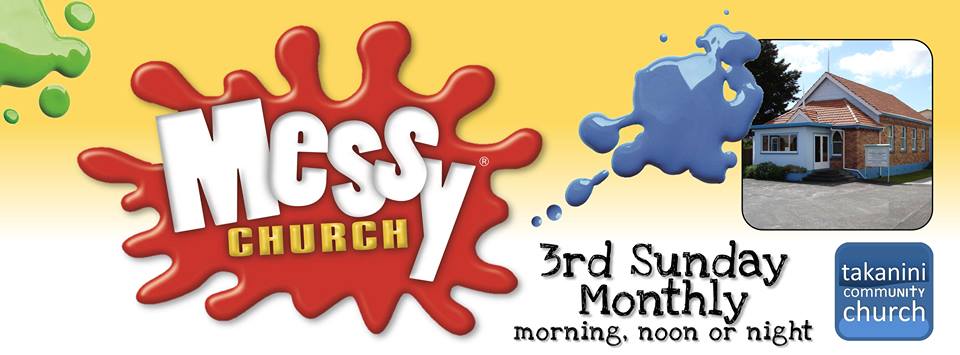
  • Hang in the MandM corner at Takanini Community Church’s “Messy Church” this Sunday

    Hang in the MandM corner at Takanini Community Church’s “Messy Church” this Sunday

    MandM with M&MsAs you know Matt is the teaching pastor at Takanini Community Church in Auckland. Our church has decided to try holding a Messy Church service once a month. The format is not like traditional church. It involves breakfast, a relaxed lounge-style teaching, family friendly craft tables and an MandM corner – complete with M&M’s and MandM; the idea is that anyone who wants to raise questions about Christianity can hang with Matt and I and eat M&M’s (and drink coffee, I will be drinking coffee) while the others do craft.

    So bring your kids and come along to 160 Great South Road Takanini, South Auckland this Sunday 27 October 2013:

    8:50 Doors open
    9:00 -9:45 Breakfast in hall ($1 per person – Breakfast Menu)
    9:45-10:00 Teaching in lounge
    10:00-10:50 Craft Time
    10:50-11:00 Close in lounge

    Messy Church

  • Is it Arrogant to Claim Jesus is the Only Way?

    Last week I spoke at Massey Presbyterian Church on the topic “Is it arrogant to claim Jesus is the only way?” The following is an abridged version of the talk I gave.

    ArrogantI was recently on a panel at Auckland University where an audience member raised the issue during the Q&A of religious pluralism. The issue is commonly raised as a rhetorical challenge, “isn’t it arrogant to believe Jesus is the only way?” In a world where there exists widespread religious pluralism, where there are people who are just as intelligent, educated, and ostensibly as sincere as we are who hold to and pratice a different religion to Christianity or no religion at all, how can a Christain maintain that she is right and everyone else is wrong. Isn’t believing that Jesus is the only way simply arrogant?

    In addressing this question I will first make three preliminary comments to identify what the issues are. Then, I will sketch three lines of response.

    First some prelimaries. As a matter of logic, if you affirm some proposition then you must reject the negation or denial of that proposition. Contradictory claims cannot both be true. It follows from this that in so far as one accepts the teachings of a religion like Christianity are true, as opposed to accepting the teachings for purely pragmatic reasons, one is rationally commited to rejecting claims that contradict this teaching. If one accepts God exists then it follows that one will believe that atheism, the denial of God’s existence, is false. If God created the world then the claim the world is not created is false. If Jesus died by crucifixition then the claim he did not exist or he died some other way is false.If there will be a final ressurection from the dead where people are judged for their actions then the claim there is no afterlife is false. So, if one accepts Christianity is true then one has to believe that other religions and perspectives that contradict Christianity are false; failure to believe this would be irrational.

    Second, accepting Christianity is true does not commit one to holding that there is no truth or value or good in other religions but it does commit one to the claim that these religions are mistaken where their teachings contradict the teachings of Christianity. This is signifcant as there are many issues on which different religions agree with Christianity, which makes them compatible with Christian teaching.

    Consider, for example Islam. Muslims believe there is only one God whom they call Allah. Allah is the Arabic word for God and was used by Christians to refer to God before the time of Mohamed. Muslims also believe that God is the creator and sustainer of the world. They believe God is all powerful, all knowing and has certain traits such as being just and merciful. Muslims believe God will judge all people and there will be a general ressurection of the dead. In all these things, Christians agree with them.

    Similarly, there are issues where Islam teaches about the way we should live that are perfectly compatible with Christian teachings, and which are arguably admirable given the standard Christian teachings on the same things. Muslims believe that one should give a third of one’s income to the poor, that one should pray five times a day.

    On the other hand, Islamic theology teaches things that are incompatible with central Christian doctrines. Muslim’s deny the Trinity, deny that Jesus was the son of God, deny that Jesus was crucified and that he rose from the dead. They affirm that Mohamaded is the final and ultimate prophet of Allah. Accepting Christianity commits one to denying these claims but not the former ones.

    What this shows is that Christians can accept that other religions and beliefs, and philosophers and theologians from within those traditions, can gain and appropriate genuine insight into the nature of God and his will for human kind. In fact, the Christian scriptures affirm this. In the first chapter of Romans the Apostle Paul states that “since the creation of the world God’s invisible qualities—his eternal power and divine nature—have been clearly seen, being understood from what has been made, so that people are without excuse.” Paul goes on to observe that this knowledge has been corrupted by Greco-Roman society but the point is that even behind such distortions is geniune insight of which the Pagans are (more…)

  • Matt to speak at the 2013 Evangelical Philosophical Society in Baltimore on Divine Commands re Abraham and Isaac

    This blog’s Matthew Flannagan has had his paper “Divine Commands and Biblical Authority: The Problem of Gen 22” accepted for the National Annual Meeting of the Evangelical Philosophical Society (“EPS”). The abstract for Matt’s paper is as follows:

    Evangelical Philosophical Society“One perennial objection to divine command meta-ethics is the possibility that God might command something abhorrent. Divine command theorists have responded that God is essentially good, as such, it is impossible for him to issue an abhorrent command. One challenge to this response, for those divine command theorists who accept a robust view of biblical authority, is the story of the binding of Isaac in Genesis 22. In this story God is said to have commanded human sacrifice; given that human sacrifice is abhorrent, and it is impossible for God to command the abhorrent, Biblical authority seems incompatible with the acceptance of a divine command theory.
    This paper responds to this challenge. First, I will argue that a careful reading of Genesis 22 in its literary context suggests God issued the command in a particular context. Second, drawing from discussions of the problem by Robert Adams Immanuel Kant, and Philip Quinn, I will discuss the circumstances under which a divine command theorist can rationally and coherently attribute a seemingly immoral command to an essentially loving and just God. I will argue that the context of God’s command in Genesis 22 is such that a divine command theorist can defensibly attribute it to an essentially good God without abandoning a robust view of biblical authority; the story of the binding of Isaac does not provide a divine command theorist with a defeater for belief in biblical authority.”

    The conference theme will be “Revelation and Authority.” The Plenary Speaker is Richard Swinburne of Oxford University. The draft copy of the ETS-EPS program is available here.

    Matt has also had a paper accepted for the Evangelical Theological Society’s Annual Meeting which is also in Baltimore around the same time – see Matt to speak at the 2013 Evangelical Theological Society in Baltimore on Feticide.

    As with previous years we will be fundraising to raise the $2,500 NZD to get him there . Donations greatly appreciated.

  • Matt to speak at the 2013 Evangelical Theological Society in Baltimore on Feticide

    This blog’s Matthew Flannagan has had his paper “Boonin’s Defense of the Sentience Criterion: A Critique” accepted for the 65th Annual Meeting of the Evangelical Theological Society (“ETS”). The abstract for Matt’s paper is as follows:

    Abstract
    “Defenders of the permissibility of feticide commonly argue that killing an organism is not homicide unless the organism’s brain has developed enough for it to acquire sentience: the capacity for consciousness and the ability to perceive pleasure and pain. In this paper I critique one of the more sophisticated versions of this argument, proposed by David Boonin in
     A Defense of Abortion. First, I sketch some prima facie problems faced by any appeal to sentience. Second, I examine Boonin’s attempt to defend an appeal to sentience against these problems by constructing a modified future like ours (FLO) account of the wrongness of killing. I argue that Boonin’s modified FLO defence of sentience fails. Both his argument for the modified FLO account and his application of this account to feticide rest on ad hoc arbitrary manoeuvres, manoeuvres which mean that the modified FLO account is a plausible criteria for the right to life only if one already grants that feticide is not homicide.”

    Matt’s ETS paper will be based on his article “Boonin’s Defense of the Sentience Criterion: A Critique” which was published in Ethics and Medicine – An International Journal of Bioethics Vol 25:2 (Summer 2009) 95-106. (You can download this article here).

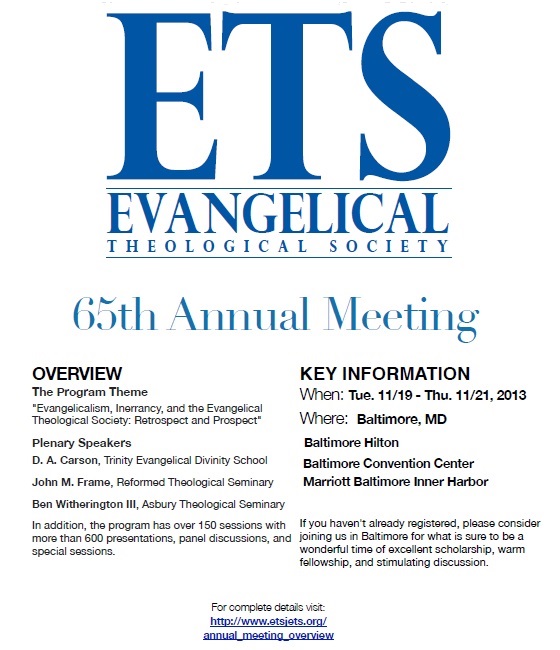
    This year’s Annual Meeting will be held in Baltimore, Maryland, USA from 19-21 November 2013.

    ETS Annual Meeting Flyer

    This year’s theme is “Evangelicalism, Inerrancy, and the Evangelical Theological Society: Retrospect and Prospect”. Plenary speakers for this year’s meeting are Dr Donald A Carson (Research Professor at Trinity Evangelical Divinity School), Dr John M Frame (Professor of Systematic Theology and Philosophy at Reformed Theological Seminary), and Ben Witherington III (Jean R Amos Professor of New Testament at Asbury Theological Seminary).

    Matt has also had a paper accepted for the Evangelical Philosophical Society’s Annual Meeting which is also in Baltimore around the same time – see Matt to speak at the 2013 Evangelical Philosophical Society in Baltimore on Divine Commands re Abraham and Isaac.

    As with previous years we will be fundraising to raise the $2,500 NZD to get him there . Donations greatly appreciated.

  • Hear Matt at MPC on: “Is it Narrow-Minded to Think Jesus is the Only Way?”

    This blog’s Matthew Flannagan will be speaking at Massey Presbytarian Church’s Night Church Service on the topic “Is it Narrow-Minded to Think Jesus is the Only Way?“

    Details are:

    MPC

    7:00pm (come at 6:30pm to grab a meal from the Night Church cafe)
    Sunday 29 September 2013
    Massey Presbyterian Church
    510 Don Buck Road, Auckland, New Zealand

    All welcome.

  • Hear Matt @ the Stayin’ Alive 2013 Pro Life Internship Program in Wellington

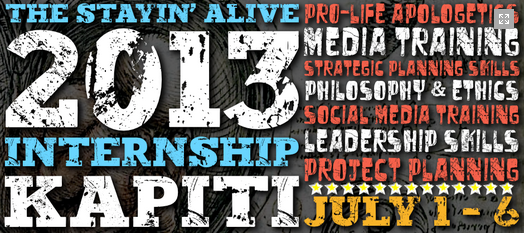
    This blog’s Matt will join Brendan Malone, and other speakers, to talk at the 2013 Pro Life Internship Program in Kapiti, Wellington which is running from 1-6 July 2013.

    Pro Life Internship

    Matt’s talks will be:

    Tuesday 2 July
    15:00 – 16:00
    Moral Relativism and Abortion

    Wednesday 3 July
    09:00 – 10:00
    Kant, Utilitarianism and Abortion

    10:10 – 11:10
    Logic and Logical Fallacies

    For more information and details on how to register go to Stayin’ Alive.

  • Auckland Conference: Science and Faith with Dr C John Collins

    Thinking Matters have a couple of conferences coming up in July with Dr C John Collins:Science and Faith Friends ofr Foes?Much of Western culture assumes that science and faith are foes, that faith and scientific naiveté go hand in hand, and that science has disproved the Bible and made faith irrelevant if not completely indefensible and undesirable.

    Come and hear Dr. C. John Collins explain why faith and science are actually friends, how good faith fosters good science, and how good science should actually lead people to be more open to faith and the Bible.

    WHEN: Friday 19 July 7pm-9.30pm and Saturday 20 July, 9:00am-4:30pm
    WHERE: City Presbyterian Church, 283 Karangahape Road, Auckland
    COST: $40 ($20 for Students).

    Coffee and tea will be provided but please bring your own lunch.

    Full details including info on how to register can be found over at Thinking Matters.

    Consider also attending: Ancient Truth for Modern Times with Dr C John Collins