Category: Conferences

  • Contemporary Philosophy of Religion and NCEA Religious Studies: Part two

    This is a talk I gave to the New Zealand Association of Philosophy Teachers annual conference at St Cutherberts College in September this year. Several people have asked me to make this talk available.

    I have broken my talk up into four parts. Part One introduces what philosophy of religion. In part two I will outline two movements within analytic philosophy during the early to mid-century which I think resulted in religious beliefs not being taken very seriously within philosophy and philosophy of religion taking a fairly minor role. Part three will look at some responses to these movements offered in the late 20th century and how they changed the philosophical landscape. Part four will look at the question of “how to do philosophy of religion” comparing the methods used by two different atheist’s J L Mackie and Graham Oppy, and how this relates the National Certificate of Educational Achievement Standards. This post will contain part two.

    The purpose of my talk this morning, however, isn’t to discuss the philosophy of religion in the early modern period. I have been asked to talk about contemporary philosophy of religion.  As I said in my introduction, I will focus on the analytic tradition because it is the tradition I was trained in and hence the one I am most familiar with.

    Philosophy of Religion in the Earlier 20th century
    The reason this is necessary is that in the early 20th-century  analytic philosophy of religion was not taken terribly seriously.  I will briefly mention a couple of reasons as to why I think this was the case:

    1 Evidentialism

    The first was that the early 20th century, within analytical Philosophy.  A particular methodological stance was adopted towards religious or theological beliefs which has been dubbed by religious epistemologists of today “Evidentialism”. The basic idea can be seen in an article written by William Clifford called the entitled The Ethics of Belief.[1] Clifford writes, “it is wrong always, everywhere, and for anyone to believe anything on insufficient evidence.”[2] The same thesis can be seen in the writings of prominent atheists such as Michael Scriven,[3] Bertrand Russell,[4] A  lucid example of the same approach is seen in the writings of Antony Flew:philosophy-of-religion

    [T]he debate about the existence of God should properly begin from the presumption of atheism, that the onus of proof must lie upon the theist…What the protagonist of my presumption of atheism wants to show is that the debate about the existence of God ought to be conducted in a particular way, and that the issue should be seen in a certain perspective. His thesis about the onus of proof involves that it is up to the theist: first to introduce and to defend his proposed concept of God; and second, to provide sufficient reason for believing that this concept of his does, in fact, have an application.[5]

    A similar position is seen John Mackie’s  work the Miracle of Theism:

    If it is agreed that the central assertions of theism are literally meaningful, it must also be admitted that they are not directly verified or directly verifiable. It follows that any rational consideration of whether they are true or not will involve arguments . . .[I]t [whether or not God exists] must be examined either by deductive or inductive reasoning or if that yields no decision, by arguments to the best explanation; for in such a context nothing else can have any coherent bearing on the issue.[6]

    Central to these writers is an important contention. Theism is philosophically acceptable only if there is good evidence for it. The word evidence can be used in all sorts of nuanced ways in epistemology. However, in this context,  the word evidence is being used synonymously with the idea of an argument or proof. Mackie states, “[whether or not God exists] must be examined either by deductive or inductive reasoning or, if that yields no decision, by arguments to the best explanation;” Flew talks of a “burden of proof” their contention is that if theism cannot be proven in the manner laid down, it is irrational.

    Evidentialism then meant that atheism or disbelief was the default position in philosophy until a successful argument for Gods existence had been proposed. Until such arguments were forthcoming, discussions within philosophy would assume a secular stance and assume God did not exist until someone offered proof they did.  Religious beliefs or assumptions, therefore, were prima facie out of place in serious philosophical discourse and theory construction.

    2. Verificationism:

    A second reason Philosophy of religion wasn’t taken terribly seriously in the earlier 20th century was the influence of a movement known as verificationism this was a movement in philosophy of language that gained a lot of traction in the late 30’s up to the 1960s. According to verificationists, a sentence is only meaningful if it is either analytic, that is true in virtue of the meaning of terms or if it can be in principle be empirically verified or falsified.  Thinkers such as the Viena Circle, A J Ayer, Carnap and others proposed different formulations of this position. But the basic idea was that any statement which could not in principle be verified or falsified empirically was meaningless.

    Note the thesis here: it’s not that the sentence it’s not scientific, or that its false or that it’s not rationally justified or warranted, it’s that the sentence is meaningless it doesn’t express any proposition at all.

    The influence of verificationism on Philosophy of religion can be seen in the famous “University Discussion” that took place in the text  New Essays in Philosophical Theology in 1955. The focus of this discussion was whether religious language actually had any meaning. When a person claims God created the earth, the question was less whether this claim is true or false, warranted or unwarranted, but “was he making a meaningful claim at all?” Was religious language really what John Hare called a “blik” an expression of an attitude as opposed to an assertion about the world?  If this position is adopted then much of what occurs in the historic philosophy of religion is either meaningless or radically misguided, it treats expressions of attitude as assertions about the world and tries to analysis, the implications, relationships, between, truth and falsity of such assertions. The problem is they aren’t assertions.

    So there were twin engines in the early to mid-twentieth century meant that philosophy of religion played a fairly marginal place in analytic philosophy. It was doubtful religious statements could even be taken seriously as meaningful statements, and if there was a presumption against their truth, they carried a burden of proof to be demonstrated or philosophically proven before anyone would take them seriously.

    [1] William Kingdon Clifford “The Ethics of Belief” in Lecture and Essays ed. William Kingdon Clifford (London: Macmillan, 1879) 339-63.

    [2]  Ibid, 186

    [3] Michael Scriven Primary Philosophy (New York: McGraw Hill, 1966) 87.

    [4] Bertrand Russell “Why I am not a Christian,” in Why I am not a Christian, ed. Bertrand Russell (London: Routledge Publishing, 2004) 3.

    [5] Antony Flew The Presumption of Atheism (London: Pemberton Publishing, 1976). 14-15

    [6] John Mackie The Miracle of Theism (Oxford: Oxford University Press, 1983) 4-6


  • Contemporary Philosophy of Religion and NCEA Religious Studies: Part one

    This is a talk I gave to the New Zealand Association of Philosophy Teachers annual conference at St Cutherberts College in September this year. Several people have asked me to make this talk available.

    I have broken my talk up into four parts. Part One introduces what philosophy of religion. In part two I will outline two movements within analytic philosophy during the early to mid-century which I think resulted in religious beliefs not being taken very seriously within philosophy and philosophy of religion taking a fairly minor role. Part three will look at some responses to these movements offered in the late 20th century and how they changed the philosophical landscape. Part four will look at the question of “how to do philosophy of religion” comparing the methods used by two different atheist’s J L Mackie and Graham Oppy, and how this relates the National Certificate of Educational Achievement Standards. This post will contain part one.

    First, I want to thank the association for asking me to speak, seeing I have been teaching in the secondary sector full time for only a  couple of years so I am not sure I have a lot to share with you and feel very much like I have more to learn from you.

    I have been asked to talk about the contemporary philosophy of religion.  In my talk this morning I will focus on three things. First, I will talk about what philosophy of religion is. Second, I will talk a little bit about its history but focus on recent developments in contemporary analytic philosophy of religion. Finally, I will link some of these things with the current National Certificate of Educational Achievement (NCEA) Standards in Religious Studies. I hope what I say is helpful to you.

    What is Philosophy of Religion
    What is the philosophy of religion? Charles Taliaferro at the Stanford Encyclopedia of Philosophy defines it as “thephilosophy-of-religion philosophical examination of the central themes and concepts involved in religious traditions.” He adds “Philosophy of religion also includes an investigation into the religious significance of historical events (e.g., the Holocaust) and general features of the cosmos (e.g., laws of nature, the emergence of conscious life, widespread testimony of religious significance, and so on)”[1] Chad Meister at The Internet Encyclopedia of Philosophy defines it as “ the philosophical study of the meaning and nature of religion. It includes the analyses of religious concepts, beliefs, terms, arguments, and practices of religious adherents.”[2]

    The History of Philosophy of Religion

    Now, Philosophy of religion has a very long history, going back to the Pre-Socratics. And it was an integral part of medieval philosophy, Augustine, Aquinas, Anselm, Abelard, Scotus, Ockham and so forth worked in the tradition of “faith seeking understanding”. They used philosophy as a conceptual tool to reflect upon, analyse, refine, the religious faith that they held and develop philosophically informed models of core religious doctrines, they also used it to respond to objections and critique rival views and develop arguments for the own for theological models they supported. Some of these reflections proved very fruitful.  The Islamic-Christian dialogue over Aristotle’s understanding of causation and how it related to miracles, and Gods causal activity in the world, for example, is profoundly influential on latter accounts of causation by people like David Hume and the concepts of laws of nature used by early modern scientists.

    Perhaps lesser appreciated is the role of philosophy of religion during the enlightenment.  There is an unfortunate tendency in the history of philosophy not to appreciate the religious context in which important key thinkers of the enlightenment operated. Descartes cogito ergo sum (I think therefore I am), for example, comes from Augustine’s response to sceptics about religious knowledge in the city of God Book 11: 26. Descartes immediately follows this up of course with an appeal to his own version of the ontological argument, proposed famously by Anselm of Canterbury.

    Or consider John Locke, according to Locke’s associate James Tyrell, the impetus for Locke’s “Essay on human understanding” was a conversation  he, Locke and four others had on the topic of “the principles of morality and revealed religion.” Locke’s attempt to develop a comprehensive empiricist understanding of knowledge was an attempt to answer the question of faith and reason, a topic he explicitly addresses in the last section of the book. (Incidentally, it’s a section often skipped in contemporary courses on Locke.)

    Or consider what a widely used textbook refers to as the “revolution in ethics” which occurred in the 18-19th centuries. Which the author, James Rachels, contends is due to Hume, Bentham and Mill. Rachel’s refers to as “A new conception of ethics”… “Morality, he [Bentham] urged is not a matter of pleasing God,  nor is it about following abstract rules, Rather, morality is nothing more than the attempt to bring about as much happiness as possible into the world”.[3]

    Rachel’s is, of course, talking about utilitarianism. However, his characterisation of the history is quite selective. In 1715, some 74 years before Bentham, George Berkley had defended a rule utilitarian conception of ethics[4]Berkeley was a divine command theorist hat moral rightness, and wrongness consists in agreement and disagreement, respectively, with the will of God.  Because  God’s purposes were benevolent a God’s aim was to maximize the happiness of his creatures, so one could assume that whatever rules maximized happiness were those enjoined by God. Berkley used this theoretical account of God and morality to attempt to reconcile his Irish Anglican commitment to passive obedience with loyalty to the Glorious revolution during Jacobite uprisings in Ireland. Berkley’s “theological utilitarianism” was adopted by people like John Gay, Abraham Tucker and compiled by William Paley. Paley’s textbook defending this way of looking at ethics was the standard text at Cambridge and widely influential several years before Bentham published his defence of utilitarianism.

    I could go on; my point is that Philosophy of religion has a long and prestigious history, even during the enlightenment and an important part of educating students about our history and the history of concepts that undergird much of the modern world involves acknowledging these connections rather than ignoring them.

    [1] Charles Taliaferro “Philosophy of Religion”, Stanford Encyclopedia of Philosophy https://plato.stanford.edu/entries/philosophy-religion/

    [2] Chad Meister, “Philosophy of Religion” Internet Encyclopedia of Philosophy http://www.iep.utm.edu/religion/

    [3] James Rachels The Elements of Moral Philosophy, (Random House: New York, 1993) 80

    [4] For explication see Stephen Darwall, “Berkeley’s Moral and Political Philosophy” Kenneth Winkler (ed.), The Cambridge Companion to Berkeley. Cambridge University Press. (2005) see also C. D. Broad, “Berkeley’s Theory of Morals” Revue Internationale de Philosophie, vol. 23-24 (1953):  72-86.


  • Matt to speak at: EPS, ETS, AAR/SBL and EPS Apologetics Meetings in Atlanta, USA this November

    Atlanta, GeorgiaEvery November the annual meetings/conferences of the Evangelical Philosophical Society (“EPS”), its Apologetics wing (“EPS Apologetics”), the Evangelical Theological Society (“ETS”), the American Academy of Religion (“AAR”) and the Society for Biblical Literature (“SBL”), are held over a 2 week period in the same city, somewhere in America. The meetings/conferences showcase the work of the academic elite from around the world; the best of the best speak and thousands come from around the globe to hear them.

    Off the strength of his work published on this blog (yes you read it here first!) Matt has been invited to be a speaker every year since 2010 inclusive. [I am not saying Matt is not published, he is, but it was his blog posts on MandM that secured him that first invite.]

    Matthew Flannagan

    This year the meetings are all being held in Atlanta, Georgia, USA from 17 to 24 November 2015. The combined EPS and ETS programme is here, information about the AAR and SBL meeting is here, the EPS Apologetics programme is here.

    Matt will be speaking as follows:

    1) EPS
    At the EPS he will present his paper, “Robust Ethics and the Autonomy Thesis: A Reply to Erik Wielenberg”, the abstract is as follows:

    “The autonomy thesis contends that there can be moral requirements to φ regardless of whether or not God commands, desires or wills that people φ. In his monograph, Robust Ethics: The Metaphysics and Epistemology of Godless Normative Realism, Erik Wielenberg offers arguably one of the most sophisticated defences of the autonomy thesis to date. Wielenberg argues that: (a) the most plausible alternative to the autonomy thesis, the divine command theory, is problematic because it cannot account for the moral obligations of reasonable unbelievers; and (b) robust realism, the thesis that moral requirements are sui generis non-natural properties which supervene upon natural properties, can be formulated in a way that avoids the standard objections to the autonomy thesis.

    In this paper I will argue Wielenberg’s defence of the autonomy thesis fails. Regarding (a), I will argue that Weilenberg’s “reasonable unbelievers” objection to divine command theories fails. Regarding (b), I will argue that robust realism fails to adequately address two standard challenges to the autonomy thesis. These are: (i) the objection that in the absence of God people lack reasons to always do the right things; and (ii) the objection that in the absence of God there is no adequate basis for grounding the claim that human beings have equal rights and dignity.”

    2) ETS
    At the ETS he will present his paper, “John Corvino and ‘The PIB Argument’”, the abstract is as follows:

    “Conservatives often appeal to alleged parallels between consensual homosexual acts and other acts, such as, consensual incest, polygamy, and bestiality in the course of debates about the moral status of consensual homosexual acts. John Corvino has labelled this argument as “the PIB argument”. In his article, “Homosexuality and the PIB argument”, he has offered an analysis and trenchant criticism of this line of argument.

    In this paper I contend Corvino’s rebuttal fails. I will first argue that Corvino attacks a straw man. He mistakenly construes the PIB argument as an argument from analogy for the conclusion that homosexual conduct is wrong. However, a careful look at the examples Corvino himself offers of PIB arguments he has found in the literature shows that defenders of the PIB argument are not offering an argument from analogy against the permissibility of consensual homosexual conduct. In fact, they are offering counter-example to rebut moral premises used in various arguments defending the permissibility of such conduct. I will then argue that, once this clarification is made, not only do Corvino’s objections to the PIB argument fail, but premises for Corvino’s own arguments for the permissibility of consensual homosexual conduct seem, prima facie, to be subject to his own objection.”

    3) AAR/SBL
    At the EPS Session at AAR/SBL, Matt will participate in a panel discussion on “Just War as Deterrence Against Terrorism: Options from Theological Ethics”, the blurb for this panel is:

    “Terrorism can be characterized as asymmetrical (rather than between two or more nation-states), indiscriminate, unconventional, and destabilizing. In a world of increased terrorist activity, how should faithful Christians respond? Given the threat of conventional warfare, Christian proponents of non-violence/pacifists and of just war alike would not disagree with efforts at “just peacemaking” and “bridge-building” to minimize hostilities and misunderstandings, paving the way to friendship and reconciliation between nations. Even so, just war advocates would claim that force would still be required when such good-faith efforts are not only rejected and scorned but when aggressors do their worst against the innocent and defenseless. But how should Christian just war theorists and proponents of non-violence alike respond to terrorism? What particular approaches are called for in light of this growing phenomenon by both Christian just war theorists and pacifists as they seek to love their neighbor and faithfully live out biblical teaching as they understand it? This panel discussion of Christian just war theorists and pacifists will offer their respective theological perspectives as they engage on this weighty, relevant topic (15 minutes each). J. Daryl Charles, author of Between Pacifism and Jihad and other works on just war, will offer a final response to the panelists (20 minutes). This will be followed by 40 minutes of the panelists’ exchanges. The remaining time will be allotted for Q&A with the audience.”

    Moderator: Paul Copan, Pledger Family Chair of Philosophy and Ethics, Palm Beach Atlantic University
    Non-violence: Myles Werntz, Palm Beach Atlantic University, author of Bodies of Peace
    Just War: Matthew Flannagan, Independent scholar and pastor, Auckland, NZ, and coauthor of “Did God Really Command Genocide?”
    Non-violence: Scot McKnight, Northern Seminary, author of The Jesus Creed and The Sermon on the Mount
    Just War: Keith Pavlischek, VP of Operations at Veterans’ Solutions, Ph.D. in political philosophy
    Respondent: J. Daryl Charles, Affiliated Fellow of the John Jay Institute.

    Craig Hazen, editor of the philosophy of religion journal Philosophia Christi, has agreed to publish these papers in a future issue.

    4) Apologetics
    Matt will speak at the EPS Apologetics conference on the topic “Morality and God’s Commands”, the blurb for this talk is:

    “It is widely believed in contemporary philosophy that morality does not depend on God. Theories that attempt to identify our moral obligations with God’s commands are believed to be subject to several important objections. In this talk I will offer reasons for rejecting this position. I will clarify what it means to claim our moral duties depend on God’s commands and I will distinguish this claim from various misconceptions. I will then examine the most common objections to this position and that show they fail.”

    Did God Really Command Genocide?In addition, Matt has been asked to moderate a session for the EPS on 18 November 2015 as well, his and Paul Copan’s book, “Did God Really Command Genocide? Coming to terms with the Justice of God” will be on sale and he will be available for book signings (something he finds really odd being asked to do!)
    Every year since 2010 that Matt has been attending these meetings/conferences it has been the incredible generosity of our readers, friends and church community that has enabled him to be there. We put up as much money as we can but we always struggle to cover the full costs.

    We are not both able to work full time due to Matt still not being able to get full-time work in his field and us having children with disabilities, one of whom’s disability is severe enough to mean school is unlikely to ever be an option for that child. The costs are more than the obvious flights, transfers, accomodation and food; we have increased care costs for our children and I have to work less as the anxiety of the child with the severe disability gets heightened while Dad is away and there is a limit to how much a caregiver can bring that down (I am self-employed so there is no leave to draw on).

    If you are able to help via a donation or with an offer of accomodation whilst Matt is there that would be great and much appreciated. Equally appreciated are any offers from those who know our kids to take them out or do something with them whilst Matt is away so I can work. Information about how to donate is available in our sidebar to the right. (more…)

  • Randal Rauser’s Interview: “Matthew Flannagan on God and Genocide”

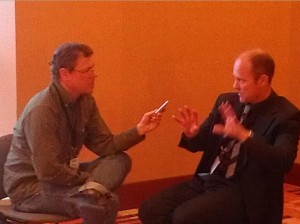
    Randal Rauser interviewing Matthew FlannaganWhen Matt was in San Diego for the Evangelical Theological Society (ETS) and Evangelical Philosophical Society (EPS) meetings in November 2014, Randal Rauser interviewed him for his Podcast, The Tentative Apologist.
    The interview was for episode 58 and is entitled “Matthew Flannagan on God and Genocide“; you can listen to it by following the link. (It is basically an interview about Matt and Paul Copan’s book, Did God Really Command Genocide? Coming to Terms with the Justice of God.)

    Rauser later reviewed Did God Really Command Genonide? here.

  • Hear Matt speak @ the Auckland Confident Christianity Apologetics Conference

    This ANZAC weekend make sure you check out the Thinking Matters Confident Christianity Apologetics Conference at Northcote Baptist Church. Matt will be speaking along with a number of other great speakers. Full conference schedule here.

    In brief, from the Thinking Matters’ Facebook Event page:

    Confident Christianity Conference

    Does God exist? Why is there so much suffering? Is truth relative? Are science and faith enemies?

    Can you give both intellectually and emotionally satisfying answers to these questions? Can you defend the Christian faith in a reasonable and compassionate way? Are you able to represent Christ’s message of hope, rescue and unfathomable love, even in the face of doubt and scepticism?

    Join us this Anzac weekend where a line-up of top international and local speakers will sensitively and skilfully respond to the biggest objections that Christians encounter today – and equip you to live out a confident, yet gracious faith in your everyday life.

    Speakers Include

    – Brett Kunkle – international youth speaker
    – Dr Jeff Tallon – award winning scientist
    – Dr Steve Kumar – philosopher & apologist
    – David Riddell – international speaker & counsellor
    – Mark Powell – business leader & CEO of The Warehouse
    – Dr Matthew Flannagan – philosopher & theologian

    And many others!

    Friday 24th April – 7:00PM – 9:30PM
    This is a FREE public event. No registration needed – just turn up!

    Saturday 25th April – 9:00AM – 5:00PM
    Full Day Conference. Tickets:

    ADULT:
    Early Bird Adult Registration $59 (Available until 17th April)
    Regular Adult Registration $69

    YOUTH (Under 18) & STUDENT (with ID):
    Early Bird Youth $30 (Available until 17th April)
    Regular Youth Registration $40

    Lunch included on Saturday (gluten free option available).

    ALL SATURDAY ATTENDEES ALSO RECEIVE A COMPLEMENTARY LEE STROBEL DOCUMENTARY DVD!

    For full details, a speaker lineup and to purchase tickets – check out our conference page: www.thinkingmatters.org.nz/conference

  • A very belated report on my trip to San Diego

    With trips to the US, Christmas, New Years, the summer break, Madeleine’s work, my preaching and juggling the family and the launch of my book, it has been a while since I blogged. Since the last post was about me going to the US I figured I should start by giving a very belated update on the trip before I get down to more run of the mill blog posts.

    Last time Madeleine blogged it was Wednesday 19 November 2014, the day after I had flown out of Auckland. I arrived in Los Angeles at 10 am on Tuesday 18 November 2014 (love the international date line!) and I finally arrived in San Diego that afternoon where I had an enjoyable dinner with Moore College President Mark Thompson.

    The Evangelical Theological Society (ETS) and Evangelical Philosophical Society (EPS)  meetings began the next day. The first session I attended was a very good paper by Richard Davis and Paul Franks critiquing Wes Morriston’s criticisms of divine command meta-ethics (DCM). This paper was technical so I’ll try to summarise: Morriston objects that if moral requirements are identical with God’s commands, and even if it’s impossible for a perfectly good God to command the random sacrifice of 3 years olds, DCM still entails that if this impossibility were actualised and God were to command the random slaughter of 3 year olds, then such slaughter is wrong.

    This objection involves what is called a counter-possible, which is a hypothetical statement with an impossible antecedent. In this case the antecedent is that a perfectly good person could command the random sacrifice of children. According to the standard semantics for counter in modal logic all counter-possibles are  trivially true. Morriston argues this approach to standard semantics is mistaken; it is plausible that some counter possibles are false and that this counter-possible is one such example.

    Davis and Franks, give an interesting and thoughtful reply to Morriston in their forthcoming article “Counterpossibles and the ‘Terrible’ Divine Command Deity“. They argue: (a) Morristons’ own criteria  for distinguishing true from false counter-possibles entails that the counter-possible, If God commanded random sacrifice then random sacrifice is morally required, is, in fact, true and not false. Second, (b) they argue that DCM does not entail this counter-possible.

    To put their point in a nutshell: they argue that a world where God commands evil is a world where God ceases to be good; and since goodness is an essential property of God this entails that in such a world God would cease to exist. However, given God is the creator and sustainer of all that is distinct from him, a world where God does not exist is a world where nothing exists. Hence, it is false that if God commands evil, evil would be morally required. This was an excellent paper and I enjoyed some stimulating discussion with both of the authors during the Q&A and also at lunch.

    Next up was a paper by Frank Beckwith discussing Judith Jarvis Thomson’s famous article “A defence of abortion”. Thomson famously concedes for the sake of argument that a fetus is a human being and then argues, from analogy, that even if that is the case abortion is still permissible. Beckwith argued that, in fact, Thomson does not grant the personhood of the fetus in the way opponents of abortion understand it, but instead assumes a radically individualistic understanding of persons whereby people are not bound by any obligations to others which they do not willingly consent to, a picture which appears to rule out such things as parental duties to children or children’s duties to parents.

    This was followed by Micheal Rea’s interesting paper on whether God is gendered and the use of masculine and feminine language and imagery in describing God. His argument was that God is not gendered and the fact that most imagery used in scripture to describe God is masculine does not justify conceptualising God is exclusively masculine terms.

    In the break I had some very good fellowship and discussion over pizza with members of the Facebook group, Christian Apologetics Alliance.

    In the afternoon I took part in the ethics session of the ETS. The session kicked off with an interesting paper on how capital punishment is practiced in the US. The author, Ken Magnuson, made several disturbing observations about the fact that wealthy people almost always escape capital murder charges whereas the poor do not. This paper was unclear on what the nature of the core problem was: was it that innocent poor people were executed, or that the guilty escaped justice? While the fact that large numbers of innocent are executed might be a reason for opposing the death penalty, the fact that some guilty people get off does not seem to be. If the problem is that some escape capital punishment who deserve it, then ensuring everyone escapes capital punishment will increase the injustice. What was clear was that there needs to be some reforms to ensure less inequitable outcomes.

    Next was a paper by Evan Lenow where he argued that the philosophical doctrine of self-ownership, as articulated in its progenitor John Locke, does not support abortion rights. In this I thought he was right; Locke’s writing in the first treatise makes Lenow’s case even stronger.

    That afternoon I gave my paper, “Abortion as Self-Defence”. I offered a critique of Elieen Mcdonagh’s contention that even if a fetus is a human being, its presence inside a women who does not wish to be pregnant constitutes an act of unjustified aggression and so a women’s right to self-defence entitles her to kill it. My criticism was based on the fact that, in non rape cases, the fetus’ existence inside the woman is due to voluntary sexual intercourse for which her and her partner are responsible and this action confers parental obligations upon both of them. Given that parents have an obligation to provide the basic necessities of life to their children, the fetus’ appropriation of such necessities cannot be unjust aggression. This paper was well received and there was some excellent discussion about rape cases and therapeutic abortion in the Q&A. (Audio of my talk is available here.)

    Thursday was equally intense. I began the morning hearing a paper by David Wood on Paul Draper’s version of the problem of evil. This was followed by a panel discussion on Scott Smith’s recent book, In Search of Moral Knowledge. The panel consisted of Francis Beckwith, David Baggett and James Dew, all offering critique and commentary on the book and Smith offering a response.

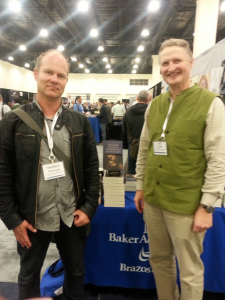
    Matthew Flannagan and Paul CopanOver lunch I met with Paul Copan and a representative from Baker Academic to discuss the launch of Copan’s and my book, Did God Really Command Genocide?: Coming to Terms with the Justice of God, the promotional events we would each be participating in, and also the prospect of further publications in the future. I was then interviewed on camera for US television about the book. (more…)

  • Matt in San Diego

    San DiegoMatt has safely arrived in San Diego and the Annual General Meetings of the Evangelical Philosophical and Theological Societies commence in a few hours.

    Matt is giving two papers this year, one at each conference: “Mackie’s Answer to the Error Theory: A Reply to Joyce″ at the EPS and “Abortion as Self Defence” at the ETS. As his book, Did God Really Command Genocide? Coming to Terms with the Justice of God, co-authored with Paul Copan, has just been released and is available for sale at the conference, I expect he will be busy promoting that too.

    If you are lucky enough to be in San Diego at the conferences please snap a pic of him for me and tag him on Facebook so we back in NZ can see what he is up to 🙂

    I want to thank those who generously donated to help get Matt there, we couldn’t have done it without you.