Category: Conferences

  • Matt to speak at the 2013 Evangelical Theological Society in Baltimore on Feticide

    This blog’s Matthew Flannagan has had his paper “Boonin’s Defense of the Sentience Criterion: A Critique” accepted for the 65th Annual Meeting of the Evangelical Theological Society (“ETS”). The abstract for Matt’s paper is as follows:

    Abstract
    “Defenders of the permissibility of feticide commonly argue that killing an organism is not homicide unless the organism’s brain has developed enough for it to acquire sentience: the capacity for consciousness and the ability to perceive pleasure and pain. In this paper I critique one of the more sophisticated versions of this argument, proposed by David Boonin in
     A Defense of Abortion. First, I sketch some prima facie problems faced by any appeal to sentience. Second, I examine Boonin’s attempt to defend an appeal to sentience against these problems by constructing a modified future like ours (FLO) account of the wrongness of killing. I argue that Boonin’s modified FLO defence of sentience fails. Both his argument for the modified FLO account and his application of this account to feticide rest on ad hoc arbitrary manoeuvres, manoeuvres which mean that the modified FLO account is a plausible criteria for the right to life only if one already grants that feticide is not homicide.”

    Matt’s ETS paper will be based on his article “Boonin’s Defense of the Sentience Criterion: A Critique” which was published in Ethics and Medicine – An International Journal of Bioethics Vol 25:2 (Summer 2009) 95-106. (You can download this article here).

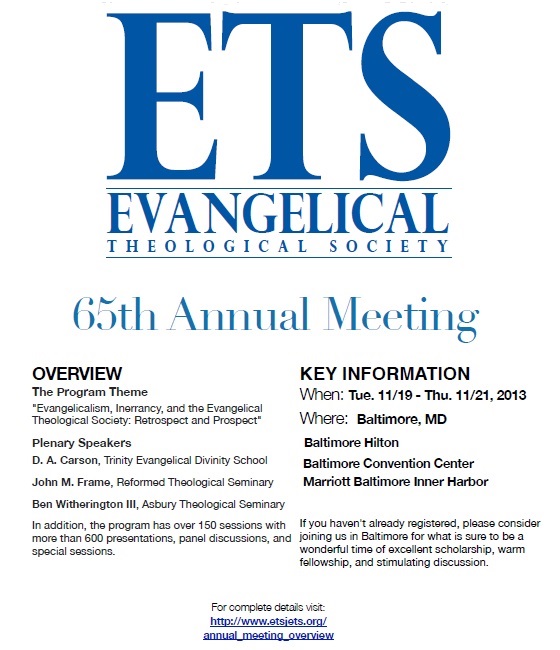
    This year’s Annual Meeting will be held in Baltimore, Maryland, USA from 19-21 November 2013.

    ETS Annual Meeting Flyer

    This year’s theme is “Evangelicalism, Inerrancy, and the Evangelical Theological Society: Retrospect and Prospect”. Plenary speakers for this year’s meeting are Dr Donald A Carson (Research Professor at Trinity Evangelical Divinity School), Dr John M Frame (Professor of Systematic Theology and Philosophy at Reformed Theological Seminary), and Ben Witherington III (Jean R Amos Professor of New Testament at Asbury Theological Seminary).

    Matt has also had a paper accepted for the Evangelical Philosophical Society’s Annual Meeting which is also in Baltimore around the same time – see Matt to speak at the 2013 Evangelical Philosophical Society in Baltimore on Divine Commands re Abraham and Isaac.

    As with previous years we will be fundraising to raise the $2,500 NZD to get him there . Donations greatly appreciated.

  • Hear Matt @ the Stayin’ Alive 2013 Pro Life Internship Program in Wellington

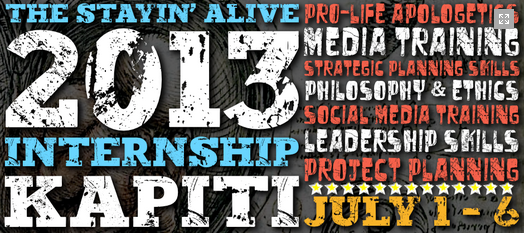
    This blog’s Matt will join Brendan Malone, and other speakers, to talk at the 2013 Pro Life Internship Program in Kapiti, Wellington which is running from 1-6 July 2013.

    Pro Life Internship

    Matt’s talks will be:

    Tuesday 2 July
    15:00 – 16:00
    Moral Relativism and Abortion

    Wednesday 3 July
    09:00 – 10:00
    Kant, Utilitarianism and Abortion

    10:10 – 11:10
    Logic and Logical Fallacies

    For more information and details on how to register go to Stayin’ Alive.

  • Auckland Conference: Science and Faith with Dr C John Collins

    Thinking Matters have a couple of conferences coming up in July with Dr C John Collins:Science and Faith Friends ofr Foes?Much of Western culture assumes that science and faith are foes, that faith and scientific naiveté go hand in hand, and that science has disproved the Bible and made faith irrelevant if not completely indefensible and undesirable.

    Come and hear Dr. C. John Collins explain why faith and science are actually friends, how good faith fosters good science, and how good science should actually lead people to be more open to faith and the Bible.

    WHEN: Friday 19 July 7pm-9.30pm and Saturday 20 July, 9:00am-4:30pm
    WHERE: City Presbyterian Church, 283 Karangahape Road, Auckland
    COST: $40 ($20 for Students).

    Coffee and tea will be provided but please bring your own lunch.

    Full details including info on how to register can be found over at Thinking Matters.

    Consider also attending: Ancient Truth for Modern Times with Dr C John Collins

  • Auckland Conference: Ancient Truth for Modern Times with Dr C John Collins

    Thinking Matters have a couple of conferences coming up in July with Dr C John Collins:Ancient Truth for Modern Times

    What is the Bible? What authority if any does the Bible have in the 21st Century? How should the Bible shape the life of the Church and individual believers?

    Our approach to Scripture is fundamental to our ability to understand who God is and what he has to say to us. Come and hear Dr C John Collins explore the nature, authority, and purpose of the Bible in the 21st Century.

    WHEN: Saturday, 13 July, 9:00am-4:30pm
    WHERE: City Presbyterian Church, 283 Karangahape Road, Auckland
    COST: $20 ($10 for Students).

    Full details including info on how to register can be found over at Thinking Matters.

    Consider also attending: Science and Faith with Dr C John Collins

  • Advance: Exploring Tough Questions About Christianity

    This blog’s Matthew Flannagan is scheduled to speak alongside Dr Glenn Peoples, Dr Chris Tucker, Sean du Toit and Jacqui Lloyd at this Friday’s one day Auckland conference Advance: Exploring Tough Questions About Christianity.

    Advance: Exploring Tough Questions About Christianity

    From the promotional material:

    Are faith and reason enemies? Should we take Christianity seriously in the world of ideas? Can we even know that Christianity is true? Thinking Matters and Evangelical Union are proud to host Christian philosopher, blogger, and popular speaker Dr Glenn Peoples to explore these questions and examine the evidence.

    Workshops sessions available:

      • Dr Chris Tucker on the ‘problem of evil’
      • Shawn Means on maths, the universe, and God
      • Sean du Toit on who wrote the books of the New Testament
      • Dr Matthew Flannagan on reading difficult Old Testament passages

    The day will conclude with a panel featuring Dr Glenn Peoples, Dr Matthew Flannagan, and Jacqui Lloyd which is open to any question.

    The location is ‘GAPS’ 17A Powell St, Avondale – slightly out of the city (and a 10 min walk from Avondale train station), this rustic location is ideal for seminars and discussion.

    Cost: $15. Lunch is included.

    Register at the Facebook event page here.

  • Hear Matt Speak at Stayin’ Alive Pro Life Training Day

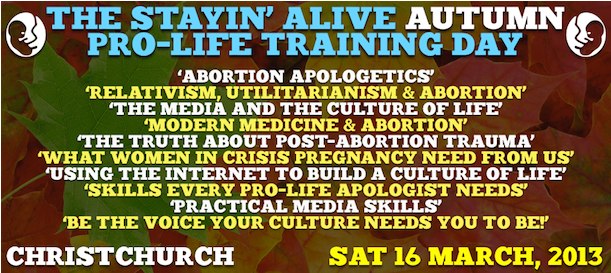
    The Autumn 2013 Stayin’ Alive Pro-Life Training Day will be held in Christchurch this Saturday 16 March 2013. Matt will be speaking twice.

    Stayin' Alive Autumn 2013

    8:15am Rego’s and tea & coffee (YouTube videos in main hall)
    9:00am Introduction, housekeeping, and ice breaker (people bingo)
    09:30am session: ‘Relativism, Utilitarianism and Abortion’ – Dr Matthew Flannagan
    10:30am Morning tea break
    10:50am session: ‘Abortion Apologetics’ – Brendan Malone
    11:50pm Break
    12:00pm session: ‘The media and the culture of life’ – Bob McCoskrie
    12:45pm Lunch Break
    13:30pm WORKSHOPS:

    1. ‘Modern medicine and abortion’ – Dr C. Hallagan
    2. ‘The truth about post-abortion trauma’ – Carolina Gnad
    3. ‘Practical media skills’ – Bob McCoskrie

    14:30pm Break
    14:45pm WORKSHOPS:

    1. ‘What women in crisis-pregnancy need from us’ – Sandra Martin
    2. ‘Using the Internet to build a culture of life’ – Jason McTague
    3. ‘Skills every pro-life apologist needs’ – Dr Matthew Flannagan

    15:45pm Afternoon tea break
    16:15pm session ‘Be the voice your culture needs you to be!’ – Brendan Malone
    17:00pm Small group discussion
    17:15pm Final wrap up
    17:45pm BBQ Dinner
    19:00pm Finish and clean up

    When and where:
    Saturday 16 March, 2013 at:

    Burwood Christian Centre
    54 Bassett Street
    Burwood
    Christchurch

    Registration starts at 8:45am on Saturday 16 March, and the event runs all day finishing with a BBQ dinner at approximately 5:45pm.

    The registration fee is $20 per person (includes lunch and dinner plus morning and afternoon tea).

    More information including how to register is available on the Stayin’ Alive website.

  • Peter Singer on Human Dignity and Infanticide: Part Two

    This is the second half of the paper I presented to the the Evangelical Philosophical Society Annual Meeting in Milwaukee three weeks ago. It is part of a two-part post series; make sure you have read part one Peter Singer on Human Dignity and Infanticide.

    II. Marquis’ Critique
    In my previous post I sketched Singer’s desire account of killing and how it relates to Singer’s preference utilitarianism and position on vegetarianism. Don Marquis has offered two kinds of counter examples to the desire account of killing:[1] take depressed people who are either suicidal or simply don’t care about life, but whom we know will with medication or counselling overcome this. Such people have no desire to live, yet it seems they have a right to life. Killing them is not in their interests and we would wrong them, not just their relatives or society, if we killed them.

    Or consider people brainwashed in a religious cult to commit suicide, or people who, believing they will be rewarded in the afterlife, offer themselves as voluntary human sacrifices. These people lack a desire to live yet they still have a right to life. Morality requires we try and save them from the cult rather than that we kill them. The desire account thus appears false, and given that preference utilitarianism entails the desire account, preference utilitarianism is problematic.

    These counter examples are part of a more general problem. Singer’s position infers a right to continue to exist from a desire to continue existing. However, the inference that “X has a prima facie right to Z” from “X desires Z”, is problematic. Children have rights to medical care, nutritious food, and education, but often children have little or no desire for these things. Often in cases of complicated medical procedures the child lacks a conception of the operation itself, yet it still has a right to such things. This claim is based on it being in their interests to have these things, and they will be harmed by not having them, it’s not plausible to ground these rights in the fact the parents or society want the child to have them.

    III. Singer’s reply

    Peter SingerIn A Reply to Don Marquis,[2] Singer acknowledges the cogency of Marquis’s counter examples and offers a revision to the desire account of killing. He cites the example of a tennis player who desires to drink a bottle he believes is full of water, but in reality contains poison. Singer concludes from this case “if a person’s desire to die is based on a false belief, it does not justify assisting him in satisfying the preference”[3], also ruling out the example of the fanatical religious believer. Similarly, “for a preference to be one we should act upon it should be based not only on accurate information …” but also a “calm and rational assessment of the situation”; this rules out the example of the depressed individual.[4]

    Singer’s revision means the issue is not the actual desires an individual has but rather their ideal desires, i.e. desires the individual would have had if they were reasoning correctly and had correct information. Marquis’s counter-examples therefore fail.

    IV. Critique of Singer’s Reply
    I will offer three lines of response to Singer’s reply.

    Motivation and Arbitrariness
    The first problem is that Singer’s position appears unmotivated. Anticipating Singer’s response, Marquis noted that while infants lack actual desires to continue to exist, it’s not clear they totally lack a rational desire to live because “if a fetus were fully informed and rational, it would desire to live” [5]. Singer’s modification then would appear to undercut his advocacy of infanticide.

    To avoid this, Singer adopts a particular conception of ideal desires. Ideal desires are a being’s actual desires corrected for false information and errors of reasoning. Seeing infants lack any desire to continue existing they cannot in this sense have an idealised desire to exist in the future. Consequently, Singer suggests that preference utilitarianism should be modified so as to involve the maximisation of idealised preferences so defined. The problem is that apart from the fact it enables him to both support abortion and infanticide and avoid the counter examples, Singer offers no reason why one should adopt this particular conception of ideal desires. Various different conceptions of ideal desires have been proposed which will get around the counter examples aforementioned and not all of them involve the modification of actual desires. Consequently, Singer’s position appears unmotivated.

    Singer’s response to this rejoinder is to state,

    “Adjusting a person’s actual desires for errors is one thing; attributing a wholly new desire to a being that is not capable of having any desires  at all, or any desires of the relevant kind is something else altogether, and something for which there is no obvious motivation” [6]

    This is inadequate; Singer asserts that his account is different from one other account and that this other accounts is unmotivated. But the fact other accounts are unmotivated does not entail that Singer’s own account is motivated.

    The Hamlet problem
    A second problem is that even if Singer’s account escapes Marquis’s counter example it seems vulnerable to a new one. Consider the following lines from Hamlet (more…)