|
This is the paper I presented to the Bioethics section of the Evangelical Theological Society, annual meeting. In November last year.
|
Category: Speaking Engagements
-
Abortion Hard Cases and Self Defence: Presentation
-
The question “Why Be Moral?” and the book of Proverbs.
I gave a brief talk at Orewa Community Church on 10 January 2020. The talk was part of a short series OCC are doing on the book of proverbs. It is available here.
-
The Psychopath Objection to Divine Command Theory: Presentation
Last year, I presented a talk entitled “The Psychopath Objection to Divine Command Theory: Another Reply to Erik Wielenberg” to the New Zealand Association of Philosophers conference in Auckland. This was a follow up to interaction I have had with the work of Erik Wielenberg.
In 2017 I wrote a critical response to Wielenberg’s book Robust Ethics: The Metaphysics and Epistemology of Godless Normative Realism. Some, of my criticisms, were discussed in the dialogue between William Lane Craig and Erik Wielenberg at North Carolina State University in 2018 which was subsequently published by Routledge . Wielenberg has since responded to these criticisms. The talk at the NZAP was my thoughts on his latest paper.
Over 2020, I have revised the substance of this talk substantially, and a version of the paper will be published in The European Journal for Philosophy of Religion next year. In November has the opportunity to present the revised paper at the annual meeting of the Evangelical Philosophical Society, which was held online in November. Below is a video of that paper.
Abstract: Recently, Erik Wielenberg has developed a novel objection to divine command metaethics (DCM). The objection is that DCM “has the implausible implication that psychopaths have no moral obligations and hence their evil acts, no matter how evil, are morally permissible”. This article criticizes Wielenberg’s argument. Section 1 expounds Wielenberg’s new “psychopath argument” in the context of the recent debate over the Reasonable Nonbelievers Objection. Section 2 discusses two ambiguities in the argument: in particular, Wielenberg’s formulation is ambiguous as to whether Wielenberg uses the word “obligation” in an objective or subjective sense. Section 3 argues that this ambiguity undercuts the argument. If Wielenberg is using the word obligation in a subjective sense, his arguments do not show that psychopaths “have no moral obligations”. By contrast, if Wielenberg is using the word obligation in an objective sense, his arguments do not show that divine command theorists are committed to denying that psychopaths have obligations.
-
FETICIDE IN CHRISTIAN MORAL THOUGHT Part two : Feticide in Patristic Thought
I teach NCEA Religious Studies, at level three, one standard is to “Analyse the response of a religious tradition to a contemporary ethical issue”. Officially students have to describe the response a religious tradition has made to a moral issue. Our school like a lot of schools looks at Christian responses to abortion. Because I did my PhD thesis on this very subject in the last year I have been going through my dissertation and simplifying, summarising and rewriting it into short sections I can use with my classes. Because there is some interest in this, I have decided to post some of these on MandM. I welcome any feedback or comments.
In our last lesson, we examined how Alexandrian Jews responded to feticide at the time that Christian churches first started coming into existence. While Christianity and Judaism differ in many important ways, the evidence suggests that on the question of feticide and abortion early Christian communities adopted the same position that Alexandrian Jews already held.
To show this, we will look first at the Patristic period. The word Patristic is used by scholars of early Christianity to refer to Christian theologians who lived between 90AD to 475 AD. When one examines the writings of the Patristics on the question of abortion, we find over and over the same two ideas: first, that killing a formed embryo or a fetus violates the fifth commandment; secondly, an appeal to the Septuagint and the formed/unformed distinction.
I. Feticide as a Violation of the Fifth Commandment.
An important document for the study of early Christianity is The Didache. The word Didache mean’s “the teaching”.
 The Didache contrasts two ways of living, “the way of life” and the “way of death”. The “Didache” was a training manual for converts to Christianity which summarises for a new convert the basic teachings of the Apostles. It is adapted from on manuals used by Jewish communities and used for instructing pagan converts to Judaism. This fact suggests the Didache is a very early Christian writing. Early Christianity was Jewish, the first Christian’s being a sect of Judaism, as time went on, however, the church broke from Judaism, and more and more non-Jewish people became Christians. Further evidence of an early date for the Didache is the primitive leadership structure of the church. The latter hierarchal structure of church leadership you find in the second century AD isn’t present instead – the Didache mentions a leadership structure of itinerant prophets and even mentions apostles. This suggests as are suggestive of a mid-first Century date for the document.[1] This would place the document within the same generation as the apostles. At the latest, the passage is dated Early-Second Century, less than a generation after the death of the apostles.
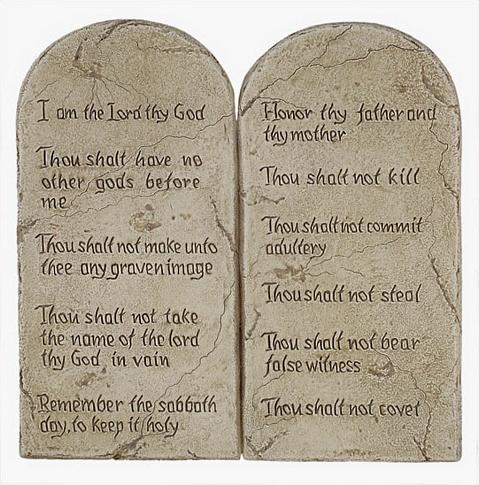
There is a line in the Didache which says “you shall not murder a child by abortion nor kill that which is born”. This line occurs in a section which explains to the readers what the ten commandments require of Christians, and the prohibition on abortion occurs alongside various other commandments such as the fifth commandments prohibition of murder and the commandment against adultery. The Didache shows us that very early on, within at least a generation of the Apostle’s early Christian communities viewed the killing of a fetus as a form of homicide. It was considered to violate the fifth of the ten commandments.
This community that produced the Didache were not alone in this. The position laid down in the Didache appears to have been widely accepted. Every theologian from the Patristic period who wrote on the question comes to the same conclusion. Here are some examples:
- Athenagoras (133–190AD) called abortion murder and compared it to infanticide.[2]
- Tertullian (155 – c. 240) calls it “speedier man-killing”[3]And states the Law of Moses condemns it.
- Minucius Felix (150 and 270AD) see abortion it as “parricidium”[4]A Roman legal term for homicide.[5]
 Cyprian (200 –258 AD) calls it murder and views violations of this command as more serious than violating the laws against idol worship.[6]
- Hippolytus (170 – 235 AD) describes abortion as murder and, like adultery, as against God’s commands.[7]
- The author of the Apocalypse of Paul (end of 4th century) describes feticide as “destroying the image of God” and as “contrary to God’s commandments”. [8]
- Augustine (354 430 AD) says that Gods law declares killing a formed fetus as murder[9] and that abortion at any stage is a cruelty akin to infanticide.[10]
- Jerome (347-420) declares feticide to be murder.[11]
- Basil (330-379) classifies it as homicide alongside killing one’s spouse and killing a person in a highway robbery.[12]
- Ambrose (340 – 397) views it as “taking away life before birth”.[13]
- Chrysostom (349 407 AD) states that abortion is “murder before birth” that abortionists turn a woman’s womb into a “chamber for murder” and in doing so “fight against His [God’s] laws”.[14]
We mentioned Philo of Alexandria in the last section and mentioned how he appealed to Jewish teaching on abortion to reject the Greek and Roman practise of infanticide. Like Philo, numerous, Early-Christian writers appealed to this teaching to offer arguments against infanticide.
In the first few centuries after Christ, Christianity was viewed with suspicion and Christians were often falsely accused of all sorts of horrible things. One accusation was that Christians engaged in infant sacrifice. Athenagoras, for example, responded to this accusation by saying Christians couldn’t support killing infants because; “we say that those women who use drugs to bring on abortion commit murder, and will have to give an account to God for the abortion”.[15] If killing a fetus was murder then infanticide must be as well. Christians “are in all things always alike and the same, submitting ourselves to reason, and not ruling over it”.[16] Tertullian responded to the same accusation by noting that for Christians, infanticide is “murder” because Christians “may not destroy even the fetus in the womb”.42 Minucius Felix responded by turning the tables arguing that it was, in fact, the pagans who practised infanticide of which because killing a fetus was merely to “commit a parricide before they bring forth”.[17]
II. Formed/Unformed Distinction and the Septuagint
In addition to seeing feticide as a violation of the fifth commandment, numerous, early Christians followed Philo in basing this conclusion upon the Septuagint and the formed/unformed distinction found in Greek Philosophy. Here are some examples:
 Tertullian (155 – c. 240) stated “The embryo, therefore, becomes a human being in the womb from the moment that its form is completed. The law of Moses, indeed, punishes with due penalties the man who shall cause abortion.”[18]
- Jerome (347-420) wrote, “The seed gradually takes shape in the uterus, and it [abortion] does not count as killing until the individual elements have acquired their external appearance and their limbs”.[19]
- Lactantius (250 – 325) argued that a fetus is formed on the 40th day and it is this stage when it is ensouled and a full human being.[20]
- Gregory of Nyssa (335–395) wrote “ [J]ust as it would not be possible to style the unformed embryo a human being, but only a potential one, assuming that it is completed so as to come forth to human birth, while as long as it is in this unformed state, it is something other than a human being.”[21]
- Cyril of Alexandria: (376 – 444) cites the Septuagint and argues a fetus becomes human at 40 days when it acquires form.[22]
- Ambrosiaster (366 and 384) argues that a human soul is infused into a fetus when the conceptus is formed, and hence abortion of a formed fetus is homicide [23].
By the end of the Patristic period, two church councils adopted policies on dealing with the killing of a fetus. The councils of Elvira and Ancyra, held in 305 A.D. and 314 A.D. respectively. The Council of Elvira declared that a woman had an abortion to cover up an affair could not be re-admitted to full communion for the rest of her life. The reason the council gives for this is that the woman has committed a double sin; she has not just committed adultery she has made this worse this by committing homicide as well.[24] This practice reflected the very harsh discipline that existed in the Early Church where serious sins committed after baptism were not forgiven. This harsh discipline was relaxed by the council of Ancyra only a few years later. Those who attended Ancyra referred to the earlier practice (reflected in Elvira) and ruled “more humanely” and required only 10 years penance before one could be received back into the fold.[25]
It seems safe to say that, throughout the patristic period, almost every Christian theologian who addressed the question of feticide did so by articulating two basic premises [1] that God has commanded people to refrain from killing a human being, and [2] that a fetus, or a formed embryo, is a human being.
However, we should be careful about interpreting these statements to mean that the early church condemned abortion absolutely in every single possible situation. There some evidence that Christain’s also permitted abortion in those rare circumstances where a woman’s life was in danger. The only Christian writer to address this situation was Tertullian. Tertullian refers to a situation where a child gets “twisted” in the womb and cannot be delivered alive without killing the mother. He describes the process of killing it with strong negative language as “a criminal deed” “infanticide” “robber in the dark” and “cruelty” however he also describes it as a “necessary crime” and “necessary cruelty” While Tertullian isn’t clear, many scholars think Tertullian here assumes that when continuing the pregnancy will kill the mother abortion is a necessary evil.
We can summarise the early churches position then as follows:
Premise: [1] Killing a human being without justification violates the law of God.
Premise: [2] A formed embryo (i.e. a fetus) is a human being.
Premise: [3] In the case of feticide (at least in the majority of cases) insufficient or no justification is forthcoming.
[1] John Robinson, Redating the New Testament, (Philadelphia, PA: Westminster, 1976), 324-27.
[2] Athenagoras, A Plea for the Christians, 35.
[3] Tertullian, Apology, 9.8.
[4] Minucius Felix, Octavius, 30.
[5] John Noonan, Contraception: A History of its Treatment by the Catholic Theologians, (Cambridge, MA:
The Bellknap Press of Harvard University, 1965), 91. Noonan notes that ‘parricidium’ was the specific Latin term for the unlawful killing of a close relative such as a parent or brother.
[6] Cyprian, Letters, 48.
[7] Hippolytus, Refutation of all Heresies, 9.7.
[8] Apocalypse of Paul 40.
[9] Augustine, Commentary on the Heptateuch, 2. 80.
[10] Augustine, On Marriage and Concupiscence, 1.17.
[11] Jerome, Letters, 22.13 and 121.4.
[12] Basil, Letter CLXXXVIII, 8.
[13] Ambrose, Hexameron, 5.18.58.
[14] Chrysostom, Homily 24 on Romans.
[15] Athenagoras, A Plea for the Christians, 35.
[16] Ibid. 42 Tertullian, Apology, 9.8.
[17] Minucius Felix, Octavius, 30.
[18] Tertullian, Treatise on the Soul, Ch VII.
[19] Jerome, Letters, 121.4.
[20] Lactantius, De Opifico Dei, 12, 17.
[21] Gregory of Nyssa, On the Holy Spirit Against Macedonius
[22] Cyril of Alexandria, De Adoratione in Spirtu et Veritate, 8.
[23] Ambrosiaster, QQ Veteris et Novi Testamenti, 23.
[24] John Connery, Abortion: The Development of the Roman Catholic Position (Chicago: Loyola University Press, 1977), 47-48
[25] Ibid., 48-49.
-
Reflections on Annihilationism, Traditionalism and the Problem of Hell
Last year I gave a paper entitled “Reflections on Annihilationism, Traditionalism and the Problem of Hell’ at the Rethinking Hell conference in Auckland. This talk is now available online.
-
The Challenge of Moral Relativism: Three Problems with Relativism
This is the third of a series of posts on moral relativism. These talks are based on some talks I have given on the subject in the last few months. In the first post, I looked at what the basic issues are. The second post examines some of the reasons people offer for accepting relativism. This last post looks at some problems with relativism.
Today most ethicists whether Christian or non-Christian reject relativism. Critics of relativism argue it faces several problems, which give us reason to reject it. I will focus on three.
1. The Problem of Moral Progress and Moral Reform.
Relativism is incompatible with moral progress or reform. While relativists can accept that the moral judgements of societies change they can’t consistently claim these changes amount to progress. If society at one time supports
 slavery or racial segregation, and then later disapproves of these things. Relativists cannot say that society has thrown off an incorrect view and adopted a correct, one. Instead, it must say that it has gone from one correct view to another one.
A related problem is that relativism suggests that moral reformers who spoke out against slavery and segregation were in fact in the wrong. They were opposing what society approved of and hence what was right for members of society.
This problem also applies to subjectivism. If a member of the Ku Klux Klan holds racist judgements at one time and then later rejects these judgements as bigotry, The subjectivist can’t say he has moved from a mistaken to a correct. Instead, he has changed from one correct view to another. Individuals don’t grow in moral insight or develop more discernment
2.The possibility of Error
There is another problem with relativism. It seems plausible that we can be mistaken in our moral judgements. I can make judgements about what is right and wrong which are incorrect, and whole societies can do this. Relativism, however, suggests mistakes like this are impossible. Subjectivism means that If I believe something is right, then I am right in doing it. Relativism means that if a society endorses a practice then its right for members of that society to do the practice. The consequence is that mistakes about morality are impossible. For a person or a community to make a mistake, it has to be possible for the standards an individual or society accepts to be different from the standards which are correct.
3. Relativism Implies that Obvious Moral Wrongs Are Acceptable
Perhaps the most important objection to relativism is that it implies that obvious moral wrongs are acceptable. If actions are right or wrong relative to an individual or societies standpoint, then anything at all can be justified. Genocide, rape, torture of children, racial intolerance, are all morally right for a person if he believes that they are or his society endorses them. Many find this implication hard to swallow if a serial killer thinks it’s permissible to kill women, is it really plausible to suggest this fact alone means his actions are right or did the fact German society adopted Nazism in the 1930s mean that Germans did no wrong when they implemented these policies.
Conclusion
Let me now bring the threads of this talk to a close. I have explained what relativism and objectivism are. I noted some common reasons why people accept relativism and suggested these reasons fail. The appeal to diversity fails to make some important distinctions and appeals to tolerance, openness and so on are incoherent. I have also sketched several problems with relativism it entails moral reform is impossible moral error is impossible and that obvious moral wrongs are right. For reasons like this most philosophers, today reject moral relativism. While it’s a challenge to the way, Christians think about ethics. I am not convinced it’s a challenge which is very defensible.
-
The Challenge of Moral Relativism: Arguments for Relativism
This post is based on a series of talks I have given on moral relativism. In my last post, I looked at what relativism and objectivism are. Here I examine some common reasons people accept or defend relativism I will offer critical commentary on these arguments.
When examining any position in philosophy it is important to understand what motivates people to hold it, why do people find it plausible? Two reasons are commonly cited.
- The Argument from Cultural Diversity
One common motivation for relativism, particularly cultural relativism, is the observation that different societies have different moral beliefs. To use a well-known example: people in 14th century Europe believed witchcraft was seriously immoral and executed witches. People in 21st century New Zealand doesn’t believe this. Some societies endorse polygamy others endorse monogamy. Facts like these are held to cast doubt on the idea there is a single true morality
independent of what society thinks.Response to the argument from cultural diversity.
Objectivists make several responses to this argument.
Distinguishing Separate idea’s.
First, they argue that this argument conflates two separate ideas. (a) the idea that beliefs about what is right and wrong differ from society to society. And (b) that idea that what really is right, and wrong differs from society. The fact different societies have different moral beliefs provides evidence for the first of these ideas. It establishes (a). However, cultural relativism affirms something stronger than this. Relativists believe moral standards are correct or incorrect relative to society. Cultural Relativists contend an action is wrong for a person because their society condemns that action. Hence, they affirm (b).
However, that the fact different societies have different moral beliefs doesn’t support (b) It’s possible that when different societies make different judgements about something that one of them is mistaken. When don’t normally assume that when societies disagree on something the correct answer is relative to society. If different societies have different beliefs about the shape or age of the earth, we would not take this to demonstrate that the earth’s actual age and shape differ in various societies. So why do we do this when the disagreement involves moral judgements? The mere fact societies make different judgements on a topic tells us nothing about whether those judgements are objectively true or false.
Exaggerated disagreement
Second, objectivists argue that appeals to cultural diversity often exaggerate the amount of cross-cultural disagreement over moral standards. Often when societies have different moral beliefs, this isn’t due to different moral standards but the result of disagreement over certain factual questions. Consider the abovementioned case of witchcraft. In the 14th-century people believed in the existence of witches. They believed witches met together secretly and sacrificed children and ate these children in a ritual feast. They bound themselves by oath to the devil to use supernatural powers to harm, and kill innocent people. Hence the believed witchcraft involved the deliberate conspiracy to cause serious harm to innocent people.
We don’t hold these beliefs today but if we did our opinion of witchcraft would be very different. Suppose we believed there was a group which conspired to randomly kill and maim innocent people and killed and ate children as part of its rituals. We probably would legally suppress this group. And many people would support the death penalty for those who did these things, killing children is a horrendous form of murder after all. The difference between us and 14th-century Europeans is due, in a large part, to different factual beliefs not simply a disagreement over moral standards.
- Relativism Promotes Tolerance
A second motivation behind relativism is the idea that moral relativism promotes tolerance and humility. When you realise that your own moral standards are correct only for you, you are less likely to fall into arrogance and pass judgements on the beliefs and practises of others. Nor are you likely to demand they change these practices and adopt yours.
Response:
Objectivists respond that this concern reveals a subtle contradiction. The argument assumes that tolerance and humility are good things, it assumes people should be tolerant and humble and should not be arrogant and rush to judgement. However, if relativism is correct, this isn’t the case. According to cultural relativism, it is wrong to be intolerant only if your society believes that it is. Societies which are imperialistic and arrogant and believes its permissible to colonialize other nations don’t do any wrong if it imposes its moral judgements on to others. Similarly, according to subjectivism humility and tolerance are wrong only if you think it is. If someone has bigoted or arrogant beliefs, then bigotry is morally required of them, and they shouldn’t act in a humble, tolerant way.
Objectivists maintain that one can condemn individuals or societies who have arrogant and bigoted practices only if you hold these things are wrong despite the fact societies or individuals may endorse them. There is something incoherent about offering a moral criticism about the arrogant and intolerant moral judgements of societies or individuals and then concluding you can’t make judgements about societies and individuals