Category: Books

  • Sinnott-Armstrong on God, Secularism and “reasons” to be moral. Part One:

    In his book Morality Without God, Walter Sinnott-Armstrong argues that a secular account of the nature of moral properties—namely, that wrongness is constituted by the property of harming others—is preferable to a theistic account, in which wrongness is identified with the property of being contrary to God’s commands

    Chapter 6 is entitled “Why be moral?”
    In this chapter, Sinnott-Armstrong attempts to rebut the idea that secular meta-ethical theories—such as the one he proposes—cannot provide an adequate answer to this question.

    Sinnott-Armstrong begins his discussion by citing an argument that purports to show that secular accounts of morality cannot answer the question: why be moral? He summarises the argument as follows:

    “Harming others is sometimes in some people’s best interest, even considering probable costs. In those cases, some theists say that only a divine threat of Hell provides a reason to be moral. Since atheists and agnostics do not believe in God, they do not believe in divine retribution for sins, so they have to admit that sometimes some people could get away with immorality and then they have no self-interested reason to be moral. Does that mean that these people have no reason at all to be moral?”[1]

    He responds to this argument as follows:

    No. That conclusion would follow only if every reason had to be self-interested, selfish, or egoistic. There is no basis for that assumption. Many reasons are not based on self-interest. That should be common ground between theists and atheists… The fact that an act prevents harm to another person can be a reason for me to do that act. The fact that an act causes harm to another person can be a reason for me not to do that act. These facts are reasons, even if the other people are strangers. Crucially, these reasons are not self-interesting. They are facts about the interests of other people, not me. These unselfish reasons can answer the question, “Why be moral?”[2]

    There are some infelicities in the way this argument is described and set up. Sinnott-Armstrong’s version of the argument relies solely on the appeal to fear of Hell and divine retribution. He doesn’t, for example, couch the argument in terms of hope of eternal life. Moreover, in the paragraphs leading up to this one, he gives a sarcastic, literalistic reading of the Book of Revelation on the topic of Hell. These all rhetorically prime negative reactions in the reader; they also border on crude caricature.

    However, in this post and in future ones, I will focus on what I take to be the main thrust of Sinnott-Armstrong’s response to this argument. Sinnott-Armstrong makes three points. First, he argues that this argument is only sound if one assumes that “every reason” is “self-interested.” Second, he argues that this assumption is false. It should be granted by both theists and non-theists that there are “unselfish reasons” based on the fact that an action will “harm” (or benefit) other people. Third, he contends these unselfish reasons can answer the question of why they are moral.

    Does the argument assume that all reasons are selfish?

    Let’s look at the first point: does this argument assume that all reasons are selfish? That depends on how one interprets the phrase “reasons to be moral” and the rhetorical question “Why be moral?”

    When we talk of “reasons” to act, we can mean one of two things. Sometimes the word “reason” functions as a mass noun, referring to what we have decisive reasons to do—what we have reasons to do all things considered, when we consider everything that counts in favour of an action and against it. Alternatively, the word “reason” can function as a count noun, referring to what we have a pro tanto reason to do—what we have reason to do all else being equal. Here we ask whether there is anything that by itself counts in favour of the action.[3]

    An illustrative example: It is a rainy day, and I have to walk fifteen minutes outside to the bus. The fact I will get wet if I don’t take an umbrella is a pro tanto reason to take an umbrella. The fact that carrying an umbrella is cumbersome is a pro tanto reason against it. When I consider all the relevant factors—the burden of carrying the umbrella and the prospect of getting wet—I conclude that I have decisive, all-things-considered reasons to carry it.[4]

    Sinnott-Armstrong’s interlocutor asks: if we are not accountable to God for our actions, and harming someone promotes our long-term self-interest, what reason do we have to refrain from doing harm? He could mean two things:
    (a) He could be asking whether, in the given circumstances, we have a pro tanto reason to refrain from harm; or
    (b) He could be asking whether, in those circumstances, we have decisive reasons not to harm.

    If he means (a), then Sinnott-Armstrong’s criticism seems on point. The interlocutor is assuming that all reasons are selfish. He is saying that if it is not in our self-interest to avoid harming others, then there is no consideration of any sort at all against harming them. This follows only if all reasons are selfish.

    I suspect that this is how Sinnott-Armstrong interprets the argument in question. The problem is that this is a very idiosyncratic understanding of the question “Why be moral?” Normally, in philosophical discussions, this is not what is meant by the question.[5]

    Consider what  Sinnott-Armstrong himself writes in his Stanford Encyclopedia of Philosophy article on moral skepticism. He writes about a form of skepticism known as “practical skepticism,” which asks the question:

    “Why be moral?” This question is used to raise many different issues. Almost everyone admits that there is sometimes some kind of reason to be moral. However, many philosophers deny various universal claims, including the claims that there is always some reason to be moral, that there is always a distinctively moral reason to be moral, and/or that there is always enough reason to make it irrational not to be moral or at least not irrational to be moral…
    Practical moral skeptics usually deny that there is always enough reason for moral action.[6]

    In a supplementary paper, he explains:

    What such practical moral skeptics deny is that I always have reason to do what is morally required… Practical moral skeptics do not deny that there is sometimes reason not to do what is morally wrong. After all, some wrongdoers are caught and punished. However, practical moral skeptics can still deny that there is always reason to do what is morally required or to avoid what is morally wrong.
    How much reason? Some practical moral skeptics claim that sometimes there is no reason at all to do what is morally required. If all reasons are self-interested, this means that sometimes doing what is morally required does not serve the agent’s interest in any way. That extreme position would be refuted if doing what is morally wrong always creates even a slight risk of some negative repercussion. A more plausible and common version of practical moral skepticism denies, instead, that there is always an adequate (or non-overridden) reason to do what is morally required. To establish this position, practical moral skeptics need only one case where there is overriding reason not to do what is morally required. (emphasis mine)[7]

    So, according to Sinnott-Armstrong himself, if we interpret the rhetorical question “Why be moral?” charitably—in a way that reflects how the question is commonly used—it is not a denial that agents lack any pro tanto reasons to do what they are required to do. Instead, the interlocutor is challenging the idea that agents always have decisive reasons to refrain from harm when doing so is contrary to their self-interest.

    Suppose we interpret Sinnott-Armstrong’s interlocutor in terms of (b). In that case, he is arguing as follows: if there are cases where harming another is in our self-interest, then we will not always have all-things-considered reasons to refrain from harm. This argument does not assume that all reasons are selfish. Even if there are unselfish reasons based on the fact an action harms others, these reasons will not always be stronger or weightier than the selfish reasons we have to the contrary. One can accept that we have a pro tanto reason to do an action and also admit that when one considers everything that is relevant—for and against—the total balance of reasons does not support it.

    We can conclude our discussion as follows: Sinnott-Armstrong’s claim—that his interlocutor’s argument rests on a false assumption, namely that all reasons are selfish—is true if one interprets the question “Why be moral?” in an idiosyncratic and uncharitable way, contrary to how the question is typically used. However, if the question is interpreted charitably, in line with its usual philosophical usage, then  Sinnott-Armstrong’s claim is false.


    [1] Walter Sinnott-Armstrong, Morality Without God (Oxford: Oxford University Press, 2009). 114

    [2] Walter Sinnott-Armstrong, Morality Without God 117

    [3] See Stephen Darwall, “What Are Moral Reasons?” The Amherst Lecture in Philosophy 12 (2017): 2. Available at https://www.law.nyu.edu/sites/default/files/What%20Are%20moral%20reasons.pdf accessed 28 August 2025

    [4] See Stephen Darwall, “What Are Moral Reasons?” 2-3

    [5] This point is made by Mark Murphy’s review, Morality Without God, available at https://ndpr.nd.edu/reviews/morality-s-without-god-s/ accessed 28 August 2025

    [6] Walter Sinnott Armstrong, Moral Skepticism, available at https://plato.stanford.edu/entries/skepticism-moral/index.html accessed 28 August 2025

    [7] Walter Sinnott Armstrong, Practical Moral Skepticism, available at https://plato.stanford.edu/entries/skepticism-moral/supplement.html accessed 28 August 2025

  • Problems in Value Theory An Introduction to Contemporary Debates: My Chapter with Graham Oppy is finally published

    Yesterday, I was informed that the book Problems in Value Theory An Introduction to Contemporary Debates has finally been published. The book is now available both on amazon on Bloomsbury’s website. Chapter 3 of this book “Does Morality Depend on God?” is co-authored by myself and Graham Oppy (Monash University). Both Graham and I each wrote an article (around 5000 words) spelling out our respective answers to the question, and then wrote a shorter piece (1500 words) where we responded to the others original essay. 

    Problems in Value Theory is edited by Steve Cowan (Lincoln Memorial University). The table of contents is as follows:

      Introduction, Steven B. Cowan

      Part I: Problems in Ethics and Aesthetics

     Introduction to Part I, Steven B. Cowan

      1. Is Morality Relative?

     Morality Is Relative, Michael Ruse

     Morality Is Objective, Francis J. Beckwith

     Responses:

     Beckwith’s Response to Ruse

     Ruse’s Response to Beckwith

      2. What Makes Actions Right or Wrong?

     Consequences Make Actions Right, Alastair Norcross

     Respect for Persons Makes Actions Right, Mark Linville

     Responses:

     Linville’s Response to Norcross

     Norcross’s Response to Linville

      3. Does Morality Depend on God?

     Morality Depends on God, Matthew Flannagan

     Morality Does Not Depend on God, Graham Oppy

     Responses:

     Oppy’s Response to Flannagan

     Flannagan’s Response to Oppy

      4. Is Beauty in the Eye of the Beholder?

     Beauty is Relative, James Mock

     Beauty is Objective, Carol S. Gould

     Responses:

     Gould’s Response to Mock

     Mock’s Response to Gould

      5. What Is the Meaning of Life?

     The Meaning of Life Is Found in God, Douglas Groothuis

     The Meaning of Life Can Be Found without God, Christine Vitrano

     Responses:

     Vitrano’s Response to Groothuis

     Groothuis” s Response to Vitrano

      Essay Suggestions

     For Further Reading

      Part II: Problems in Political Philosophy

     Introduction to Part II, Steven B. Cowan

      6. Do We Need Government?

     We Do Not Need Government, Roderick T. Long

     We Need Some Government, Alex Tuckness

     Responses:

     Tuckness’s Response to Long

     Long’s Response to Tuckness

      7. Should Wealth Be Redistributed?

     Wealth Should Be Redistributed, Jon Mandle

     Wealth Should Not Be Redistributed, Jan Narveson

     Responses:

     Narveson’s Response to Mandle

     Mandle’s Response to Narveson

     8. When May the Government Wage War?

     The Government Should Never Wage War, Andrew Alexandra

     The Government May Sometimes Wage War, Nathan L. Cartagena

     Responses:

     Cartagena’s Response to Alexandra

     Alexandra’s Response to Cartagena

      Essay Suggestions

     For Further Reading

     Index

     The blurb from Bloomberry is as follows:

    Problems in Value Theory takes a pro and con approach to central topics in aesthetics, ethics and political theory.

     Each chapter begins with a question: What Makes Actions Right or Wrong? Does Morality Depend on God? Do We Need Government? Contemporary philosophers with opposing viewpoints are then paired together to argue their position and raise problems with conflicting standpoints. Alongside an up-to-date introduction to a core philosophical stance, each contributor provides a critical response to their opponent and clear explanation of their view.

     Discussion questions are included at the end of each chapter to guide further discussion.

     With chapters ranging from why the government should never wage war to what is art and does morality depend on God, this introduction covers questions lying at the heart of debates about what does and does not have value.

    Get your copy now, read it, and let me know what you think both here and on Amazon. I am sure there is much more both Graham and I could say on this topic. Graham Oppy is one the best Philosophers of Religion in the world, and it was a real privilege being part of this project with him.  

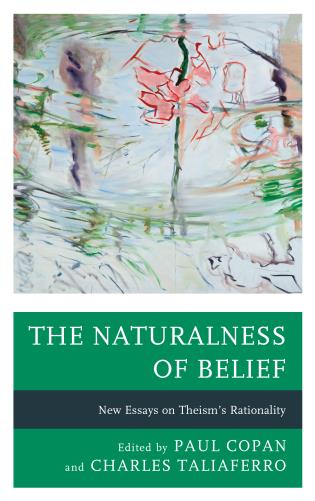
  • The Naturalness of Belief: New Essays in Theism’s Rationality.

    The book The Naturalness of Belief: New Essays on Theism’s Rationality recently arrived from the publishers and is available on Amazon. Matt contributed a chapter to this book entitled “Divine Commands and the Euthyphro Dilemma: Some Naturalistic Misperceptions” The Naturalness of Belief is edited by Paul Copan (Palm Beach Atlantic) and Charles Taliaferro (St Olaf College) and published by Lexington Books.

    The table of contents is as follows:

    Introduction
    Part I: The Unnaturalness of Naturalism?
    1. Naturalism and Naturalness: A Naturalist’s Perspective
    —Graham Oppy
    Part II: Foundational Considerations
    2. Is Naturalism Natural?
    —Charles Taliaferro
    3. The Contraction and Expansion of Naturalism and the Theistic Challenge
    —Charles Taliaferro
    4. Taking Philosophical Naturalism Seriously
    —R. Scott Smith
    Part III: Theistic Belief, Science, and Naturalism
    5. In What Sense Might Religion Be Natural?
    —Justin Barrett and Aku Visala
    6. Science, Methodological Naturalism, and Question-Begging
    —Robert Larmer
    Part IV: Axiology and Naturalism
    7. Alienating Humanity: How Evolutionary Ethics Undermines Human Rights
    —Angus Menuge
    8. Divine Commands, Duties, and Euthyphro: Theism and Naturalist Misunderstandings
    —Matthew Flannagan
    9. Beauty: A Troubling Reality for the Scientific Naturalist
    —R. Douglas Geivett and James Spiegel
    Part V: Naturalism and Existential Considerations
    10. Existential Arguments for Theistic Belief
    —Clifford Williams
    11. Psychological Factors Contributing to Atheism: Bad Father Relationships and Just Bad Relationships as in Autistic Spectrum Disorders
    —Paul C. Vitz
    12. The Cultural Implications of Theism versus Naturalism
    —Paul Copan and Jeremiah J. Johnston
    Part VI: Naturalism, Freedom, and Immortality
    13. Theism, Robust Naturalism, and Robust Libertarian Free Will
    —J.P. Moreland
    14. Naturalism, Theism, and Afterlife Beliefs
    —Jonathan Loose

    The blurb from Amazon is as follows.

    Despite its name, “naturalism” as a world-view turns out to be rather unnatural in its strict and more consistent form of materialism and determinism. This is why a number of naturalists opt for a broadened version that includes objective moral values, intrinsic human dignity, consciousness, beauty, personal agency, and the like. But in doing so, broad naturalism begins to look more like theism. As many strict naturalists recognize, broad naturalism must borrow from the metaphysical resources of a theistic world-view, in which such features are very natural, commonsensical, and quite “at home” in a theistic framework.

    The Naturalness of Belief begins with a naturalistic philosopher’s own perspective of naturalism and naturalness. The remaining chapters take a multifaceted approach in showing theism’s naturalness and greater explanatory power. They examine not only rational reasons for theism’s ability to account for consciousness, intentionality, beauty, human dignity, free will, rationality, and knowledge; they also look at commonsensical, existential, psychological, and cultural reasons—in addition to the insights of the cognitive science of religion.

    Get your copy now, read it, and let us know what you think both here and on Amazon.

  • On Judging Books by their Covers: A Fisk of the Secularist Outpost’s book review of Did God Really Command Genocide?

    You should not judge a book by its cover, unless you are a secularist… then it is okay.

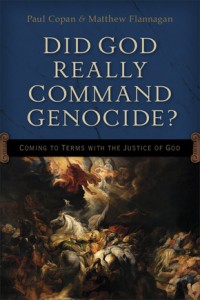
    In a post entitled “Books Like This Should be a Warning Signal to Inerrantists“, published on 26 September 2014, The Secular Outpost’s Jeffery Jay Lowder refers to Paul Copan and this blog’s Matthew Flannagan’s, then forthcoming, book Did God Really Command Genocide? Coming to Terms with the Justice of God.

    crystal ballAfter making an acknowledged assumption as to whom authored the publisher’s description, Lowder then moves to confidently asserting that his assumption was correct, and leaps from there to critiquing the then-not-yet-published-or-available to-Lowder-to-actually-read content of the book. Yes folks, it is a live example of judging a book, quite literally, by its cover.
    Lowder wrote: [note: that bold, underlined, italics are my emphasis, any other emphasis is original. My comments are in italics]

    “So they admit that the relevant passages are among “the most confusing and uncomfortable passages of Scripture,” passages which make even hardened inerrantists like Copan and Flannagan “squeamish.”

    This is the bit wrongly attributed to Paul and Matt that I referred to above.

    “But, being the faithful believers that they are, Copan and Flannagan will argue that, yes, a “good, kind, and loving deity” would command (and, in fact, has commanded) “the wholesale slaughter of nations.””

    Apparently Lowder is a clairvoyant secularist. Either that or he is really good at cover interpretation.

    “How will they reconcile God’s goodness, kindness, and love with genocide? The book’s subtitle suggests that they will argue that “justice” is the answer.”

    See?

    “The fundamental problem with books like this is that they fly in the face of what seems obvious to everyone else who doesn’t already hold the a priori belief that everything the Bible says must be true,”

    Ah, so not being a Christian is what gives secularists the ability to boldly state the “obvious” about the content of books they have only had access to the covers of. I thought that maybe I just lacked the confidence to make such bold assertions about the content of books I have not read. (…Well, that, and the fact that, unlike Lowder, I do have access to the manuscript by virtue of my sleeping with one of the authors [whom I am married to] and I know for a fact that this is *not* actually what Paul and Matt argue. Small details, I know.)

    “just because the Bible says it.””

    That is actually not what inerrantists of Matt and Paul’s ilk believe;  this is actually a strawman (small detail, again, I know).

    To paraphrase something Nick Trakakis wrote in another context, “Defenses of genocidal behavior by the OT god turn a blind eye to what seem clear and obvious to everyone else — that such behavior makes a mockery out of what any person would consider morally justifiable behavior.””

    This would be a good ending if the book actually did defend “genocidal behavior by the OT god.” Again, small detail.

    Did God Really Command Genocide?Advice to Lowder: try, I don’t know, reading it. It got released today so you finally can. Did God Really Command Genocide? is now available from the following book providers:

    Baker Books
    Amazon
    Kindle
    Book Depository

  • Out Now: Did God Really Command Genocide? Coming to Terms with the Justice of God by Paul Copan and Matthew Flannagan

    Did God Really Command Genocide?Well done Matt and Paul. 🙂

    Out now!

    Get your copy today of Did God Really Command Genocide? Coming to Terms with the Justice of God, by Paul Copan and Matthew Flannagan, published by Baker Books.

    More here.

    Buy from Baker Books
    Buy on Amazon in paperback
    Buy for your Kindle
    Buy from Book Depository

    (The New Zealand store launch is not until 31 January 2015 but Book Depository do free international posting.)