This is a talk I gave to the New Zealand Association of Philosophy Teachers annual conference at St Cutherberts College in September this year. Several people have asked me to make this talk available. I have broken my talk up into four parts. Part One introduces what philosophy of religion. In part two I will outline two […]
Entries Tagged as 'Epistemology'
Contemporary Philosophy of Religion and NCEA Religious Studies: Part Four
October 23rd, 2017 Comments Off on Contemporary Philosophy of Religion and NCEA Religious Studies: Part Four
Tags: Graham Oppy · John Mackie · NCEA
Richard Carrier on the Moral Scepticism Objection to Divine Command Theory
October 7th, 2017 13 Comments
In my paper “Is Ethical Naturalism More Plausible than Supernaturalism: A Reply to Walter Sinnott-Armstrong”. I discussed the what I called the “Moral Scepticism objection’ to a Divine command theory (DCT) of ethics. Walter Sinnott-Armstrong had argued as follows: [1] If DCT is true then we cannot know whether an action is wrong unless we know that God has it. [2] We have no […]
Tags: Divine Command Theory · Epistemology · Richard Carrier
In Defense of Reasonable Disagreement
May 30th, 2011 39 Comments
At the close of his 1967 book “God and Other Minds”, Alvin Plantinga argues that if theistic belief is to be dismissed as “irrational”, or in some sense “epistemically sub-par” on the basis that it lacks a rationally compelling argument, then likewise we should also reject belief in other minds, since the best argument for […]
Tags: Alvin Plantinga · Analogical argument · Disagreement · God and Other Minds · Rationality · Reformed Epistemology · Religious Epistemology · Richard Feldman · Theism · Theists

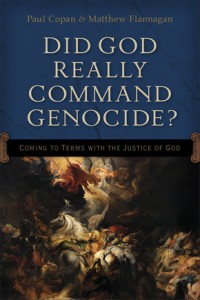 A common objection to belief in the God of the Bible is that a good, kind, and loving deity would never command the wholesale slaughter of nations. In the tradition of his popular Is God a Moral Monster?, Paul Copan teams up with Matthew Flannagan to tackle some of the most confusing and uncomfortable passages of Scripture. Together they help the Christian and nonbeliever alike understand the biblical, theological, philosophical, and ethical implications of Old Testament warfare passages.