Category: Role of the State

  • The Separation of Church and Self: Rethinking Separationism

    Is it just for a pluralistic society to ground its public policy on religious premises? What role should religion play in such a society? Debate over questions like these has figured in theology, philosophy, political science, jurisprudence and popular culture for centuries. In contemporary Western pluralistic society the debate continues. Even for those unfamiliar with its nuances at the higher levels the effect of the standard view, as described by Stephen Carter, is immediately familiar:

    “One good way to end a conversation – or start an argument – is to tell a group of well educated professionals that you hold a political position (preferably a controversial one such as being against abortion or pornography) because it is required by your understanding of God’s will. In the unlikely event that anyone hangs around to talk with you about it, chances are that you will be challenged on the ground that you are intent on imposing your religious beliefs on other people. And in contemporary political and legal culture, nothing is worse.”[1]

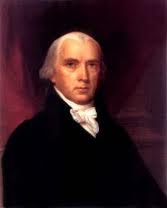
    James Madison

    Carter is referring to the separationist understanding of religion and public life, the idea that in a contemporary pluralistic society significant restraint must be put on the political role of religious reasons. This restraint is negative; when a functionary deliberates over a proposed policy it is not justified for that functionary to decide to support or oppose that policy on grounds derived from religion. A corollary of this is that citizens should not try to influence public policy by appealing to religious reasons. Separationists argue that the public policy of a pluralistic society must be able to be justified by a plausible secular justification in order for it to be just to all. Religious beliefs, while utilised and followed in private, should be kept separate from public policy debates, the administration of public institutions and the deliberation of public functionaries. (more…)

  • Contra Mundum: The Number of the Beast

    The OmenRecently TV3 screened The Omen. This classic horror is a about a boy called Damian who is the predicted anti-Christ and appropriately has the number 666 on his head. This film epitomises how the book of Revelation is understood in contemporary culture; apparently it predicts a future person, the beast or the anti-Christ who will take over the world. Associated with this is the number 666 which is literally inscribed into people’s heads or hands.  I think this pop-theology is mistaken.

    The relevant section in Revelation says:

    And the dragon stood on the shore of the sea. And I saw a beast coming out of the sea. He had ten horns and seven heads, with ten crowns on his horns, and on each head a blasphemous name. The beast I saw resembled a leopard, but had feet like those of a bear and a mouth like that of a lion. The dragon gave the beast his power and his throne and great authority… The whole world was astonished and followed the beast. Men worshiped the dragon because he had given authority to the beast, and they also worshiped the beast and asked, “Who is like the beast? Who can make war against him?” (Rev 13:1-2, 3b-4)

    The text proceeds:

    Then I saw another beast, coming out of the earth. He had two horns like a lamb, but he spoke like a dragon. He exercised all the authority of the first beast on his behalf, and made the earth and its inhabitants worship the first beast … He also forced everyone, small and great, rich and poor, free and slave, to receive a mark on his right hand or on his forehead, so that no one could buy or sell unless he had the mark, which is the name of the beast or the number of his name. This calls for wisdom. If anyone has insight, let him calculate the number of the beast, for it is man’s number. His number is 666. (Rev 13:11,16-18)

    Most English translations mention the number 666, (more…)

  • The Theology of the Declaration of Independence

    As I write this it is just beginning to be the 4th of July in the United States now, though its been 4th July for some time here in New Zealand.

    The 4th of July is, of course, Independence Day. Typically in New Zealand, those members of the secular blogosphere, who consider themselves to be classical liberals, have an annual rant on the 4th of July about the Declaration of Independence, praising the philosophy expounded in this document.

    Declaration of IndependenceNot PC’s Peter Cresswell, for example, states in Happy July 4th! that “with the exception of just a few words, the words could hardly be bettered today;” the declaration is, “A wonderful, wonderful anthem to freedom that rings down through the years.”  He bemoans, “if only the real meaning of those words could be heard and understood.”

    A few years ago Kiwiblog’s David Farrar made similar claims, he stated he would often “marvel at those marvelous words, written in the heat of oppression…Marvelous, absolutely marvelous.”

    I agree. I would simply point out to my secular, liberal, country-men what the words in this document actually say, and some of the philosophical ideas they expound.

    First, the declaration refers to God; it does so four times. Maverick Philosopher has an excellent analysis of the theological content;

    In the initial paragraph, we find the phrase “…Laws of Nature and of Nature’s God….” This phrase rules out pantheism: God is distinct from Nature. In the second paragraph, there is the phrase, “…endowed by their Creator with certain unalienable rights….” Putting these two references together, we may infer that the God being referred to is not merely a deistic initiator of the temporally first segment of the physical universe, but a being involved in the creation of the human race. For if God endowed human beings with rights, this endowment had to occur at the time of the creation of human beings, which of course occurred later than the beginning of the physical universe. In traditional jargon, God is a creator continuans rather than a mere creator originans. He is not a mere cosmic starter-upper, but a being who is continuously involved in maintaining the universe in existence.

    …

    The other two references are in the final paragraph. There we find the phrase, “…Supreme Judge of the World for the Rectitude of our Intentions….” near the beginning of the paragraph, and near the end, “…a firm Reliance on the Protection of divine Providence….” Now if God is the Supreme Judge, then he is more than a mere metaphysical cause responsible for the universe’s beginning to exist; he is also the supreme moral arbiter. And since he endows human beings with rights, as opposed to being merely a judge of rights antecedently possessed, then it seems we may infer that God is the source of moral distinctions (as opposed to a mere judge of them).

    The reference to divine providence is further evidence that the conception of God in the Declaration is non-deistic. For if God provides and protects, then God has an ongoing involvement with the world and its inhabitants such as would be ruled out by a deistic view. It should also be obvious that talk of providence (from the Latin, pro-videre) implies divine foreknowledge which implies intelligence and perhaps omniscience on the part of the deity. The God of the Declaration is not a blind metaphysical cause posited to explain why the universe began to exist, but a being with such attributes as moral goodness and intelligence…. So if by ‘deism’ is meant the doctrine that God is a mere metaphysical cause of the universe’s beginning to exist who is thereafter uninvolved in its continuing to exist, then the God of the Declaration is non-deistic.

    Second, the declaration claims that belief in a creator is self-evident; that is, it is a properly basic belief, which is rationally acceptable to hold in the absence of any proof.

    We hold these truths to be self-evident, that all men are created equal, that they are endowed by their Creator with certain unalienable Rights, that among these are Life, Liberty, and the pursuit of Happiness.

    Third, the declaration makes political pronouncements about public policy on the basis of these theological claims and expects these pronouncements to be taken seriously.

    Fourth, the declaration says that various rights, such as the right to life and liberty, are unalienable. That is, a person cannot alienate one’s life or freedom as they can legally alienate a piece of property. You can’t take my property if I do not consent to you having it but if I do consent, you can take it; property is alienable, life and liberty are not. The argument of the declaration reflects John Locke’s argument in the Second Treatise of Civil Government;

    To understand political power right, and derive it from its original, we must consider, what state all men are naturally in, and that is, a state of perfect freedom to order their actions, and dispose of their possessions and persons, as they think fit, within the bounds of the law of nature, without asking leave, or depending upon the will of any other man.[1]

    …

    But though this be a state of liberty, yet it is not a state of licence: though man in that state have an uncontroulable liberty to dispose of his person or possessions, yet he has not liberty to destroy himself, or so much as any creature in his possession, but where some nobler use than its bare preservation calls for it. The state of nature has a law of nature to govern it, which obliges every one: and reason, which is that law, teaches all mankind, who will but consult it, that being all equal and independent, no one ought to harm another in his life, health, liberty, or possessions: for men being all the workmanship of one omnipotent, and infinitely wise maker; all the servants of one sovereign master, sent into the world by his order, and about his business; they are his property, whose workmanship they are, made to last during his, not one another’s pleasure[2]

    …

    This freedom from absolute, arbitrary power, is so necessary to, and closely joined with a man’s preservation, that he cannot part with it, but by what forfeits his preservation and life together: for a man, not having the power of his own life, cannot, by compact, or his own consent, enslave himself to any one, nor put himself under the absolute, arbitrary power of another, to take away his life, when he pleases. No body can give more power than he has himself; and he that cannot take away his own life, cannot give another power over it.[3]

    The point here is that because your right to life and liberty are from God, no one can legitimately enslave or kill you, even if you consent to it. This was not a mere incidental addendum idea, it was central to Lockean political philosophy, which maintained (as the declaration does) that the government derives its powers from the consent of the governed. If a person can consent to be killed or enslaved then they can consent to the government enslaving them also to having the arbitrary power to kill them and hence tyranny can be legitimate. The reason tyranny is illegitimate is because, “No body can give more power than he has himself; and he that cannot take away his own life, cannot give another power over it.”

    The declaration then makes a metaphysical claim: God exists. It makes an epistemological claim about faith and reason: that belief in God is rational independent of proof. It makes an implicit claim of political philosophy: religion is not a private thing that should not influence public life but rather, theological claims should influence public life. Finally it makes a moral claim; that consenting adults do not have a right to do whatever they like with their own bodies, rather there are “Laws of Nature and of Nature’s God” that bind all human beings, that they are compelled to follow even if all parties consent otherwise. Governments are legitimate to the extent in which they respect these laws.

    I agree with PC, it is hard to improve on this philosophy; I have defended it in several places on this blog.

    Ironically, however, the militant secular liberals in NZ who parrot the declaration seem committed to attacking these ideas and rejecting them on every point. They argue that belief in God is irrational because it cannot be empirically proven, they claim that the public square should be secular, that religion should be private and not influence public policy and they argue that liberty means consenting adults can do whatever they like with their own bodies and lives. Far from being unalienable, a person’s life and freedom is his property to alienate as that person sees fit.

    It is also hard to disagree with PC’s sentiments that the declaration is “A wonderful, wonderful anthem to freedom that rings down through the years. If only the real meaning of those words could be heard and understood.” “Indeed, if only.”

    [1] John Locke Second Treatise of Civil Government Section II 4.
    [2] Ibid II6.
    [3] Ibid IV 23.

  • Can State Expropriation of Minerals be Justified? Part II

    In Can State Expropriation of Minerals be Justified? Part I, I set out a common law property rights argument drawing from the writings of jurists Blackstone and Locke as well as contemporary philosopher Ed Feser. I looked at what circumstances, if any, might justify the state taking of real property, looking specifically at minerals from the sub-soil of privately held property. In this post I identify and critique some of the purported justifications for the historic and current expropriation of property in New Zealand, using the examples of petroleum, gold and silver.

    II.        Purported Justifications
    One of the earliest attempts to justify an inroad into property rights in sub-soil was made in The Case of Mines. Three arguments offered by counsel for the queen are recorded which I have labelled excellence, necessity and currency:

    Excellence: “because gold and silver were the most excellent products of the soil, they should, ipso facto, go to the Queen, who was the most excellent person in the realm.”[29]

    Necessity: “That the King as head of the realm needed the money to keep up the army and enforce the laws.”[30]

    Currency: “That gold was necessary or coin or commerce, and the Crown ought to have it to mint,”[31]

    Whilst “none of the reasoning of the judges is given, just the bare decision”,[32] I will assume that the reasons offered by counsel were the reasons accepted by the court and address the merits of each in turn.

    The excellence argument is clearly problematic as it is not a given that the monarch will always be the most excellent person in the realm (especially when one pauses to consider the character and conduct of some of England’s monarchs). Further, even assuming that a monarch is the most excellent person in the realm, it would not follow that this attribute confers an automatic right to the most excellent form of every conceivable thing regardless of whether those things were owned by other people. Further, the assumption that gold is the most excellent of metals suggests that ‘excellent’ is being used in an economic sense to denote gold as the most economically valuable of metals. However, if this assumption is correct then the most excellent person must be the richest, which would entail that anyone wealthier than the queen was entitled to take her gold (an argument that I am fairly confident counsel for the queen did not intend).

    The other two arguments are more plausible. They both speak to the state’s need to be able to finance the discharge of its basic functions (i.e. defence, justice, minting the currency, etc) and, as such, are arguably extensions of the necessity justification. Given the then threat of Spanish invasion, the need to raise an army in times of war and the practical uses of gold and silver in the 16th century, these arguments may have had some merit. However, in contemporary New Zealand where the core functions of government are funded by taxation, where we keep a standing army and our currency is not minted from, or based on, gold and silver, the elements of necessity that ground the reasoning within The Case of Mines are not currently present.

    As current precedent The Case of Mines can justifiably affirm the principle that in situations of necessity, such as defence or natural disaster, where the state needs a particular mineral and cannot realistically obtain it from within its own lands or by trade then it might be justified in expropriating it from private citizens for the duration of the necessity. Something like this justification was arguably present in the passage of the Petroleum Act 1937. Oil had become a mineral of strategic importance to defence as the British Royal Navy fleet had converted to oil in 1914. This proved to be critical in their sea victories during WWI. In 1919 existing regulations governing the extraction of oil were extended to private land. Driven largely by the British Navy’s need for oil, a post-war search for oil in the British Colonies began.

    In 1927 a Petroleum Bill was drafted but abandoned. At the time, the petroleum industry was growing by itself; Shell and BP were both active in New Zealand, private agreements to extract petroleum were being struck and the national urgency in the wake of WWI was waning. However, as the 1930’s progressed, issues of national defence increasingly came back into focus;[33]

    The growing strategic threat from Japan and Germany caused the New Zealand government to focus on the need to increase investment by international oil companies in the discovery and extraction of New Zealand’s oil reserves – and on the ability of those companies to deal with a single owner (the government) as being ‘in the national interest’.

    The Petroleum Act 1937 nationalised all petroleum. The justifications cited were petroleum’s strategic importance in defence, the economy, transport and the preference of the oil companies to deal with a single party.[34] Whilst the appeal to national interests found broad support within society, the passage of the act was highly controversial.[35] It was disputed that the expropriation of private property was necessary to achieve the objectives and the lack of compensation was widely objected to, particularly so by Maori.

    The Waitangi Tribunal reports that “Maori shared in the wider endorsement, and their challenge was not to the intent to nationalise the resource but to the failure to pay landowners compensation for their loss of property rights under the common law and the Treaty.”[36] The 1937 Act did not grant royalties to the landowners despite the provision to do this initially being left open;[37]

    The approach of the government in 1937 and 1938 was based on the position that, where the ‘national interest’ justified action and where the owners of the confiscated rights could be presumed to share in the national benefits of the policy, no compensation for the loss of private property rights need be paid.

    The government of the day appeared to hold that property rights could be justifiably overridden without compensation on the grounds of “national interests.” Traditionally these were a mixture of strategic national security issues and economic benefits to the country as whole.

    A.        National Security Justifications
    Now earlier I suggested that the necessity justification may apply to such appeals; however, the strategic necessity arising from factors such as the threat posed by Germany, Japan, Spain or the British Navy’s need for oil is no longer present (the British navy is these days increasingly nuclear propelled and the New Zealand Navy barely has a fleet). Yet despite the change in the strategic situation, legislation asserting ownership of petroleum, gold, silver, and uranium to the state remain — in fact, post-WWII legislation has affirmed their position as state property “whether or not the land has been alienated” and has reserved additional minerals to the collection.[38] (In the case of the continued state reservation of uranium this seems rather odd given that it appears incapable of attaining the standard for military necessity given New Zealand’s nuclear free policies.)

    B.        Economic Justifications
    Peter Ackroyd suggests that taking property to acquire economic benefit was a driving justification for many of New Zealand’s past legislative acts. He cites from Hansard, “The Colony, however, could not afford to dispense with the mining industry, and every effort should be made by the Legislature to assist in maintaining its position.” [39]

    It is indisputable that a prosperous mining industry can contribute greatly to the progress of a society; however, whether the gain of this benefit, in and of itself, can justify the taking of another’s property seems rather dubious. Almost any taking of one person’s property by another will economically advantage the taker yet this does not typically justify taking (even if the taker invested the property in a way that ended up benefiting the takee). Every person has a right to retain their justly acquired property and to have the taking of it protected by law. Paternalistic justifications such as “it is economically good for you” are not normally grounds for overriding the rights of adults.

    In the event that someone does take from another, it is normal practice under the principles of restorative justice that the taker be required to compensate the takee. Likewise, when a state takes property in the name of national or economic interest it was recognised at common law that compensation must be paid. Further it is common to find this requirement in other jurisdictions. A recent survey of the constitutional legislation within 30 OECD countries showed that 28 expressly acknowledge property rights and 24 required expropriations of property rights to be adequately justified and to not occur without compensation.[40]

    In New Zealand the CMA provides compensation for the disturbance of the land caused by mining activities but not for the loss of the minerals. The situation is analogous to a judge ordering a burglar to fix the window broken during the burglary but permitting the burglar to keep the widescreen plasma TV he took from the house.

    As cited earlier, a justification commonly offered for the state’s failure to pay compensation is that “the owners of the confiscated rights could be presumed to share in the national benefits of the policy.” Lewis Evans, Neil Quigley and Kevin Counsell identify a problem with this line of reasoning;[41]

    This position will … only be justified if it can be shown that those affected by the confiscation of the private rights will receive benefits roughly equivalent in value to the share of the benefits that they would have otherwise received. In this case [the Petroleum Act], of course, no such analysis was done.

    Even if the state did undertake this analysis of costs and benefits, the justification fails to note that compensation does not actually introduce any additional cost. The following example will bear this out. A person owns a piece of property, P. P is worth a certain value, V. If the state expropriates P and fails to compensate the owner then the owner loses V. However, if the state does compensate the owner then the state loses the value of V. Either way, someone is going to pay the cost of V. The question is who should bear this cost – the private owner or the government? Both the loss and the cost remain the same regardless of who bears it.[42]

    Lewis, Evans & Quigley note that the absence of compensation increases the chance that the state will over-estimate the benefits of various takings and not accurately measure the costs.[43]

    Uncompensated confiscation is not justified by actions that are deemed by politicians to be ‘in the public interest’. It is too easy for interest groups who benefit from government actions but bear none of those costs to create the appearance of a public benefit when none in fact exists. If there is a public interest, its value must be quantified against the loss to the private property rights that would be destroyed by the action. In the absence of this accounting, government will overuse its power of eminent domain and will engage in actions that impose net costs on society as a whole.

    As shown above, compensating owners does not increase the cost to society but a policy permitting expropriation without compensation may.

    III.       Conclusion
    I have argued that there is a common law presumption in favour of property rights, which is based on a moral principle antecedent to state recognition. According to this principle, a state must justify any expropriation of property. While I granted that expropriation may be able to be justified on certain grounds, contemporary New Zealand does not currently meet such grounds. Expropriation on economic grounds is far more dubious and even if this ground could be justified, the absence of statutory provisions for compensation renders such takings unjust.


    [29] James Parcell “A Thesis on the Prerogative Right of the Crown to Royal Metals” (Government Printer, Wellington, 1960) 13.
    [30] Ibid 14.
    [31]
    Ibid.
    [32] Ibid 11. Parcell suggests that the report was a forgery or had been embellished.
    [33]
    Lewis Evans, Neil Quigley & Kevin Counsell “Protection of Private Property Rights and Just Compensation: An Economic Analysis of the Most Fundamental Human Right Not Provided in New Zealand” (2009) New Zealand Institute for the Study of Competition and Regulation (at 21 January 2010) 23.
    [34] Ibid 23-24.
    [35] Hansard and the national archives record fierce debate; breaches of the Treaty of Waitangi were alleged and the Petroleum Haka became part of New Zealand history.
    [36] Waitangi Tribunal The Petroleum Report – Wai 796 (2003) 29.
    [37]
    Lewis, Evans & Quigley, above n 33, 24.
    [38] Key examples: Atomic Energy Act 1945; Coal Act 1948, 1949; Iron and Steel Industry Act 1959; Mining Act 1971, which were all brought under the CMA.
    [39] Peter Ackroyd “Mining Legislation and the Reservation of Mineral Resources in New Zealand” [1988] NZLJ 41, 42.
    [40]
    Lewis, Evans & Quigley, above n 33, 43-48.
    [41] Lewis, Evans & Quigley, above n 33, 24.
    [42]
    I am grateful to Matthew Flannagan for the development of this argument.
    [43] Lewis, Evans & Quigley, above n 33, 41.

    RELATED POSTS:
    Can State Expropriation of Minerals be Justified? Part I
    Property Rights: Blackstone, Locke and the Legislative Scheme Part I
    Property Rights: Blackstone, Locke and the Legislative Scheme Part II
  • Can State Expropriation of Minerals be Justified? Part I

    New Zealand, like many nations, has a long history of the state taking real property, often without compensation. In this two part series I examine one sub-set of takings, minerals from the sub-soil of privately held property (although the argument herein could apply with equal force to any state taking). Drawing from common law, the writings of jurists such as Blackstone and Locke and contemporary philosopher Ed Feser, I look at what circumstances, if any, might justify taking. I then apply this to the current practice in New Zealand and ask is the practice justified, does it meet the standard?

    Drawing from Talmudic Law, the jurist Accursius of Bologna wrote the phrase cujus est solum, ejus est usque ad coelum et ad inferos (to whom belongs the soil it is his, even to heaven and to the middle of the earth) as a gloss on Justinian’s Digest.[1] By the 16th century this maxim had become accepted common law doctrine for determining the extent of the rights enjoyed by a tenant in fee simple (“landowner”).[2] The English Laws Act retrospectively declared that “so far as applicable to the circumstances of the Colony of New Zealand,” all statute and common laws of England became “part of the laws of New Zealand.” [3] This was confirmed by the Imperial Laws Application Act 1988. Since 1840 to the present day there have been few instances where the court has held that a statute or common law of England was not applicable to the circumstances of the colony of New Zealand.[4] Hence, in the absence of statutes overriding it, the maxim is part of New Zealand law.

    Historically the rights of the landowner included ownership of the minerals in the sub-soil. “The grant of the land includes the surface and … all that is infra, i.e. mines, earth, clay etc.”[5] The sub-soil minerals were assumed to be conveyed along with the land, unless the conveyance instrument stipulated otherwise.[6]

    Land hath also, in its legal signification, an indefinite extent, upwards as well as downwards. … whatever is in a direct line, between the surface of any land and the centre of the earth, belongs to the owner of the surface; as is every day’s experience in the mining countries. So that the word “land” includes not only the face of the earth, but every thing under it, or over it. And therefore, if a man grants all his lands, he grants thereby all his mines of metal …

    Until the last century or so, the only minerals not subject to this doctrine were gold and silver.[7] In The Case of Mines, the court held “that by the law all mines of gold and silver within the realm, whether they be in the lands of the Queen, or of subjects, belong to the Queen by prerogative.”[8] When it came to ownership of other minerals the court held,[9]

    That if the ore or mine in the soil of a subject be of copper, tin, lead, or iron, in which there is no gold or silver, in this case the proprietor of the soil shall have the ore or mine, and not the Crown by prerogative, for in such barren base metal no prerogative is given to the Crown.

    Whilst gold and silver were the primary focus of the New Zealand government’s first legislative reservations of minerals,[10] successive legislation incrementally added all the “base” minerals (and more) mentioned in The Case of Mines into state ownership.[11]

    Initially the state only claimed the minerals contained in state land and reserved the mineral rights on alienation of its own land.[12] However, subsequent legislation saw all land subject to a retention clause on alienation that reserved, for the state, all minerals existing in their natural condition within that land.[13] Today there are still pockets of minerals that remain in private ownership, as some land has not been alienated since the passage of the relevant legislation. However, these minerals cannot be petroleum, gold, silver, and uranium as these minerals belong to the state regardless of whether or not the land has been alienated.[14] The state possesses an exclusive right to alienate (or grant a licence to alienate) the minerals it owns.[15] In many circumstances, land owners cannot refuse consent for prospecting, exploration and mining to occur on their land.[16]

    This state of affairs, with respect to the ownership of minerals, has eroded the rights of the landowner as mineral ownership has changed without the consent of the original owner. Further, this change in ownership occurred without the owner being compensated. Prima facie, this change of ownership cannot be said to be compatible with property rights.

    I.          Property Rights
    Property rights are often described as “a bundle of rights.” This bundle includes the full or limited right to access, use, assign, exclude others from and destroy property. William Blackstone identified property rights as “The third absolute right, inherent in every Englishman, … which consists in the free use, enjoyment, and disposal of all his acquisitions, without any control or diminution, save only by the laws of the land.”[17]

    It is important to understand this quote in context. Blackstone grounded the legal right to property in a moral right that exists antecedent to the state.[18]

    There is indeed some difference among the writers on natural law concerning the reason why occupancy should convey this right, and invest one with this absolute property: Grotius and Puffendorf insisting that this right of occupancy is founded on a tacit and implied assent of all mankind that the first occupant should become the owner; and Barbeyrac, Titius, Mr. Locke, and others, holding that there is no such implied assent, neither is it necessary that there should be; for that the very act of occupancy alone, being a degree of bodily labour, is, from a principle of natural justice, without any consent or compact, sufficient of itself to gain a title;—a dispute that savours too much of nice and scholastic refinement. However, both sides agree in this, that occupancy is the thing by which the title was in fact originally gained; every man seizing to his own continued use such spots of ground as he found most agreeable to his own convenience, provided he found them unoccupied by any one else.

    Blackstone appeals to John Locke’s polemic against absolute monarchy, which sets out the locus classicus for the justification of property rights.[19] Locke argued that human beings have a series of rights antecedent to the existence of civil government. The state serves people by protecting and recognising these rights. One such right is the right to property. Locke argued that people own their own bodies and as such their own labour. When one mixes one’s labour with previously unowned land one acquires a right to this land, subject to the proviso that one leaves “enough and as good … for others”[20]

    Edward Feser has suggested that Locke’s proviso is mistaken and that an initial acquisition of the sort Locke refers cannot be unjust;[21]

    This, it seems to me, is a clear implication of the assumption … that external resources are initially unowned. Consider the following example. Suppose an individual A seeks to acquire some previously unowned resource R. For it to be the case that A commits an injustice in acquiring R, it would also have to be the case that there is some individual B (or perhaps a group of individuals) against whom A commits the injustice. But for B to have been wronged by A’s acquisition of R, B would have to have had a rightful claim over R, a right to R. By hypothesis, however, B did not have a right to R, because no one had a right to it—it was unowned, after all. So B was not wronged and could not have been. In fact, the very first person who could conceivably be wronged by anyone’s use of R would be, not B, but A himself, since A is the first one to own R. Such a wrong would in the nature of the case be an injustice in transfer—in unjustly taking from A what is rightfully his—not in initial acquisition. The same thing, by extension, will be true of all unowned resources: it is only after someone has initially acquired them that anyone could unjustly come to possess them, via unjust transfer. It is impossible, then, for there to be any injustices in initial acquisition.

    If one mixes one’s labour with, and gains ownership of, previously unowned land then one acquires a property right to it, which in turn gives one the right to assign it to others. Given this, Locke’s proviso is unnecessary. Assignees of such land acquire the property rights along with the land. Unless another can establish that the initial acquisition was unjust or that there has been an unjust transfer at some point in the chain of ownership, the landowner’s property rights must be respected.

    The moral property rights of the landowner are not absolute in the sense of never being able to be overridden.[22] Although Blackstone suggests property rights are limited “only by the laws of the land”, he qualifies this in the very next paragraph,

    So great moreover is the regard of the law for private property, that it will not authorise the least violation of it; no, not even for the general good of the whole community. If a new road, for instance, were to be made through the grounds of a private person, it might perhaps be extensively beneficial to the public; but the law permits no man, or set of men, to do this without consent of the owner of the land. In vain may it be urged, that the good of the individual ought to yield to that of the community; for it would be dangerous to allow any private man, or even any public tribunal, to be the judge of this common good, and to decide whether it be expedient or no. Besides, the public good is in nothing more essentially interested, than in the protection of every individual’s private rights, as modelled by the municipal law. In this and similar cases the legislature alone can, and indeed frequently does, interpose, and compel the individual to acquiesce. But how does it interpose and compel? Not by absolutely stripping the subject of his property in an arbitrary manner; but by giving him a full indemnification and equivalent for the injury thereby sustained. The public is now considered as an individual, treating with an individual for an exchange. All that the legislature does is to oblige the owner to alienate his possessions for a reasonable price; and even this is an exertion of power, which the legislature indulges with caution, and which nothing but the legislature can perform.[23]

    Blackstone suggests property rights can be overridden for the public good provided that, public good is understood as “the protection of every individual’s private rights”, “the legislature alone” authorises it by law and the owner is compensated. Elsewhere he suggests that necessity might be a further option; a person in need “may demand a supply sufficient for all the necessities of life from the more opulent part of the community, by means of the several statutes enacted for the relief of the poor.”[24]

    Ed Feser elaborates on the idea of necessity or “absolute distress”,[25]

    The most obvious implication is that individuals in circumstances of what Cronin calls “absolute distress” have a right to the use of the resources of others, where the paradigm examples would be the starving man in the woods who takes food from a cabin, or a window washer who grabs a flagpole to break his fall from a building, or someone fleeing robbers who can only escape by running through someone else’s back yard. Someone in circumstances like these is not guilty of theft or the like, because for actions like the ones in question to count as theft, etc., the cabin owner or flagpole owner or homeowner would have to have such an absolute right to his property that he could justly refuse to allow others to use it even in the circumstances in question; and, according to natural law theory, no one could possibly have so absolute a property right. For the same reason, if some resource (say, the only remaining source of water in an area stricken by drought) became “absolutely necessary … to save the community or part of it from extinction,” then any individual who had heretofore privately owned that resource would have an obligation in justice to relinquish it.”

    Necessity can be a justifiable but limited inroad into property rights.  Feser argues that the necessity exception can extend to political situations,[26]

    It [necessity] is also what would justify the taxation required for the necessary functions of government (national defense, courts of law, etc.), since … the very existence of the community … depends on the state’s performance of these functions.

    Feser also suggests that necessity might,[27]

    justify taxation for the purposes of funding some measure of public assistance for those in absolute distress who are incapable of either finding work or getting help from family members and friends. For these circumstances would seem to be relevantly similar to those in which the starving man in the woods finds himself.

    Whilst the right may not be absolute, a prima facie property right exists. The burden falls on the expropriator to justify takings.[28]

    That we do in fact, in everyday life, put the burden of proof on the denier of claims to property is evidenced by the presumption that exists in law that the possessor of a holding is the rightful owner of it. This reflects our intuitive sense of justice in holdings. It is only (egalitarian) philosophers who—bizarrely—put the burden on the possessor to prove that we shouldn’t expropriate his holdings. Such philosophers are reminiscent of the epistemological skeptic who challenges you to prove you’re not dreaming, or are not a brain in a vat, or whatever—as if it were such strange logical possibilities, rather than the commonsense belief in the external world, that had the presumption in their favor!

    In Can State Expropriation of Minerals be Justified? Part II, I will set out some of the purported justifications for expropriation of property, using the examples of petroleum, gold and silver. I  will then analyse and critique these.


    [1] Yehuda Abramovitch gives a fascinating history of the origins of the maxim in “The Maxim ‘Cujus Est Solum Ejus Usque Ad Caelum’ as Applied in Aviation” (1962) 8 McGill LJ 247.
    [2] Bury v Pope (1586) 1 Cro Eliz 118; 78 ER 375.
    [3] 858 s1.
    [4] David Williams “Gold, The Case of Mines (1568) and the Waitangi Tribunal” (2003) 7 Australian Journal of Legal History 157, 165.
    [5] Mitchell v Mosley Cozens [1914] 1 Ch 438 at 450 (CA) Per Hardy MR.
    [6] William Blackstone “Chapter 2: Of Real Property; And, First, of Corporeal Hereditaments” in George Sharswood (ed) Sir William Blackstone, Commentaries on the Laws of England in Four Books (J.B. Lippincott Co, Philadelphia, 1893) Vol 1, Bk 2, Ch 2, s 19.
    [7]
    R v Earl of Northumberland (1568) 1 Plowden 310 [75 ER 472] (Case of Mines). Upheld in Woolley v A-G (1877) 2 AC 163 (PC); A-G v Morgan [1891] 1 Ch 432.
    [8]
    Case of Mines 510.
    [9] Ibid 511.
    [10] Gold Fields Act 1858.
    [11] In 1991 all incremental legislation relating to the extraction of minerals was brought under Crown Minerals Act subject only to Ngai Tahu (Pounamu Vesting) Act 1997.
    [12]
    Land Amendment Act 1913.
    [13] For example, Land Act 1948 and Crown Minerals Act 1991 (“CMA”).
    [14] CMA s10.
    [15]
    Permits to prospect, explore and mine minerals are granted under ss23-29 of the CMA.
    [16]
    Access to land is covered under ss49-80 of the CMA. A landowner might succeed at vetoing the exercise of a mining permit on his or her land (if it is not a mining permit for petroleum) but stands little success opposing the exercise of a permit to prospect or explore as the public interest grounds referred to in s66 of the CMA are very broad.
    [17] William Blackstone “Chapter 1: Of The Absolute Rights Of Individuals” in Sharswood, above n 6, Vol 1, Bk 1, Ch 1, s 139. This is similar to the opening flourish of property as “sole and despotic dominion” in Blackstone’s chapter “Of Property in General” below n 18.
    [18] William Blackstone “Chapter 1: Of Property, In General” in Sharswood, above n 6, Vol 1, Bk 2, Ch 1, s 9.
    [19] John Locke Two Treatises of Government (1690) Peter Laslett (ed) (Cambridge University Press, Cambridge, 1967), Second Treatise, Ch 5.
    [20] Ibid s 27.
    [21] Edward Feser
    “There is no such thing as an Unjust Initial Acquisition” (2005) 22 Social Philosophy and Policy 56, 58-59.
    [22] Although Blackstone describes property rights as absolute rights of people, it is clear from the context that  by ‘absolute’ he means a right a person has in the state of nature, that is, a right that exists antecedent to any state recognition. He does not mean absolute in the sense of never being able to be overridden.
    [23]
    Feser, above n 21.
    [24] Ibid.
    [25]
    Edward Feser
    “Classical Natural Law Theory, Property Rights, and Taxation” (2010) 27 Social Philosophy and Policy 21, 43.
    [26]
    Ibid 47.
    [27] Ibid.
    [28] Feser, above n 21, 11.

    RELATED POSTS:
    Can State Expropriation of Minerals be Justified? Part II
    Property Rights: Blackstone, Locke and the Legislative Scheme Part I
    Property Rights: Blackstone, Locke and the Legislative Scheme Part II

  • Name Suppression and the Balancing of Rights and Freedoms

    God, via the consent of the governed, gives authority to the state to administer justice against those who violate the rights and freedoms of others. Given this, it is important that the citizens can see that justice is being done. My fellow blogger WhaleOil’s very public battle with New Zealand’s name suppression laws and the wide support he’s received (if not for his actions at least for the sentiment behind them) highlights a concern that name suppression law, as practiced in New Zealand – especially with regard to celebrities – offends this notion.

    Suppression orders offend important liberal concepts; the principle of openness, transparent and public trials, is grounded in the right to a fair trial and the right to freedom of expression, for each citizen to be able to seek, receive and impart information, are both contained the New Zealand Bill of Rights Act 1990. Suppression orders meant that we, the public, are unable to receive information about matters of justice and thus we cannot fully witness justice being done; the balance of power becomes too weighted in favour of the state.

    This is not to say there is no place for suppression orders, I believe there clearly is, but in granting one the interests of justice must be properly weighed against the right to expression “and only where the Court’s capacity to ensure justice is significantly imperilled will the right of citizens and the media to seek, receive and impart information be curtailed.” (Thomas J in Police v O’Connor [1992] 1 NZLR 87, 99) The court must take into consideration the effect of doing so on freedom of expression, alongside its affronts to the principle of openness, and engage in the weighing and balancing that Thomas J referred to.

    Now given the presumption of innocence, innocent until proven guilty in a court of law, one wonders why someone simply being accused of something causes the court to tip the balance in favour of the right to privacy, a right not typically contained in Bills of Rights or listed by jurists when considering the key elements of a just and liberal society? If the reason is that once accused everyone thinks you did it then why doesn’t everyone get name suppression? Do non-celebrities not also have very real risks to their careers and relationships when they are tainted by accusations?

  • A Review of Last Night’s Boscawen, McCoskrie, Evans, Baldock Meeting UPDATED

    Last night’s meeting with John Boscawen, Bob McCoskrie, Jim Evans and Larry Baldock on amending s59 of the Crimes Act to decriminalise the use of reasonable force for the purposes of parental correction was encouraging. The main themes I came away with from each speaker were:

    John Boscawen – ACT Party MP
    John Boscawen has not given up on his Bill and will use the time between now and 15 October 09, the date he expects his Bill to go to first reading, to rally support for it. He needs us to keep the issue live. So commenters, keep commenting; bloggers keep blogging. Everyone keep the pressure on the MP’s, especially the Nats  and everyone keep an eye out for public meetings as John travels around and turn up to them with friends – we want the media to be able to report that there are bums on seats everywhere he goes in support of this Bill.

    Despite John Key’s refusal to act, keep in mind that MP’s feel political pressure, they are human beings, they are not immune to it.

    Jim Evans – Emeritus Professor of Law at the University of Auckland
    Professor Evans confirmed that the dominant purpose of any act of force in the course of parenting cannot be correction. He spoke of his concern for the danger to the rule of law caused by reliance on police discretion for acts that are clearly criminal. He said it might be one thing for the police to exercise discretion over issuing a traffic fine but when it comes to criminal acts it is not an adequate solution. If you have a situation where conduct that should not be criminal in fact is then the solution is not to just not prosecute but to change the law.

    Highlighting Fitzgerald v Muldoon [1976] 2 NZLR 615 (NZSC) he spoke of the legal principle that required this contained in the Bill of Rights Act 1689, Article 1, which provides:

    “That the pretended power of suspending of laws or the execution of laws by regal authority without consent of Parliament is illegal.”

    Essentially this means that only parliament can change the law and it must make a statute to do so. Professor Evans pointed out that being governed by discretion, as opposed to law, makes it impossible for one to stand on the law.

    Bob McCoskrie – Family First
    Bob spoke on research on the real causes of child abuse and called for more action on that.  Not one, even those done by the likes of UNICEF, CYFS and the Children’s Commissioner, cited smacking as a cause.  I support this research and action being done but not by government.

    He also put up some excellent quotes:

    John’s Key speaking on Radio Live on 4 Sept 09 at 11:40 am to Michael Laws:

    “It’s a complete and utter dog’s breakfast – let’s acknowledge that”, that it’s badly drafted, “extremely vague”, and “we believe the Borrows amendment was the right place to settle.”

    Hat tip: S59Blog, Voxy

    [I won a chocolate bar at the meeting for knowing who said that – it was very nice]

    Sue Bradford’s contradictory and confusing statements on the law;

    Will ban smacking: “Greens draw up their own anti-smacking bill”

    Won’t ban smacking:
    Sue Bradford: “It won’t be legal but that won’t mean…
    Barry Soper (interviewer): “So it’s banning smacking.”
    Bradford: “No it’s not”

    Smacking is banned: “Ms Bradford says parents need to accept that it is no longer legal to hit children.”

    Smacking isn’t banned: “Smacking has never been a criminal offence, and still isn’t”

    Smacking already banned: “it is already illegal to smack children but her bill removes a defence of reasonable force for the purpose of correction.” (March 2007)

    There is no such law:
    “There is no specific law relating to smacking on New Zealand’s statute books. People like Mr McCoskrie have fostered a myth that what has happened is that a new law has been created that specifically outlaws smacking. This is simply not true.”

    Smacking bill won’t help: “The epidemic of child abuse and child violence in this country continues – sadly. My bill was never intended to solve that problem.” (National Radio – 21 Dec 07)

    Sue Bradford attempts to explain the effect of the anti-smacking law to National Radio’s Sean Plunket (18 June 2009) – click here to listen [or read Dave Crampton’s summary of the interview.]

    Sue Bradford says it’s not a decision that should be left to the people – watch her on YouTube.

    Hat tip: Vote No

    A great one by former Labour Prime Minister Michael Moore (not the faux-documentary maker) in the Herald,

    The expensive, puerile, futile controversy over the ill-considered anti-smacking legislation is a monument to political cowardice and opportunism.

    Hat tip: Big News, Contra Celsum

    [Many thanks to the readers who sent these quotes to me; I have had a very bad run with pain lately and sitting through the meeting on hard plastic chairs was really difficult and I was paying for it yesterday which is why I did not hunt them down myself.]

    Larry Baldock – Kiwi Party
    Larry spoke of his plans to promote another referendum; a non-binding referendum to ask the question “should Citizens Initiated Referenda seeking to amend or repeal a law be binding?’ He asked for people to sign up to help promote it, once it is approved by the Clerk of the House.

    I did not sign up and will not help to promote it.

    Direct democracy is a flawed concept. Legislating is a skill, it is not something that every person is capable of. This is why we must take care to elect skilled and capable and ethical people to parliament when we vote. We elect them to consider the issues, all of them and wisely legislate on our behalf. They should listen to the people but democracy is not mob rule, it is not and should not constitute bowing to the will of the majority. The majority can and have and continued to jump on the wrong bandwagons; the majority once supported slavery, circuses in Rome, they elected Hitler to power and in New Zealand if we held binding referenda today abortion on demand and the removal of the defence of provocation would fly through – positions that are wrong (see here and here respectively) that are held on the basis of knee-jerk emotionalism instead of reason.

    Much philosophical literature has been written over the centuries against direct democracy.  If I have not convinced you, read some before you sign your name to Larry’s petition or agree to help promote it.

    I agree with Larry’s frustrations, I agree there is a massive problem with our political system in New Zealand but the solution is that we need an upper house. An upper house vets legislation sent up by the lower house. It is typically elected by a different system so you get quite a different makeup. Essentially it means that all legislation gets a second look by skilled, knowledgeable eyes, gets re-debated, amended and tweaked before it becomes law. This is a far better safeguard that the option to call a binding referendum where only a vague conception can be communicated to parliament in the form of the referenda question to which one can only offer a yes or a no. A bill still has to be drafted in response to a binding referendum and who gets to write that or determine how much it is in line with the referenda question?

    If Larry’s petition was a clearly worded call for an upper house I would be behind him completely.

    UPDATE:
    You Tube videos of the speakers are here.