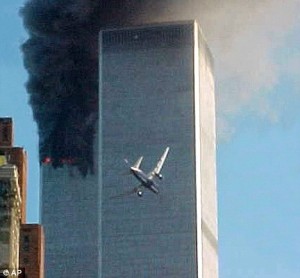
The night of September 11, 2001, was a night we did not get much sleep in. By 4am September 12 (New Zealand time) our two-week old son and 14 month old daughter had woken us twice already. Frustratingly, I awoke again sometime after 4am to a different noise coming from the lounge; it turned out that our eldest son, then aged 6, was up watching television. I stumbled into the room and told him to go back to bed. As I got back into bed I told Madeleine “It’s OK hon, it was just Christian watching some movie about New York” (I’d seen the Twin Towers on the screen as I switched the TV off). Less than an hour later our sleep was interrupted again, this time by the telephone. Madeleine, awoken for the 4th time that night, angrily moaned “who the hell is ringing at this time? Don’t they know we have a newborn?” It was my Dad.
“Matt” he told me tersely “I am just ringing to say I am alright. I got grounded at Heathrow airport and did not fly into the US as I had intended to this morning and so was not caught up in the drama that’s unfolded.”
“What drama?” I said bewilderedly “why wouldn’t you be ok?”
“Haven’t you heard?” he responded “planes have been high-jacked; there has been a terrorist attack in America – the World Trade Centre has been hit, as has the Pentagon”.
I suddenly was wide awake.
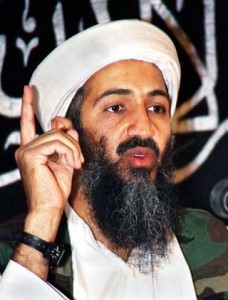
 One particularly poignant fact about the events of 9/11 is that the terrorists who carried out the attacks justified their actions by claiming God commanded them to do so. That fact has lead many contemporary commentators to argue that a divine command theory of ethics is indefensible. September 11 is just the most recent example in a series of incidents throughout history such as the Crusades, Inquisition and wars of religion. Divine command ethics is discredited by the fact that people appeal to such commands to justify terrorism.
At first glance this objection is hard to take seriously; the premise is that some people have appealed to divine commands to commit atrocities. The conclusion is that any appeal to divine commands in ethics should be rejected. This conclusion does not follow. To be valid the objector must assume a tacit premise: if people appeal to certain reasons to justify atrocities, then appeals to those reasons are always problematic. This premise is false.
An analogous line of reasoning applies to appeals to right and wrong per se. Take any historical atrocity that people have attempted to justify; in almost every case the justifier will have argued that the action in question was the right action to do, the justifier invariably appeals to the purported rightness of their action. If the tacit premise is true then appeals to right and wrong are always problematic.
Other examples illustrate the same point. The “reign of terror” during the French Revolution was justified by appeals to liberty, equality, fraternity and the rights of humankind; one victim of the guillotine famously remarked, “Oh, liberty, what crimes are committed in your name?” Millions have been slaughtered by appeals to the greater good of society or the liberation of the oppressed classes and it is well known that people have defended wars on the basis of justice and social peace. Should we therefore avoid liberty, equality, opposing oppression, seeking justice, social peace and so on? Obviously not.
The fact that people have attempted to offer justifications for atrocities by appealing to some reason does not entail that any or all appeals to such reasons are problematic. This is a fairly innocuous claim. Take any premise you like – secular or theological – it is true that a person could appeal to this premise in an attempt to justify something but this fact does not mean the premise is problematic. For the appeals to atrocities argument to have bite one needs to show more than just that someone has tried to justify an abhorrent action by appealing to God’s commands; one would have to show that they did so successfully, that God actually commands such practises.
The claim that God commands atrocities appears to be indefensible. We need to remember that we are not talking about the commands of just anyone; we are talking about God, who is typically defined as a being who is omnipotent, omniscient, and morally perfect. So, as the terms are defined, the claim that it is possible for God to command people to torture others for fun is true only if it is possible for a morally perfect person to command an atrocious thing. But this is not possible. The very reason that critics cite atrocities in their arguments against God is because they regard these actions as paradigms of conduct that no morally good person could ever (more…)