On 1 May 2011 the world received the news that Osama Bin Laden was dead; gunned down in Pakistan by an elite team of US Navy Seals. Even before his death Bin Laden had become a legendary persona. Not only was he a terrorist leader responsible for the deaths of thousands of innocents but he functioned as a contemporary paradigm of the fanatical religious nutter who promotes hatred, violence and intolerance – much like the symbol Adolf Hitler was to earlier generations.
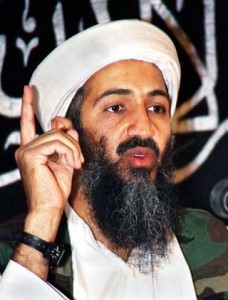 The 9/11 terrorist attacks reinvigorated a fear that has lain dormant in the western psyche since at least the 17th century. This fear is encapsulated in an objection to belief in God known as the argument from historical atrocities. Many critics of religion refer to the religious wars that tore Europe apart during the 17th century, citing events such as the Inquisition and Crusades — although lately the Taliban have been the image of choice.
Recently, whilst debating the viability of religious morality at the University of Notre Dame, best-selling author Sam Harris repeatedly cited the Taliban as a representative example of theological ethics. One need not read far into the literature of contemporary free thinkers to uncover this line of argument. Consider Jim Peron of the Institute for Liberal Values:
“To admit religion into the “public arena” is “dangerous.” And long term the results will be just as bloody and violent as they were in the past. … To put religion into that sector is to ignore centuries of history and return to the conflict-ridden, bloody world of the Dark Ages.”
Peron went on to refer to common motifs of the Inquisition: “crazy Puritans”, Servetus’ execution in Calvin’s Geneva and so on. Similar themes abound in the writings of Dawkins, Harris and Hitchens. The citation of historical cases is not in itself an argument so it is hard to discern the exact objection here. It appears to consist of two claims. Firstly, that some people who believe in God have committed atrocities against other people. Secondly, that if people who hold a belief commit atrocities then that belief is either false or should be avoided by liberal-minded people.
Historians Ronald Numbers and David Lindberg point to recent research having discredited the portrayal of the early Middle Ages as “the Dark Ages” brought about by Christianity. Similarly, research into Inquisition archives reveal that while such tribunals did exist, many popular beliefs are based on embellishment, exaggeration and propaganda rather than a sober assessment of facts. The picture of the Inquisition that emerges from these studies is significantly more benign than has popularly been thought. Similarly, historian Leland Ryken’s studies on the Puritans have questioned many of the popular stereotypes Peron referred to.
Take Peron’s allusion to the execution of Servetus. In his study on the life of Calvin, Oxford Theologian Alister McGrath argues (more…)