
Thinking Matters and Evangelical Union hosted an event at the University of Auckland for Jesus Week entitled A Godless Public Square: Do ‘Private’ Christian Beliefs Have a Place in Public Life? This event was essentially a conversation between Theology, Philosophy and Law on the topic of Religion in Public Life. It featured Matthew Flannagan – Analytic Theologian, Glenn Peoples – Philosopher and Madeleine Flannagan – Legal Scholar and was moderated Patt Brittenden. If you missed it you can now watch it on video.
Each speaker has published the speeches they wrote for this event:
- Matthew Flannagan’s speech – Theology
- Glenn Peoples’ speech – Philosophy
- Madeleine Flannagan’s speech – Law
Hat tip (and credit for filming and editing this video): Stuart at Thinking Matters.
Tags: Doctrine of Religious Restraint · Freedom of Religion · Gerald Gaus · Glenn Peoples · John Rawls · MandM on Video · Pat Brittenden · Religion in Public Life · Robert Audi · Steven Smith4 Comments
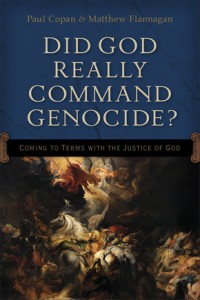 A common objection to belief in the God of the Bible is that a good, kind, and loving deity would never command the wholesale slaughter of nations. In the tradition of his popular Is God a Moral Monster?, Paul Copan teams up with Matthew Flannagan to tackle some of the most confusing and uncomfortable passages of Scripture. Together they help the Christian and nonbeliever alike understand the biblical, theological, philosophical, and ethical implications of Old Testament warfare passages.

Whats the difference in Matt being a theologian and Glenno being a philosopher? Don’t they work on the same stuff coming from the same angles? Please explain.
Matt, is there a transcript available of this?
No there is no transcript. There are the three blog posts that contain the speeches we each spoke from…
Dicky P Matt holds a Masters in Philosophy and a PhD in Theology. Glenn holds a Masters in Theology and a PhD in Philosophy. They have similar research interests and approaches. However, their styles are different and they have different strengths that they bring to both their written and oral work.