In recent posts I have been looking at the rhetorical question: “if there is no God, why be good?” In my last post, I suggested one way to understand this question was in terms of Henry Sidgwick’s famous argument regarding the “dualism of practical reason. As I interpreted Sidgwick, his argument had three steps. First, […]
Entries Tagged as 'Ethics'
What is the Question?: John Gay’s “Dissertation Concerning the Fundamental Principle of Virtue or Morality”
April 3rd, 2021 Comments Off on What is the Question?: John Gay’s “Dissertation Concerning the Fundamental Principle of Virtue or Morality”
Tags: Divine Command Theory · God and Morality · Henry Sidgwick · John Gay · Utilitarianism · Why be Moral?
What is the Question?: Henry Sidgwick’s Dualism of Practical Reason
March 26th, 2021 Comments Off on What is the Question?: Henry Sidgwick’s Dualism of Practical Reason
In a previous post, I criticised Richard Dawkins’s discussion of the question: if there is no God, why be good? One criticism I raised was that Dawkins seemed to misunderstand the challenge this rhetorical question presents. This raises the question as to how we should understand this rhetorical question. What exactly is the problem being […]
Tags: Divine Command Theory · Dualism of Practical Reason · God and Morality · Henry Sidgwick · Utilitarianism · Why be Moral?
Published in Sophia “Why the Horrendous deeds objection is still a bad argument”
February 12th, 2021 3 Comments
My paper, “Why the Horrendous deeds objection is still a bad argument” has now been published by Sophia here. The abstract is as follows: A common objection to divine command meta-ethics (‘DCM’) is the horrendous deeds objection. Critics object that if DCM is true, anything at all could be right, no matter how abhorrent or […]
Tags: Brad Hooker · Divine Command Theory · Erik Wielenberg · Euthyphro Dilemma · God and Morality · Jason Thibodeau · Louise Anthony · Walter Sinnott-Armstrong · Wes Morriston
Dawkin’s dilemma: How not to answer the question “Why Be Moral?”
January 21st, 2021 Comments Off on Dawkin’s dilemma: How not to answer the question “Why Be Moral?”
In his bestselling book, the God Delusion, Richard Dawkin’s responds to the question: “If there is no God, Why be good?” Posed like that, the question sounds positively ignoble. When a religious person puts it to me in this way (and many of them do), my immediate temptation is to issue the following challenge: ‘Do you really mean […]
Tags: God and Morality · Henry Sidgwick · Richard Dawkins · The God Delusion · Thomas Reid · Why be Moral?
Abortion Hard Cases and Self Defence: Presentation
January 14th, 2021 Comments Off on Abortion Hard Cases and Self Defence: Presentation
This is the paper I presented to the Bioethics section of the Evangelical Theological Society, annual meeting. In November last year. Abstract:Op ponents of abortion often agonise over two difficult cases. (a) Cases where the pregnancy originates in rape and (b) cases the pregnancy or threatens the life of the mother. This paper will explore […]
Tags:
The question “Why Be Moral?” and the book of Proverbs.
January 12th, 2021 1 Comment
I gave a brief talk at Orewa Community Church on 10 January 2020. The talk was part of a short series OCC are doing on the book of proverbs. It is available here.
The Psychopath Objection to Divine Command Theory: Presentation
December 15th, 2020 Comments Off on The Psychopath Objection to Divine Command Theory: Presentation
www.youtube.com/watch?v=xHhmuqBW6Dw”>dialogue
Last year, I presented a talk entitled “The Psychopath Objection to Divine Command Theory: Another Reply to Erik Wielenberg” to the New Zealand Association of Philosophers conference in Auckland. This was a follow up to interaction I have had with the work of Erik Wielenberg. In 2017 I wrote a critical response to Wielenberg’s book Robust […]
Tags: Divine Command Theory · Erik Wielenberg · Psychopath Objection · Wes Morriston · William Lane Craig

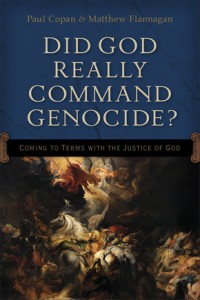 A common objection to belief in the God of the Bible is that a good, kind, and loving deity would never command the wholesale slaughter of nations. In the tradition of his popular Is God a Moral Monster?, Paul Copan teams up with Matthew Flannagan to tackle some of the most confusing and uncomfortable passages of Scripture. Together they help the Christian and nonbeliever alike understand the biblical, theological, philosophical, and ethical implications of Old Testament warfare passages.