Category: War Ethics

  • Dialogue with Randal Rauser

    When I was in Baltimore last November I caught up with fellow theologian and blogger Randal Rauser. Randal is professor of Theology at Taylor Seminary in Edmonton Canada.

    Randal and I have had some spirited but cordial exchanges in the past, including a panel discussion at the Society of Biblical Literature in 2010.While we do not always agree I find him to be a very astute critic of my work.

    Randal Rauser and Matthew Flannagan

    Randal asked to interview me in Baltimore on the topic “Matthew Flannagan on God, ethics, and divine commands” so the readers of his blog could get a take on the positions I have staked out. The interview is now available at the link above.

  • In Defense of the Bible: A Comprehensive Apologetic for the Authority of Scripture

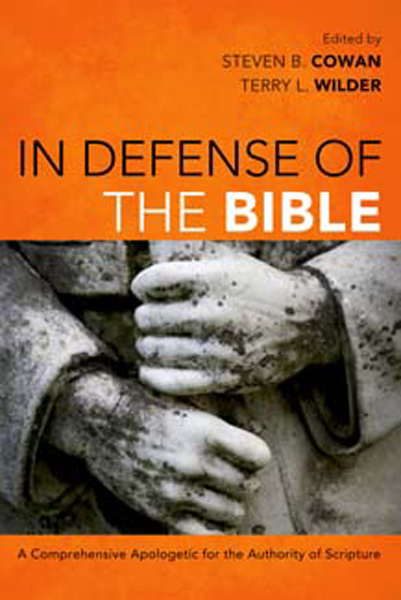
    In Defense of the Bible: A Comprehensive Apologetic for the Authority of Scripture

    In Defense of the Bible: A Comprehensive Apologetic for the Authority of Scripture

    Another of the books Matt has contributed to arrived from the publisher’s today. In Defense of the Bible: A Comprehensive Apologetic for the Authority of Scripture addresses and responds to the major contemporary challenges to the divine inspiration and authority of Scripture. It is edited by Steven B Cowan and Terry L Wilder and published by B&H Academic.

    The blurb from the publishers:

    In Defense of the Bible begins by looking at philosophical and methodological challenges to the Bible—questions about whether or not it is logically possible for God to communicate verbally with human beings; what it means to say the Bible is true in response to postmodern concerns about the nature of truth; defending the clarity of Scripture against historical skepticism and relativism.

    Contributors also explore textual and historical challenges—charges made by Muslims, Mormons, and skeptics that the Bible has been corrupted beyond repair; questions about the authorship of certain biblical books; allegations that the Bible borrows from pagan myths; the historical reliability of the Old and New Testaments.

    Final chapters take on ethical, scientific, and theological challenges— demonstrating the Bible’s moral integrity regarding the topics of slavery and sexism; harmonizing exegetical and theological conclusions with the findings of science; addressing accusations that the Christian canon is the result of political and theological manipulation; ultimately defending the Bible as not simply historically reliable and consistent, but in fact the Word of God.

    Contributors include R Douglas Geivett, William A Dembski, Mary Jo Sharp, Darrell L Bock and Paul Copan, with whom Matt co-authored a chapter entitled “Does the Bible Condone Genocide?”

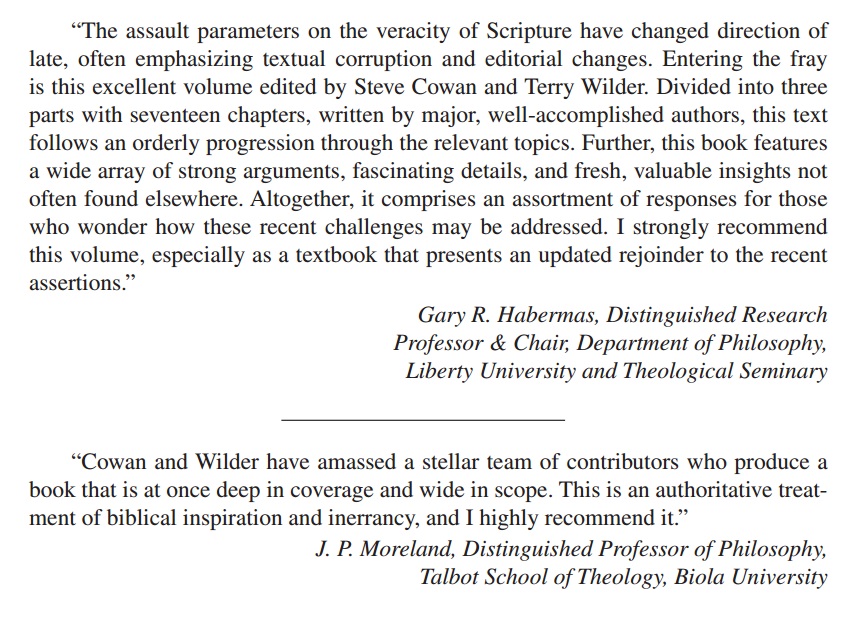
    A couple of endorsements:

    Endorsements

    In Defense of the Bible is available in both Kindle and Paperback formats. Get your copy from Amazon or Book Depository or wherever you like.

  • Is a Divine Command Theory Pscyopathic? Sam Harris on Divine Commands: Part II

    William Lane Craig v Sam HarrisIn my last post, Sam Harris on Divine Commands: Part I, I criticised Sam Harris’ characterisation of divine command meta-ethics.  In this post I want to turn to his second line of criticism of a Divine Command Theory. In Harris’ debate with William Lane Craig at Notre Dame, transcript here, Harris stated:

    “I’m glad he raised the issue of psychopathy—we are being offered a psychopathic and psychotic moral attitude. It’s psychotic because this is completely delusional. There’s no reason to believe that we live in a universe ruled by an invisible monster Yahweh. But it is, it is psychopathic because this is a total detachment from the, from the well-being of human beings. It, this so easily rationalizes the slaughter of children. Ok, just think about the Muslims at this moment who are blowing themselves up, convinced that they are agents of God’s will. There is absolutely nothing that Dr. Craig can s—can say against their behavior, in moral terms, apart from his own faith-based claim that they’re praying to the wrong God. If they had the right God, what they were doing would be good, on Divine Command theory.”

    Here, Harris suggests a Divine Command Theory expresses both a psychopathic and a psychotic moral attitude. I will address the charge of a Divine Command Theory being “psychotic” in a later post. Here, I want to address what I think is Harris’ main concern: a Divine Command Theory is psychopathic. It involves a “total detachment … from the well-being of human beings” and “so easily rationalizes the slaughter of children”. Why does Harris think this? “Because, at this moment Islamic terrorists are blowing themselves up convinced they are agents of God’s will, and a divine command theory can say nothing against their behavior in moral terms except the faith based claim that they are praying to the wrong God.”

    A lot could be said about this argument. First, note that even if it were sound, it does not show the Divine Command Theory is false. Harris is, in fact, offering pragmatic arguments against the theory: it is dangerous, or is easily misused – but there are many things which are dangerous and easily misused that are nevertheless true.

    More importantly, the argument is unsound. A Divine Command Theory contends that an action is obligatory if God actually commands that action. It does not contend that an action is obligatory if someone claims, or believes that God commands it. Obviously, simply believing something is the case does not mean that it is true. Harris, as an atheist, surely recognises this; many people believe and are convinced God exists yet Harris thinks they are mistaken.

    Hence, the mere fact an Islamic terrorist believes God has commanded him or her to “blow themselves up” does not commit the divine command theorist to supporting terrorism. All a divine command theorist needs to say in response to Islamic terrorists is that (more…)

  • Life and Death – Matthew Flannagan Interviewed on Shine TV

    Matt was interviewed on Life and Death issues for Shine TV’s Just Thinking show recently. The Episode aired last week.

  • Contra Mundum: Pacifism and Just Wars

    Comedian Bill Maher recently berated Christians for being hypocrites for supporting military action against terrorists in his “New Rules” segment on the U.S. TV show Real Time (transcript here). Jesus, Maher contended, was a pacifist; “Jesus lays on that hippie stuff pretty thick. He has lines like, “do not repay evil with evil,” and “do not take revenge on someone who wrongs you.” Here Maher was citing from Romans 12, where Paul formulated Christ’s teaching about loving one’s enemies. In this passage Paul commanded people to “bless those who persecute them,” they are forbidden to “repay evil for evil” and are commanded to “not take revenge” but to “leave room for God’s wrath. For it is written, ‘Vengeance belongs to me. I will pay them back’.”

    Maher scathingly contended that this support contradicted Christ’s clear teaching; he said, “nonviolence was kind of Jesus’ trademark. Kind of his big thing. To not follow that part of it is like joining Greenpeace and hating whales.”

    After saying this Maher quipped, “the next line isn’t ‘and if that doesn’t work, send a titanium fanged dog to rip his nuts off.’” The irony is that it Maher clearly had not bothered to actually read the next line; Romans 13 states that the “governing authorities” are “established by God”; one is morally bound to submit to rulers because “rulers do not bear the sword for no reason. They are God’s servants, agents of wrath to execute vengeance upon evil doers”.

    The Greek words for evil, wrath, and vengeance are the same in both Romans 12 and 13. Paul is stating that the very things Christians are forbidden to do with regard to not repaying evil for evil, are precisely what the State has been given the legitimate authority and right to do.

    Paul here elaborates the basic premise that moral theologians appeal to to reject pacifism and to support the claim that war can be just under certain circumstances. The premise is that a government has the right and duty to use force to uphold within the geographical area over which it has jurisdiction. A just war is simply an extension of a government’s power to pass laws and create police powers.

    If a criminal attempts to rape or kill people within the geographical realm over which a government has authority then the government can justifiably use force to prevent this. And it can also use force to try and punish anyone who does these things; hence, the existence of a legislature, police force, courts and prisons. Just War theorists simply note that there seems no reason why this would not extend to when the person committing the offence is a soldier from another country as opposed to a domestic criminal.

    These theorists argue that for a war to be just it must (more…)

  • Lawful Authority and Just Wars

    A reader pointed me to this interesting post on Pacifism and Just War Theory from Baylor University Philosophy Professor, Alexander Pruss.

    Just WarInterestingly Pruss offers an argument similar to the one I presented at a panel discussion on the ethics of war recently. In this discussion I suggested that traditional Christian Just War Theory follows from the contention that a government has the right and duty to use force to uphold justice within the geographical area over which it has jurisdiction. A just war is simply an extension of the government’s police powers. If a criminal attempted to rape or kill people within the geographical realm over which a government has authority then the government could justifiably use force to prevent this. It could also use force to try and punish anyone who did do these things; this is why we have a police force, court system and prisons. Just war theorists cannot see why this should cease to be the case when the person committing the offence is a soldier from another country as opposed to a domestic criminal.

    Pruss gives a similar argument; he starts by defining problematic violence as “lethal violence, i.e. violence that, if successful, has a high probability of resulting in the opponent’s death, counts as problematic, even when the death is not intended.” He then argues,

    “If it is permissible to use problematic violence to stop a citizen wife from murdering her citizen husband, it should also be permissible to use problematic violence to stop a non-citizen woman who sneaked into one’s country to murder her citizen husband. Moreover, this should be permissible even if the woman was commissioned by another state to kill her husband. But if we allow that it is permissible to use problematic violence against criminals acting on behalf of foreign states, then there seems to be no way to deny that it is permissible to use problematic violence to stop invaders.”

    He makes this illustration,

    “When the invading army marches in, burning crops and murdering citizens, they are breaking the victim country’s laws. If problematic violence is permitted to enforce the laws of one’s territory, it should be permissible to use problematic violence to stop them. But this seems to be a case of war.”

    This argument is common in the Reformed or Presbyterian traditions. John Murray, in his book Principles of Conduct, notes the Pauline teaching that the  “governing authorities” are “established by God.” One is morally bound to submit to rulers because “rulers do not bear the sword for no reason. They are God’s servants, agents of wrath to bring punishment on the wrongdoer.” He then asks, “by what kind of logic can it be maintained that the magistrate, who is invested with the power of the sword, may and must execute vengeance upon evil doers within his own domain must sheath the sword of resistance when evil doers from without invade his domain.”

    The Westminster confession makes a similar argument. It argues that because a Government has the authority to use force to maintain justice and peace within the realm over which it governs it can fight wars to maintain justice and peace within this realm.

    I think this is one of the most important lines of argument in defence of Just War Theory. In my talk, I argued that the standard six criteria of a just war: just cause, lawful authority, last resort, the use of proportionate and discriminate force and so on simply unpack the general circumstances in which governments are permitted to us force and apply it to warfare. Here I simply want to explore one implication of this line of argument that Pruss raises. (more…)

  • Pacifism, the Bible and the Sin of Selfishness

    ‘If someone wants something from us and we do not want to give it to them that is the sin of selfishness and the Bible condemns selfishness.’ This was one of the three points a Christian pacifist speaker made in defending his stance at the panel discussion on War Ethics that Matt mentioned in Pacifism and The Golden Rule.

    Whilst there were a lot of issues raised that night that I wanted to respond to (being a member of the audience, I was only able to ask a question on one) it was this point that I woke up with in my head the next morning; I awoke with the question/statement I wished I’d have asked/said on the night fresh in my mind. Here it is:

    Mr Pacifist, you said that if someone wants something from us and we do not want to give it to them that is the sin of selfishness; if someone wants to take from us we should let them without resistance because that is what Jesus did when he let himself be crucified. Is that about right?

    Gun=Better Protection than any Pacifist Male

    So if I go out to the parking lot and a man pins me to the ground and starts raping me and my hand find a rock in the darkness next to me, is what you are saying that I should let him take what he wants, that I should not use the rock to smash him in the head but rather I should lie back and think of Jesus?

    I think the point you are missing is that Jesus let his life be taken to save humankind. If I let myself be taken I am saving no one; if I smashed the rapist in the head with a rock I could at least save the next victim. I could mount the argument that by responding with my choice to be pacifist I was selfishly not thinking of the next victim?

    And what if it was my daughter? What if I heard a noise in the night and found some man pinning my 10 year old down raping her? Should I tell her to lie back and think of Jesus too? Not call the police who might force him away in handcuffs to face a justice system that will deprive him on his liberty? Not smash him over the head with a frying pan or attack him with a kitchen knife? Because I’ll tell you what, anyone who I found doing that to my daughter would leave my house in a body bag or I would give my life trying.

    Pacifism might sound trendy but it misses the point that while Jesus might have lived a fairly pacifist looking life when he was on earth, Jesus is part of a Trinity and there are other parts of the Trinity that judge, that wage war, that strike down and destroy. Yet another part of the Trinity inspired the writing of  the whole Bible. All three elements of the Trinity’s example must be read together to understand the contexts they fall in and I believe  (more…)