Category: Conferences

  • “Thank God for the New Zealand Anti Terrorist Squad” Published

    At last years the conference of the American Academy of Religion I participated in a panel discussion on the topic “Just War as Deterrence Against Terrorism”.

    The papers from this symposium have now been published in issue 18: 21 of Philosophia Christi

    The abstract to my article “Thank God for the New Zealand Anti-Terrorist Squad” is as follows:

    On November 14 1990 David Gray’s 22 hour shooting spree ended when the New Zealand Anti-terrorist squad (ATS) shot Gray dead. In this paper I argue that Christians should support the existence of state agencies like the ATS who are authorized to use lethal force. Alongside the duty we as Christians have to love our neighbors, live at peace with others and to not repay evil for evil, God has authorized the government to use force when necessary to uphold a just peace within the geographical area over which it has jurisdiction.

    This panel involved contributions from  Paul Copan, Myles Werntz, Gregory Boyd, Keith Pavlischek, and J. Daryl Charles and consquently contained an interesting mix of pacifists and just war theorists.

  • Matt to speak at: EPS, ETS, AAR/SBL and EPS Apologetics Meetings in Atlanta, USA this November

    Atlanta, GeorgiaEvery November the annual meetings/conferences of the Evangelical Philosophical Society (“EPS”), its Apologetics wing (“EPS Apologetics”), the Evangelical Theological Society (“ETS”), the American Academy of Religion (“AAR”) and the Society for Biblical Literature (“SBL”), are held over a 2 week period in the same city, somewhere in America. The meetings/conferences showcase the work of the academic elite from around the world; the best of the best speak and thousands come from around the globe to hear them.

    Off the strength of his work published on this blog (yes you read it here first!) Matt has been invited to be a speaker every year since 2010 inclusive. [I am not saying Matt is not published, he is, but it was his blog posts on MandM that secured him that first invite.]

    Matthew Flannagan

    This year the meetings are all being held in Atlanta, Georgia, USA from 17 to 24 November 2015. The combined EPS and ETS programme is here, information about the AAR and SBL meeting is here, the EPS Apologetics programme is here.

    Matt will be speaking as follows:

    1) EPS
    At the EPS he will present his paper, “Robust Ethics and the Autonomy Thesis: A Reply to Erik Wielenberg”, the abstract is as follows:

    “The autonomy thesis contends that there can be moral requirements to φ regardless of whether or not God commands, desires or wills that people φ. In his monograph, Robust Ethics: The Metaphysics and Epistemology of Godless Normative Realism, Erik Wielenberg offers arguably one of the most sophisticated defences of the autonomy thesis to date. Wielenberg argues that: (a) the most plausible alternative to the autonomy thesis, the divine command theory, is problematic because it cannot account for the moral obligations of reasonable unbelievers; and (b) robust realism, the thesis that moral requirements are sui generis non-natural properties which supervene upon natural properties, can be formulated in a way that avoids the standard objections to the autonomy thesis.

    In this paper I will argue Wielenberg’s defence of the autonomy thesis fails. Regarding (a), I will argue that Weilenberg’s “reasonable unbelievers” objection to divine command theories fails. Regarding (b), I will argue that robust realism fails to adequately address two standard challenges to the autonomy thesis. These are: (i) the objection that in the absence of God people lack reasons to always do the right things; and (ii) the objection that in the absence of God there is no adequate basis for grounding the claim that human beings have equal rights and dignity.”

    2) ETS
    At the ETS he will present his paper, “John Corvino and ‘The PIB Argument’”, the abstract is as follows:

    “Conservatives often appeal to alleged parallels between consensual homosexual acts and other acts, such as, consensual incest, polygamy, and bestiality in the course of debates about the moral status of consensual homosexual acts. John Corvino has labelled this argument as “the PIB argument”. In his article, “Homosexuality and the PIB argument”, he has offered an analysis and trenchant criticism of this line of argument.

    In this paper I contend Corvino’s rebuttal fails. I will first argue that Corvino attacks a straw man. He mistakenly construes the PIB argument as an argument from analogy for the conclusion that homosexual conduct is wrong. However, a careful look at the examples Corvino himself offers of PIB arguments he has found in the literature shows that defenders of the PIB argument are not offering an argument from analogy against the permissibility of consensual homosexual conduct. In fact, they are offering counter-example to rebut moral premises used in various arguments defending the permissibility of such conduct. I will then argue that, once this clarification is made, not only do Corvino’s objections to the PIB argument fail, but premises for Corvino’s own arguments for the permissibility of consensual homosexual conduct seem, prima facie, to be subject to his own objection.”

    3) AAR/SBL
    At the EPS Session at AAR/SBL, Matt will participate in a panel discussion on “Just War as Deterrence Against Terrorism: Options from Theological Ethics”, the blurb for this panel is:

    “Terrorism can be characterized as asymmetrical (rather than between two or more nation-states), indiscriminate, unconventional, and destabilizing. In a world of increased terrorist activity, how should faithful Christians respond? Given the threat of conventional warfare, Christian proponents of non-violence/pacifists and of just war alike would not disagree with efforts at “just peacemaking” and “bridge-building” to minimize hostilities and misunderstandings, paving the way to friendship and reconciliation between nations. Even so, just war advocates would claim that force would still be required when such good-faith efforts are not only rejected and scorned but when aggressors do their worst against the innocent and defenseless. But how should Christian just war theorists and proponents of non-violence alike respond to terrorism? What particular approaches are called for in light of this growing phenomenon by both Christian just war theorists and pacifists as they seek to love their neighbor and faithfully live out biblical teaching as they understand it? This panel discussion of Christian just war theorists and pacifists will offer their respective theological perspectives as they engage on this weighty, relevant topic (15 minutes each). J. Daryl Charles, author of Between Pacifism and Jihad and other works on just war, will offer a final response to the panelists (20 minutes). This will be followed by 40 minutes of the panelists’ exchanges. The remaining time will be allotted for Q&A with the audience.”

    Moderator: Paul Copan, Pledger Family Chair of Philosophy and Ethics, Palm Beach Atlantic University
    Non-violence: Myles Werntz, Palm Beach Atlantic University, author of Bodies of Peace
    Just War: Matthew Flannagan, Independent scholar and pastor, Auckland, NZ, and coauthor of “Did God Really Command Genocide?”
    Non-violence: Scot McKnight, Northern Seminary, author of The Jesus Creed and The Sermon on the Mount
    Just War: Keith Pavlischek, VP of Operations at Veterans’ Solutions, Ph.D. in political philosophy
    Respondent: J. Daryl Charles, Affiliated Fellow of the John Jay Institute.

    Craig Hazen, editor of the philosophy of religion journal Philosophia Christi, has agreed to publish these papers in a future issue.

    4) Apologetics
    Matt will speak at the EPS Apologetics conference on the topic “Morality and God’s Commands”, the blurb for this talk is:

    “It is widely believed in contemporary philosophy that morality does not depend on God. Theories that attempt to identify our moral obligations with God’s commands are believed to be subject to several important objections. In this talk I will offer reasons for rejecting this position. I will clarify what it means to claim our moral duties depend on God’s commands and I will distinguish this claim from various misconceptions. I will then examine the most common objections to this position and that show they fail.”

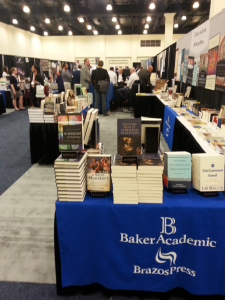
    Did God Really Command Genocide?In addition, Matt has been asked to moderate a session for the EPS on 18 November 2015 as well, his and Paul Copan’s book, “Did God Really Command Genocide? Coming to terms with the Justice of God” will be on sale and he will be available for book signings (something he finds really odd being asked to do!)

    Every year since 2010 that Matt has been attending these meetings/conferences it has been the incredible generosity of our readers, friends and church community that has enabled him to be there. We put up as much money as we can but we always struggle to cover the full costs.

    We are not both able to work full time due to Matt still not being able to get full-time work in his field and us having children with disabilities, one of whom’s disability is severe enough to mean school is unlikely to ever be an option for that child. The costs are more than the obvious flights, transfers, accomodation and food; we have increased care costs for our children and I have to work less as the anxiety of the child with the severe disability gets heightened while Dad is away and there is a limit to how much a caregiver can bring that down (I am self-employed so there is no leave to draw on).

    If you are able to help via a donation or with an offer of accomodation whilst Matt is there that would be great and much appreciated. Equally appreciated are any offers from those who know our kids to take them out or do something with them whilst Matt is away so I can work. Information about how to donate is available in our sidebar to the right. (more…)

  • Hear Matt speak @ the Auckland Confident Christianity Apologetics Conference

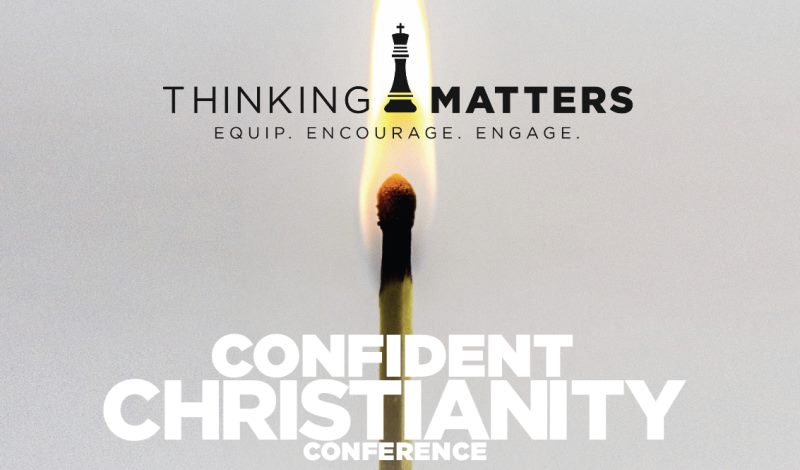
    This ANZAC weekend make sure you check out the Thinking Matters Confident Christianity Apologetics Conference at Northcote Baptist Church. Matt will be speaking along with a number of other great speakers. Full conference schedule here.

    In brief, from the Thinking Matters’ Facebook Event page:

    Confident Christianity Conference

    Does God exist? Why is there so much suffering? Is truth relative? Are science and faith enemies?

    Can you give both intellectually and emotionally satisfying answers to these questions? Can you defend the Christian faith in a reasonable and compassionate way? Are you able to represent Christ’s message of hope, rescue and unfathomable love, even in the face of doubt and scepticism?

    Join us this Anzac weekend where a line-up of top international and local speakers will sensitively and skilfully respond to the biggest objections that Christians encounter today – and equip you to live out a confident, yet gracious faith in your everyday life.

    Speakers Include

    – Brett Kunkle – international youth speaker
    – Dr Jeff Tallon – award winning scientist
    – Dr Steve Kumar – philosopher & apologist
    – David Riddell – international speaker & counsellor
    – Mark Powell – business leader & CEO of The Warehouse
    – Dr Matthew Flannagan – philosopher & theologian

    And many others!

    Friday 24th April – 7:00PM – 9:30PM
    This is a FREE public event. No registration needed – just turn up!

    Saturday 25th April – 9:00AM – 5:00PM
    Full Day Conference. Tickets:

    ADULT:
    Early Bird Adult Registration $59 (Available until 17th April)
    Regular Adult Registration $69

    YOUTH (Under 18) & STUDENT (with ID):
    Early Bird Youth $30 (Available until 17th April)
    Regular Youth Registration $40

    Lunch included on Saturday (gluten free option available).

    ALL SATURDAY ATTENDEES ALSO RECEIVE A COMPLEMENTARY LEE STROBEL DOCUMENTARY DVD!

    For full details, a speaker lineup and to purchase tickets – check out our conference page: www.thinkingmatters.org.nz/conference

  • Talks from Baltimore Available

    For those who are interested, the Evangelical Theological Society has put recordings of all the papers presented in Baltimore online for a price of $4 each. My 2 presentations are available here. The talks include the Q&A so during the second presentation Professor Swinburne from Oxford University can be heard offering critical comments on my paper.

    I found that the website says that most people who bought recordings of my talks also bought recordings of a paper by Gordon Otese, Associate Professor of Old Testament and Hebrew at Heritage Theological Seminary, Cambridge, Ontario, who presented a paper in the old testament narrative session at the ETS, entitled “The Use of 1 Samuel 15 as a Critique of Holy War Hyperbole“. I purchased a recording of Otese’s paper and found that it discusses, critiques and expands upon some of my work on the existence of hyperbole in 1 Samuel 15.

    UPDATE: My third talk “Morality and Gods Commands: Answering Common Objections” presented at  the  Annual Apologetics Conference of the Evangelical Philosophical Society  is  now available.

  • Back from Baltimore

    The following is a belated report of my recent trip to Baltimore. I began writing the post in December, but Christmas, New Year, the holidays, and various other things got in the way of me finally completing it.

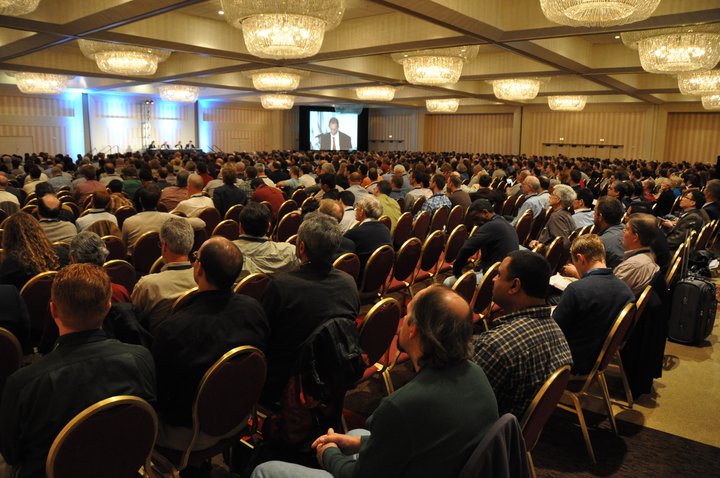
    On Tuesday 26 November 2013 I flew back to New Zealand having attended the annual conference of the Evangelical Theological Society (ETS), Evangelical Philosophical Society (EPS), and Evangelical Philosophical Society Apologetics (Apologetics) conferences in Baltimore. My trip year was shorter than my month long tour the previous year and a lot more intense, but it was still very rewarding.

    The first session I attended was a panel involving Micheal Bird, Al Mohler and Peter Enns and Van Hoozer on inerrancy. There were no surprises here. Al Mohler took the line that inerrancy, as defined by the Chicago statement, must be retained and that denying it was a kind of slippery slope to all sorts of doctrinal error. Peter Enns asserted a whole lot of alleged problems with inerrancy; he assumed that the issues he raised were a fait accompli, ignored any critical responses to them and dismissed theological arguments as a priori without engaging the premises. Van Hoozer spelt out his own position in terms of speech act theory.

    Michael Bird was perhaps the exception in terms of stating the expected; he pointed out correctly, in my view, that the debate on inerrancy tended to presuppose a North American context. He argued that the kinds of cultural battles which contributed to the American debate had not played out the same way in evangelicalism outside the USA. This, I think, is entirely correct. Unfortunately there was little engagement between speakers. I would have liked to heard how each responded to the premises and arguments of their opponents.

    The next session of note was David Baggett speaking on “the vices of virtue theory”. Baggett is working on a sequel to the book Good God: The Theistic Foundations of Morality which he co-wrote with Jerry Walls. In this paper Baggett raised some trenchant criticisms of Philippa Foot’s book Natural Goodness. Foot defends a naturalistic account of goodness in terms of the natural flourishing of a species. The gist of Baggett’s criticism was that Foot is unable to really rise above amoral accounts of goodness, such as when we say that a good tiger tears apart its prey well.

    In the afternoon I attended an interesting paper by Christian Milhut about whether resentment can be a virtue. Milhut was critical of the idea that our feelings of resentment and anger at perceived injustices are reliable. This paper elicited an interesting discussion about when such emotions are and are not appropriate in morality.

    The evening saw the EPS reception, where Gary DeWeese gave a thoughtful address on the role of fellowship in Christian philosophy. This was followed by nibbles, socialising and mingling.

    On the Wednesday I began at 8:30 am by attending a paper by Peter Payne on “Objectivity in debates over whether Ethics needs God”. This was followed by a paper by Harry Bunting entitled “Divine Authority A Kantian Perspective”. Bunting’s paper was excellent. He noted that while Immanuel Kant viewed morality’s content as dependent on reason, but maintained Kant believed the moral law was only obligatory on humans because God held human beings accountable to the standards reason laid down. Bunting brought this perspective of God’s authority being linked to him holding humans accountable into dialogue with Mark Murphy’s celebrated position on divine authority in “an essay on divine authority”. Bunting’s paper was extremely interesting and I hope to get a copy of this paper in the future as (more…)

  • Matt to speak at the 2013 Evangelical Theological Society in Baltimore on Feticide

    This blog’s Matthew Flannagan has had his paper “Boonin’s Defense of the Sentience Criterion: A Critique” accepted for the 65th Annual Meeting of the Evangelical Theological Society (“ETS”). The abstract for Matt’s paper is as follows:

    Abstract
    “Defenders of the permissibility of feticide commonly argue that killing an organism is not homicide unless the organism’s brain has developed enough for it to acquire sentience: the capacity for consciousness and the ability to perceive pleasure and pain. In this paper I critique one of the more sophisticated versions of this argument, proposed by David Boonin in
     A Defense of Abortion. First, I sketch some prima facie problems faced by any appeal to sentience. Second, I examine Boonin’s attempt to defend an appeal to sentience against these problems by constructing a modified future like ours (FLO) account of the wrongness of killing. I argue that Boonin’s modified FLO defence of sentience fails. Both his argument for the modified FLO account and his application of this account to feticide rest on ad hoc arbitrary manoeuvres, manoeuvres which mean that the modified FLO account is a plausible criteria for the right to life only if one already grants that feticide is not homicide.”

    Matt’s ETS paper will be based on his article “Boonin’s Defense of the Sentience Criterion: A Critique” which was published in Ethics and Medicine – An International Journal of Bioethics Vol 25:2 (Summer 2009) 95-106. (You can download this article here).

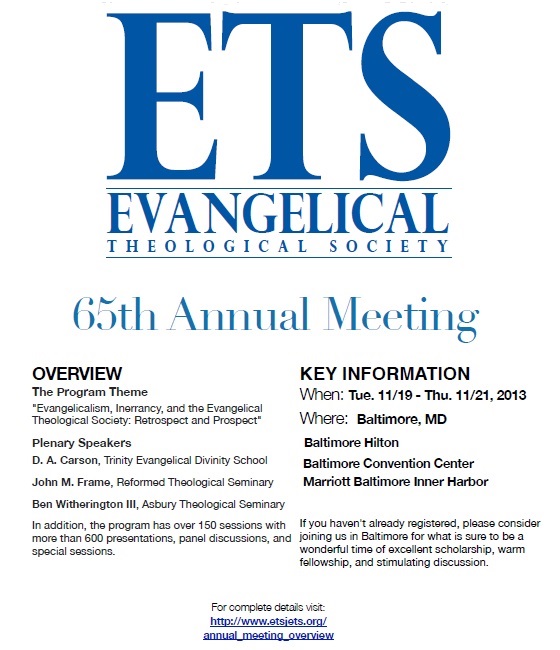
    This year’s Annual Meeting will be held in Baltimore, Maryland, USA from 19-21 November 2013.

    ETS Annual Meeting Flyer

    This year’s theme is “Evangelicalism, Inerrancy, and the Evangelical Theological Society: Retrospect and Prospect”. Plenary speakers for this year’s meeting are Dr Donald A Carson (Research Professor at Trinity Evangelical Divinity School), Dr John M Frame (Professor of Systematic Theology and Philosophy at Reformed Theological Seminary), and Ben Witherington III (Jean R Amos Professor of New Testament at Asbury Theological Seminary).

    Matt has also had a paper accepted for the Evangelical Philosophical Society’s Annual Meeting which is also in Baltimore around the same time – see Matt to speak at the 2013 Evangelical Philosophical Society in Baltimore on Divine Commands re Abraham and Isaac.

    As with previous years we will be fundraising to raise the $2,500 NZD to get him there . Donations greatly appreciated.

  • Back from the USA

    The CrowdMadeleine and I flew back to New Zealand from Milwaukee on Tuesday having both attended the Evangelical Philosophical Society Annual Meeting, the Annual Meeting of the Evangelical Theological Society, and the Evangelical Philosophical Society’s Apologetics Conference. Prior to that I had spent three weeks based in Charlotte, North Carolina. I will speak about the  conferences later in this post but first I will summarise what I did in Charlotte.

    Charlotte
    My work in North Carolina can be divided into several categories.

    First, and this was the bulk of what I did, I did a bit of speaking on a lecture circuit at various campuses in North Carolina on issues relating to God and Morality for Ratio Christi. Formally, this involved, driving to a campus, delivering a lecture and then taking a Q&A.
    Speaking at UNC CharlotteI learned very quickly that there was a lot more to what I was doing than the formal activity of giving lectures; in fact, most of the more important work was the informal stuff that went on behind the scenes.  In addition to presenting lectures, there was often an equally important informal component. Often I would meet with students before the lecture  and discuss the challenges they were facing as Christian students in a secular campus. I would offer advice, counsel, support, etc. On other occasions I would, in addition to giving the lectures, meet with the supporters and financiers of the people running student ministries and discuss with them the importance of Apologetics and of developing an intellectually robust faith among students.  I found that the most important and constructive engagement and interaction with people typically occurred in these informal contexts.
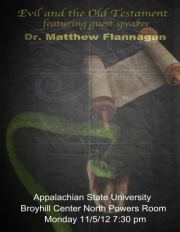
    Speaking at Appalachian State UniversitySecond, in addition to my major task of giving lectures, on the weekends I gave instruction in churches. After my first week I was part of a missions team that spent a weekend teaching at a church in a nearby Cherokee Reservation.  The weekend after that I taught an adult education class in a Community Fellowship Church of North Carolina. The  following weekend I preached from the pulpit.  One Sunday evening I attended a service at a Slavic Baptist church where almost the entire service was in Russian and we needed a translator to follow what was being said. After the service I was one of a team of people who spoke to the youth group; I spent several hours fielding their very astute and intelligent questions about the Christian faith.

    This work was very challenging. It is one thing to give lectures at a university when one has, as I have, spent years studying and working in universities. It is quite another speaking to Cherokee Native American Indians one week, Southern Americans the next and youth from Slavic Immigrant Families the next – especially when my own culture is Kiwi!

    Third, and finally, I worked with the students at Southern Evangelical Seminary. One night when I was not lecturing, I presented an academic paper to students and graduates from the seminary, which was followed by a discussion. Another night I travelled to Belmont Abbey, a Catholic Liberal Arts College to dialogue with a Catholic theologian about the relative strengths of Natural Law Theory verses Divine Command Meta- Ethics.

    Both events were focused on seminary students, to get them to be presented with new or different material to what they were familiar with so they could ask questions and be stretched in their intellectual development.  I found the work over those three weeks very taxing physically, yet I enjoyed it immensely. I was giving lectures at universities, back to back, almost every day; I was often travelling for hours to and from the university in question and sometimes I would have to stay overnight with billets. As noted above the diversity of what I did stretched me.

    Lecturing on campuses to potentially hostile audiences is challenging enough, particularly when one throws in a Q&A. It becomes more so when there are obvious cultural barriers such as my indecipherable New Zealand accident and tendency to speaK too quickly because of the speed of my thoughts!  But, in addition to this, I was required to  give a talk to theology students, to Slavic youth, adult congregants, North American Indians on Reservations, and people from a country not my own in general – these contexts forced me to adapt my material fairly quickly to these new contexts with very little prep time.

    Milwaukee
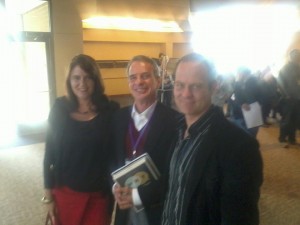
    Madeleine, Bill Craig and IThe business end of my trip however was the conference in Milwaukee. On Wednesday 16 November 2012. Both Madeleine and I presented papers at the Evangelical Philosophical Society’s Annual Meeting. In the morning I presented my paper “Peter Singer, Human Dignity and Infanticide”; this was a critical look at Peter Singer’s account of the wrongness of killing and some of his attempts to revise his position in light of criticisms by Don Marquis.
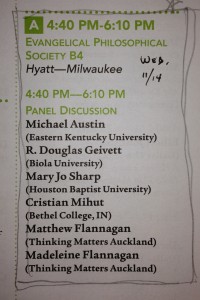
    EPS Panel DiscussionIn the afternoon, Madeleine and I were on a panel discussing the  book Being Good: Christian Virtues for Everyday Life along with Mary Jo Sharp, Cristian Mihut and the book’s Editors, Michael W Austin and Doug Geivett. Madeleine offered a response and critique of the chapter on “Courage” by Rebecca Konyndyk DeYoung and I offered a criticism of Charles Taliaferro’s chapter on “Love”.

    Madeleine did extremely well, you would never have guessed, unless you knew to look for things like how she gripped the podium, that she had flown into Milwaukee at 12.05 am the night before, had been living with a pain disability aggravated by sitting for the past 4 years which was on high alert due to almost 24 hours travelling, and that she was completely shattered from working insane hours to be able to leave her litigation schedule and our children, whilst functioning on NZ time. In her typical style she spoke in a clear, articulate and forthright manner, her content was good, and I doubt anyone present could have been aware of the fact that she alone was the only speaker on the panel with no formal philosophy qualifications without reading her bio.
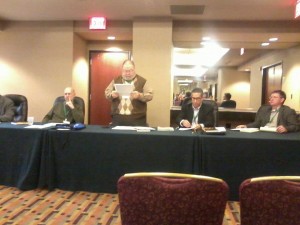
    Panel on Protestant PurgatoryIn addition to our own presentations, we attended a number of sessions such as Mike Austin’s talk on “Analytic Moral Theology”, Frank Beckwith’s response to the recent  “After Birth Abortion” paper published in the Journal of Medicine and Ethics, Paul Copan’s discussion on Acts 17, Charles Taliaferro’s Lecture on Environmentalism, a very stimulating panel discussion on Jerry Wall’s new book which offers a Protestant Defense of Purgatory, among various other presentations including sessions on religious pluralism and the Evangelical Theological Society’s panel discussion on environmentalism.
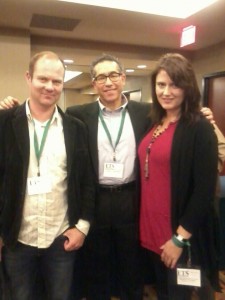
    Me, Frank Beckwith, MadeleineBy the time the EPS Apologetics conference started both Madeleine and I were knackered. Despite this we attended sessions on God and Morality by Frank Beckwith, Jeremy Evans’ session on Theism and the Meaning and Purpose of Life, David Baggett’s discussion of Moral Scepticism, Mike Austin’s talk on “Evangelical Blogging”, Angus Menuge, the new Evangelical Philosophical Society President’s talk on Religious Language, Gary Habermas’ talk on the Resurrection, and Mary Jo Sharp’s very useful session on effective public speaking.
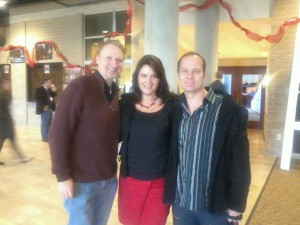
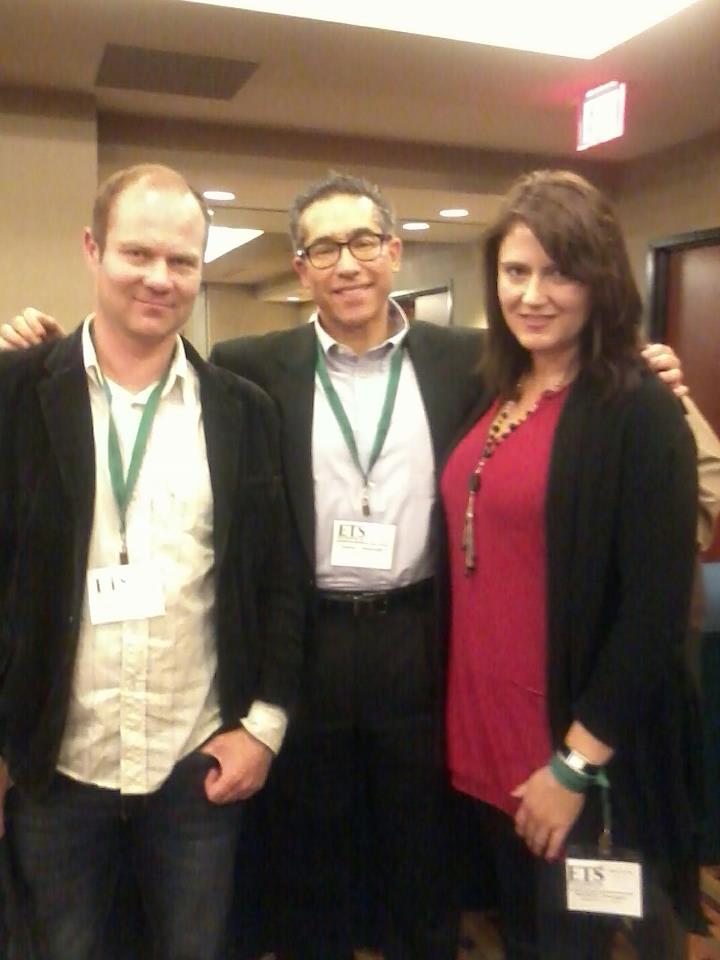
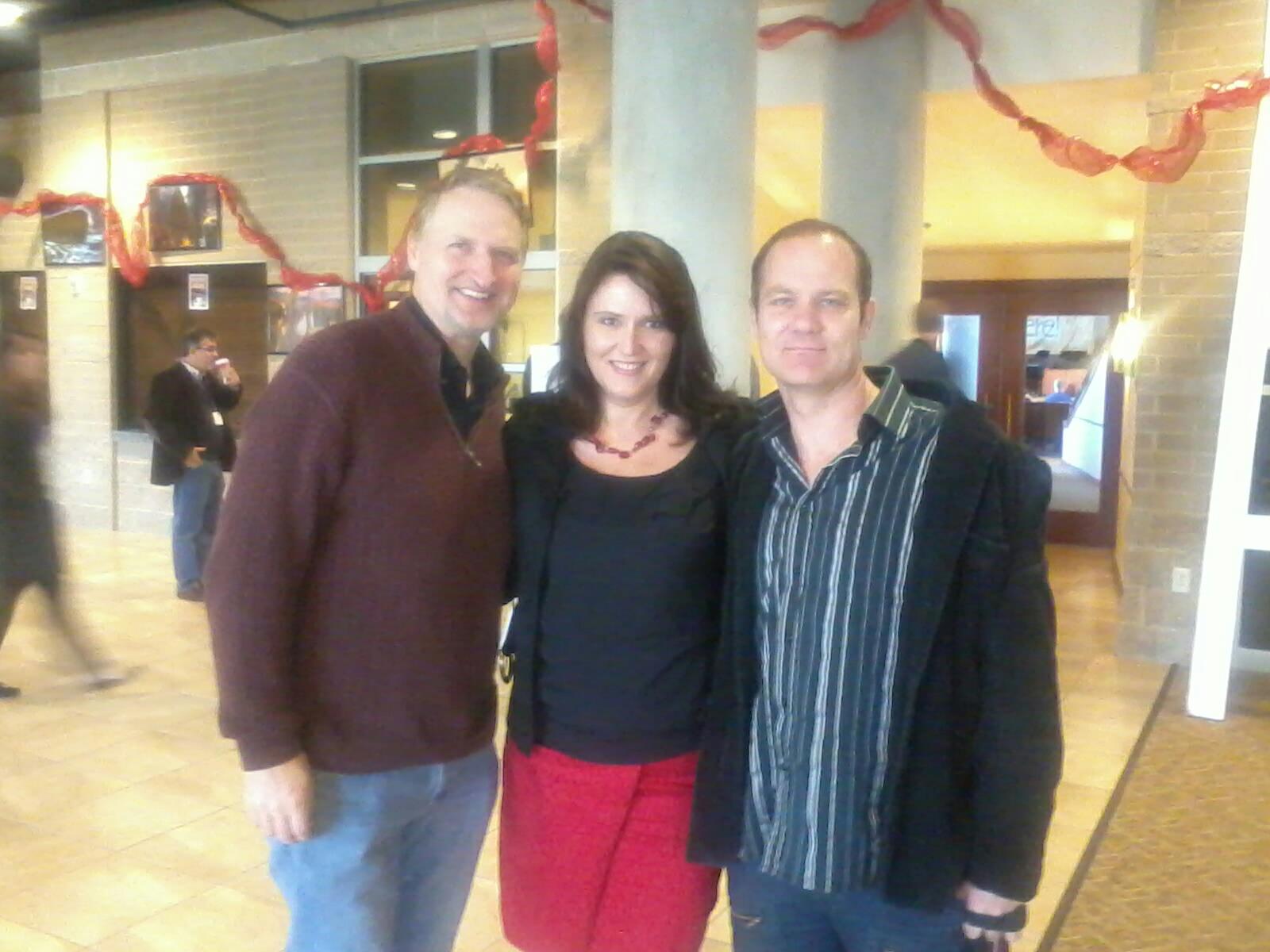
    Paul Copan, Madeleine and IIn addition to the papers and sessions there was a lot of general networking going on. Paul Copan, Madeleine and I and met with a prospective publisher about co-writing a book on the moral issues surrounding the conquest narrative; it looks likely that Baker Books will accept our proposal, I will keep readers posted. I signed my publishing contract with Baker for an earlier publication. Madeleine had an interesting experience with Lee Strobel, Mary Jo Sharp, Mark Mittelberg and Chad Meister dialoguing with a prospective seeker. Mary Jo Sharp and Madeleine plotted prospective joint debate projects. Frank Beckwith and Madeleine discussed their shared religion in public life/philosophy meets law interests; Frank and I discussed possible joint projects on the abortion issue. Discussions were had with Craig Hazen about the Biola Faculty, Mark Mittelberg, Mary Jo Sharp and William Lane Craig about the possibility of their visiting New Zealand. We also met with Ratio Christi regarding the possibility of  a New Zealand chapter being formed.

    Mary Jo Sharp and Madeleine

    Since we got back, I have been following up on several potential employment opportunities that have arisen from the trip, a couple in New Zealand, a couple overseas, as well as possibility of 3 further books, one co-written with Madeleine, and various other potential projects involving ministry writing and speaking.

    In addition to the scholarly stuff, I got to see the Atlantic Ocean for the first time,  I saw the New York sky line, the Statue of Liberty and the New World Trade Centre. I visited a Nascar Centre, was present in the US during the re-election of Barack Obama and Cyclone Sandy. We discovered Wisconsin Cheese, Wisconsin Frozen Custard and Madeleine got to indulge in her favourite lollie flavours (candy to the US readers): cinnamon and root beer (she is happy to receive donations of either or both via post).

    Needless to say we arrived home on Tuesday extremely tired but extremely grateful to everyone who supported us in making this trip from those who donated – we love you all – through to people like Simon Brace who organised the Charlotte leg, Paul Copan who shared his hotel room with us, Ratio Christi who shouted us meals, our eldest daughter Sheridan who took on the task of primary caregiver to her younger siblings – no mean task given the severe Autistic Spectrum Disorder and Anxiety issues of our youngest child – Mike Austin and Doug Geivett who invited Madeleine and I to speak on their Book Panel, among others (this is by no means an exhaustive list!).