Tag: Richard Swinburne

  • Talks from Baltimore Available

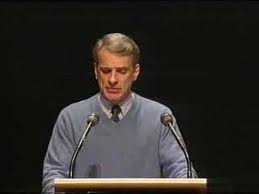
    For those who are interested, the Evangelical Theological Society has put recordings of all the papers presented in Baltimore online for a price of $4 each. My 2 presentations are available here. The talks include the Q&A so during the second presentation Professor Swinburne from Oxford University can be heard offering critical comments on my paper.

    I found that the website says that most people who bought recordings of my talks also bought recordings of a paper by Gordon Otese, Associate Professor of Old Testament and Hebrew at Heritage Theological Seminary, Cambridge, Ontario, who presented a paper in the old testament narrative session at the ETS, entitled “The Use of 1 Samuel 15 as a Critique of Holy War Hyperbole“. I purchased a recording of Otese’s paper and found that it discusses, critiques and expands upon some of my work on the existence of hyperbole in 1 Samuel 15.

    UPDATE: My third talk “Morality and Gods Commands: Answering Common Objections” presented at  the  Annual Apologetics Conference of the Evangelical Philosophical Society  is  now available.

  • Matt to speak at the 2013 Evangelical Philosophical Society in Baltimore on Divine Commands re Abraham and Isaac

    This blog’s Matthew Flannagan has had his paper “Divine Commands and Biblical Authority: The Problem of Gen 22” accepted for the National Annual Meeting of the Evangelical Philosophical Society (“EPS”). The abstract for Matt’s paper is as follows:

    Evangelical Philosophical Society“One perennial objection to divine command meta-ethics is the possibility that God might command something abhorrent. Divine command theorists have responded that God is essentially good, as such, it is impossible for him to issue an abhorrent command. One challenge to this response, for those divine command theorists who accept a robust view of biblical authority, is the story of the binding of Isaac in Genesis 22. In this story God is said to have commanded human sacrifice; given that human sacrifice is abhorrent, and it is impossible for God to command the abhorrent, Biblical authority seems incompatible with the acceptance of a divine command theory.

    This paper responds to this challenge. First, I will argue that a careful reading of Genesis 22 in its literary context suggests God issued the command in a particular context. Second, drawing from discussions of the problem by Robert Adams Immanuel Kant, and Philip Quinn, I will discuss the circumstances under which a divine command theorist can rationally and coherently attribute a seemingly immoral command to an essentially loving and just God. I will argue that the context of God’s command in Genesis 22 is such that a divine command theorist can defensibly attribute it to an essentially good God without abandoning a robust view of biblical authority; the story of the binding of Isaac does not provide a divine command theorist with a defeater for belief in biblical authority.”

    The conference theme will be “Revelation and Authority.” The Plenary Speaker is Richard Swinburne of Oxford University. The draft copy of the ETS-EPS program is available here.

    Matt has also had a paper accepted for the Evangelical Theological Society’s Annual Meeting which is also in Baltimore around the same time – see Matt to speak at the 2013 Evangelical Theological Society in Baltimore on Feticide.

    As with previous years we will be fundraising to raise the $2,500 NZD to get him there . Donations greatly appreciated.

  • William Lane Craig, Original Sin and Original Guilt

    A lot of people are up in arms at the moment about a paragraph in William Lane Craig’s answer to Question 193 “Overweening Ignorance.” Facebook, blogs, twitter and message boards are abuzz with Christians angrily attacking Craig with the charge that this paragraph shows he either does not hold to the doctrine of original sin or that he thinks it is not essential to Christianity. Here is what some are saying about the offending paragraph:

    “Craig denies that original sin is essential to the Christian faith.” Steve Hays

    In “Bible-optional Christianity” Hays sets out the offending sentences from the offending paragraph then puts them alongside Romans 5:12 and Corinthians 15:21-22, 45-49 (passages which speak of man’s sinful nature and the need for Christ’s salvation). The conclusion we are supposed to draw is that Craig is denying the truth of these passages and views these as “optional.”

    In “Hollywood Squares” Hays draws a ejusdem generis parallel between Craig’s paragraph and the writings of liberal scholars like Spong, Bultmann and The Archbishop of Canterbury.

    In the comments section of his third post on the paragraph “Rabbit Ears“, where he accuses Craig of making “a V-sign behind God’s head when God is speaking (the rabbit-ear gesture),” Hays writes:

    “Craig doesn’t seem to care what the Bible teaches about original sin. He simply absolves his correspondent of responsibility to believe what the Bible teaches on this subject, regardless.”

    On Facebook Dominic Bnonn Tennant wrote:

    “This is why, contrary to the objections of some, William Lane Craig not the world’s foremost apologist. The first duty of apologetics is to the truth. Not to unbelieving presuppositions. You can’t have good apologetics without good theology.”

    On Hays’ blog Bnonn Tennant wrote:

    “As I think someone has said already, the problem with Craig is that he starts with philosophy and only then worries about theology. That’s ass-backwards.”

    James R White of Alpha & Omega Ministries Apologetics Blog wrote:

    “this is not the first time WLC has made this statement. I have said repeatedly that WLC’s theology is way too hobbled to support biblical Christian theism, which is why he has to produce a much smaller theism to defend. And this is one of the manifestations of starting with philosophy and then crafting a theology to match your philosophical opinions.”

    Jonathan wrote:

    “Some apologists are eager to get people into the “Kingdom” anyway they can.”

    Saint and Sinner wrote:

    “I am so sick of minimalist Christianity”

    Peter Pike wrote:

    “Without Original Sin, there is no basis by which Christ’s blood can be applied to any sinner whatsoever. Craig should know this. He has a responsibility to teach this. I don’t care if ignorant, non-biblical “Christians” don’t hold to it–Craig is held to a higher standard, and his outright ignoring of this doctrine instead of teaching it in a way that someone can understand it simply neuters Christianity.

    You don’t defend Christianity by surrendering”

    William Lane Craig

    Apparently, Craig is not only affirming heresy but is a compromiser who is not committed to the truth, who denies that the existence of universal sinfulness and that the need for salvation is an essential Christian belief.

    This own goal demonstrates not just an alarming inability for many Christians to read in context but also some overweening ignorance about theology (not to mention an alarming lack of charity for the man who is internationally renowned and respected for publicly defending the faith by lay people and the academy alike.)

    Let us take a look at the offending paragraph (more…)

  • Contra Mundum: Richard Dawkins and Open Mindedness

    The bold statement “Richard Dawkins opens minds” leaped out at me from the newsletter sitting on the University of Auckland’s Law Library counter. The article went on to sing the praises of Richard Dawkins and mentioned his book The God Delusion. On reading the piece one could be forgiven for concluding that Dawkins’ works are a paragon of the open minded assessment of ideas.

    Now Dawkins is a Zoologist and I, not being a Zoologist, would not presume to assess his work on Zoology. What is interesting, however, is that much of Dawkins’ most famous work is not on Zoology; it is on Theology and specifically Philosophy of Religion. That field of Philosophy which critically analyses religious questions, such as, the veracity of arguments for and against God’s existence. Having some background in these fields I find it a little surprising that an Auckland University publication would contend that his work is open minded because it is evidently not.

    In The God Delusion Dawkins’ main argument against the existence of God alludes to Fred Hoyle’s famous claim that the probability of something as complex as life evolving by blind chance was less likely than a fully-functional Boeing 747 being created by a hurricane blowing parts around in a junk yard. Dawkins writes, “However statistically improbable the entity you seek to explain by invoking a designer, the designer himself has got to be at least as improbable. God is the Ultimate Boeing 747.” Dawkins has made the same line of argument elsewhere “God, or any intelligent, decision-making calculating agent, is complex, which is another way of saying improbable.” In The Blind Watchmaker he argues,

    Once we are allowed simply to postulate organized complexity, if only the organized complexity of the DNA/protein replicating machine, it is relatively easy to invoke it as a generator of yet more organized complexity”. But of course any God capable of intelligently designing something as complex as the DNA/protein machine must have been at least as complex and organized as that machine itself.

    This argument contains three premises. First, that theism (belief in God) is justified by “postulating” God to explain the existence of organised complexity. Second that the God appealed to by theists is complex. Third, that the existence of complex beings are highly improbable. These lead to the conclusion that “God is the Ultimate Boeing 747” and hence “almost certainly does not exist”. The problem with this argument is that all three premises rest on caricatures and misunderstandings of contemporary theology and ignorance of contemporary philosophy of religion. I will explain.

    Dawkins contends that God is postulated to explain organised complexity. There are two problems with this contention. First, Dawkins assumes that God is rationally believed only if his existence is inferred by some kind of argument for the best explanation of a given phenomenon. However, not all beliefs are justified on the basis of some kind of argument of this sort. Our belief in the existence of the past, our belief that it is wrong to rape, our belief that other people exist or that basic axioms of logic are true are not based on inferences to the best explanation. It is not that they are rationally believed because they explain some phenomena better than all alternatives, it is rather that these beliefs are part of the background data that we use to assess proposed explanations against. These things are true because we immediately experience them as true. I have the experience of remembering the existence of a past event. I intuitively perceive that rape is wrong. I experience the basic axioms of logic as self-evident and so on. Such beliefs are called properly-basic beliefs.

    Since the late 1970’s an extremely important movement within Philosophy of Religion, known as the reformed epistemology movement, has offered detailed and rigorous defences of the contention that, for theists, belief in God can be properly-basic. This position has been defended by leading philosophers of religion such Alvin Plantinga, William Alston, Nicholas Wolterstorff, Peter Van Inwagen and others. Now, of course, it is possible that this movement is mistaken but Dawkins surely owes us an argument to this end as opposed to his simply assuming it and ignoring the counter evidence.

    Second, among those theists who do defend God’s existence on the basis of some argument for the best explanation, very few do so on the basis that God explains “organized complexity”. Richard Swinburne, the leading proponent of such arguments, argues that God explains the existence of laws of nature, religious experience, the origin of the universe and the continued existence of the universe. Swinburne does not postulate God to explain “organised complexity”. Similarly, William Lane Craig, a leading defender of theism, suggests that God explains the origin of the universe, the existence of morality and the fine tuning of the laws of nature. Again, Craig makes no appeal to “organized complexity”. In 2009 The Blackwell Companion to Natural Theology was published which contains the most up to date versions of the 11 most definitive arguments used to defend the existence of God in the literature today. Not one of them involves an appeal to “organised complexity”. While the cogency of arguments for the existence of God that do not involve “organized complexity” remains open to substantive debate, it is undisputed that these arguments exist. Dawkins’ picture of God as a postulate to explain organised complexity is a crude caricature of theistic scholarship.

    To be fair Dawkins attempts to address some of these other arguments elsewhere in the book. However, here again much of his writing consists of caricature. He attacks five arguments proposed 800 years ago by Thomas Aquinas as being representative of the current case for theism and completely ignores the vastly more sophisticated and vigorous versions being defended in the literature today. Ironically, Dawkins quite severely misunderstands Aquinas’ arguments and attributes to him a position no Aquinas scholar would accept as accurate. However, even if his account were accurate, critiquing theism by attacking the arguments of one 12th century theologian is a bit like me attacking evolution on the basis of the evidence for it gathered in the 12th century and ignoring any of the scientific developments of the last 800 years. Such ineptitude would not be tolerated in the scientific world and should not be seen as de rigueur just because the topic is religion.

    Dawkins’ second contention fares little better. Dawkins states that “A God capable of continuously monitoring and controlling the individual status of every particle in the universe cannot be simple” this seems to be because,

    The corners of God’s giant consciousness are simultaneously preoccupied with the doings and emotions and prayers of every single human being—and whatever intelligent aliens there might be on other planets in this and 100 billion other galaxies.

    There are several problems here. First, as Craig has noted, this confuses whether what God thinks about is complex with whether God himself is complex. Second, as Plantinga has noted, in The Blind Watchmaker Dawkins states that something is complex if it has parts that are “arranged in a way that is unlikely to have arisen by chance alone.” However, the concept of God employed by most theists is of an immaterial being that does not have material parts so by Dawkins’ own definition God is not complex (unless one assumes that God is a material being but theists almost unanimously maintain that God is an immaterial being).

    This misrepresentation is made all the more pertinent by the fact that for centuries theists have been offering rigorous and sophisticated arguments that God is not in fact complex but is simple. While these arguments may not be successful, Dawkins still needs to actually provide reasons for rejecting them. To simply assert that God is to be conceived in a way that no one conceives Him and to ignore the numerous arguments to the contrary seem more like a child who asserts his position and then puts his hands over his ears and repeats “I am not listening” than it does a serious critical evaluation of another’s position.

    Dawkins’ final contention, that the existence of complex beings is improbable, is similarly confused. Suppose one grants that God is “the Ultimate Boeing 747” and that God’s existence is as statically improbable as the complexity it is invoked to explain. Little in fact follows from this. This is because what is improbable in the Boeing 747 analogy is that the plane came into existence by chance. If God is “the Ultimate Boeing 747” then the conclusion to be drawn is only that it is improbable that God came into existence by chance. This, however, provides us with no reason for thinking that God does not exist. No theist holds that God came into existence by chance, theists hold that God is eternal. Here, again, Dawkins attacks a concept of God nobody holds to and hence is caught jousting with a straw-man.

    On examining Dawkins’ central argument what one discovers is not an open-minded, informed, careful examination of the contemporary debate over the existence of God. Nor does one find a carefully researched assessment of theism. Instead one finds Dawkins simply ignoring what theists mean by God. He ignores how they conceptualise God and ignores the arguments and discussions they have actually made. The theism Dawkins dismisses apparently assumes that God is a material being with parts, that He came into existence by chance and is postulated merely to explain organized complexity. The actual arguments proposed in defence of theism that have been put forward in the literature are not addressed at all.

    Some Auckland University academics might consider such tactics to count as open-minded but I do not. In my view an open-minded honest assessment of religion requires accurately representing what theologians say and teach. It means endeavouring to read and understand their position and offer informed and critical responses to these positions. Ignorance and caricature is not open-minded scholarship.

    I write a monthly column for Investigate Magazine entitled Contra Mundum. This blog post was published in the May 10 issue and is reproduced here with permission. Contra Mundum is Latin for ‘against the world;’ the phrase is usually attributed to Athanasius who was exiled for defending Christian orthodoxy.

    Letters to the editor should be sent to: editorial@investigatemagazine.DELETE.com

    RELATED POSTS:
    Contra Mundum: Slavery and the Old Testament

    Contra Mundum: Secular Smoke Screens and Plato’s Euthyphro

    Contra Mundum: What’s Wrong with Imposing your Beliefs onto Others?
    Contra Mundum: God, Proof and Faith
    Contra Mundum: “Bigoted Fundamentalist” as Orwellian Double-Speak
    Contra Mundum: The Flat-Earth Myth
    Contra Mundum: Confessions of an Anti-Choice Fanatic
    Contra Mundum: The Judgmental Jesus

  • Some Autobiographical Remarks: How I Discovered Christian Philosophy

    Increasingly so of late, I find myself in conversations, in the receipt of email requests or blog comments asking where to begin and how to expand one’s Christian philosophical understanding. I have been asked to recommend books and places to study and to share my own journey in this area.

    I started my studies at Waikato University in 1993. I was advised by the leadership at the church I attended, a church with some 300 student members I might add, to not study philosophy. I was told that this subject was one Christians should avoid or risk being led astray. However, for the reasons of timetabling, I was left with no option but to study Introduction to Philosophy.

    At that time the only apologists I was familiar with were Josh McDowell and Steve Kumar, who had spoken to our youth group. In Kumar’s book, Christian Apologetics: Think Why You Believe, there was a bibliography and for some reason I decided to go to the University library and follow these books up. I did not end up following the bibliography exactly as the first book that stood out on the shelf when I went into philosophy of religion section of the library was a book called God, Freedom and Evil by Alvin Plantinga and something prompted me to pick it up. I had never heard of Alvin Plantinga and had no idea that I had just picked up the definitive discussion of the logical problem of evil. As a first year student, with no background in philosophy, I actually managed to read it from cover to cover.

    This is not where I recommend people to start, as Plantinga is hard going, but it did give me one advantage. I had not been captivated by a superficial treatment of the issue but by arguably the best treatment of that issue in the literature. Plantinga opened my eyes to the possibilities of Christian theorising.

    I began devouring other authors. I stumbled on Richard Swinburne’s The Existence of God, one of the most rigorous arguments for the existence of God written in the last century. I read Paul Helm’s discussion Eternal God: A Study of God Without Time and Reichenbach’s defence of the cosmological argument in Cosmological Argument: A Reassessment. Following up a footnote in Helm’s book, I came across another author I had never heard of, William Lane Craig and read his book The Kalam Cosmological Argument. I discovered Thomas Morris’s The Logic of the God Incarnate (I don’t know why more theologians don’t read Morris) and began reading various anthologies on Philosophy of Religion.

    At the same time I was studying religious studies under Doug Pratt, someone very sympathetic to Lloyd Geering, and we covered the rationality of theism in our Introduction to Philosophy course. I can honestly say the sceptical focus of these courses had absolutely no effect except to teach me how superficial the scepticism I was being subjected to was. To be told by Geering that no intelligent person can believe in God with only brief justification and then be informed that Christianity must be completely re-worked alongside contrasted by the detailed point by point rebuttal of arguments for atheism in my extra-curricula reading by Plantinga and Swinburne meant there was no contest.

    By my second year, I had read Plantinga’s God and Other Minds: A Study of the Rational Justification of Belief in God. This book was absolutely brilliant. Plantinga demolished several common arguments for atheism; however, he also made some astutely critical points against the standard Christian arguments for God’s existence. Two thirds through the book he concluded that the arguments for and the arguments against were inconclusive, he the made what seemed to be a bizarre move and turned to the problem of other minds, he pointed out that the arguments for and against the existence of other people were equally inconclusive and in some cases the arguments failed for reasons very similar to the arguments for the existence of God. Yet, belief in other minds was clearly rational, so why wasn’t belief in God?

    This struck me as odd. Surely belief in God was totally different to belief in other minds. Faith and Rationality: Reason and Belief in God edited by Plantinga and Wolterstorff changed my stance. Until then I had been devouring books by Craig and Swinburne arguing for the existence of God. Plantinga, however, suggested that there was a flawed method behind the demand for evidence. Many discussions on the existence of God tacitly assumed that there was a neutral body of propositions assented to by believer and non-believer alike. All other propositions were rational only if they followed from this original body by evidence. Plantinga’s radical suggestion was that Christians and non-Christians started with a different body of evidence to each other. The idea of a neutral agreed upon starting point was a fiction and usually incoherent. Frequently assumptions that made sense only from a naturalistic viewpoint were smuggled in to the ‘neutral’ starting point, subtly rigging the debate.

    This opened my eyes, particularly in the area of ethics. I started seeing why people came to the conclusions they did and Christians seemed unable to combat them despite perceiving that there was something wrong with their argument. The idea that religion had no place in public life or scholarship and people had to bracket their faith commitments when answering normative questions meant that the fundamental premises Christians relied on for their conclusions were discounted from the outset. Christians were being forced to justify their conclusions from a perspective that was really hostilely secular but was taken for granted as the neutral starting point that nobody could question.

    I went on to write my Masters thesis in Philosophy on Plantinga’s ideas on faith and reason. I took the lessons I learned into my PhD in Theology and extended them into ethics. At no point, at any institution I studied in, was I ever taught these things in class. The textbooks used contained superficial treatments of Christian ethics that had been shredded by Christian Philosophers. The lecturers hadn’t read Christian Philosophy or if they had, they had only dabbled in it and had a superficial understanding or were unaware of the extent it went focussing on minor players. I had no choice but to teach myself by reading widely.

    So in summation, in New Zealand, there is nowhere (yet) where I could recommend people to study Christian Philosophy. If you want to become proficient in this field you are probably best to enrol in a secular philosophy degree program, and hunt down and read all the counter arguments from the high-level Christian philosophers as you progress.

    As a starting point, accessible to anyone without a background in Philosophy, I would recommend the book Reason for the Hope Within: Alvin Plantinga edited by Michael Murray. This book is hands down, the best introduction to Christian Philosophy and Apologetics as it combines rigour with accessibility to the lay person. I cannot recommend this book highly enough.

    Further, in conjunction with Thinking Matters Tauranga, we are developing a critical thinking course for lay people to teach the basics of logical analysis of arguments, some intro to Christian Philosophy and how to approach common objections to the faith. This will initially be launched in Tauranga early next year but we intend to bring it to Auckland and hopefully make it available more widely from there.