Category: Publications

  • Problems in Value Theory An Introduction to Contemporary Debates: My Chapter with Graham Oppy is finally published

    Yesterday, I was informed that the book Problems in Value Theory An Introduction to Contemporary Debates has finally been published. The book is now available both on amazon on Bloomsbury’s website. Chapter 3 of this book “Does Morality Depend on God?” is co-authored by myself and Graham Oppy (Monash University). Both Graham and I each wrote an article (around 5000 words) spelling out our respective answers to the question, and then wrote a shorter piece (1500 words) where we responded to the others original essay. 

    Problems in Value Theory is edited by Steve Cowan (Lincoln Memorial University). The table of contents is as follows:

      Introduction, Steven B. Cowan

      Part I: Problems in Ethics and Aesthetics

     Introduction to Part I, Steven B. Cowan

      1. Is Morality Relative?

     Morality Is Relative, Michael Ruse

     Morality Is Objective, Francis J. Beckwith

     Responses:

     Beckwith’s Response to Ruse

     Ruse’s Response to Beckwith

      2. What Makes Actions Right or Wrong?

     Consequences Make Actions Right, Alastair Norcross

     Respect for Persons Makes Actions Right, Mark Linville

     Responses:

     Linville’s Response to Norcross

     Norcross’s Response to Linville

      3. Does Morality Depend on God?

     Morality Depends on God, Matthew Flannagan

     Morality Does Not Depend on God, Graham Oppy

     Responses:

     Oppy’s Response to Flannagan

     Flannagan’s Response to Oppy

      4. Is Beauty in the Eye of the Beholder?

     Beauty is Relative, James Mock

     Beauty is Objective, Carol S. Gould

     Responses:

     Gould’s Response to Mock

     Mock’s Response to Gould

      5. What Is the Meaning of Life?

     The Meaning of Life Is Found in God, Douglas Groothuis

     The Meaning of Life Can Be Found without God, Christine Vitrano

     Responses:

     Vitrano’s Response to Groothuis

     Groothuis” s Response to Vitrano

      Essay Suggestions

     For Further Reading

      Part II: Problems in Political Philosophy

     Introduction to Part II, Steven B. Cowan

      6. Do We Need Government?

     We Do Not Need Government, Roderick T. Long

     We Need Some Government, Alex Tuckness

     Responses:

     Tuckness’s Response to Long

     Long’s Response to Tuckness

      7. Should Wealth Be Redistributed?

     Wealth Should Be Redistributed, Jon Mandle

     Wealth Should Not Be Redistributed, Jan Narveson

     Responses:

     Narveson’s Response to Mandle

     Mandle’s Response to Narveson

     8. When May the Government Wage War?

     The Government Should Never Wage War, Andrew Alexandra

     The Government May Sometimes Wage War, Nathan L. Cartagena

     Responses:

     Cartagena’s Response to Alexandra

     Alexandra’s Response to Cartagena

      Essay Suggestions

     For Further Reading

     Index

     The blurb from Bloomberry is as follows:

    Problems in Value Theory takes a pro and con approach to central topics in aesthetics, ethics and political theory.

     Each chapter begins with a question: What Makes Actions Right or Wrong? Does Morality Depend on God? Do We Need Government? Contemporary philosophers with opposing viewpoints are then paired together to argue their position and raise problems with conflicting standpoints. Alongside an up-to-date introduction to a core philosophical stance, each contributor provides a critical response to their opponent and clear explanation of their view.

     Discussion questions are included at the end of each chapter to guide further discussion.

     With chapters ranging from why the government should never wage war to what is art and does morality depend on God, this introduction covers questions lying at the heart of debates about what does and does not have value.

    Get your copy now, read it, and let me know what you think both here and on Amazon. I am sure there is much more both Graham and I could say on this topic. Graham Oppy is one the best Philosophers of Religion in the world, and it was a real privilege being part of this project with him.  

  • The Psychopath Objection to Divine Command Theory: Another Response to Erik Wielenberg (Part three)

    In Part One, I expounded the Psychopath objection to divine command meta-ethics (DCM) that has recently been defended by Erik Wielenberg. Wielenberg argues as follows:

    R1) If God commands a person S to do act A, this command imposes an obligation on S to do A, only if S is capable of recognising the requirement to do A as being extremely authoritative and as having imperative force.

    [1] There are some psychopaths who are incapable of grasping the authority and force of moral demands. (empirical premise) 

    [2] So, there are some psychopaths to whom God has issued no divine commands. (from 1 and R)

    [3] So, if DCT is true, then there are some psychopaths who have no moral obligations. (from 2 and DCT). 

    [4] But there are no psychopaths who have no moral obligations. 

    [5.] Therefore, DCT is false. (from 3 and 4)

    In my last post, I contended this argument is crucially ambiguous; the word “obligation” occurs in both R1 and [3] and [4]. However, one can use the word “obligation” in an objective and a subjective sense. Objective obligatoriness (or rightness or wrongness) is the deontic status that an action has in virtue of its actual circumstances and consequences” By contrast, “Subjective obligatoriness (or rightness or wrongness) is the deontic status an action has in virtue of the agent’s beliefs about its morally relevant circumstances and consequences” (Smith (2010), 4)

    I contend that the distinction between objective and subjective obligation makes trouble for the Psychopath Objection. For the argument to be logically valid, and avoid committing the fallacy of equivocation, the word “obligation must be used the same way in both premise [R] and premise [4]. When one examines Wielenberg’s argument; however, we find this is not the case. If we interpret the word obligation in the “subjective sense” premise [4] is not justified by the evidence Wielenberg offers. By contrast, if we interpret obligation in the objective sense, then [R] is unjustified.

     The Subjectivist Interpretation

    Let us begin first by interpreting [R] and [4] in the subjective sense:

     (R1 Subjective) If God’s commands a person S to do act A, this command imposes a subjective obligation on S to do A, only if S is capable of recognising the requirement to do A as being extremely authoritative and as having imperative force.


    [1] There are some psychopaths who are incapable of grasping the authority and force of moral demands. (empirical premise) 

    [2*] So, there are some psychopaths to whom God has issued commands that generate no subjective obligations. (from 1 and R) .

     [3*] So, if DCT is true, then there are some psychopaths who have no subjective moral obligations. (from 2 and DCT). 

    [4S] But there are no psychopaths who have no subjective moral obligations. 

    [5.] Therefore, DCT is false. (from 3 and 4)

    If we interpret [4] in terms of [4S], then Wielenberg must contend not just that Psychopaths have objective obligations’ but also that they are subjectively obligated to refrain from immoral activity. He must hold that Psychopath’s act contrary to their own non-culpable recognition of what morality requires. The data he cites, however, does not support this. Consider the following examples, which Wielenberg cites to support premise [1] 

    The mainstream view of psychopaths in contemporary psychology and philosophy has it that they have significant neurological deficits that leave them with an absent or significantly diminished capacity for love, compassion, and guilt. They are often described as lacking conscience and are incapable of grasping the authority and force of moral demands…(emphasis added) (Wielenberg (2018), 5)

    ‘Since their dysfunctional conscience does not stimulate moral feelings, psychopaths do not become aware of the constraints required to understand that they have obligations. Their conscience does not make them responsive to the constraining power of morality’..(Emphasis added) (Ibid., 6)

    About one in twenty-five individuals are sociopathic, meaning, essentially, that they do not have a conscience … The intellectual difference between right and wrong does not bring on the emotional sirens and flashing blue lights, or the fear of God, that it does for the rest of us. … ‘[Psychopaths] do not appear… to be aware of the need to justify actions which infringe moral rules … [and] do not really understand the concept of morality’… ‘Psychopaths do not merely behave contrary to moral standards . . . but seem in some sense not even to understand the notion of a moral standard in any “serious” sense. (Emphasis added) (Ibid., 5-6)


     Even more, telling is the conclusion Wielenberg draws from this data.

    Notice that the problem here is not that DCT implies that psychopaths are not responsible for their immoral actions. There are robust philosophical debates about the extent to which psychopaths are legally or morally responsible for their actions (see, e.g. Malatesti & McMillan (2010) ). ….However, as far as I can tell, all parties to these debates would accept the claim about psychopaths upon which the argument of this article depends: psychopaths cannot grasp the authority and force of moral demands. As Erick Ramirez puts it, ‘psychopaths are said to suffer from moral blindness. Philosophers disagree on whether this moral blindness exempts them from responsibility for their bad behavior’ (Ramirez (2013), 244). As this remark suggests, the moral blindness of psychopaths is widely taken for granted – and that moral blindness of psychopaths is the foundation of the central argument of this article. Accordingly, the problem for DCT that I have advanced here is not that it implies that psychopaths violate moral obligations but are not (legally or morally) responsible for doing so; rather, the problem is that DCT implies that psychopaths have no moral obligations to violate in the first place. (Wielenberg (2018), 8)

    This data, if accurate, undermines the claim that Psychopaths have subjective obligations. The evidence does not-unequivocally support the idea that they do what is wrong, given what they non-culpably believe about the situation. Wielenberg concedes Psychopaths are “morally blind” may “lack a conscience” “do not understand the concept of morality” and “lack the constraints necessary constraints required to understand that they have obligations.” His claim they have obligations carries no implications that they are culpable of their actions or culpably act contrary to what they discern to be obligatory. Consequently, [4S] is unjustified. [4] is only justified if Wielenberg is using obligation in the objective sense. 

    Objectivist Interpretation

    This leads us to consider next an “objectivist” interpretation of the argument.

      (R1 Objective) If God’s commands a person S to do act A, this command imposes an objective obligation on S to do A, only if S is capable of recognising the requirement to do A as being extremely authoritative and as having imperative force. 


    [1] There are some psychopaths who are incapable of grasping the authority and force of moral demands. (empirical premise) 

    [2**] So, there are some psychopaths to whom God has issued commands that generate no objective obligations. (from 1 and R) .

     [3] So, if DCT is true, then there are some psychopaths who have no objective moral obligations. (from 2 and DCT). 

    [4O] But there are no psychopaths who have no subjective moral obligations. 

    [5.] Therefore, DCT is false. (from 3 and 4)


    If [4] is interpreted in terms of [4O], then [4] is plausible. Even if Pscyopath’s suffer from “a moral blindness” which prevents them from recognising their objective obligations, it is implausible to think Psychopaths lack objective moral requirements. 

    The problem is that now (R1 Objective) is no longer plausible. We saw above that Wielenberg argues for R by contending that standard responses to the promulgation objection rely on it. Wielenberg argued:

    A distinctive feature of DCT is that a given human being has moral obligations only if a divine command is somehow communicated to that human being. This aspect of the theory is emphasised by many proponents of the theory. For example, Adams writes: ‘A command does not exist or have any force unless it is issued – that is, unless, it is in some way communicated’ (R. Adams (1999), 263). In defence of this position, Adams memorably remarks that ‘[g]ames in which one party incurs guilt for failing to guess the unexpressed wishes of the other party are not nice games. They are no nicer if God is thought of as a party to them’ (ibid., 261) (Wielenberg (2018), 2)

    He immediately continues:

    Stephen Evans similarly emphasises the importance of divine communication in this passage:

    A law that was passed in secret and never revealed to anyone would hardly be binding on the citizens of a state. It is true that it is often said that ignorance of the law is not a valid excuse for not obeying the law, but this principle surely assumes that the law in question is a matter of public record and that the individual who should obey the law could have known about it. Something similar must hold for moral laws as well. (Evans (2013), 37) 

    In accordance with Adams’s view that ‘[i]n order to exist, a command… .must be communicated to those who are subject to it’ (R. Adams (1999), 263), I shall henceforth use ‘command’ to mean obligation-bestowing command. On this usage, no divine command is issued unless it imposes some moral obligation on those to whom it is issued (Ibid.)

    This argument does not, however, seem plausible if by R we mean (R1 objective). On the face of it, Adam’s and Evan’s are using the word “obligation” in the subjective sense in these paragraphs. 

    Consider Adam’s first, Adam’s repudiates a “picture of divine-human relations, one in which the wish of God’s heart imposes binding obligations without even being communicated, much less issuing in a command.” This is because “Games in which one party incurs guilt for failing to guess the unexpressed wishes of the other party are not nice games. They are no nicer if God is thought of as a party to them.” In this passage, the phrase “binding obligation” is being used synonymously with “incurring guilt”. The problem he is addressing is that that one cannot incur guilt unless one non-culpably knows what is required. This best fits the concept of a subjective obligation. 

    We can say similar things about Evan’s. Evans states that a law “passed in secret” would not be “is binding” on citizens. However, he explains what he means next sentence; it is about whether someone has a valid excuse due to non-culpable ignorance. Evans is talking about an obligation of which one is not culpably ignorant and so incurs guilt for violating. So, Evan’s is plausibly talking about a subjective obligation. 

    Conclusion

    My conclusion, therefore, is that Wielenberg’s latest round in the dialectic on divine command meta-ethics is unsuccessful. His new Psychopathy objection commits the fallacy of equivocation. When he claims that God’s commands, do not impose an obligation unless the commandee is capable of recognising the requirement as both authoritative and as having imperative force he uses the word objective either in a subjective or objective sense. If he has in mind the former, then the very data he cites does not support his claim that Psychopaths have moral obligations. If he uses the word in an objective sense, then divine command theorists are not committed to denying Psychopaths have moral obligations.


    Adams Robert Finite and Infinite Goods: A Framework for Ethics [Book]. – Oxford : Oxford University Press, 1999.

    Evans C Stephen God and Moral Obligation [Book]. – Oxford : Oxford University Press, 2013.


    Smith Holly
    The Moral Clout of Reasonable Beliefs [Book Section] // Oxford Studies in Normative Ethics / book auth. Timmons Mark. – Oxford : Oxford University Press, 2010. – Vol. 1.

    Wielenberg Erik Divine command theory and psychopathy [Journal] // Religious Studies. – 2018. – pp. 1-16.

  • The Psychopath Objection to Divine Command Theory: Another Response to Erik Wielenberg (Part two)

    In my last post, I expounded the Psychopath objection to divine command meta-ethics (DCM) that has recently been defended by Erik Wielenberg. To recap. Wielenberg suggests that my response to his earlier “reasonable unbeliever’s objection” relies on the following principle:

    R) God commands person S to do act A only if S is capable of recognising the requirement to do A as being extremely authoritative and as having imperative force.

    Wielenberg’ summarises his argument as follows:

    The Psychopath Objection to Divine Command Theory

    [1] There are some psychopaths who are incapable of grasping the authority and force of moral demands. (empirical premise) 

    [2] So, there are some psychopaths to whom God has issued no divine commands. (from 1 and R) .

    [3] So, if DCT is true, then there are some psychopaths who have no moral obligations. (from 2 and DCT). 

    [4] But there are no psychopaths who have no moral obligations. 

    [5.] Therefore, DCT is false. (from 3 and 4)

    I think this argument is unsound. However, before I can elaborate as to why I believe this, a couple of ambiguities in the argument need to be addressed.

    Let’s look first at R.

    R) God commands a person S to do act A only if S is capable of recognising the requirement to do A as being extremely authoritative and as having imperative force.

    As this is worded R lays condition, under which commands can exist. It entails that if someone does not recognise God’s commandments as authoritative or having imperative force, then God has not issued a command. It is unclear, however, that the counterexamples I offered suggest something this strong.  Consider, in particular, the context of my replies. Morrison’s had stated: “Even if he is aware of a “sign” that he somehow manages to interpret as a “command” not to steal, how can he [a reasonable non-believer] be subject to that command if he doesn’t know who issued it, or that it was issued by a competent authority?” (Morriston (2009), 5)

     The situation Morriston envisaged is one where someone is aware of the existence of the command but is unaware of its source.  What is being contested is not the existence of the command but whether unbelievers are “subject to it”. Morriston elaborates what he means by “subject to it” it later in the same paragraph. “[I[f the note is unsigned, the handwriting is unfamiliar, and you have no idea who the author might be, then it is as clear as day that you have no such obligation.” He adds “even if our reasonable non-believer gets as far as to interpret one of Adams’s “signs” as conveying the message, “Do not steal,” he will be under no obligation to comply with this instruction unless and until he discovers the divine source of the message.”

    Consequently, Morriston is not envisaging a situation where no one issues the command. He is instead suggesting that a command has been issued but that it fails to impose an obligation upon the hearer. It was in response to this argument that I offered my counterexamples. Consequently, these replies were not trying to provide situations under which a command exists. They were suggesting conditions under which an existing command can generate an obligation.

    Something similar is true of the other counterexamples consider Evan’s example of the person hiking on the Iran/Iraq Border. Before offering this example, Evan’s describes the argument he is responding to as follows;

    Wielenberg admits that if God exists he would be authorised to impose obligations on human beings… However, the problem is that for this to happen, the recipients of the command must know that the commands come from God, otherwise no obligation is generated.

    Evan’s takes himself to be addressing the situation under which God’s commands impose obligations. Not circumstances under which commands exist.

    Consequently, as R is worded, it is far too strong.   Wielenberg appears to be aware of this point. Early in the discussion, he states:

    Is shall henceforth use command to mean obligation-bestowing command. On this usage, no divine command is issued unless it imposes some moral obligation on those to whom it is issued. It is important to see that this usage may differ somewhat from the ordinary sense of command (Wielenberg (2018), 2)

    If this is correct, then R should be understood as follows:

    R1) If God commands a person S to do act A, this command imposes an obligation on S to do A, only if S is capable of recognising the requirement to do A as being extremely authoritative and as having imperative force.

    To avoid potential unclarity, I will use R1 instead of R throughout the rest of the discussion.

    This brings us to a second and more crucial ambiguity. R1 refers to an “obligation-bestowing” command. However,  the word “obligation” admits of different senses. Historically medieval theologians distinguished between a material and formal sense of obligation. More recent literature has used the words “objective” and “subjective” instead to describe this distinction.  Smith explains: “Objective obligatoriness (or rightness or wrongness) is the deontic status that an action has in virtue of its actual circumstances and consequences” By contrast, “Subjective obligatoriness (or rightness or wrongness) is the deontic status an action has in virtue of the agent’s beliefs about its morally relevant circumstances and consequences” (Smith (2010), 4)

    As an illustration, consider the case of David Cerven, an unarmed man who was shot dead by the New Zealand police in March of 2015. After committing several of armed robberies, Cerven had arranged with the police to meet at a public park where he would turn himself in. When the police arrived, he informed them he was armed and reached into his jacket pulling out what looked like a gun. CCTV footage showed Cerven “putting his right hand into his right-hand pocket, taking his hand out of the pocket and then appearing to clasp both hands together as if to make it look like he had a firearm in his hands”.  Cerven was shot and killed. Subsequent investigation revealed Cerven was unarmed.  (New Zealand Herald, 2018)

    In Smith’s terminology, the shooting of Cerven was objectively wrong. If we look at the actual circumstances and consequences, the police were shooting dead an unarmed man, who was not threatening either them or the public. To kill an unarmed man is morally wrong, and police officers have an obligation not to shoot unarmed people. At the same time, the shooting of Cerven was subjectively permissible. Given what the police knew; that Cerven had stated he was armed, was reaching for what looked like a gun, and the speed in which they had to make a decision, their decision to fire was permissible.

    Donagan (1977) points out that objective and subjective obligations play different roles in moral thinking. “When an agent and his moral counsellors are considering the moral permissibility of a proposed action, the first question to arise is, Is it materially (objectively) permissible?”. The agent is to attempt to discern his objective duties as accurately possible and to perform them.  By contrast, subjective obligations are utilised when a person has acted on what they believe to be their objective obligations, and we are raising questions about culpability and blameworthiness. If the agent act with non-culpable ignorance, even if the act is objectively wrong, he is excused and not subject to blame for performing it. Whereas he does wrong knowingly and intentionally, he is blameworthy. (Donagan (1977), 137)

    There are important connections between objective and subjective senses of the word obligations and significant discussion and debate about how to formulate them and their relationship to each other. These details do not concern us here.  What is pertinent is that the distinction between objective and subjective obligations provides us with two  possible interpretations of R :

    (R1. Subjective) If God’s commands a person S to do act A, this command imposes a subjective obligation on S to do A, only if S is capable of recognising the requirement to do A as being extremely authoritative and as having imperative force.

    (R1. Objective) If God’s commands a person S to do act A, this command imposes an objective obligation on S to do A, only if S is capable of recognising the requirement to do A as being extremely authoritative and as having imperative force.

    The same ambiguity effects premise [4] as well. [4] could mean either:

    [4S] But there are no psychopaths who have no subjective moral obligations. 

    Or

    [4O] But there are no psychopaths who have no objective moral obligations.

    Having clarified some ambiguities in the Psychopathy argument. We can no turn to offering a response. I is my contention that the common distinction between objective and subjective obligation makes trouble for the Psychopath Objection.  In my next post, I will explain why this ambiguity makes Wielenberg’s objection unsound.


    Morriston Wes The Moral Obligations of Reasonable Non-Believers: A special problem for divine command meta-ethics [Journal] // International Journal of Philosophy of Religion. – 2009 . – Vol. 65

    Donagan Alan The Theory of Morality [Book]. – Chicago : Chicago University Press, 1977.

    Evans C Stephen God and Moral Obligation [Book]. – Oxford : Oxford University Press, 2013.

    New Zealand Herald Big Read: The life and death of David Cerven [Online] // nzherald.co.nz. – July 24, 2018. – 8 10, 2019. – https://www.nzherald.co.nz/nz/news/article.cfm?c_id=1&objectid=12094183.

    Smith Holly The Moral Clout of Reasonable Beliefs [Book Section] // Oxford Studies in Normative Ethics / book auth. Timmons Mark. – Oxford : Oxford University Press, 2010. – Vol. 1.

    Wielenberg Erik Divine command theory and psychopathy [Journal] // Religious Studies. – 2018. – pp. 1-16.

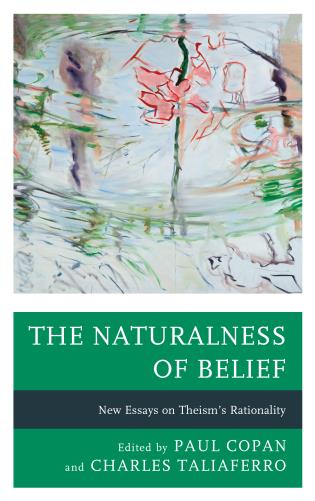
  • The Naturalness of Belief: New Essays in Theism’s Rationality.

    The book The Naturalness of Belief: New Essays on Theism’s Rationality recently arrived from the publishers and is available on Amazon. Matt contributed a chapter to this book entitled “Divine Commands and the Euthyphro Dilemma: Some Naturalistic Misperceptions” The Naturalness of Belief is edited by Paul Copan (Palm Beach Atlantic) and Charles Taliaferro (St Olaf College) and published by Lexington Books.

    The table of contents is as follows:

    Introduction
    Part I: The Unnaturalness of Naturalism?
    1. Naturalism and Naturalness: A Naturalist’s Perspective
    —Graham Oppy
    Part II: Foundational Considerations
    2. Is Naturalism Natural?
    —Charles Taliaferro
    3. The Contraction and Expansion of Naturalism and the Theistic Challenge
    —Charles Taliaferro
    4. Taking Philosophical Naturalism Seriously
    —R. Scott Smith
    Part III: Theistic Belief, Science, and Naturalism
    5. In What Sense Might Religion Be Natural?
    —Justin Barrett and Aku Visala
    6. Science, Methodological Naturalism, and Question-Begging
    —Robert Larmer
    Part IV: Axiology and Naturalism
    7. Alienating Humanity: How Evolutionary Ethics Undermines Human Rights
    —Angus Menuge
    8. Divine Commands, Duties, and Euthyphro: Theism and Naturalist Misunderstandings
    —Matthew Flannagan
    9. Beauty: A Troubling Reality for the Scientific Naturalist
    —R. Douglas Geivett and James Spiegel
    Part V: Naturalism and Existential Considerations
    10. Existential Arguments for Theistic Belief
    —Clifford Williams
    11. Psychological Factors Contributing to Atheism: Bad Father Relationships and Just Bad Relationships as in Autistic Spectrum Disorders
    —Paul C. Vitz
    12. The Cultural Implications of Theism versus Naturalism
    —Paul Copan and Jeremiah J. Johnston
    Part VI: Naturalism, Freedom, and Immortality
    13. Theism, Robust Naturalism, and Robust Libertarian Free Will
    —J.P. Moreland
    14. Naturalism, Theism, and Afterlife Beliefs
    —Jonathan Loose

    The blurb from Amazon is as follows.

    Despite its name, “naturalism” as a world-view turns out to be rather unnatural in its strict and more consistent form of materialism and determinism. This is why a number of naturalists opt for a broadened version that includes objective moral values, intrinsic human dignity, consciousness, beauty, personal agency, and the like. But in doing so, broad naturalism begins to look more like theism. As many strict naturalists recognize, broad naturalism must borrow from the metaphysical resources of a theistic world-view, in which such features are very natural, commonsensical, and quite “at home” in a theistic framework.

    The Naturalness of Belief begins with a naturalistic philosopher’s own perspective of naturalism and naturalness. The remaining chapters take a multifaceted approach in showing theism’s naturalness and greater explanatory power. They examine not only rational reasons for theism’s ability to account for consciousness, intentionality, beauty, human dignity, free will, rationality, and knowledge; they also look at commonsensical, existential, psychological, and cultural reasons—in addition to the insights of the cognitive science of religion.

    Get your copy now, read it, and let us know what you think both here and on Amazon.

  • Matt’s book “Did God Really Command Genocide” on sale for $1.99

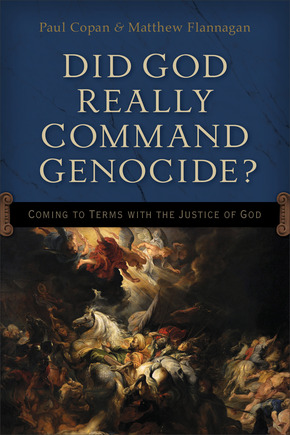
    As long-time readers of MandM will know, in 2014  I co-wrote a book with Paul Copan entitled Did God Really Command Genocide: Coming to Terms with the Justice of God.Did God Really Command Genocide?

    Yesterday Baker books have notified me that, for the month of September, Amazon, Barnes and Noble, and CBD, are running an ebook promotion on this book. During September the eBook version of our book will be available for $1.99.

    Please feel, to take advantage of this deal, also please feel free to let anyone you know who may be interested to take advantage of it and to share this information to anyone you know who may be interested.

  • “Robust Ethics and the Autonomy Thesis” Now Online

    Recently, Philosophia Christi published Matt’s article “Robust Ethics and the Autonomy Thesis: A reply to Erik Wielenberg”. This article consisted of some critical commentary and responses to Erik Wielenberg’s bookdefaul1 Robust Ethics: The Metaphysics and Epistemology of Godless Normative Realism.

    Since then Matt’s article has received a little bit of unexpected attention. One of my arguments was discussed in a dialogue between William Lane Craig and Erik Wielenberg that took place at North Carolina State University earlier this year, and on the back of this, we have received several received requests to read the paper. It is now available here: Flannagan Robust Ethics PC 19 2 (1)

    Permission has been granted from the Editor of Philosophia Christi to upload this contribution. Learn more about the Journal by going to www.epsociety.org/philchristi.

  • “Robust Ethics and the Autonomy Thesis” published in Philosophia Christi

    Matt’s article, “Robust Ethics and the Autonomy Thesis: A reply to Erik Wielenberg” has been published in the wiPhilosophia Christinter issue ( Vol 19 Num. 2 – Winter 2017) of Philosophia Christi.  An overview of the contents of the full issue can be found here.  The editor has given Matt permission to upload the article in a couple of months. For now here is the abstract:

    In his monograph, Robust Ethics: The Metaphysics and Epistemology of Godless Normative Realism, Erik Wielenberg offers arguably one of the most sophisticated defenses of the autonomy thesis to date. Wielenberg argues that (I) the divine command theory is problematic because it cannot account for the moral obligations of reasonable unbelievers; (II) Godless normative robust realism (GRNR) can be formulated in a way that avoids the standard objections to the autonomy thesis; and (III) GRNR provides a better account of intrinsic value. In this paper, I will argue Wielenberg’s defenses of the autonomy thesis fails. I will argue that his objection to divine command theories fails, that he fails to address two standard challenges to the autonomy thesis adequately, and, finally, that Wielenberg fails to show that GRNR better accounts for the intuition that certain things are intrinsically good than various forms of theistic alternatives.