Several years ago, I gave a talk on the morality of abortion at New Hope Community Church in East Auckland. This talk was based on my Ph.D. research at Otago University. Apparently, in the wake of recent supreme court decisions in America, some interest has been expressed in this talk. So, I attach it here.
Category: Religion in Public Life
-
On alleged Victim’s of Church abuse… “Can you blame them?”…. “Yes I can”
Can you blame them? This was the rhetorical question I heard recently, posed by a speaker at a Conference of religious studies teachers that I attended. The answer to the question was supposed to be No, and most of the audience seemed to take this to be the correct answer. Nor is this atypical It’s not the first time I have heard the same sort of rhetorical methods employed nor is it the first time I have seen this response.
No doubt readers will wonder what this question was in response to so let me spell out the context. The speaker was articulating various demographics about the growth of religious belief and practise in contemporary Australia. While doing so he told the following story: A woman and her family had been actively involved in a church for many years, however later in her life, her marriage ended in divorce. When this happened the woman was told she was no longer welcome in the church. Her family left. The speaker then passionately told us how her children all now are emphatic that organised religion does more harm than good. After relaying this story he then fired off the rhetorical question ” And who can blame them?”
Had I been less polite I would have stated: “I can”. I think I can blame them. I have heard similar stories over the years from various speakers and must admit to being less than keen on the enthusiastic apologetic self-flagellation that Christian’s often engage in over such stories. Here is why
First, is a matter of facts and evidence. One thing I have learnt is that when people have had an acrimonious dispute one should always be hesitant to jump to judgement. In any dispute, especially one involving divorce, parties on both sides will have conflicting stories. Both will claim to be unjustly aggrieved, and sorting out what happened isn’t always easy. In this context, I am reminded of a conversation I had with a family law judge once over dinner. The judge talked about both parties in a dispute expressing “their truth”. Piquing my interest, we got into a discussion about whether he believed the truth was relative. On clarification, however, it became apparent the judge wasn’t affirming relativism instead he was expressing a fact he had observed from years on the bench. When emotions run high and loyalties are betrayed or tested people tend to rationalise, deceive themselves, to minimise their own behaviour and maximise that of others. His point was that the different parties often sincerely believe their own stories. They are convinced what they say is true. Despite the fact that it can’t be. It’s the truth as they see it, even if we might see that it is selective with the facts and distorted. I don’t doubt the judge’s observation that this is common. In light of this, I think we need to be very careful before we judge that a church or church leadership group has acted appallingly in such a dispute. This isn’t to say Churches never act in inappropriate ways, or make pastoral or theological howlers. It’s just the point that, even though they do, we shouldn’t immediately accept as credible every accusation that they have the as unvarnished truth. Before we rush to judgement, we should try and work out whether the claim is credible.
In this particular case there are many questions one would need to ask, for example, how did the divorce occur? Did one spouse commit adultery, was there violence or desertion, and from which spouse? Moreover, if the woman was a member of the church isn’t it at least likely that her husband is as well?
In light of these questions, one can immediately see the situation could be more nuanced than it appears. Suppose the woman had committed adultery, deserted her husband, the church was offering pastoral support to her devastated husband. She was turning up every Sunday with the new man and refusing to acknowledge a problem. In this sort of situation, one can easily sympathise with the churches decision. On the other hand, if the man was a womanising wife beater and the pastoral team were taking his side because “wives should submit to their husbands” the picture is different. The point is I’d want to know more about the picture before I rushed to judgement and said: “who can blame them?”
It shouldn’t need to be said. But it’s simply not true that every time some angry person tells a story about their disputes with a church are that the church is in the wrong and the disputant is in the right. Sometimes it’s the case, and sometimes it isn’t. We owe church leaders more respect and justice than to simply believe without question every single accusation made against them, and to join in sympathetic outrage with every accusation. If we rush to judgement, it’s actually us who are behaving appallingly. So while I am quite sure that church leaders can and sometimes do act in bad ways, accusations still need to be substantiated.
But let’s suppose the story is accurate. The church leadership did behave badly and kicked someone out unjustly. I still think we must answer the speaker’s rhetorical question in the affirmative. Here is why: Note what the speaker said, he said that upon being treated this way the family concluded that organised religion does more harm than good. They didn’t want to be associated with an institution that behaves this way. So they will have nothing more to do with “religion”.
But hang on! Can’t a person be legitimately questioned for drawing this kind of conclusion? What has happened is that one church has done one hurtful or offensive thing on one occasion. How can a person justifiably extrapolate from this that religion does more harm than good? Or even that this is normal or typical for churches per se. To do this, a person would need to look at a representative sample of actions performed by various religious organisations over history. Looking at all the hurtful things religious institutions have done over the centuries and all the beneficial things they have done. There would need to be some weighing of these against one another. And only when this was done could one justifiably conclude that religion causes more harm than good.
To suggest that because an organisation has hurt you and your family, you can, therefore, make a judgement about all religious institutions and their total effect on society and history is, frankly, absurd. It is obviously a bad inference. Moreover, this type of judgment is one we would out rightly condemn as stereotypical or bigoted if it occurred in a different context.
Here is an example: suppose a woman’s husband was in the world trade tower on September 11, 2001. As a result of the attack that morning he is killed, and she is overcome with grief. We would feel justified empathy with her, situation, it’s awful, and she has clearly been wronged, unjustifiably widowed by someone else’s criminal conduct. Does it follow however that we can now justifiably go along with her families claim that all Muslims are terrorists and complicit in such behaviour? Obviously not, to do this would, in fact, to sanction stereotyping and to put it bluntly bigotry.
Or, to use another example, suppose someone is walking home and is attacked by an African American male. He is beaten and hospitalised and dies from the mugging. The victim’s family are angry in a fit of rage they declare that African American males are a scourge and want nothing to do with any African American men they do more harm than good? What would we say? “Can you blame them?” I think we can and would; we would call this racial prejudice. I think we would understand the anger and sympathise with their pain, but we would also recognise that this pain and anger has twisted or warped their perspective so that they are promoting, without evidence, harmful generalisations about others. And we would want to challenge those generalisations. Of course, this may need to be done in a sensitive and tactful way. But the fact we are sensitive and tactful doesn’t mean we grant what they say is justified. It isn’t. They have allowed their rage and anger to become pathological and bigoted and this isn’t blameless.
One might wonder why I am harping on about an anecdotal story I have heard in a talk. Here is why: the story I heard and the response I witnessed to it is, I think, representative of something common. Throughout many years at Bible college, University, and witnessing general culture I have often seen people react this way to claims about abuse on the part of religious leaders, and it bothers me that people react this way.
My studies have taught me that there are in popular culture false narratives about religious people and religious institutions. Some of these narratives are so notorious historians have given them names The black legend, the myth of a dark ages, the Whig view of history, the conflict thesis, myths about the Crusades in their own way these different narratives are deep in popular psychology and they tell a narrative about the role of religious institutions in our society and history. These narratives are also false. But, their falsity isn’t often appreciated in popular culture. It’s also worth noting these narratives can be harmful. A few years ago I studied the terror that occurred during the French revolution, and it was eye opening how some of these sorts of narratives were used to murder people. The idea of religion as an institution which inevitably oppresses the downtrodden was a well-known Marxist trophe[1]and it was used to justify the slaughter of thousands. Obviously, not everyone who believes these things is going to kill, but we need to call a spade a spade. A false narrative based on selective and stereotypical reasoning is still a false narrative, and if such a narrative can and has been harmful, we need to be candid about this, it can be used this way. Sticks and stones break bones and names can hurt you.
So when the speaker asks, “can we blame them” I answer “yes we can” In all walks of life people suffer, have disputes and can be unjustly treated, does this justify them in generalising about whole groups of people? No, it doesn’t. The fact the topic is religion doesn’t change this fact.
[1] Compare for example Karl Marx’s “religion is the opium of the people’ Mao Tse Tung’s “Religion is Poison” and the title of Christopher Hitchen’s bestselling “God is not Great How Religion Poison’s Everything” (emphasis mine)
-
Contemporary Philosophy of Religion and NCEA Religious Studies: Part one
This is a talk I gave to the New Zealand Association of Philosophy Teachers annual conference at St Cutherberts College in September this year. Several people have asked me to make this talk available.
I have broken my talk up into four parts. Part One introduces what philosophy of religion. In part two I will outline two movements within analytic philosophy during the early to mid-century which I think resulted in religious beliefs not being taken very seriously within philosophy and philosophy of religion taking a fairly minor role. Part three will look at some responses to these movements offered in the late 20th century and how they changed the philosophical landscape. Part four will look at the question of “how to do philosophy of religion” comparing the methods used by two different atheist’s J L Mackie and Graham Oppy, and how this relates the National Certificate of Educational Achievement Standards. This post will contain part one.
First, I want to thank the association for asking me to speak, seeing I have been teaching in the secondary sector full time for only a couple of years so I am not sure I have a lot to share with you and feel very much like I have more to learn from you.
I have been asked to talk about the contemporary philosophy of religion. In my talk this morning I will focus on three things. First, I will talk about what philosophy of religion is. Second, I will talk a little bit about its history but focus on recent developments in contemporary analytic philosophy of religion. Finally, I will link some of these things with the current National Certificate of Educational Achievement (NCEA) Standards in Religious Studies. I hope what I say is helpful to you.
What is Philosophy of Religion
What is the philosophy of religion? Charles Taliaferro at the Stanford Encyclopedia of Philosophy defines it as “the philosophical examination of the central themes and concepts involved in religious traditions.” He adds “Philosophy of religion also includes an investigation into the religious significance of historical events (e.g., the Holocaust) and general features of the cosmos (e.g., laws of nature, the emergence of conscious life, widespread testimony of religious significance, and so on)”[1] Chad Meister at The Internet Encyclopedia of Philosophy defines it as “ the philosophical study of the meaning and nature of religion. It includes the analyses of religious concepts, beliefs, terms, arguments, and practices of religious adherents.”[2]
The History of Philosophy of Religion
Now, Philosophy of religion has a very long history, going back to the Pre-Socratics. And it was an integral part of medieval philosophy, Augustine, Aquinas, Anselm, Abelard, Scotus, Ockham and so forth worked in the tradition of “faith seeking understanding”. They used philosophy as a conceptual tool to reflect upon, analyse, refine, the religious faith that they held and develop philosophically informed models of core religious doctrines, they also used it to respond to objections and critique rival views and develop arguments for the own for theological models they supported. Some of these reflections proved very fruitful. The Islamic-Christian dialogue over Aristotle’s understanding of causation and how it related to miracles, and Gods causal activity in the world, for example, is profoundly influential on latter accounts of causation by people like David Hume and the concepts of laws of nature used by early modern scientists.
Perhaps lesser appreciated is the role of philosophy of religion during the enlightenment. There is an unfortunate tendency in the history of philosophy not to appreciate the religious context in which important key thinkers of the enlightenment operated. Descartes cogito ergo sum (I think therefore I am), for example, comes from Augustine’s response to sceptics about religious knowledge in the city of God Book 11: 26. Descartes immediately follows this up of course with an appeal to his own version of the ontological argument, proposed famously by Anselm of Canterbury.
Or consider John Locke, according to Locke’s associate James Tyrell, the impetus for Locke’s “Essay on human understanding” was a conversation he, Locke and four others had on the topic of “the principles of morality and revealed religion.” Locke’s attempt to develop a comprehensive empiricist understanding of knowledge was an attempt to answer the question of faith and reason, a topic he explicitly addresses in the last section of the book. (Incidentally, it’s a section often skipped in contemporary courses on Locke.)
Or consider what a widely used textbook refers to as the “revolution in ethics” which occurred in the 18-19th centuries. Which the author, James Rachels, contends is due to Hume, Bentham and Mill. Rachel’s refers to as “A new conception of ethics”… “Morality, he [Bentham] urged is not a matter of pleasing God, nor is it about following abstract rules, Rather, morality is nothing more than the attempt to bring about as much happiness as possible into the world”.[3]
Rachel’s is, of course, talking about utilitarianism. However, his characterisation of the history is quite selective. In 1715, some 74 years before Bentham, George Berkley had defended a rule utilitarian conception of ethics[4]Berkeley was a divine command theorist hat moral rightness, and wrongness consists in agreement and disagreement, respectively, with the will of God. Because God’s purposes were benevolent a God’s aim was to maximize the happiness of his creatures, so one could assume that whatever rules maximized happiness were those enjoined by God. Berkley used this theoretical account of God and morality to attempt to reconcile his Irish Anglican commitment to passive obedience with loyalty to the Glorious revolution during Jacobite uprisings in Ireland. Berkley’s “theological utilitarianism” was adopted by people like John Gay, Abraham Tucker and compiled by William Paley. Paley’s textbook defending this way of looking at ethics was the standard text at Cambridge and widely influential several years before Bentham published his defence of utilitarianism.
I could go on; my point is that Philosophy of religion has a long and prestigious history, even during the enlightenment and an important part of educating students about our history and the history of concepts that undergird much of the modern world involves acknowledging these connections rather than ignoring them.
[1] Charles Taliaferro “Philosophy of Religion”, Stanford Encyclopedia of Philosophy https://plato.stanford.edu/entries/philosophy-religion/
[2] Chad Meister, “Philosophy of Religion” Internet Encyclopedia of Philosophy http://www.iep.utm.edu/religion/
[3] James Rachels The Elements of Moral Philosophy, (Random House: New York, 1993) 80
[4] For explication see Stephen Darwall, “Berkeley’s Moral and Political Philosophy” Kenneth Winkler (ed.), The Cambridge Companion to Berkeley. Cambridge University Press. (2005) see also C. D. Broad, “Berkeley’s Theory of Morals” Revue Internationale de Philosophie, vol. 23-24 (1953): 72-86.
-
John Corvino on Liberals and Being Judgemental
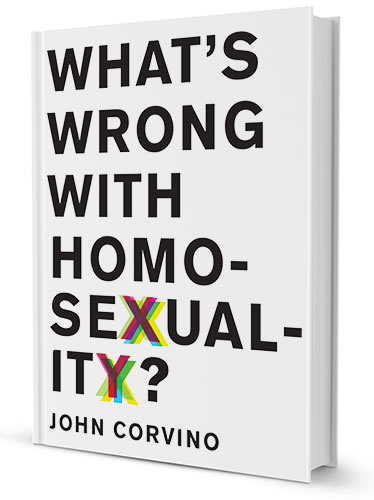 Recently I have been reading John Corvino’s book, “What’s wrong with Homosexuality?” Corvino describes himself as a religious sceptic and is one of the leading defenders of the moral permissibly of homosexual conduct, and also an articulate defender of what is commonly called “gay rights”. In terms of the conclusions we each have, Corvino and I are on very different pages. Yet despite our significant differences, I was pleasantly surprised at how much of his book I agreed with, particularly, his attempt to bring a degree of clear thought to the issue as opposed to the emotionalistic sloganising and rhetorical bullying that so often accompanies this issue.
I want to share with my readers this gem, which comes from the first chapter:
“Some people claim that morality is a “private matter” and that, in any case, people’s rights shouldn’t hinge on others’ moral opinions. I think this view is badly mistaken. Morality is about how we treat one another, and thus it is quintessentially a matter for public concern. It’s about the ideals we hold up for ourselves and others. It’s about the kind of society we want to be: what we will embrace, what we will tolerate, and what we will forbid. And while it’s true that a free society grants a good deal of personal latitude here, avoiding legal force except where transgressions infringe upon others’ liberty, it doesn’t follow that morality is irrelevant to the law. People’s moral views strongly influence how they vote, and thus, ultimately, what laws get passed. There’s a philosophical connection as well. Laws depend on moral foundations, broadly speaking, for their legitimacy, and the commitment to “liberty and justice for all” is a moral commitment. So it irks me when my fellow liberals insist that “we ought not judge one another.” I understand where they’re coming from: Moralistic finger-wagging is tiresome, not to mention counterproductive, and nobody likes a know-it-all. One might also point to Biblical support for the directive, though presumably in that context it means that humans have no business making “Final Judgments,” not that we can’t make judgments at all. But as a general rule, the claim that we ought not judge one another is misguided—logically, rhetorically, and morally. It’s misguided logically because it’s self-refuting. (If we ought not judge one another, then why are you telling me what to do?) It’s misguided rhetorically because it makes liberals seem as if they have conceded “moral values” to the other side, leaving them in the untenable position of being “opposed” to moral values. And it’s misguided morally, because people have a moral responsibility not only to behave well themselves but also to promote standards of right conduct. The moral tone of society is everyone’s responsibility, liberals included. This is not to say that we ought to become moral busybodies. Humility is a moral virtue, as is kindness, and those who wield morality as a weapon are at least as confused as those who insist that it’s a “private matter.” But we shouldn’t confuse the rejection of bad moralizing with the rejection of moralizing altogether. Morality is too important for that.”
Excluding the phrase “my fellow liberals”, I could not agree more with Corvino’s sentiments.
-
Yet Another Lawyer Agrees: Marriage Amendment Act Bill is an Affront to Freedom of Religion and Belief
Barrister Ian Bassett has given another opinion describing the risks to freedom of religion and belief of Louisa Wall’s Marriage Amendment Act Bill if it is enacted in its presently proposed form, which would include this amendment:
“Without limiting the generality of subsection (1), no celebrant who is a minister of religion recognised by a religious body enumerated in Schedule 1, and no celebrant who is a person nominated to solemnize marriages by an approved organisation, is obliged to solemnize a marriage if solemnizing that marriage would contravene the religious beliefs of the religious body or the religious beliefs or philosophical or humanitarian convictions of the approved organisation.”
It is clear that any marriage celebrant exercising their public function who is not covered by the amendment risks being in breach of the New Zealand Bill of Rights Act 1990 and the Human Rights Act 1993 if they refuse to perform their public function as marriage celebrants because it is a same sex couple seeking to be married.

Church ministers, marriage celebrants, court registrars, church elders, leaders, photographers and caterers and any other person or entity supplying services to the public risks being in breach of the Human Rights Act 1993 if they refuse to supply services to a couple seeking to be married because the couple are same sex. For some this could also mean risking their employment.
Service providers to the public risk being in breach of the Human Rights Act 1993 if they refuse to supply services to a married couple because the couple are same sex.
The New Zealand Law Society’s Law Reform Committee headed by Professor Paul Rishworth LLB (Hons) M Jur highlighted the risk to freedom of religion and belief in the Bill in its submission to Parliament:
“The proposer of the Bill said that the Bill was not intended to compel marriage celebrants to perform marriages contrary to their religious beliefs. However, in the Law Society’s view, Professor Rishworth says it is arguable that marriage celebrants who refuse to perform same-sex marriages will be acting unlawfully under the Human Rights Act 1993, the New Zealand Bill of Rights Act 1990, or both.
“We want to highlight arguable conclusions which seem to be at odds with the settled intentions of the Bill’s drafters. Whatever the position, the Law Society believes it makes sense to put the matter beyond doubt,” Professor Rishworth says.
The only thing that the amended Bill puts beyond doubt is that the critics of those raising fears about the Bill’s threat to freedom of religion and belief were wrong. By recommending an amendment the Select Committee are agreeing that a risk existed, as the likes of Ian Bassett, Grant Illingworth have argued, contra to The Human Rights Commission’s claim that all “…religious officials and leaders are free to refuse to perform marriages that are not in accordance with their religious beliefs.”
Bassett, Illingworth and Rishworth are not alone with their concerns among the legal fraternity.
Graeme Edgeler, a Wellington Barrister has been quoted in the Herald saying:
… if an independent celebrant declined to marry a same-sex couple, the couple could then complain to the Human Rights Commission.
“It’s not about [celebrants] being forced, it’s about people getting in trouble afterwards if they didn’t,” he told APNZ.
“They’re not breaking any rule in the Marriage Act, but rules in other acts. The main one would be the Human Rights Act, which says you can’t discriminate on the basis on sexual orientation or gender.”
Auckland Barrister Rachel Wong has raised issues against the Bill.
This blog’s Madeleine Flannagan LLB, Associate Barrister and Solicitor at Coast Legal, adds her voice:
“The Bill, in its present form, fails to protect individual freedom of religion and belief (belief being a comprehensive viewpoint not based on religion). The proposed amendment only protects group religious rights, which is little protection at all for most religious celebrants as few denominations hold formal views on marriage, many practitioners of religion do not belong to a group and for those that do they might hold a different personal view on this topic to the group view. The amendment then fails to protect the religious freedom of most religious celebrants just as it utterly fails to protect the freedom of belief of non-religious celebrants who have no group to appeal to to protect their freedom.”
Ian Bassett’s latest opinion thoroughly analyses the legal effects of the amended Bill, a summary as to whose freedom of religion and belief it protects and whose it does not follows: (more…)
-
Freedom of Religion in a Secular Society @ Auckland University this Monday
 As part of AUSA’s Human Rights week at the University of Auckland, and in association with Thinking Matters, Matt and I will be giving a free public lecture with Q&A on the topic “Freedom of Religion in a Secular Society” on Monday 12 September from 7-8.30pm in Clock Tower Lecture Room 032.
The Facebook page for this event states:
The New Zealand Bill of Rights Act states:
13 – Everyone has the right to freedom of thought, conscience, religion, and belief, including the right to adopt and to hold opinions without interference.
14 – Everyone has the right to freedom of expression, including the freedom to seek, receive, and impart information and opinions of any kind in any form.
15 – Every person has the right to manifest that person’s religion or belief in worship, observance, practice, or teaching, either individually or in community with others, and either in public or in private.
- How should we read these sections alongside idea that New Zealand is a secular society?
- How should we read them alongside the viewpoint advanced most notably by philosophers such as John Rawls that religion should be privatised?
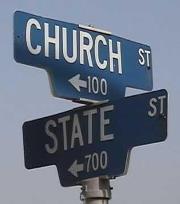
- Does Separation of Church and State require Separation of Religion from public life?
- Can we still have Freedom of Religion in New Zealand and hold to these views?
- What approach is just and fair in a pluralistic society like ours?
Analytic Theologian and Ethicist, Dr Matthew Flannagan and Legal Scholar, Madeleine Flannagan (a post-graduate student in Law at Auckland) will give a joint lecture followed by a Q&A session on the topic Freedom of Religion in a Secular Society from 7.00-8.30pm on Monday 12 September 2011 in Clock Tower 032.
-
Contra Mundum: Separating Church and State
Co-authored by Matthew and Madeleine Flannagan
The late Philosopher Richard Rorty once described religion as a “conversation stopper”, something that polarises discussion and ends or prevents fruitful dialogue. Rorty was an advocate of,
“the happy, Jeffersonian compromise that the Enlightenment reached with the religious. This compromise consists in privatizing religion — keeping it out of … “the public square,” making it seem bad taste to bring religion into discussions of public policy.”
The view that the public square – the legal system, economy, public education system, politics and so on – should be secular is now standard in contemporary political theory. When making decisions about their private conduct religious believers can utilise religious reasons in but in public they are morally bound to bracket their beliefs about God and appeal only to secular considerations.
In an earlier column, “Secularism and Public life”, Matthew criticised this position. He pointed out that a growing number of scholars working in philosophy, political science and law are calling the defensibility of this position into question. We will not repeat those points here instead we will address one interesting feature of Rorty’s comment above; Rorty referred to his position as “the … Jeffersonian compromise.”
In doing this he reflected a trend that began in the US the mid to late 20th Century and has spread around the Western World. The First Amendment of the United States (US) Constitution asserts that “Congress shall make no law respecting an establishment of religion, or prohibiting the free exercise thereof; …”. In a letter to the Danbury Baptists in 1802, US Founding Father Thomas Jefferson stated that this amendment established a “wall of separation” between church of state. In the mid 20th century the US Supreme court argued that on the basis of Jefferson’s comments the US Constitution required the “separation of church and state”. This was then interpreted to mean that the US Constitution demanded a secular public square, religious ideals and beliefs were not to be allowed in public life.
It won’t be news to anyone who has watched any US television shows to hear that the Supreme Court has interpreted the First Amendment to mean that religious instruction, prayer, references to God, displays of the 10 Commandments, nativity scenes — even where participation is voluntary — are banned from public institutions.
 When Rorty referred to his position as “the Jeffersonian compromise” he was alluding to this line of argument. It is an argument we have heard over and over: because our society has a separation of church and state, we are committed to having a secular public square. If one opposes a secular public square and believes, as we do, that religious beliefs should influence public life then one gets accused of denying the separation of church and state.
We think this inference is wrong-headed. It confuses the separation of two institutions, the church and state, with the separation of religion and public life. These are not the same things.
To understand separation of church and state some history is necessary.
Prominent legal scholar, Steven D Smith, observed that the church-state relationship, which would have been familiar to an eighteenth century American, was one where “governments controlled or directly intervened in the internal affairs of churches, and churches claimed and were formally endowed with governmental powers.” He elaborated that,
“Since the middle ages, scholars and polemicists of all stripes had argued-on both religious and political grounds-that the church should exercise control over the state or-again on both religious and political grounds-that the state should control the church. The common view for centuries had been that an established church was essential to political and social stability. …
In medieval Europe, for example, kings had claimed, and had exercised, the power to appoint bishops and popes. After the Reformation, the British monarch became the official head of the Church of England, and British government assumed control over both the selection of ecclesiastical officials and the formulation of religious doctrine.
Medieval popes regularly crowned earthly emperors and kings, and they claimed (and frequently purported to exercise) the authority not merely to excommunicate but actually to depose those kings. Popes sometimes asserted jurisdiction to adjudicate what were essentially political or property disputes. In England, the Church enjoyed-and still enjoys-official representation in Parliament. Immigrants later imported established churches in some form into most of the American colonies.”
Separation of church and state is the idea that the church should not be formally endowed with governmental powers and that the state should not try to intervene in or control the church. Now many people (including we, the writers) accept this. We do not believe that the government should set up an official state church or have any say in the liturgy, theology, choice of ministers and so on in established churches. Nor do we think that churches should be granted state powers, the right to hold seats in parliament, the ability to pass legislation, prosecute or tax people and so on. We wholeheartedly accept the separation of church and state.
However, separation of church and state is not separation of religious beliefs from public life – perhaps this confusion arises because both concepts have the word “separation” in them. Church and state are formal institutions; public life is not an institution nor is a religious belief an institution. To assert, as so many commentators do, that separation of church and state commits us to a secular public square is to offer a non-sequitur.
Some examples will illustrate this point. Suppose New Zealand were to allow the establishment of a completely private university; this university would not be an official state university, it would not be endowed with any political status nor would it does it hold any judicial, legislative or executive powers. The government would not choose its employees or its curriculum and the scholars within it would have total academic freedom. If this were to occur we would say there was an institutional separation between the state and this university.
Now, imagine that the science department (more…)
