Category: Religion in Public Life

  • The End of State Education: Resistance is Futile

    The litany of the forces arrayed against quality state education systems is long. We believe these forces make state education’s decline inevitable. Without a thoroughgoing reformation of the fundaments of Western society itself, resistance is futile. The Borg is here.

    We know that in New Zealand roughly one third of all graduates from state schools are functionally illiterate and innumerate. They cannot read supermarket shelf labels. Nor can they compare prices. We also know that on any given school day one tenth of pupils will be absent, without a conscientious reason. Truancy is systemic.

    State Education

    Recently we sought to interview potential candidates for a teaching position in our Christian school. These candidates were committed Christians; they were currently studying at a teacher training institution; they were zealous for their prospective careers–but they were unable to write a paragraph that was grammatically or syntactically correct. Apparently they had never learned through thirteen years of state schooling what a full-stop was, or how one was to begin a sentence. Yet, they had all graduated with “flying colours” from NCEA levels 11 through 13 in English! Sadly they were unemployable in our school.

    These folk were part of another cohort of graduates from our state schools that are neither functionally illiterate nor innumerate–but they are   incompetent in even the rudiments of language and maths. This, of course, means that their ability to think, reason, encapsulate, describe, argue, and comprehend is severely curtailed. We guess that this cohort would represent another third of graduates from state schools.

    Those who think that starting a new state funded programme (for example, Early Childhood Education), or shrinking classroom sizes, or raising teacher salaries, or introducing national testing will turn the tide are naive. They have not reckoned with the barrage of the secular forces arrayed against state schools.

    Let’s name two of these secular forces. The first is statism–which arguably is the established religion of our day. By this we mean that for many the state or the government is the ultimate reality and force. Name any social, political, material, economic or cultural problem and within a nano-second the conversation will have become political–by which we mean that “the government needs to do something, or this, or that” will have been introduced into the conversation. Functionally our society looks to government as its god.

    The spin-off effect upon state education is direct. The state’s “long term” solution to any problem is to attempt to use its schools to change human nature and action to solve society’s perceived problems. Government as redeemer translates into schools as agents of socialisation and state propaganda, not education. This is a weight which schools simply cannot bear. They both stop educating and fail miserably in socialisation.

    The second secular force also has religious roots (more…)

  • Maori Animism: New Zealand’s Established Religion

    New Zealand, along with all nations, is acutely religious. But, more than most Western countries, the dominant religion is now the Established Religion. We are using “established” in the historical sense of a religion prescribed and protected, so that all citizens must respect and honour that particular religion’s beliefs and practices. Established religion is the religion buttressed and proscribed by the law of the land and funded by tax money.

    The established religion in New Zealand is Maori animism. In historical terms it is a pagan and primitive religion, riddled with superstition and idolatry. It is an offence and provocation to the Living God. But none who want official and public respect in New Zealand dare criticise the Establishment. Those, however, who fear God more than man are prepared to call it for what it is: stale hokey pokey–a thoroughly sour, ignorant and stupefying batch of mouldy ice-cream. Every Christian who understands what the Bible says about idolatry and false gods has no hesitation in flatly rejecting Maori animism. In so doing, we have become the new dissenters.

    Wavering Christians may well be offended at such a stand because they fear it will cause offence to Maori. Not causing offence has regrettably become for some of our brethren, not the eleventh commandment, but the only commandment. To these brethren we say, “harden up”. Fear God, not man. These weaker brethren have not yet realised that when it comes to a choice between offending the Living God, on the one hand, or man on the other, Christians must offend man a thousand times over. We must never, ever wilfully offend our God.

    We will drive out any idol, never tolerating any in His presence. We will be as jealous of God’s honour as God is Himself. We will never bow down or honour any image of God, which makes all graphical representations of God idolatrous. We will never tolerate His Name being used in an empty or vain fashion. We will honour His holy day. This is what former generations called the First Table of the Law.

    The ignorance and stupidity of Maori animism has been on display in recent days. A church youth group had a fantastic day out, climbing Mount Taranaki, packing up a couch and BBQ by hand. Quite a feat. At the top they reclined for a celebratory meal. After enjoying the Lord’s creation and celebrating his goodness, they decamped taking their gear and detritus with them.

    Mt TaranakiOn returning to the land of the living dead they were assailed by a government official: an outraged Taranaki Department of Conservation boss, Phil Mohi. Now, Phil it turns out is a Maori who has returned to the religion of his ancestors and is a card carrying animist. He has taken it upon himself to speak out in the name of his god. His god is the mountain (Mt Taranaki). The top of the mountain is tapu–sacred ground, in the eyes of Phil and his colleagues. To eat up there is to eat on his god’s head. (We are not making this up. One shudders to think the depths of outrage that would be disembogued were anyone forced to relieve themselves up the mountain.) According to a media report entitled “Mt Taranaki summit cook-up ‘tapu offence’“:

    He said the summit barbecue was disappointing because the young people there probably didn’t realise or hadn’t learnt that the mountain and especially the summit is a very sacred place for iwi of Taranaki. “We discourage camping at the summit and try to make people aware that the very highest part is the most sacred of all – and ask climbers to avoid standing there. “There’s a difference too between eating prepared food for sustenance and actually cooking on the summit,” he said.

    Ah, the casuistry of the animist. How quaint. Now the young Christians were taken aback by this outburst. They apologised. They did not want to cause offence, they said.

    What they should have said is something like this (more…)

  • The New Zealand Association of Rationalist Humanists and the Privileging of Secularism

    The New Zealand Association of Rationalist Humanists (“NZARH”) has a statement of aspirational ideals for the New Zealand state on their website. Entitled “The Tolerant Secular State” it is anything but.

    The first two sentences of the document exhibit a confusion which is inherent throughout (and commonly found in discussions of church and state):

    Lord Voldemort

    “The NZARH strongly believes that government should be secular; that is dealing with the issues of this world rather than following a religious agenda. Our law should not give one set of beliefs privilege over another and the state should treat religious organisations the same as any other organisation.”

    An equivocation on the meaning of the word “secular” in the very first sentence is immediately apparent.

    Stephen Smith notes that the word secular has two distinct meanings. Etymologically, “secular” refers to things pertaining to this world and life as opposed to the next. In this sense of the word “secular” is not opposed to religion; many religious beliefs and values pertain to life in this world, beliefs about: marriage, sex, human life, killing,  justice for the poor, what one’s duties are in this life, what God’s purposes are in this life and so on are all secular beliefs in this sense. The second and more common meaning of “secular” is to say it excludes, is in opposition to beliefs and values that are religious in nature; this is usually the first definition one will find in a dictionary.

    The NZARH use both meanings in the first sentence of their “Tolerant Secular State” document (more…)

  • The Separation of Church and Self: Rethinking Separationism

    Is it just for a pluralistic society to ground its public policy on religious premises? What role should religion play in such a society? Debate over questions like these has figured in theology, philosophy, political science, jurisprudence and popular culture for centuries. In contemporary Western pluralistic society the debate continues. Even for those unfamiliar with its nuances at the higher levels the effect of the standard view, as described by Stephen Carter, is immediately familiar:

    “One good way to end a conversation – or start an argument – is to tell a group of well educated professionals that you hold a political position (preferably a controversial one such as being against abortion or pornography) because it is required by your understanding of God’s will. In the unlikely event that anyone hangs around to talk with you about it, chances are that you will be challenged on the ground that you are intent on imposing your religious beliefs on other people. And in contemporary political and legal culture, nothing is worse.”[1]

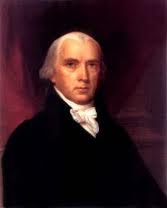
    James Madison

    Carter is referring to the separationist understanding of religion and public life, the idea that in a contemporary pluralistic society significant restraint must be put on the political role of religious reasons. This restraint is negative; when a functionary deliberates over a proposed policy it is not justified for that functionary to decide to support or oppose that policy on grounds derived from religion. A corollary of this is that citizens should not try to influence public policy by appealing to religious reasons. Separationists argue that the public policy of a pluralistic society must be able to be justified by a plausible secular justification in order for it to be just to all. Religious beliefs, while utilised and followed in private, should be kept separate from public policy debates, the administration of public institutions and the deliberation of public functionaries. (more…)

  • Middleton Grange, Free Exercise and the Gay Rights Movement UPDATED

    Over at GayNZ.com’s Proclamations of the Red Queen blog, Craig Young is in a celebratory  mood. Middleton Grange, a Reformed Evangelical Christian school has been forced by law to pay reparations and have their management undergo “human rights education” because they dismissed a netball coach on the grounds that he openly engaged in homosexual conduct.

    Middleton Grange is a school based in Christchurch. The school’s aim’s, as stated on its website, show that its first aim as a educational facility is to “Help pupils know and understand God and His ways and respond to Him in obedience, love and service.” The website further states,

    The school rests on a Reformed and Evangelical interpretation of Scripture which informs all aspects of governance and management. The Christian Schools’ Trust is responsible for safeguarding the Special Character of the school.

    Now it should be no surprise to any educated person that a reformed evangelical interpretation of scripture usually includes, among other things, the contention that sex between people of the same sex violates God’s commands. Nor should it be a surprise that, given the school’s stated purpose is to inculcate these beliefs, it will not hire or retain people whose example or teaching contradicts this purpose.

    The only question that really needs to be asked then is whether it should be legal for religious groups like this to set up such schools and teach these things and engage in these sorts of hiring practices. Should reformed evangelical Christianity be a tolerated religion? The alternative is, of course, to ban such schools, force parents to send their children to schools that will teach that their parents religious beliefs are false  – essentially not allow adults to propagate these values to their children. This is known as religious persecution.

    In fact by ruling that the school must hire/retain staff whose actions are inconsistent with the schools purpose and then requiring the staff to undergo “human rights education.” the Human Rights Commission (HRC) goes one step further. It states that not only must such schools not exist but it maintains that the adults running them must undergo compulsory re-education into the secular liberal way of thinking. Am I the only one who finds this sort of thing a tad draconian?

    Mr Young, however, seems to think otherwise, he states,

    Frankly, I’m surprised that this sort of collision between lesbian and gay teachers and backward fundamentalist enclaves has taken so long to materialise. I suspect that it’s because we shun such neurotic and hermetically sealed enclaves unless there is good reason to do otherwise

    Apparently the biggest problem in all this is that this sort of religious persecution and re-education has not happened sooner. As to why such schools should be persecuted, Young gives three reasons.

    First because it is a “malignant Christchurch fundamentalist” school. In other words, Young considers this school to expound fundamentalism and he considers such a religion to be “malignant.” This really is not the issue, the issue is whether the state should persecute such religious groups and subject the people within them to compulsory re-education. There are many religious perspectives I disagree with, some I find highly offensive yet this does not mean that the state should intervene in this way.

    Young’s second reason is,

    Founded in 1964, it was host to Graham Capill, Christian Heritage Party leader. His dad Don was Vice Principal until the eighties. I was a one-time inmate there. It served as a nexus for the abortive campaign against homosexual law reform in the mid-eighties.

    There are three reasons here (a) Young attended the school and did not like it, (b) a political leader Young is known to immensely dislike and who was convicted for sexual molestation once attended the school and this man’s father was once Principal; and, (c) the school promoted political views at odds with the secular liberal mainstream on issues like abortion and homosexuality.

    It is hard to see how any of these reasons justify the HRC’s actions. Is Young saying any school he does not like should be legally punished? Is Craig suggesting that if an old boy of a school is convicted of a crime years after leaving that the whole school should be held responsible? Does Young support a return to collective and vicarious punishments perhaps?

    The last reason Young gave is perhaps the most telling; schools should be subject to legal sanction if their politics are disagreeable. Again, am I the only one who finds it odd that this sort of crap is proposed by one of the voices for “tolerance” and “respect for diversity”?

    Craig then gives the usual red herrings; he states “Should it end there? Well, no. If Middleton Grange refuses to employ lesbian and gay teachers, then what about issues like LGBT suicide prevention? Or homophobic bullying?” While I agree that bullying of any human being is wrong (it being assault) and suicide of any person is tragic, the reasoning here lacks cogency. Suppose a fundamentalist Christian was severely bullied at school, the kids picked on him because they considered him to be an intolerant bigot or suppose that his refusal to have pre-marital sex or drink alcohol made him a social outcast? I take it that Young would support fundamentalist teachers coming into this school and teaching a fundamentalist interpretation of the bible to their students so as to re-educate those bullying him? Perhaps the HRC should force the management of any secular school that does not do this to attend church…

    The only remotely sensible comment Craig makes is a rhetorical question, “Should fundamentalist private schools be penalised by withheld operational funding if they refuse to obey mainstream New Zealand anti-discrimination laws?” Indeed that is the core question. Should private religious schools be allowed to teach and freely exercise their religion? Some segments of the gay rights movement and their supporters need to be honest and just outright admit that they support religious persecution instead of talking about “tolerance” and “the celebration of diversity” – values they clearly do not believe in.

    UPDATED BY MADELEINE

    In the comments below Joel, a blogger from the US, writes:

    There is no liberty in New Zealand, I take it, nor equality.

    And what about the human rights violated against the Christian school?

    I have chosen to respond this here as originally Matt and I had toyed with looking at this in this post anyway and so I don’t want it getting lost in the comments, which I anticipate will be prolific in number (just a hunch).

    New Zealand does not have an entrenched constitution, its Bill of Rights is a simple statute which is ultimately subordinate to any other statute it clashes with, see section 4:

    4.  Other enactments not affected
    No court shall, in relation to any enactment (whether passed or made before or after the commencement of this Bill of Rights),—

    (a) Hold any provision of the enactment to be impliedly repealed or revoked, or to be in any way invalid or ineffective; or

    (b) Decline to apply any provision of the enactment—

    by reason only that the provision is inconsistent with any provision of this Bill of Rights.

    Although, to be fair, for any clash the clashing rule, law or policy must be read in the way most conducive to it being consistent with the Bill of Rights, see section 6:

    6. Interpretation consistent with Bill of Rights to be preferred
    Wherever an enactment can be given a meaning that is consistent with the rights and freedoms contained in this Bill of Rights, that meaning shall be preferred to any other meaning.

    If a consistent reading cannot be achieved then the courts will either deem a policy inconsistent with the Bill of Rights or deem it a justified limitation,

    5. Justified limitations
    Subject to section 4 of this Bill of Rights, the rights and freedoms contained in this Bill of Rights may be subject only to such reasonable limits prescribed by law as can be demonstrably justified in a free and democratic society.

    The reality is that due to the fact the courts cannot strike statutes down or refuse to apply them and that there are no penalties for Bill of Rights breaches either beyond the stigma of being in breach of it, which only works if society values the right in question, if it is an unpopular group or cause being violated who cares right?

    So that is the context freedom of religion sits in in New Zealand, which is covered in the section on democratic and civil rights:

    13. Freedom of thought, conscience, and religion
    Everyone has the right to freedom of thought, conscience, religion, and belief, including the right to adopt and to hold opinions without interference.

    14. Freedom of expression
    Everyone has the right to freedom of expression, including the freedom to seek, receive, and impart information and opinions of any kind in any form.

    15. Manifestation of religion and belief
    Every person has the right to manifest that person’s religion or belief in worship, observance, practice, or teaching, either individually or in community with others, and either in public or in private.

    Now at a glance at these sections our US friends must be wondering how the tale Matt told above and the story in the newspaper article he linked to could happen; it appears that New Zealand requires the state to allow its citizens and private organisations the right to form any belief they like, impart it and act on it.

    The reason you are momentarily lulled into this false sense of reality is because you have not factored in the Human Rights Act. Remember earlier when I said the Bill of Rights is subject to other laws? Let’s take a look at section 22, I have highlighted the key bits to take note of in italics:

    22. Employment
    (1) Where an applicant for employment or an employee is qualified for work of any description, it shall be unlawful for an employer, or any person acting or purporting to act on behalf of an employer,—

    (a) To refuse or omit to employ the applicant on work of that description which is available; or

    (b) To offer or afford the applicant or the employee less favourable terms of employment, conditions of work, superannuation or other fringe benefits, and opportunities for training, promotion, and transfer than are made available to applicants or employees of the same or substantially similar capabilities employed in the same or substantially similar circumstances on work of that description; or

    (c) To terminate the employment of the employee, or subject the employee to any detriment, in circumstances in which the employment of other employees employed on work of that description would not be terminated, or in which other employees employed on work of that description would not be subjected to such detriment; or

    (d) To retire the employee, or to require or cause the employee to retire or resign,—

    by reason of any of the prohibited grounds of discrimination.

    Let’s take a look at the “prohibited grounds of discrimination” shall we? The definitions section states “prohibited ground of discrimination has the meaning given to it by section 21″. Section 21 is long so I have only included the relevant bits for our purposes,

    21 Prohibited grounds of discrimination

    (1) For the purposes of this Act, the prohibited grounds of discrimination are—

    (m) Sexual orientation, which means a heterosexual, homosexual, lesbian, or bisexual orientation.

    So there you have it, freedom of thought, conscience, religion, expression and the manifestation of those beliefs are trumped by the Human Rights Act (and the Education Act which permits private schools to educate and manage themselves along the lines of the special character of the school).

    Joel is right, New Zealand’s commitment to liberty and equality is lacking as is respect for freedom of religion.

  • The Theology of the Declaration of Independence

    As I write this it is just beginning to be the 4th of July in the United States now, though its been 4th July for some time here in New Zealand.

    The 4th of July is, of course, Independence Day. Typically in New Zealand, those members of the secular blogosphere, who consider themselves to be classical liberals, have an annual rant on the 4th of July about the Declaration of Independence, praising the philosophy expounded in this document.

    Declaration of IndependenceNot PC’s Peter Cresswell, for example, states in Happy July 4th! that “with the exception of just a few words, the words could hardly be bettered today;” the declaration is, “A wonderful, wonderful anthem to freedom that rings down through the years.”  He bemoans, “if only the real meaning of those words could be heard and understood.”

    A few years ago Kiwiblog’s David Farrar made similar claims, he stated he would often “marvel at those marvelous words, written in the heat of oppression…Marvelous, absolutely marvelous.”

    I agree. I would simply point out to my secular, liberal, country-men what the words in this document actually say, and some of the philosophical ideas they expound.

    First, the declaration refers to God; it does so four times. Maverick Philosopher has an excellent analysis of the theological content;

    In the initial paragraph, we find the phrase “…Laws of Nature and of Nature’s God….” This phrase rules out pantheism: God is distinct from Nature. In the second paragraph, there is the phrase, “…endowed by their Creator with certain unalienable rights….” Putting these two references together, we may infer that the God being referred to is not merely a deistic initiator of the temporally first segment of the physical universe, but a being involved in the creation of the human race. For if God endowed human beings with rights, this endowment had to occur at the time of the creation of human beings, which of course occurred later than the beginning of the physical universe. In traditional jargon, God is a creator continuans rather than a mere creator originans. He is not a mere cosmic starter-upper, but a being who is continuously involved in maintaining the universe in existence.

    …

    The other two references are in the final paragraph. There we find the phrase, “…Supreme Judge of the World for the Rectitude of our Intentions….” near the beginning of the paragraph, and near the end, “…a firm Reliance on the Protection of divine Providence….” Now if God is the Supreme Judge, then he is more than a mere metaphysical cause responsible for the universe’s beginning to exist; he is also the supreme moral arbiter. And since he endows human beings with rights, as opposed to being merely a judge of rights antecedently possessed, then it seems we may infer that God is the source of moral distinctions (as opposed to a mere judge of them).

    The reference to divine providence is further evidence that the conception of God in the Declaration is non-deistic. For if God provides and protects, then God has an ongoing involvement with the world and its inhabitants such as would be ruled out by a deistic view. It should also be obvious that talk of providence (from the Latin, pro-videre) implies divine foreknowledge which implies intelligence and perhaps omniscience on the part of the deity. The God of the Declaration is not a blind metaphysical cause posited to explain why the universe began to exist, but a being with such attributes as moral goodness and intelligence…. So if by ‘deism’ is meant the doctrine that God is a mere metaphysical cause of the universe’s beginning to exist who is thereafter uninvolved in its continuing to exist, then the God of the Declaration is non-deistic.

    Second, the declaration claims that belief in a creator is self-evident; that is, it is a properly basic belief, which is rationally acceptable to hold in the absence of any proof.

    We hold these truths to be self-evident, that all men are created equal, that they are endowed by their Creator with certain unalienable Rights, that among these are Life, Liberty, and the pursuit of Happiness.

    Third, the declaration makes political pronouncements about public policy on the basis of these theological claims and expects these pronouncements to be taken seriously.

    Fourth, the declaration says that various rights, such as the right to life and liberty, are unalienable. That is, a person cannot alienate one’s life or freedom as they can legally alienate a piece of property. You can’t take my property if I do not consent to you having it but if I do consent, you can take it; property is alienable, life and liberty are not. The argument of the declaration reflects John Locke’s argument in the Second Treatise of Civil Government;

    To understand political power right, and derive it from its original, we must consider, what state all men are naturally in, and that is, a state of perfect freedom to order their actions, and dispose of their possessions and persons, as they think fit, within the bounds of the law of nature, without asking leave, or depending upon the will of any other man.[1]

    …

    But though this be a state of liberty, yet it is not a state of licence: though man in that state have an uncontroulable liberty to dispose of his person or possessions, yet he has not liberty to destroy himself, or so much as any creature in his possession, but where some nobler use than its bare preservation calls for it. The state of nature has a law of nature to govern it, which obliges every one: and reason, which is that law, teaches all mankind, who will but consult it, that being all equal and independent, no one ought to harm another in his life, health, liberty, or possessions: for men being all the workmanship of one omnipotent, and infinitely wise maker; all the servants of one sovereign master, sent into the world by his order, and about his business; they are his property, whose workmanship they are, made to last during his, not one another’s pleasure[2]

    …

    This freedom from absolute, arbitrary power, is so necessary to, and closely joined with a man’s preservation, that he cannot part with it, but by what forfeits his preservation and life together: for a man, not having the power of his own life, cannot, by compact, or his own consent, enslave himself to any one, nor put himself under the absolute, arbitrary power of another, to take away his life, when he pleases. No body can give more power than he has himself; and he that cannot take away his own life, cannot give another power over it.[3]

    The point here is that because your right to life and liberty are from God, no one can legitimately enslave or kill you, even if you consent to it. This was not a mere incidental addendum idea, it was central to Lockean political philosophy, which maintained (as the declaration does) that the government derives its powers from the consent of the governed. If a person can consent to be killed or enslaved then they can consent to the government enslaving them also to having the arbitrary power to kill them and hence tyranny can be legitimate. The reason tyranny is illegitimate is because, “No body can give more power than he has himself; and he that cannot take away his own life, cannot give another power over it.”

    The declaration then makes a metaphysical claim: God exists. It makes an epistemological claim about faith and reason: that belief in God is rational independent of proof. It makes an implicit claim of political philosophy: religion is not a private thing that should not influence public life but rather, theological claims should influence public life. Finally it makes a moral claim; that consenting adults do not have a right to do whatever they like with their own bodies, rather there are “Laws of Nature and of Nature’s God” that bind all human beings, that they are compelled to follow even if all parties consent otherwise. Governments are legitimate to the extent in which they respect these laws.

    I agree with PC, it is hard to improve on this philosophy; I have defended it in several places on this blog.

    Ironically, however, the militant secular liberals in NZ who parrot the declaration seem committed to attacking these ideas and rejecting them on every point. They argue that belief in God is irrational because it cannot be empirically proven, they claim that the public square should be secular, that religion should be private and not influence public policy and they argue that liberty means consenting adults can do whatever they like with their own bodies and lives. Far from being unalienable, a person’s life and freedom is his property to alienate as that person sees fit.

    It is also hard to disagree with PC’s sentiments that the declaration is “A wonderful, wonderful anthem to freedom that rings down through the years. If only the real meaning of those words could be heard and understood.” “Indeed, if only.”

    [1] John Locke Second Treatise of Civil Government Section II 4.
    [2] Ibid II6.
    [3] Ibid IV 23.

  • Contra Mundum: Secularism and Public Life

    Legal scholar Stephen Carter stated,

    One good way to end a conversation – or start an argument – is to tell a group of well educated professionals that you hold a political position (preferably a controversial one such as being against abortion or pornography) because it is required by your understanding of God’s will. In the unlikely event that anyone hangs around to talk with you about it, chances are that you will be challenged on the ground that you are intent on imposing your religious beliefs on other people. And in contemporary political and legal culture, nothing is worse.

    Carter puts his finger on an important perspective which is pervasive in contemporary liberal societies. This is the view that citizens of liberal democracies may justly support the implementation of a law only if they reasonably believe themselves to have a plausible secular justification for that law. Further, they must be willing to appeal to secular justifications alone in political discussion. The upshot of this perspective is that it is perceived to be unjust to support or advocate for laws for theological or religious reasons.

    I will refer to this position as secularism, the commitment to the position that the public square should be secular. The secularisation of political culture is, of course, an implication of accepting this position.  Richard Rorty described it as,

    The happy, Jeffersonian compromise that the Enlightenment reached with the religious. This compromise consists in privatizing religion — keeping it out of … “the public square,” making it seem bad taste to bring religion into discussions of public policy.

    My experience as a New Zealand citizen is that secularism is widely held and taken for granted in our culture by media, politicians and popular culture. I also think, perhaps predictably, that secularism of this sort is questionable.

    Let me begin by pointing out that several writers have observed that prima facie there is something unfair or discriminatory about secularism. Contemporary critics of secularism, Christopher Eberle and Terence Cuneo, note that it entails “There is an important asymmetry between religious and secular reasons in the following respect: some secular reasons can themselves justify state coercion but no religious reason can.”

    Another critic, Philip Quinn, observes that secularists impose “burdens on religious people” that they nowhere suggest “imposing on nonreligious people.” Secularists do “not propose that nonreligious people must be sufficiently motivated by adequate religious reason for their advocacy or support of restrictive laws or policies. The lack of symmetry is striking.”

    This raises an obvious question, why the asymmetry? On the face of it secularism appears to privilege secular ideologies and doctrines in public debate whilst relegating religious or theological perspectives to the private sphere.  What is the basis for this? Two reasons are typically offered and neither is terribly compelling.

    The first is that it is dangerous to allow theological or religious concerns into public debate. Defenders of secularism raise the specter of the wars of religion that tore Europe apart during the 17th century or they mention episodes such as the Inquisition and Crusades, which are said to be consequences of allowing religious reasons to influence public and political life. It is argued that the only way to keep social peace and prevent the kind of violence that Europe witnessed is to ensure religious reasons do not influence public life and that all political discussions take place on secular terms.

    This argument assumes that appeal to religious reasons is the cause of religious wars and appeals to secular reasons protect us against such wars. Writing in the Stanford Encyclopedia of Philosophy, Eberle and Cuneo note that the religious wars of the 17th century were caused not by the appeal to religious reasons per se but rather by the violation of religious freedom. Moreover, they note that even in the 17th century, religious persecution was typically justified on secular grounds. They go on to observe that religious freedom is not necessarily safeguarded by secularising public debate. They note that many “secularists have a long history of hostility to the right to religious freedom and, presumably, that hostility isn’t at all grounded in religious considerations” In addition, they note correctly that some of the most important defences of religious persecution and defences of religious tolerance, such as those proposed by John Locke and Pierre Bayle, appealed to explicitly theological grounds.

    Yale philosopher Nicholas Wolterstorff makes a similar point, he notes that much of “the slaughter, torture, and generalised brutality of our century has mainly been conducted in the name of one or another secular cause–nationalism of many sorts, communism, fascism, patriotisms of various kinds, economic hegemony.” He also stated that “many of the social movements in the modern world that have moved societies in the direction of liberal democracy have been deeply and explicitly religious in their orientation.” Wolterstorff cites examples such as the abolitionist, civil rights and various other resistance movements as examples.

    The assumption that secular reasoning is always tolerant and religious reasoning is always intolerant does not survive scrutiny. Particular types of religious reasons in particular political contexts can lead to wars and abuse, whereas appealing to other types of religious reasons in other contexts can be beneficent. The same is equally true of secular reasons. Certain types of secular reasons can be dangerous in particular contexts and other types of secular reasons are not. To single religious reasons out as being ‘too dangerous to be aired in public’ and insisting on a default to secular reasons seems ad hoc and unjustified.

    The fear of religious wars is not the only argument typically offered for the secular public square. The main reason offered for secularism is that religious reasons are not accessible to all people. Auckland Law Professor Paul Rishworth observes, “some have contended that the nature of religious belief is such that, while it may be integral to individual autonomy and development, it has no proper role in public policy debates and that these ought to be conducted exclusively in secular terms that are equally accessible to all.” [Emphasis added]

    Something like this is also evident in defences of secularism. Leading secular Philosopher Michael Tooley states, “For it is surely true that it is inappropriate, at least in a pluralistic society, to appeal to specific theological beliefs of a non moral sort… in support of legislation that will be binding upon everyone.” Robert Audi, one of the leading defenders of secularism, states “as advocates for laws and public policies, then, and especially for those that are coercive, virtuous citizens will seek grounds of a kind that any rational adult citizen can endorse as sufficient for the purpose.” [Emphasis added]  In essence, because not everyone in society accepts the existence of God or some theological perspective on life then it is unjust to base laws governing their conduct on theological or religious grounds.

    This argument is deeply flawed. If taken consistently it would require not just the exclusion of religious reasons but the exclusion of any reasons that were controversial and not accepted by all people. The problem is that many secular justifications and ideologies are also controversial in the same way. Quinn makes the point,

    If the fact that religious reasons cannot be shared by all in a religiously pluralistic society suffices to warrant any exclusion of religious reasons for advocating or supporting restrictive laws or policies, then much else ought in fairness also to be excluded on the same grounds.

    He goes on to note,

    Indeed, it would seem that the appeal to any comprehensive ethical theory, including all known secular ethical theories, should be disallowed on the grounds that every such theory can be reasonably rejected by some citizens of a pluralistic democracy. And if justification of restrictive laws or policies can be conducted only in terms of moral considerations no citizen of a pluralistic democracy can reasonably reject, then in a pluralistic democracy such as ours very few restrictive laws or policies can be morally justified, a conclusion that would, I suspect, be welcomed only by anarchists. [Emphasis added]

    I agree with Quinn. There is special pleading going on whereby theological beliefs are rejected on certain grounds, while secular ones are not, even though the same grounds and reasons, consistently applied, should lead to the rejection of secular beliefs.

    On examining secularism and the main arguments for it, it certainly is not evident that a just or fair society will have a secularised public square. To insist this is the case prima facie seems to favour secular views of the world for no adequate reason. Contrary to what some maintain, secular reasons, like religious reasons, can be used to justify atrocities and human rights abuses. Further, like religious reasons, secular reasons are frequently controversial and not shared by all intelligent people. Of course, secularists might consider religious views of the world to be false but then, of course, religious people consider secular views of the world to be false and given the diversity of secular moral theories on offer they cannot all be true (some are at odds with each other) so why single out religious views? The question remains as to why morality requires that public discussions privilege secular perspectives by requiring that all such discussions are engaged in on secular terms.  I suspect we will be waiting a long time for an answer.

    [In this article I acknowledge being influenced by my wife Madeleine Flannagan’s supervised research paper “Religious Restraint and Public Policy” which she wrote under the supervision of Professor Rishworth, the Dean of the University of Auckland’s School of Law.]

    I write a monthly column for Investigate Magazine entitled Contra Mundum. This blog post was published in the June 10 issue and is reproduced here with permission. Contra Mundum is Latin for ‘against the world;’ the phrase is usually attributed to Athanasius who was exiled for defending Christian orthodoxy.

    Letters to the editor should be sent to: editorial@investigatemagazine.DELETE.com

    RELATED POSTS:
    Contra Mundum: Richard Dawkins and Open Mindedness
    Contra Mundum: Slavery and the Old Testament

    Contra Mundum: Secular Smoke Screens and Plato’s Euthyphro

    Contra Mundum: What’s Wrong with Imposing your Beliefs onto Others?
    Contra Mundum: God, Proof and Faith
    Contra Mundum: “Bigoted Fundamentalist” as Orwellian Double-Speak
    Contra Mundum: The Flat-Earth Myth
    Contra Mundum: Confessions of an Anti-Choice Fanatic
    Contra Mundum: The Judgmental Jesus