Tag: Religious History

  • Contra Mundum: Religion and Violence

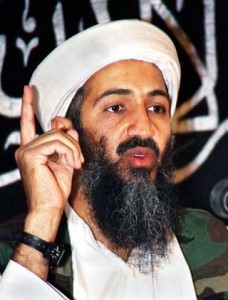
    On 1 May 2011 the world received the news that Osama Bin Laden was dead; gunned down in Pakistan by an elite team of US Navy Seals. Even before his death Bin Laden had become a legendary persona. Not only was he a terrorist leader responsible for the deaths of thousands of innocents but he functioned as a contemporary paradigm of the fanatical religious nutter who promotes hatred, violence and intolerance – much like the symbol Adolf Hitler was to earlier generations.

    Osama Bin LadenThe 9/11 terrorist attacks reinvigorated a fear that has lain dormant in the western psyche since at least the 17th century. This fear is encapsulated in an objection to belief in God known as the argument from historical atrocities. Many critics of religion refer to the religious wars that tore Europe apart during the 17th century, citing events such as the Inquisition and Crusades — although lately the Taliban have been the image of choice.

    Recently, whilst debating the viability of religious morality at the University of Notre Dame, best-selling author Sam Harris repeatedly cited the Taliban as a representative example of theological ethics. One need not read far into the literature of contemporary free thinkers to uncover this line of argument. Consider Jim Peron of the Institute for Liberal Values:

    “To admit religion into the “public arena” is “dangerous.” And long term the results will be just as bloody and violent as they were in the past. … To put religion into that sector is to ignore centuries of history and return to the conflict-ridden, bloody world of the Dark Ages.”

    Peron went on to refer to common motifs of the Inquisition: “crazy Puritans”, Servetus’ execution in Calvin’s Geneva and so on. Similar themes abound in the writings of Dawkins, Harris and Hitchens. The citation of historical cases is not in itself an argument so it is hard to discern the exact objection here. It appears to consist of two claims. Firstly, that some people who believe in God have committed atrocities against other people. Secondly, that if people who hold a belief commit atrocities then that belief is either false or should be avoided by liberal-minded people.

    Historians Ronald Numbers and David Lindberg point to recent research having discredited the portrayal of the early Middle Ages as “the Dark Ages” brought about by Christianity. Similarly, research into Inquisition archives reveal that while such tribunals did exist, many popular beliefs are based on embellishment, exaggeration and propaganda rather than a sober assessment of facts. The picture of the Inquisition that emerges from these studies is significantly more benign than has popularly been thought. Similarly, historian Leland Ryken’s studies on the Puritans have questioned many of the popular stereotypes Peron referred to.

    Take Peron’s allusion to the execution of Servetus. In his study on the life of Calvin, Oxford Theologian Alister McGrath argues (more…)

  • God, Morality and Abhorrent Commands: Part II Robert Adams

    In this three-part series I will look at some different ways of adjudicating conflicts between apparent divine commands and moral beliefs. I started with Immanuel Kant, now I will look at Robert Adams’ position.

    In “God, Morality and Abhorrent Commands: Part I Kant” I mentioned Phillip Quinn’s observation that theists can face a particular dilemma,

    “[I]t seems possible that a theist should have both good reasons for believing that God has commanded him to perform a certain action and good reasons for believing that it would be morally wrong for him to perform that action. Thus a theist can be confronted with moral dilemmas of a peculiar sort.”

    Immanuel Kant argued that when faced with such a dilemma the theist should reject the belief that God has commanded the action and accept the moral belief. This was due to his belief that moral beliefs are more certain that theological beliefs. I contested this claim. More recently Robert Adams has defended Kant’s conclusion. Consider the structure of the kind of dilemma Quinn cites,

    [1] Whatever God commands is morally permissible;

    [2] God commands X;

    [3] It is wrong to do X.

    These three claims contradict each other; like Kant, Adams suggests that the rational person should reject [2]. However, his reasons are somewhat different. Adams persuasively reasons that [1] is true only if God is understood as perfectly good, in the sense of being loving, just and so on. If God were evil or morally indifferent then it would be possible for him to command wrongdoing and so [1] would be false.  This means that a person who accepts [1] must presuppose that God is good.

    Adams argues that God cannot be meaningfully said to be good if what he commands drastically departs  from what we consider to be right and wrong. Human beings have some grasp of what constitutes goodness and some grasp of what constitutes right and wrong and it is part of our concept of what is good that a good being does not command wrong doing. Moreover, to call a being good is to attribute to it a character trait that is incompatible with certain other actions, attitudes and so on. Raymond Bradley made the point succinctly in his debate with William Lane Craig “Can a Loving God Send People to Hell?“

    “If we were to describe someone such as Hitler as perfectly good despite all his evil doings, we’d be playing word games which are intellectually dishonest as they are morally pernicious. … it would be to deprive the word “holy” of its ordinary meaning and make it a synonym for “evil.”

    This supports Adams’ conclusion that one cannot rationally accept [1] as one implicitly assumes that God does not issue commands at variance with our conception of morality. In Finite and Infinite Goods: A Framework for Ethics he concludes,

    “Our existing moral beliefs are bound in practise, and I think, ought in principle, to be a constraint on our beliefs about what God commands. We simply will not and should not, accept a theological ethics that ascribes to God a set of commands that is too much at variance with the ethical outlook we bring to our ethical thinking.” [Emphasis original]

    As with Kant there is a lot of truth to this; however, Adams’ position has certain limits.  As critics of Adams have pointed out his conclusion is limited. In the paragraph above Adams concludes that “our existing moral beliefs” must be a constraint on our beliefs about what God commands. His justification for this is that we “should not, accept a theological ethics that ascribes to God a set of commands that is too much at variance with the ethical outlook we bring to our ethical thinking.” The phrase “too much” suggests that one can accept ascription of a set of commands that is somewhat at odds with the outlook we bring to our ethical thinking.

    Two points Adams makes elsewhere in Finite and Infinite Goods suggest that this limitation on his conclusion is necessary. First, while we do have some grasp of what is good and some grasp of what is right and wrong it is evident that our moral judgements are fallible. Adams calls this the “transcendence” of the good. He states,

    “All of God’s commands and judgments are right; God is the ethical standard. But our beliefs (even the most cherished) about them must be distinguished from God’s commands and judgments themselves. To fail to make that distinction is idolatry.”

    Adams is surely correct here. While God does not command wrongdoing. It is quite likely that a perfectly good omniscient being would command something contrary to what we think is wrong.  Our moral intuitions are fallible, hence it is possible that some of God’s commands would clash with our own moral judgements. In fact to suggest that God would never command something which we consider to be wrong expresses an incredible hubris. It is to dogmatically assume that we are such good judges of morality that God could never disagree with us. It is to put our own moral judgements beyond question. The existence of some commands that strike us as strange or immoral does not count for much.

    Second, our concept of goodness and our judgement about particular cases can be and sometimes is subject to revision. We change our opinions about the goodness and rightness of certain things without “playing word games which are intellectually dishonest” or depriving “the word ‘holy’ of its ordinary meaning and make it a synonym for ‘evil.’”  If this were not the case, one could never honestly or rationally change ones mind on an ethical issue. Nor could people coherently disagree with or persuade one another about moral issues. Adams’ notes this when he writes that he accepts “the possibility of a conversion in which one’s whole ethical outlook is revolutionized, and reorganized around a new center” but “we can hardly hold open the possibility of anything too closely approaching a revolution in which, so to speak, good and evil would trade places”.

    These points, however, quite evidently limit Adams’ conclusion. What his argument, in fact, shows is not that “our existing moral beliefs must serve as a constraint on our beliefs about what God commands” but rather that certain types of our existing beliefs do this, those so central to our concept of goodness that accepting them would be “approaching a revolution in which, so to speak, good and evil would trade places.” In “A Psychological Constraint on Obedience to God’s Commands: The Reasonableness of Obeying the Abhorrently Evil” James Rissler notes,

    “In such an instance, obedience requires that one give up everything one previously believed about morality… one has been commanded to relinquish everything one understands about the nature of goodness, one will have no concept of the good with which to identify Gods command, there will be complete breakdown of between everything one currently affirms about goodness and everything one is asked to believe about goodness.”

    Rissler gives two examples; the first is where God issues a command to reverse one’s conception of right and wrong or issues a set of commands, each one of which negates every moral imperative one currently accepts. Second, he suggests that a moral belief might be “sufficiently integral to one’s conception of morality” that abandoning it would force such a radical revision as to destroy one’s concept of goodness all together. Imagine a command to kill everyone around you purely for entertainment or a command that said harming, hurting and inflicting suffering on people for no reason at all is permissible. Consider a command to hate God and despise all other human beings. One cannot accept a system of divine commands where every duty we believe in is declared false nor can we accept a system which suggests that the vast majority of our moral beliefs are mistaken. This would come too close to the problematic revolution Adams talks of.

    To sum up, in Part I and II, I have looked at the Kantian approach to the kind of dilemma Quinn sketches. Neither Kant or Adams, I think, establish the claim that in “our existing moral beliefs must serve as a constraint on our beliefs about what God commands.” They did, however, lend support for a weaker thesis. Kant’s argument, for example, does suggest that those moral claims about which we are certain, should serve as such a constraint and I mentioned several beliefs which I consider to be fairly certain as examples.

    Adams’ argument on the other hand suggests that we cannot coherently “accept a theological ethics that ascribes to God a set of commands that is too much at variance with the ethical outlook we bring to our ethical thinking.” He argues that we cannot coherently or defensibly accept a theological ethics which, in effect, makes good and evil trade places and which so radically transforms our concept of goodness so that good becomes a synonym for what we call evil or calls our concept of goodness so radically into question that it breaks down. Certain beliefs such as it is prima facie wrong to inflict pain and suffering on others or it is prima facie wrong to treat others with contempt” or it is prima facie wrong to lie, steal and kill are so central to our account of goodness that we cannot coherently accept that a perfectly good being has issued commands that negate them.

    In my next post I will look at Philip Quinn’s alternative.

    RELATED POST:
    God, Morality and Abhorrent Commands: Part I Kant
    God, Morality and Abhorrent Commands: Part III Philip Quinn

  • God, Morality and Abhorrent Commands: Part I Kant

    In this three-part series I will look at some different ways of adjudicating conflicts between apparent divine commands and moral beliefs starting with Immanuel Kant.

    In “Commonsense Atheism and the Canaanite Massacre” I addressed a question put to me by Luke from Commonsense Atheism,

    “If Matt did think these events happened literally as described in the Bible, would he then conclude that God was an evil monster to command them? Or would he, in the end, agree with Bill Craig that genocide is okay as long as God feels like it?”

    In my response I pointed out Craig claims that killing non-combatants in war is permissible if a loving and just God commands it (which is an implication of a divine command theory). This conditional is arguably true. Either it is possible for a just and loving omniscient person to command genocide or it is not. If it is then genocide would only be commanded in situations where a just and loving person, aware of all the relevant facts, could endorse it; under these circumstances it is hard to see how genocide could be evil. On the other hand, if it is impossible for a just and loving omniscient person to ever command genocide then the situation Luke mentions is one with an impossible antecedent. On the standard accounts of counter-factual logic, conditionals with impossible antecedents are true. So far from being absurd there are reasons for thinking this conditional is true.

    The question Luke asks is really a species of a larger and important question in theological ethics. In Finite and Infinite Goods Robert Adams notes “A convincing defense of a divine command theory of the nature of obligation must address our darkest fear about God’s commands–the fear that God may command something evil.” Philip Quinn makes a similar point,

    “[I]t seems possible that a theist should have both good reasons for believing that God has commanded him to perform a certain action and good reasons for believing that it would be morally wrong for him to perform that action. Thus a theist can be confronted with moral dilemmas of a peculiar sort.”

    I suspect Luke is really asking how a theist can rationally respond to a dilemma of this sort. While I do not know what Luke’s opinion on this issue is, a common view is that if a theist has good reasons for believing an action is wrong then any claim that God has commanded should be rejected. The locus classicus for this position is Immanuel Kant; in Reason within the Bounds of Religion, Kant stated:

    “Abraham should have replied to this supposedly divine voice: “That I ought not kill my good son is quite certain. But that you, this apparition, are God — of that I am not certain, and never can be, not even is [read: if] this voice rings down to me from (visible) heaven.”

    Similarly, in the Conflict on the Faculties he states he states,

    “That to take a human being’s life because of his religious faith is wrong is certain, unless (to allow the most extreme possibility) a divine will, made known to the inquisitor in some extraordinary way, has decreed otherwise. But that God has ever manifested this awful will is a matter of historical documentation and never apodictically certain. After all, the revelation reached the inquisitor only through the intermediary of human beings and their interpretation, and even if it were to appear to him to have come from God himself (like the command issued to Abraham to slaughter his own son like a sheep), yet it is at least possible that on this point error has prevailed.”

    Kant, here, is discussing the kind of dilemma Quinn refers to. The dilemma can be spelled out as follows, in certain situations a theist might find him or herself with reason to affirm the following three propositions,

    [1] Whatever God commands is morally permissible;

    [2] God commands X;

    [3] It is wrong to do X.

    These three claims cannot all be true, so a rational person must reject one of them; the question is which one? Kant’s answer is that when faced with a dilemma of this sort the theist should reject [2].  It is worth elaborating on his position a bit.

    First, note that Kant accepts [1] he grants that if we knew that God commanded the killing of a particular human being, it would be permissible to kill that human being. Kant’s objection is that one cannot be rational in believing that God has, in fact, issued such a command. Philip Quinn notes that Kant’s argument involves an appeal to an epistemic principle: whenever two conflicting claims differ in epistemic status, the claim with the lower status is to be rejected.  Kant contends that moral claims such as “it is wrong to kill innocent people” are certain. However, claims that God commands or forbids a certain action are not certain and never can be. From these points it follows that a rational person will accept [3] and reject [2].

    Despite its appeal Kant’s argument is flawed for several reasons. Philip Quinn notes two problems. First, “Kant has an extremely optimistic view of our ability to attain epistemic certainty about principles of moral wrongness,” he thinks we can be certain of moral claims. This, however, is dubious. There are some moral claims of which I am fairly certain. I am certain, for example, that it is wrong to inflict as much pain on another as I can merely for my own entertainment. I am fairly certain that killing, assault, theft and lying are prima facie wrong and can only be justified if some overriding moral reason applies. However, many moral claims are highly controversial and are far from certain at all. Consider, for example, the debate over whether the bombing of Hiroshima was justified because it saved a huge number of lives by ending a war early. While I myself do not share this opinion, I would not say I am certain about it. Similarly, consider moral debates about capital punishment or euthanasia or affirmative action. While I believe there are defensible and justified answers to these questions, I doubt we can claim certainty about answers to these questions.

    Second, Kant claims that we can never be certain that God has prohibited a certain action. Quinn notes, “It would thus seem to be well within God’s power to communicate to us a sign that confers on the claim that God commands some intolerant behavior, for example, issuing threats to heretics, a fairly high epistemic status.” If God were to do this then we would have certainty that he had commanded the action. So it is not clear that beliefs about what God wills are always less certain than moral beliefs.

    I am inclined to push this criticism further. It seems to me that many sceptical worries that are raised about God and his commands apply with equal force to moral beliefs. Consider three common concerns sceptics raise about religion. One is the claim that the existence of God is not necessary to explain any empirical phenomena. The second is the concern that the claim God exists and has commanded a particular action cannot be empirically demonstrated or proven to exist. The third is the widespread pluralism with regard to both the existence of God and his nature. All three of these worries apply to moral beliefs. The existence of moral properties appears unnecessary to explain any empirical phenomena, almost any empirical phenomena can be explained equally well by accepting that moral beliefs are all false but that people think they are true. Attempts to prove that moral beliefs are true from non-moral premises alone are probably more controversial than any argument for the existence of God. And there is widespread pluralism over whether moral properties exist; nihilists and non-cognitivists deny such properties exist and amongst believers in the truth of moral beliefs, there is widespread disagreement over the nature of morality. Intuitionists contend it is a non-natural property, naturalists contend it is a natural property but disagree over what the natural property in question is, supernaturalists contend it is a divine command or a theological property and so on.

    In fact, Kant’s own argument provides an example of this point. Kant argues in The Conflict in the Faculties that we can never be certain that God has commanded an action because,

    “the revelation reached the inquisitor only through the intermediary of human beings and their interpretation, and even if it were to appear to him to have come from God himself (like the command issued to Abraham to slaughter his own son like a sheep), yet it is at least possible that on this point error has prevailed.”

    But this is equally true of many moral beliefs, a good amount of what people believe with regards to morality comes to them through the intermediary of human beings and their interpretation. Most westerners belief’s in liberal ideals, such as, the equality of women, opposition to slavery and so are mediated through human beings. Moreover, even if we directly intuit moral properties, it is possible that we are mistaken. Human moral intuitions and judgements are fallible and can err. So in many instances I am inclined to think that the sceptical worries people raise to conclude that theological beliefs are uncertain apply also to moral beliefs. To appeal to these concerns, so as to claim that belief about God’s will is less certain than moral beliefs, is to engage in special pleading.

    In my next post I will look at Robert Adams’ defence of Kant’s position and then I will look at Philip Quinn’s alternative.

    RELATED POSTS:
    God, Morality and Abhorrent Commands: Part II Robert Adams
    God, Morality and Abhorrent Commands: Part III Philip Quinn

  • The Theology of the Declaration of Independence

    As I write this it is just beginning to be the 4th of July in the United States now, though its been 4th July for some time here in New Zealand.

    The 4th of July is, of course, Independence Day. Typically in New Zealand, those members of the secular blogosphere, who consider themselves to be classical liberals, have an annual rant on the 4th of July about the Declaration of Independence, praising the philosophy expounded in this document.

    Declaration of IndependenceNot PC’s Peter Cresswell, for example, states in Happy July 4th! that “with the exception of just a few words, the words could hardly be bettered today;” the declaration is, “A wonderful, wonderful anthem to freedom that rings down through the years.”  He bemoans, “if only the real meaning of those words could be heard and understood.”

    A few years ago Kiwiblog’s David Farrar made similar claims, he stated he would often “marvel at those marvelous words, written in the heat of oppression…Marvelous, absolutely marvelous.”

    I agree. I would simply point out to my secular, liberal, country-men what the words in this document actually say, and some of the philosophical ideas they expound.

    First, the declaration refers to God; it does so four times. Maverick Philosopher has an excellent analysis of the theological content;

    In the initial paragraph, we find the phrase “…Laws of Nature and of Nature’s God….” This phrase rules out pantheism: God is distinct from Nature. In the second paragraph, there is the phrase, “…endowed by their Creator with certain unalienable rights….” Putting these two references together, we may infer that the God being referred to is not merely a deistic initiator of the temporally first segment of the physical universe, but a being involved in the creation of the human race. For if God endowed human beings with rights, this endowment had to occur at the time of the creation of human beings, which of course occurred later than the beginning of the physical universe. In traditional jargon, God is a creator continuans rather than a mere creator originans. He is not a mere cosmic starter-upper, but a being who is continuously involved in maintaining the universe in existence.

    …

    The other two references are in the final paragraph. There we find the phrase, “…Supreme Judge of the World for the Rectitude of our Intentions….” near the beginning of the paragraph, and near the end, “…a firm Reliance on the Protection of divine Providence….” Now if God is the Supreme Judge, then he is more than a mere metaphysical cause responsible for the universe’s beginning to exist; he is also the supreme moral arbiter. And since he endows human beings with rights, as opposed to being merely a judge of rights antecedently possessed, then it seems we may infer that God is the source of moral distinctions (as opposed to a mere judge of them).

    The reference to divine providence is further evidence that the conception of God in the Declaration is non-deistic. For if God provides and protects, then God has an ongoing involvement with the world and its inhabitants such as would be ruled out by a deistic view. It should also be obvious that talk of providence (from the Latin, pro-videre) implies divine foreknowledge which implies intelligence and perhaps omniscience on the part of the deity. The God of the Declaration is not a blind metaphysical cause posited to explain why the universe began to exist, but a being with such attributes as moral goodness and intelligence…. So if by ‘deism’ is meant the doctrine that God is a mere metaphysical cause of the universe’s beginning to exist who is thereafter uninvolved in its continuing to exist, then the God of the Declaration is non-deistic.

    Second, the declaration claims that belief in a creator is self-evident; that is, it is a properly basic belief, which is rationally acceptable to hold in the absence of any proof.

    We hold these truths to be self-evident, that all men are created equal, that they are endowed by their Creator with certain unalienable Rights, that among these are Life, Liberty, and the pursuit of Happiness.

    Third, the declaration makes political pronouncements about public policy on the basis of these theological claims and expects these pronouncements to be taken seriously.

    Fourth, the declaration says that various rights, such as the right to life and liberty, are unalienable. That is, a person cannot alienate one’s life or freedom as they can legally alienate a piece of property. You can’t take my property if I do not consent to you having it but if I do consent, you can take it; property is alienable, life and liberty are not. The argument of the declaration reflects John Locke’s argument in the Second Treatise of Civil Government;

    To understand political power right, and derive it from its original, we must consider, what state all men are naturally in, and that is, a state of perfect freedom to order their actions, and dispose of their possessions and persons, as they think fit, within the bounds of the law of nature, without asking leave, or depending upon the will of any other man.[1]

    …

    But though this be a state of liberty, yet it is not a state of licence: though man in that state have an uncontroulable liberty to dispose of his person or possessions, yet he has not liberty to destroy himself, or so much as any creature in his possession, but where some nobler use than its bare preservation calls for it. The state of nature has a law of nature to govern it, which obliges every one: and reason, which is that law, teaches all mankind, who will but consult it, that being all equal and independent, no one ought to harm another in his life, health, liberty, or possessions: for men being all the workmanship of one omnipotent, and infinitely wise maker; all the servants of one sovereign master, sent into the world by his order, and about his business; they are his property, whose workmanship they are, made to last during his, not one another’s pleasure[2]

    …

    This freedom from absolute, arbitrary power, is so necessary to, and closely joined with a man’s preservation, that he cannot part with it, but by what forfeits his preservation and life together: for a man, not having the power of his own life, cannot, by compact, or his own consent, enslave himself to any one, nor put himself under the absolute, arbitrary power of another, to take away his life, when he pleases. No body can give more power than he has himself; and he that cannot take away his own life, cannot give another power over it.[3]

    The point here is that because your right to life and liberty are from God, no one can legitimately enslave or kill you, even if you consent to it. This was not a mere incidental addendum idea, it was central to Lockean political philosophy, which maintained (as the declaration does) that the government derives its powers from the consent of the governed. If a person can consent to be killed or enslaved then they can consent to the government enslaving them also to having the arbitrary power to kill them and hence tyranny can be legitimate. The reason tyranny is illegitimate is because, “No body can give more power than he has himself; and he that cannot take away his own life, cannot give another power over it.”

    The declaration then makes a metaphysical claim: God exists. It makes an epistemological claim about faith and reason: that belief in God is rational independent of proof. It makes an implicit claim of political philosophy: religion is not a private thing that should not influence public life but rather, theological claims should influence public life. Finally it makes a moral claim; that consenting adults do not have a right to do whatever they like with their own bodies, rather there are “Laws of Nature and of Nature’s God” that bind all human beings, that they are compelled to follow even if all parties consent otherwise. Governments are legitimate to the extent in which they respect these laws.

    I agree with PC, it is hard to improve on this philosophy; I have defended it in several places on this blog.

    Ironically, however, the militant secular liberals in NZ who parrot the declaration seem committed to attacking these ideas and rejecting them on every point. They argue that belief in God is irrational because it cannot be empirically proven, they claim that the public square should be secular, that religion should be private and not influence public policy and they argue that liberty means consenting adults can do whatever they like with their own bodies and lives. Far from being unalienable, a person’s life and freedom is his property to alienate as that person sees fit.

    It is also hard to disagree with PC’s sentiments that the declaration is “A wonderful, wonderful anthem to freedom that rings down through the years. If only the real meaning of those words could be heard and understood.” “Indeed, if only.”

    [1] John Locke Second Treatise of Civil Government Section II 4.
    [2] Ibid II6.
    [3] Ibid IV 23.
  • Guest Post: No Official Religion in God’s Own?

    David Simpkin is a Hamilton based lawyer with an interest in church-state issues. He studied law at the University of Auckland and holds a BA majoring in history and political studies. David is married to Susan and has a infant son, Caleb. He attends Whitiora Bible Church in Hamilton. David writes:

    As a holiday weekend that coincides with the most significant festival on the Christian calendar, Easter, concludes we should reflect on the freedom of religion we have in this nation. The Human Rights Commission is calling for submissions on a draft statement on freedom of religion and belief that includes the statement:

    ‘New Zealand has no official or established religion.’

    Race relations conciliator Joris de Bres has publicly said that New Zealand’s absence of a state religion is a statement of fact[1]. Former Prime Minister Helen Clark was also quoted as saying there is no state religion, there will be no state religion[2]. These comments may be a surprise to those Kiwis who thought rugby has the role of a national religion!

    Given the above comments by influential New Zealanders and the tax payer supported Human Rights Commission it must be clearly correct legally to say that New Zealand has no official religion.

    Well, actually, no, it is not.

    Does New Zealand Have an Official Religion?
    An important distinction needs to be made at the outset. A state with an established religion is one in which a particular religion or church is effectively an arm of the state, and the state identifies with a particular religion. A state with an official religion gives special recognition or privileges to a religion. While an established religion and an official religion are usually found together, that is not always the case.

    One of the most (if not the most) important offices in New Zealand is that of our head of state. New Zealand is a constitutional monarchy and the head of state in New Zealand is our monarch, currently Queen Elizabeth II.

    The Accession Declaration Act 1910 provides New Zealand’s head of state’s oath of office’ This accession declaration states:

    “I … do solemnly and sincerely in the presence of God profess, testify, and declare that I am a faithful Protestant, and that I will, according to the true intent of the enactments which secure the Protestant succession to the Throne of my Realm, uphold and maintain the said enactments to the best of my powers according to law.”

    The accession declaration provides that the Queen must claim to be a Protestant. This is inconsistent with the notion that New Zealand has no official religion. It also refers to other laws which “secure the Protestant succession.” These other laws are the Bill of Rights 1688[3] and The Act of Settlement 1700[4]. All these acts of parliament were re-affirmed as part of the law of New Zealand by our parliament as recently as 1988 in the Imperial Laws Application Act (which, curiously given her comments above, Helen Clark voted in favour of passing[5]). The other laws that secure the Protestant succession are intended to ensure that the King or Queen of New Zealand is always a Protestant Christian. These laws are, incidentally, identical to the current law in the now multi-religious United Kingdom. Where New Zealand differs from the United Kingdom is that neither the Anglican nor Presbyterian churches are established.

    The legal requirement that New Zealand’s head of state must be a Protestant Christian means that in our constitutional form at least we are a Christian nation. Technically our official religion is Anglicanism[6]. Having an official religion of course in no way requires New Zealanders to profess a particular religion. But does an Official Religion pose a threat to Religious Minorities? To answer this question lets refer to some overseas examples.

    Having no official religion and a secular state has been no guarantee that freedom of religion and human rights generally will be respected in North Korea, Cuba and the People’s Republic of China, all of which have woeful human rights records.

    By contrast the Lutheran church is the established church in Norway (there is even a minister of church affairs). It would be fair to say that Norway is not known for its suppression of freedom of religion or for having a poor human rights record.

    Likewise, the established Anglican Church in England and the Presbyterian Church in Scotland has not led to a lack of freedom of religion. Indeed the tolerant Anglican Church is preferable for religious minorities to intolerant secularism.

    It may come as a surprise to learn that there are leading Muslim and Jewish scholars who are actually against disestablishing the Anglican Church in the United Kingdom. To paraphrase their argument, an established but tolerant Anglican Church is preferable to a nation where all reference to the religious or sacred is ruthlessly excluded from the public domain[7].

    The intolerant secularism rightly feared by religious minorities has been evident in France recently. France has already banned the Islamic headscarf and outward wearing of the crucifix, and other religious symbols, in state schools[8] and is considering banning the wearing of a burqa altogether, moves which are causing public discord in France[9].

    Having an official religion is not necessarily any threat to freedom of religion, and may actually be more beneficial to religious minorities than aggressive secularism. The advancement of the rights of religious minorities and multi-culturalism should not be mis-used as a Trojan horse to advance intolerant secularism.

    Conclusion
    As a nation we should celebrate our tolerant Christian tradition, not attempt to falsely deny the legal fact that Christianity is a part of our national constitution. Ironically denials that Christianity is our official religion are playing down the Christian religious tradition that bought about the very religious freedom and tolerance the Human Rights Commission is attempting to promote.

    We have nothing to fear and will gain by having a National Statement on Religious Diversity in New Zealand and a Draft Statement on Freedom of Religion and Belief that acknowledge the existence of New Zealand’s official religion rather than willfully ignore it.


    [1] “There’s No State Religion –De Bres” New Zealand Herald 19 February 2007.
    [2]
    As above.
    [3]
    The relevant section of Bill of Rights 1688 provides:

    And whereas it hath beene found by experience that it is inconsistent with the safety and welfaire of this Protestant Kingdome to be governed by a Popish Prince or by and King or Queene marrying a Papist the said Lords Spirituall and Temporall and Commons doe further pray that it may be enacted that all and every person and persons that is are or shall be reconciled to or shall hold communion with the See or Church of Rome or shall professe the Popish religion or shall marry a Papist shall be excluded and be for ever uncapeable to inherit possesse or enjoy the Crowne and Government of this Realme.

    [4] Section 3 of the Act of Settlement 1700 states (inter alia) “that whosoever shall hereafter come to the possession of this Crown shall joyn in Communion with the Church of England.”
    [5]
    Hansard, 1988 (4th Labour government 1984-1990).
    [6] The Head of State is required to be an Anglican – refer to footnote 4.
    [7]
    Tariq Modood “(Muslim) Establishment, Multiculturalism and British Citizenship,” Political Quarterly 65 (1994) pp.53-73; Rabbi Jonathan Sacks, Ibid at 63-64; also Jonathan Sacks, The Persistence of Faith: Morality and Society in a Secular Age, London, 1991, cited in R Ahdar and J Stenhous et al God and Government The New Zealand Experience, University of Otago Press 2000.
    [8] “Party Pushes Burqa Law Despite Public Discord” New Zealand Herald 10 January 2010.
    [9] Ibid.

    [Wikipedia have a chart showing which countries Queen Elizabeth II is currently head of state of.]

  • Guest Post: Dan Brown’s History of Science

    This guest post was submitted by Dr James Hannam. Dr Hannam is a UK based historian with degrees in physics and history from the Universities of Oxford and London and a PhD in the history of science from the University of Cambridge. He blogs at Quodlibeta.

    The film adaptation of Dan Brown’s Angels and Demons was released this year and, on top of Brown’s new novel, appears to have done a roaring trade. Reports suggest that this is a better effort by director Ron Howard than his The Da Vinci Code, although most critics would feel that making a worse film would have been a stiffer test.

    For those lucky enough to be unfamiliar with the book, Angels and Demons is set in Rome where hunky Harvard symbologist Robert Langdon, played by Tom Hanks, is trying to prevent the Illuminati from detonating an anti-matter bomb.  According to Dan Brown’s alternative view of history, the Illuminati are a secret society of scientists (Copernicus and Galileo were, of course, members) who were persecuted by the Catholic Church.  After a great purge in the seventeenth century, we learn, the society went underground and plotted revenge. For some reason, it has taken them over three hundred years to get their act together.

    The Da Vinci Code launched the literary careers of a whole faculty previously-obscure professors of New Testament Studies. Admittedly, they had good reason for wanting to put the record straight about Brown’s distortions of early Christian history.  This time, it’s historians of science who might be upset by Brown’s misrepresentation. Because his contention that the Catholic Church has spent the last two millennia holding back the advance of science is as wrongheaded as the story that Mrs Jesus retired to the south of France with her kids.

    Of course, it’s not just Dan Brown who believes in the battle between science and religion. While few people think that the Illuminati really were a group of scientists suppressed by the Church, the perception of an eternal conflict between reason and faith is widespread. It’s true that the Church did make a single significant mistake in 1616, when it banned Copernicus’s opinion that the earth orbits the sun. But the subsequent trial of Galileo over the issue had more to do with papal self-esteem than astronomy. And even in this case, the Catholic Church was siding with the scientific consensus of the time. Still, you can’t manufacture an eternal conflict from a single example, so proponents of the hypothesis have had to resort to a different strategy – inventing the evidence.

    For example, in the book of Angels and Demons, Brown alleges that the Church had Copernicus murdered for his heliocentric model. While this is a more extreme allegation, there is a general belief that Copernicus feared persecution for his ideas. It’s widely thought that he refrained from publishing them until he was on his deathbed. In fact, he had circulated a pamphlet outlining his theory decades before he died. This was favourably received by senior churchmen and he was urged to publish by a cardinal. He even dedicated his great book, On the Revolutions of the Heavenly Spheres, to the Pope.

    Alas, as long as the likes of Dan Brown sell far more books than historians of science, this is a myth that is unlikely to go away.

    James Hannam’s book God’s Philosophers: How the Medieval World Laid the Foundations of Modern Science is published by Icon. The best price we could find for it from a New Zealand bookseller, with free delivery, was through The Nile Online Bookstore at the above link. International readers can buy it through Amazon. As I have previously stated elsewhere, it would make a good Christmas gift…

    RELATED POSTS:
    The “Dark Ages” and Other Propaganda
    More on the “Dark Ages” and Other Propaganda
    Things They Don’t Teach you in Public Schools…
    The Flat Earth Myth
    Contra Mundum: The Flat-Earth Myth

  • Weight Watchers and the Historical Atrocities Argument

    We’ve all heard the slogan that atheism is superior to theism because of all the atrocities committed in the name of religion. If you flick through the pages of the new-atheist publications by the likes of Dawkins, Hitchens, Loftus, Harris, et al you’ll probably find some version of this assertion in each.

    Setting aside the dubious factual claims and the fact that I could list a stack of atheist atrocities that could outnumber the theist ones just from the last century alone, there is another way of addressing the slogan. If a person joined Weight Watchers, got the points book, the pamphlets explaining how the program works and began attending weekly meetings to fellowship with others on the same journey but instead of following the instructions began to bend the rules, invent new ones and ignore others and as a result began to gain weight, could that person justifiably claim that Weight Watchers made them fat? That Weight Watchers should be rejected as a weight-loss program, in fact, attempting to lose weight in and of itself is a bad thing, because this person gained weight whilst ostensibly being a follower of the program?

    If you can see how ridiculous it would be to blame Weight Watchers and to abandon the pursuit of weight loss because someone who cheated on the program had a bad outcome then why can’t you see it when the same reasoning is applied to atrocities committed in the ‘name of’ Christianity

    H/T Rodney Lake at Thinking Matters Tauranga