Tag: Osama Bin Laden

  • Divine Commands Post 9/11

    The night of September 11, 2001, was a night we did not get much sleep in. By 4am September 12 (New Zealand time) our two-week old son and 14 month old daughter had woken us twice already. Frustratingly, I awoke again sometime after 4am to a different noise coming from the lounge; it turned out that our eldest son, then aged 6, was up watching television. I stumbled into the room and told him to go back to bed. As I got back into bed I told Madeleine “It’s OK hon, it was just Christian watching some movie about New York” (I’d seen the Twin Towers on the screen as I switched the TV off). Less than an hour later our sleep was interrupted again, this time by the telephone. Madeleine, awoken for the 4th time that night, angrily moaned “who the hell is ringing at this time? Don’t they know we have a newborn?” It was my Dad.

    “Matt” he told me tersely “I am just ringing to say I am alright. I got grounded at Heathrow airport and did not fly into the US as I had intended to this morning and so was not caught up in the drama that’s unfolded.”

    “What drama?” I said bewilderedly “why wouldn’t you be ok?”

    “Haven’t you heard?” he responded “planes have been high-jacked; there has been a terrorist attack in America – the World Trade Centre has been hit, as has the Pentagon”.

    I suddenly was wide awake.
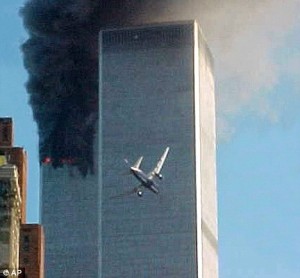
    9/11 World Trade Centre Terrorist AttackOne particularly poignant fact about the events of 9/11 is that the terrorists who carried out the attacks justified their actions by claiming God commanded them to do so. That fact has lead many contemporary commentators to argue that a divine command theory of ethics is indefensible. September 11 is just the most recent example in a series of incidents throughout history such as the Crusades, Inquisition and wars of religion. Divine command ethics is discredited by the fact that people appeal to such commands to justify terrorism.

    At first glance this objection is hard to take seriously; the premise is that some people have appealed to divine commands to commit atrocities. The conclusion is that any appeal to divine commands in ethics should be rejected.  This conclusion does not follow. To be valid the objector must assume a tacit premise: if people appeal to certain reasons to justify atrocities, then appeals to those reasons are always problematic. This premise is false.

    An analogous line of reasoning applies to appeals to right and wrong per se. Take any historical atrocity that people have attempted to justify; in almost every case the justifier will have argued that the action in question was the right action to do, the justifier invariably appeals to the purported rightness of their action. If the tacit premise is true then appeals to right and wrong are always problematic.

    Other examples illustrate the same point. The “reign of terror” during the French Revolution was justified by appeals to liberty, equality, fraternity and the rights of humankind; one victim of the guillotine famously remarked, “Oh, liberty, what crimes are committed in your name?” Millions have been slaughtered by appeals to the greater good of society or the liberation of the oppressed classes and it is well known that people have defended wars on the basis of justice and social peace. Should we therefore avoid liberty, equality, opposing oppression, seeking justice, social peace and so on? Obviously not.

    The fact that people have attempted to offer justifications for atrocities by appealing to some reason does not entail that any or all appeals to such reasons are problematic. This is a fairly innocuous claim. Take any premise you like – secular or theological – it is true that a person could appeal to this premise in an attempt to justify something but this fact does not mean the premise is problematic. For the appeals to atrocities argument to have bite one needs to show more than just that someone has tried to justify an abhorrent action by appealing to God’s commands; one would have to show that they did so successfully, that God actually commands such practises.

    The claim that God commands atrocities appears to be indefensible. We need to remember that we are not talking about the commands of just anyone; we are talking about God, who is typically defined as a being who is omnipotent, omniscient, and morally perfect. So, as the terms are defined, the claim that it is possible for God to command people to torture others for fun is true only if it is possible for a morally perfect person to command an atrocious thing. But this is not possible. The very reason that critics cite atrocities in their arguments against God is because they regard these actions as paradigms of conduct that no morally good person could ever (more…)
  • Contra Mundum: Religion and Violence

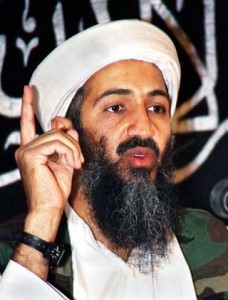
    On 1 May 2011 the world received the news that Osama Bin Laden was dead; gunned down in Pakistan by an elite team of US Navy Seals. Even before his death Bin Laden had become a legendary persona. Not only was he a terrorist leader responsible for the deaths of thousands of innocents but he functioned as a contemporary paradigm of the fanatical religious nutter who promotes hatred, violence and intolerance – much like the symbol Adolf Hitler was to earlier generations.

    Osama Bin LadenThe 9/11 terrorist attacks reinvigorated a fear that has lain dormant in the western psyche since at least the 17th century. This fear is encapsulated in an objection to belief in God known as the argument from historical atrocities. Many critics of religion refer to the religious wars that tore Europe apart during the 17th century, citing events such as the Inquisition and Crusades — although lately the Taliban have been the image of choice.

    Recently, whilst debating the viability of religious morality at the University of Notre Dame, best-selling author Sam Harris repeatedly cited the Taliban as a representative example of theological ethics. One need not read far into the literature of contemporary free thinkers to uncover this line of argument. Consider Jim Peron of the Institute for Liberal Values:

    “To admit religion into the “public arena” is “dangerous.” And long term the results will be just as bloody and violent as they were in the past. … To put religion into that sector is to ignore centuries of history and return to the conflict-ridden, bloody world of the Dark Ages.”

    Peron went on to refer to common motifs of the Inquisition: “crazy Puritans”, Servetus’ execution in Calvin’s Geneva and so on. Similar themes abound in the writings of Dawkins, Harris and Hitchens. The citation of historical cases is not in itself an argument so it is hard to discern the exact objection here. It appears to consist of two claims. Firstly, that some people who believe in God have committed atrocities against other people. Secondly, that if people who hold a belief commit atrocities then that belief is either false or should be avoided by liberal-minded people.

    Historians Ronald Numbers and David Lindberg point to recent research having discredited the portrayal of the early Middle Ages as “the Dark Ages” brought about by Christianity. Similarly, research into Inquisition archives reveal that while such tribunals did exist, many popular beliefs are based on embellishment, exaggeration and propaganda rather than a sober assessment of facts. The picture of the Inquisition that emerges from these studies is significantly more benign than has popularly been thought. Similarly, historian Leland Ryken’s studies on the Puritans have questioned many of the popular stereotypes Peron referred to.

    Take Peron’s allusion to the execution of Servetus. In his study on the life of Calvin, Oxford Theologian Alister McGrath argues (more…)

  • Fallacy Friday: Tu Quoque (But you did it too!)

    Last week I looked at the Straw Man Fallacy, today I want to explore the tu quoque fallacy. In latin tu quoque (too kwo-kwee) means “you too”;  in fact, the phrase “you did it too” is a good, succinct account of this fallacy. A tu quoque occurs when one rebuts a particular criticism of one’s own position by showing one’s opponent’s position is subject to the same criticism; this is done instead of showing that one’s own position is not susceptible to the criticism.

    A good example is the following segment of a CNN Interview with Osama Bin Laden,

    Q: Now, the United States government says that you are still funding military training camps here in Afghanistan for militant, Islamic fighters and that you’re a sponsor of international terrorism. … Are these accusations true? …

    Osama Bin LadenOsama Bin Laden: … At the time that they condemn any Muslim who calls for his right, they receive the highest top official of the Irish Republican Army at the White House as a political leader, while woe, all woe is the Muslims if they cry out for their rights. Wherever we look, we find the US as the leader of terrorism and crime in the world. The US does not consider it a terrorist act to throw atomic bombs at nations thousands of miles away, when it would not be possible for those bombs to hit military troops only. These bombs were rather thrown at entire nations, including women, children and elderly people and up to this day the traces of those bombs remain in Japan. The US does not consider it terrorism when hundreds of thousands of our sons and brothers in Iraq died for lack of food or medicine. So, there is no base for what the US says and this saying does not affect us.[1]

    Here Bin Laden was asked to respond to the claim that he has been sponsoring terrorism and training Islamic militants. Bin Laden argued that there is no basis for this claim because the United States supports terrorism and has itself engaged in activities which can justifiably be labelled ‘terrorist’. Bin Laden’s comments about the United States may or may not be true but either way it would not answer the questions as to whether Bin Laden has been sponsoring terrorism. It is possible, after all, that both Bin Laden and the United States sponsor and engage in terrorism.

    The Difference Between a Tu Quoque and Internal Criticism
    It is important to distinguish this argument from another similar argument, which I will call internal criticism. Internal criticism occurs when one argues against an opponent’s position by noting that one proposition the opponent holds conflicts with another proposition he holds.

    An example is Alvin Plantinga’s famous argument in God and other Minds. In this book Plantinga looks at the question of whether belief in the existence of God is irrational because it cannot be proven to be true with a non-circular argument (more…)