Category: Politics

  • Contra Mundum: Consenting Adults and Harm

    In debates over abortion, homosexual conduct, euthanasia, prostitution, drugs, those who call themselves liberals often mount the same basic argument; a socially or morally permissive stance is necessitated towards such practices because people have a right to choose do what ever they like with their own bodies. As John Stuart Mill put it in his book On Liberty:

    “The only part of the conduct of anyone, for which he is amenable to society, is that which concerns others. In the part which merely concerns himself, his independence is, of right, absolute. Over himself, over his own body and mind, the individual is sovereign.” [Emphasis added]

    John Stuart Mill

    Here Mill articulates the harm principle. He makes a distinction between other-regarding actions, actions that harm other people, and self-regarding actions, those that harm oneself. He argues that society, either by law or by social pressure, cannot justly regulate any action a person performs unless it is other-regarding; that is, it harms people other than the agent him/herself.

    As Mill’s position is typically interpreted, harm is understood to be governed by the principle volenti non fit injuria (where there is consent there is no injury); it refers to things done to other people without their consent. Mill states that a self-regarding action is one “which affects only himself, or affects others with their free and voluntary, and undeceived consent”.

    Mill intended his principle to be criteria as to what should and should not be made a criminal offence; he did not consider it criteria for determining what is right and wrong. Yet many contemporary liberals appear to use it in this latter way. They contend that as long as the action involves only consenting adults it is morally permissible. It is often asserted in our society, as though it were self-evident, that people have a moral right to do whatever they like with their own bodies.

    I think this claim is far from self-evident. Irving Kristol famously proposed this counter-example in a 1971 article in New York Times Magazine:

    “[T]he plain fact is that none of us is a complete civil libertarian. We all believe that there is some point at which the public authorities ought to step in to limit the “self-expression” of an individual or group even where this might be seriously intended as a form of artistic expression, and even where the artistic transaction is between consenting adults. A playwright or theatrical director might, in this crazy world of ours, find someone willing to commit suicide on stage, as called for by the script. We would not allow that-any more than we would permit scenes of real physical torture on the stage, even if the victim were a willing masochist. And I know of no one, no matter how free in spirit, who argues that we ought to permit gladiatorial contests in Yankee stadium, similar to those once performed in the Coliseum of Rome-even if only consenting adults were involved.”

    The examples Kristol gives are all cases where any person of common sense would condemn the act but where all the victims consent to be harmed.

    In his book Harmless Wrong Doing: Moral Limits of the Criminal Law, Liberal Political Philosopher Joel Feinberg considers Kristol’s objection as the most important and potentially-devastating counter-example to the harm principle and he spends considerable energy attempting to circumvent it. He offers four responses. Here I will argue that these responses fail.

    First, Feinberg questions whether such cases are really cases of consensual homicide. He suggests (more…)

  • Contra Mundum: Stoning Adulterers

    Back in 2005 there was a minor furore when Labour MP Ashraf Choudhary stated he agreed with the Koran’s teaching that people who engaged in homosexual conduct or who committed adultery should be stoned to death. In the media spiral that followed, some commentators pointed out that it was not just Islam that held this view; Christians are committed to the same conclusion. Consider Deuteronomy 22:22 “If a man is found sleeping with another man’s wife, both the man who slept with her and the woman must die. You must purge the evil from Israel” or Leviticus 20:10 “If a man commits adultery with another man’s wife—with the wife of his neighbour—both the adulterer and the adulteress are to be put to death. Often passages like this motivate a rhetorical question “why don’t Christians today stone to death women who commit adultery? After all, this is what the Bible commands isn’t it?”

    Ten Commandments

    I’ll make two points in response to this. First, those who press this line of argument assume that these commands are addressed to contemporary Christians. This is a dubious assumption; the laws occur as part of a covenant or vassal treaty between the tribes of Israel and God. While some of the laws expounded in this treaty reflect rules of justice and equity applicable to all people, Gentiles were not parties to this treaty nor were gentile Christians required to be – something the New Testament spends a lot of time elaborating on.

    Second, and this will be my main focus, this line of argument assumes that these apparent laws function like modern statute law; the assumption is that they are literal and binding commands to kill people who had committed certain crimes. It is also assumed that the author of these laws expected them to be carried out. Interestingly, it is precisely this assumption which many scholars of these laws have questioned. Here I will spell out some reasons why they do so.

    Comparisons between Leviticus and Deuteronomy and other ancient Near Eastern (“ANE”) law codes suggest they are the same genre. One feature of such codes is seemingly harsh penalties. In old Babylonian law, the hand that assaults was severed; a man who kissed another’s wife was to have his lips cut off; a person who stole bees was to be stung by bees; a man who raped another’s wife would be sentenced to having his own wife or daughter raped; a negligent builder whose house collapsed and killed another’s son would be sentenced to having his own son killed, and so on.

    ANE expert Raymond Westbrook notes that these prescribed punishments are both inconsistent with the actual legal practice known to have occurred in these cultures and are often inconsistent with themselves. He notes, “some law codes impose physical punishments and others payments for the same offenses, while some codes have a mixture of the two.” The contradiction is only apparent because, “in highlighting one or the other alternative, the codes are making a statement as to their view of the gravity of the offence.” He argues that the laws “reflect the scribal compilers’ concern for perfect symmetry and delicious irony rather than the pragmatic experience of the law courts.” Westbrook concludes that the method used in ANE legal texts was “to set out principles by the use of often extreme examples.”

    A similar point is made by Old Testament scholar John Goldingay who suggests that many of these laws “were not intended to be enforced” but rather were “promulgated to indicate the moral and social priorities of the law giver.” They functioned to express certain ideals of behaviour, to denounce actions like adultery as really bad and intolerable rather than to define precise penalties for these actions.

    Westbrook points to the practice of (more…)

  • Internationalism is Dead: Boneparte’s Descendants

    OK, so we thought that you would want to hear it here first. Internationalism–the idea that nation states are subject to a higher “sovereignty”– is dead. The corpse is rotting. The Libyan “adventure”, called for by the UN, is growing madder than a March Hare. All the problems and faults of internationalism are now clearly displayed. We hear Joan Baez in the background, intoning “when will they ever learn?” Not in a hurry would be our bet.

    Muammar Muhammad al-Gaddafi

    Though internationalism may be dead, the foolishness that is bound up in the heart of unconverted man is likely to keep flogging that particular equine corpse for decades to come.

    Consider the mess that the internationalists are now in. The UN has passed a resolution directing that a no-fly zone be established in Libya. The internationalist community has spoken. Man, the universal overlord of the globe, has determined that what was happening in Libya ought not to be; some kind of nebulous higher ethic was appealed to which mean that “humanity” or “the international community” had to step up and into Libya to sort things out.

    The echoes in the UN Security Council chamber had not died away before they were drowned by arguments between those who voted over what the meaning and application of the resolution. This from Al Jazeera:

    International criticism of the coalition enforcing the no-fly zone has continued to grow, with India joining China in publicly calling for an end to the airstrikes. Jiang Yu, a spokeswoman for China’s foreign ministry, said on Tuesday that the government opposed “the wanton use of armed force leading to more civilian casualties and more humanitarian disasters”. China had already called for a ceasefire.

    S M Krishna, the Indian foreign minister, called for a “cessation of armed conflict”. His office had previously issued a statement on Monday expressing “regret” for the military intervention. Pranab Mukherjee, the country’s foreign minister, said in a speech to parliament that “no external powers” should interfere in Libya. “Nobody, not a couple of countries, can take that decision to change a particular regime,” he said

    The Sydney Morning Herald reports that the Brits cannot even agree amongst themselves as to what the resolution means: can they take Gaddafi out or not? Some say yes; others nay-say. Neither can the French agree amongst themselves. Does the resolution mean that Gaddafi can legitimately stay in power. Yes. No. Maybe. All of the above. Meanwhile, Turkey a member of NATO has announced that it will not allow its airspace to be used in enforcing the no-fly zone, if it goes beyond the UN resolution–whatever it might mean, and no-one knows.

    The announcement came after Turkey, a member of the NATO, warned on Tuesday that it could not agree to the military alliance taking over the enforcement of the no-fly zone if their mission went “outside the framework” of the UN decision.

    Meanwhile in the US, President Obama, a committed internationalist, appeared deeply reluctant to (more…)

  • The Pretensions of Democracy and the Egypt Riots

    The secular west has a secular gospel. It is the good news of democracy. When problems assail a nation, all would be assuaged if not solved if it had more democracy. And so it has come to pass with respect to Egypt.

    The West is not unique in that it has its own version of gospel. All human cultures, religions, and peoples have a gospel of some kind. The word “gospel” of course means good news. The gospel of any society is the proclamation of what that society believes will make things right. Whatever a culture looks to as the “super problem solver” is its saviour. Proclaiming and touting that “saviour” is its gospel. That gospel reaches the status of being established in a society when its promises and claims are seen as self-evident and beyond question. Whenever a culture fails to achieve a consensus view of what its saviour is, it has no gospel: fracturing is inevitable.

    In the West, under the aegis of its established religion of secular humanism, democracy is it. It is easy to understand why democracy has become the West’s established gospel of choice. The West is primarily about the glorification and celebration of man. Democracy is that form of government which does respectful obeisance to man–it is the system of government which seems to accord most closely with the idea that man is his own self-saviour. If man is his own self-saviour, then democracy is the form of government which brings man into a position of institutional supremacy in society. The will of the people is the voice of our god.

    So, if any society has problems (and all do), a system of government which institionalises and reifies the will and wisdom of man must be better, if not best. Democracy facilitates man taking control of his own destiny and this will result in the solving and resolution of all problems.

    Egypt RiotsAs the West opines and pontificates over Egypt it cannot help but project its gospel upon that country. The future for Egypt would be much more assured and all problems would be mitigated if the government were to become less authoritarian. If free and fair elections were held and the people had a voice all would be well, or at least better. How beautiful upon the mountains are the feet of those who come proclaiming the gospel of democracy. What a tingle goes up the spine when our high priests in the West proclaim our secular liturgical chants.

    Problem number one. (more…)

  • The New Zealand Association of Rationalist Humanists and the Privileging of Secularism

    The New Zealand Association of Rationalist Humanists (“NZARH”) has a statement of aspirational ideals for the New Zealand state on their website. Entitled “The Tolerant Secular State” it is anything but.

    The first two sentences of the document exhibit a confusion which is inherent throughout (and commonly found in discussions of church and state):

    Lord Voldemort

    “The NZARH strongly believes that government should be secular; that is dealing with the issues of this world rather than following a religious agenda. Our law should not give one set of beliefs privilege over another and the state should treat religious organisations the same as any other organisation.”

    An equivocation on the meaning of the word “secular” in the very first sentence is immediately apparent.

    Stephen Smith notes that the word secular has two distinct meanings. Etymologically, “secular” refers to things pertaining to this world and life as opposed to the next. In this sense of the word “secular” is not opposed to religion; many religious beliefs and values pertain to life in this world, beliefs about: marriage, sex, human life, killing,  justice for the poor, what one’s duties are in this life, what God’s purposes are in this life and so on are all secular beliefs in this sense. The second and more common meaning of “secular” is to say it excludes, is in opposition to beliefs and values that are religious in nature; this is usually the first definition one will find in a dictionary.

    The NZARH use both meanings in the first sentence of their “Tolerant Secular State” document (more…)

  • The Separation of Church and Self: Rethinking Separationism

    Is it just for a pluralistic society to ground its public policy on religious premises? What role should religion play in such a society? Debate over questions like these has figured in theology, philosophy, political science, jurisprudence and popular culture for centuries. In contemporary Western pluralistic society the debate continues. Even for those unfamiliar with its nuances at the higher levels the effect of the standard view, as described by Stephen Carter, is immediately familiar:

    “One good way to end a conversation – or start an argument – is to tell a group of well educated professionals that you hold a political position (preferably a controversial one such as being against abortion or pornography) because it is required by your understanding of God’s will. In the unlikely event that anyone hangs around to talk with you about it, chances are that you will be challenged on the ground that you are intent on imposing your religious beliefs on other people. And in contemporary political and legal culture, nothing is worse.”[1]

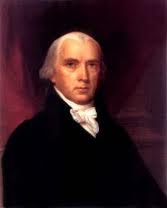
    James Madison

    Carter is referring to the separationist understanding of religion and public life, the idea that in a contemporary pluralistic society significant restraint must be put on the political role of religious reasons. This restraint is negative; when a functionary deliberates over a proposed policy it is not justified for that functionary to decide to support or oppose that policy on grounds derived from religion. A corollary of this is that citizens should not try to influence public policy by appealing to religious reasons. Separationists argue that the public policy of a pluralistic society must be able to be justified by a plausible secular justification in order for it to be just to all. Religious beliefs, while utilised and followed in private, should be kept separate from public policy debates, the administration of public institutions and the deliberation of public functionaries. (more…)

  • The Theology of the Declaration of Independence

    As I write this it is just beginning to be the 4th of July in the United States now, though its been 4th July for some time here in New Zealand.

    The 4th of July is, of course, Independence Day. Typically in New Zealand, those members of the secular blogosphere, who consider themselves to be classical liberals, have an annual rant on the 4th of July about the Declaration of Independence, praising the philosophy expounded in this document.

    Declaration of IndependenceNot PC’s Peter Cresswell, for example, states in Happy July 4th! that “with the exception of just a few words, the words could hardly be bettered today;” the declaration is, “A wonderful, wonderful anthem to freedom that rings down through the years.”  He bemoans, “if only the real meaning of those words could be heard and understood.”

    A few years ago Kiwiblog’s David Farrar made similar claims, he stated he would often “marvel at those marvelous words, written in the heat of oppression…Marvelous, absolutely marvelous.”

    I agree. I would simply point out to my secular, liberal, country-men what the words in this document actually say, and some of the philosophical ideas they expound.

    First, the declaration refers to God; it does so four times. Maverick Philosopher has an excellent analysis of the theological content;

    In the initial paragraph, we find the phrase “…Laws of Nature and of Nature’s God….” This phrase rules out pantheism: God is distinct from Nature. In the second paragraph, there is the phrase, “…endowed by their Creator with certain unalienable rights….” Putting these two references together, we may infer that the God being referred to is not merely a deistic initiator of the temporally first segment of the physical universe, but a being involved in the creation of the human race. For if God endowed human beings with rights, this endowment had to occur at the time of the creation of human beings, which of course occurred later than the beginning of the physical universe. In traditional jargon, God is a creator continuans rather than a mere creator originans. He is not a mere cosmic starter-upper, but a being who is continuously involved in maintaining the universe in existence.

    …

    The other two references are in the final paragraph. There we find the phrase, “…Supreme Judge of the World for the Rectitude of our Intentions….” near the beginning of the paragraph, and near the end, “…a firm Reliance on the Protection of divine Providence….” Now if God is the Supreme Judge, then he is more than a mere metaphysical cause responsible for the universe’s beginning to exist; he is also the supreme moral arbiter. And since he endows human beings with rights, as opposed to being merely a judge of rights antecedently possessed, then it seems we may infer that God is the source of moral distinctions (as opposed to a mere judge of them).

    The reference to divine providence is further evidence that the conception of God in the Declaration is non-deistic. For if God provides and protects, then God has an ongoing involvement with the world and its inhabitants such as would be ruled out by a deistic view. It should also be obvious that talk of providence (from the Latin, pro-videre) implies divine foreknowledge which implies intelligence and perhaps omniscience on the part of the deity. The God of the Declaration is not a blind metaphysical cause posited to explain why the universe began to exist, but a being with such attributes as moral goodness and intelligence…. So if by ‘deism’ is meant the doctrine that God is a mere metaphysical cause of the universe’s beginning to exist who is thereafter uninvolved in its continuing to exist, then the God of the Declaration is non-deistic.

    Second, the declaration claims that belief in a creator is self-evident; that is, it is a properly basic belief, which is rationally acceptable to hold in the absence of any proof.

    We hold these truths to be self-evident, that all men are created equal, that they are endowed by their Creator with certain unalienable Rights, that among these are Life, Liberty, and the pursuit of Happiness.

    Third, the declaration makes political pronouncements about public policy on the basis of these theological claims and expects these pronouncements to be taken seriously.

    Fourth, the declaration says that various rights, such as the right to life and liberty, are unalienable. That is, a person cannot alienate one’s life or freedom as they can legally alienate a piece of property. You can’t take my property if I do not consent to you having it but if I do consent, you can take it; property is alienable, life and liberty are not. The argument of the declaration reflects John Locke’s argument in the Second Treatise of Civil Government;

    To understand political power right, and derive it from its original, we must consider, what state all men are naturally in, and that is, a state of perfect freedom to order their actions, and dispose of their possessions and persons, as they think fit, within the bounds of the law of nature, without asking leave, or depending upon the will of any other man.[1]

    …

    But though this be a state of liberty, yet it is not a state of licence: though man in that state have an uncontroulable liberty to dispose of his person or possessions, yet he has not liberty to destroy himself, or so much as any creature in his possession, but where some nobler use than its bare preservation calls for it. The state of nature has a law of nature to govern it, which obliges every one: and reason, which is that law, teaches all mankind, who will but consult it, that being all equal and independent, no one ought to harm another in his life, health, liberty, or possessions: for men being all the workmanship of one omnipotent, and infinitely wise maker; all the servants of one sovereign master, sent into the world by his order, and about his business; they are his property, whose workmanship they are, made to last during his, not one another’s pleasure[2]

    …

    This freedom from absolute, arbitrary power, is so necessary to, and closely joined with a man’s preservation, that he cannot part with it, but by what forfeits his preservation and life together: for a man, not having the power of his own life, cannot, by compact, or his own consent, enslave himself to any one, nor put himself under the absolute, arbitrary power of another, to take away his life, when he pleases. No body can give more power than he has himself; and he that cannot take away his own life, cannot give another power over it.[3]

    The point here is that because your right to life and liberty are from God, no one can legitimately enslave or kill you, even if you consent to it. This was not a mere incidental addendum idea, it was central to Lockean political philosophy, which maintained (as the declaration does) that the government derives its powers from the consent of the governed. If a person can consent to be killed or enslaved then they can consent to the government enslaving them also to having the arbitrary power to kill them and hence tyranny can be legitimate. The reason tyranny is illegitimate is because, “No body can give more power than he has himself; and he that cannot take away his own life, cannot give another power over it.”

    The declaration then makes a metaphysical claim: God exists. It makes an epistemological claim about faith and reason: that belief in God is rational independent of proof. It makes an implicit claim of political philosophy: religion is not a private thing that should not influence public life but rather, theological claims should influence public life. Finally it makes a moral claim; that consenting adults do not have a right to do whatever they like with their own bodies, rather there are “Laws of Nature and of Nature’s God” that bind all human beings, that they are compelled to follow even if all parties consent otherwise. Governments are legitimate to the extent in which they respect these laws.

    I agree with PC, it is hard to improve on this philosophy; I have defended it in several places on this blog.

    Ironically, however, the militant secular liberals in NZ who parrot the declaration seem committed to attacking these ideas and rejecting them on every point. They argue that belief in God is irrational because it cannot be empirically proven, they claim that the public square should be secular, that religion should be private and not influence public policy and they argue that liberty means consenting adults can do whatever they like with their own bodies and lives. Far from being unalienable, a person’s life and freedom is his property to alienate as that person sees fit.

    It is also hard to disagree with PC’s sentiments that the declaration is “A wonderful, wonderful anthem to freedom that rings down through the years. If only the real meaning of those words could be heard and understood.” “Indeed, if only.”

    [1] John Locke Second Treatise of Civil Government Section II 4.
    [2] Ibid II6.
    [3] Ibid IV 23.