Category: Theology

  • Tom Wright on Hypocrisy: Catholic Church Sex Scandals, the Media and Jimmy Savile

    N T Wright, theologian and research professor at St Andrews University, tells the British media a few home truths about  hypocrisy and faux moral outrage.

    I listened in disbelief as John Humphrys interviewed Cardinal Cormac Murphy-O’Connor on Radio 4’s Today programme this week. Surely, he said, like a headmaster addressing an errant teenager, if highly placed people knew about the behaviour of Cardinal Keith O’Brien, somebody in authority should have done something rather than covering it up? I waited for the former archbishop of Westminster, who sounded weary of the whole thing, to come up with any of the phrases that might have stopped the interview in its tracks: “Jimmy Savile”; “BBC”; “people in glass houses”. Perhaps he was too polite. So Humphrys pressed on: the church claims it can tell people how to behave, so surely it has to live up to those standards itself?

    The joke here is that it is usually the media that tell people how to behave. Yes, the church sometimes “speaks out”. But if it’s moralising you want, turn on the radio. Or pick up a newspaper. And the institution the media especially love to attack is of course the church. There is a logic to this. The media want to be the guardians of public morality, but some people still see the church that way. Very well, it must be pulled down from its perch to make way for its secular successor.

    Don’t be fooled when “religious affairs correspondents” look prim and solemn and shake their heads at the latest clerical scandal. They are enjoying every minute of it. It keeps them in a job (did anyone imagine that the real “religious affairs” of this country, the prayerful and self-sacrificial work that goes on under the radar every day of every year, would ever make headlines?). More: it makes it easier to sustain the fiction that the journalists have taken over as the nation’s moral police.

    Until there’s another scandal – in the media themselves. Savile at the BBC. Phone hacking at the News of the World. Try suggesting that these were isolated, maverick one-off lapses, and listen to the hollow laughter echoing round the country. The church has rightly been attacked for hypocrisy. But is nobody else guilty? If the church is hypocritical about sex, the media are hypocritical about hypocrisy.

    The whole article in the Guardian is well worth reading. Wright goes on to  make some astute points about virtue, moral failure, morality and hypocrisy.

  • Apologetics in Auckland

    Here in New Zealand, I am often told by evangelical leaders that we now live in a post-modern society, which has moved beyond “arguments” and that Apologetics is an outdated “modernist concept.” They say we need instead to “tell the story” so that people will see the “meta-narrative of scripture”—whatever exactly that means.

    ScalesLast night, Madeleine and I were invited to a Christmas function for new lawyers, organised by the Law Society, the professional association for lawyers in New Zealand. The function was in a major law firm in central Auckland’s business district. So I was right in the thick of the up-and-coming legal professionals in New Zealand.

    Anyway, Madeleine struck up a conversation with some young lawyers who were working for an arm of the government. They discussed aspects of their respective legal professions. Then one of them turned to me and asked me, “what do you do?” I answered that I was a theologian. Immediately, this caused them to pause (it often has this effect) and one told me he had been reading a book called The God Delusion by Richard Dawkins. Without thinking, I said, “Oh, that book, it’s crap.” He replied, “Yeah, but you have to say that, don’t you?” I responded, “No I don’t actually.” I then mentioned to him the works of some other atheists to whom I would not respond in that fashion, despite the fact I disagreed with their conclusions.

    Then, for the next thirty minutes, these lawyers began asking me genuine questions about the Christian faith. One asked me immediately, “why don’t you refrain from eating shellfish given the Old Testament prohibits it?” He was not being hostile; he was interested. I explained how the food laws functioned to set Israel apart from other nations and how, in the New Testament era, Gentiles were incorporated as part of God’s people, meaning the barrier between Jew and Gentile lacked relevance.

    Then one asked me, “I have heard the evidence for Jesus is as good, if not better, than that for other historical figures—is that true?” I discussed with him the sources we have for Alexander the Great and how they compared with the Gospels in terms of time, discussed how people date the gospels to confirm it, and mentioned the age of the epistles. We then discussed the supernatural aspects of the narrative and Hume’s arguments about miracles. They were fascinated.

    Next came a question about pagan mythology and parallels with Jesus. One then said, “wouldn’t a really popular guy like Jesus be written about by everyone?” I explained why this assumption was mistaken and one other lawyer said, “Yeah, I suppose expecting the Romans to write about Jesus is like expecting Washington, D.C. to write about the Aramoana incident.” (When non-New Zealander’s respond to this with “What’s the Aramoana incident?” their question illustrates nicely the point being made.)

    I then discussed Josephus’s reference to Jesus, Tacitus, the Talmud and so on. Each then opened up to me and told me of their own spiritual struggles and journey. To my considerable surprise, when one of them was called away from conversation some 30 to 40 minutes latter, ending the discussion, he stated to his beckoning companion, “Hey, you missed a really interesting discussion we had over here. This guy’s a theologian; he is not a try-hard ex-Catholic like you, he is the real thing.” This companion’s girlfriend then responded, as though she was viewing an exhibit in the zoo or a museum, “Is he a minister?” and then my interlocutor relayed to his companions how interesting and fruitful he considered the conversation to have been as they moved over to his friend.

    They moved on, but one lawyer who was nearby came over to us, (more…)

  • Hear Matthew Flannagan Preach on Genesis 33 (Mp3)

    Matt's SermonsHear Matthew Flannagan preach on Genesis 33.

    Genesis 33 – Jacob Meets Esau

    33 Jacob looked up and there was Esau, coming with his four hundred men; so he divided the children among Leah, Rachel and the two female servants. 2 He put the female servants and their children in front, Leah and her children next, and Rachel and Joseph in the rear. 3 He himself went on ahead and bowed down to the ground seven times as he approached his brother.

    4 But Esau ran to meet Jacob and embraced him; he threw his arms around his neck and kissed him.And they wept. 5 Then Esau looked up and saw the women and children. “Who are these with you?” he asked.

    Jacob answered, “They are the children God has graciously given your servant.” (more…)

  • Back from the USA

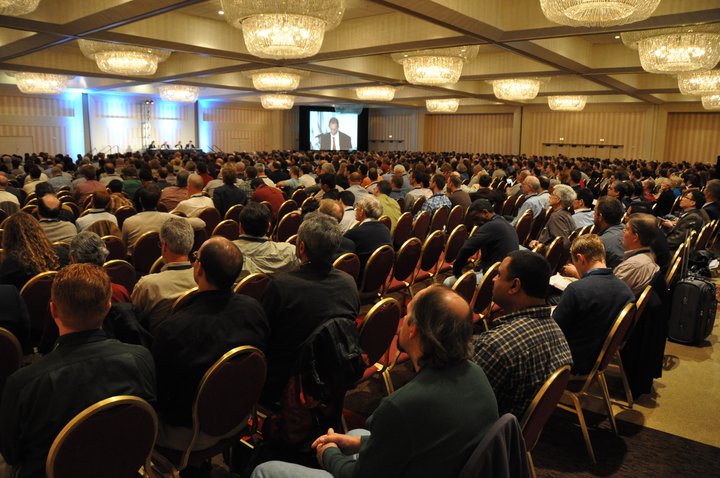
    The CrowdMadeleine and I flew back to New Zealand from Milwaukee on Tuesday having both attended the Evangelical Philosophical Society Annual Meeting, the Annual Meeting of the Evangelical Theological Society, and the Evangelical Philosophical Society’s Apologetics Conference. Prior to that I had spent three weeks based in Charlotte, North Carolina. I will speak about the  conferences later in this post but first I will summarise what I did in Charlotte.

    Charlotte
    My work in North Carolina can be divided into several categories.

    First, and this was the bulk of what I did, I did a bit of speaking on a lecture circuit at various campuses in North Carolina on issues relating to God and Morality for Ratio Christi. Formally, this involved, driving to a campus, delivering a lecture and then taking a Q&A.
    Speaking at UNC CharlotteI learned very quickly that there was a lot more to what I was doing than the formal activity of giving lectures; in fact, most of the more important work was the informal stuff that went on behind the scenes.  In addition to presenting lectures, there was often an equally important informal component. Often I would meet with students before the lecture  and discuss the challenges they were facing as Christian students in a secular campus. I would offer advice, counsel, support, etc. On other occasions I would, in addition to giving the lectures, meet with the supporters and financiers of the people running student ministries and discuss with them the importance of Apologetics and of developing an intellectually robust faith among students.  I found that the most important and constructive engagement and interaction with people typically occurred in these informal contexts.
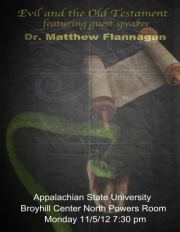
    Speaking at Appalachian State UniversitySecond, in addition to my major task of giving lectures, on the weekends I gave instruction in churches. After my first week I was part of a missions team that spent a weekend teaching at a church in a nearby Cherokee Reservation.  The weekend after that I taught an adult education class in a Community Fellowship Church of North Carolina. The  following weekend I preached from the pulpit.  One Sunday evening I attended a service at a Slavic Baptist church where almost the entire service was in Russian and we needed a translator to follow what was being said. After the service I was one of a team of people who spoke to the youth group; I spent several hours fielding their very astute and intelligent questions about the Christian faith.

    This work was very challenging. It is one thing to give lectures at a university when one has, as I have, spent years studying and working in universities. It is quite another speaking to Cherokee Native American Indians one week, Southern Americans the next and youth from Slavic Immigrant Families the next – especially when my own culture is Kiwi!

    Third, and finally, I worked with the students at Southern Evangelical Seminary. One night when I was not lecturing, I presented an academic paper to students and graduates from the seminary, which was followed by a discussion. Another night I travelled to Belmont Abbey, a Catholic Liberal Arts College to dialogue with a Catholic theologian about the relative strengths of Natural Law Theory verses Divine Command Meta- Ethics.

    Both events were focused on seminary students, to get them to be presented with new or different material to what they were familiar with so they could ask questions and be stretched in their intellectual development.  I found the work over those three weeks very taxing physically, yet I enjoyed it immensely. I was giving lectures at universities, back to back, almost every day; I was often travelling for hours to and from the university in question and sometimes I would have to stay overnight with billets. As noted above the diversity of what I did stretched me.

    Lecturing on campuses to potentially hostile audiences is challenging enough, particularly when one throws in a Q&A. It becomes more so when there are obvious cultural barriers such as my indecipherable New Zealand accident and tendency to speaK too quickly because of the speed of my thoughts!  But, in addition to this, I was required to  give a talk to theology students, to Slavic youth, adult congregants, North American Indians on Reservations, and people from a country not my own in general – these contexts forced me to adapt my material fairly quickly to these new contexts with very little prep time.

    Milwaukee
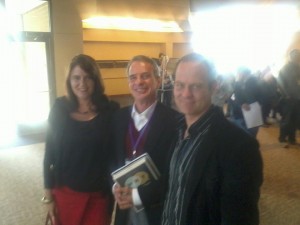
    Madeleine, Bill Craig and IThe business end of my trip however was the conference in Milwaukee. On Wednesday 16 November 2012. Both Madeleine and I presented papers at the Evangelical Philosophical Society’s Annual Meeting. In the morning I presented my paper “Peter Singer, Human Dignity and Infanticide”; this was a critical look at Peter Singer’s account of the wrongness of killing and some of his attempts to revise his position in light of criticisms by Don Marquis.
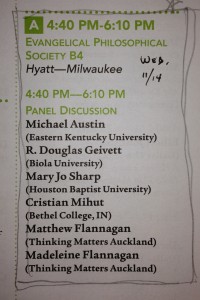
    EPS Panel DiscussionIn the afternoon, Madeleine and I were on a panel discussing the  book Being Good: Christian Virtues for Everyday Life along with Mary Jo Sharp, Cristian Mihut and the book’s Editors, Michael W Austin and Doug Geivett. Madeleine offered a response and critique of the chapter on “Courage” by Rebecca Konyndyk DeYoung and I offered a criticism of Charles Taliaferro’s chapter on “Love”.

    Madeleine did extremely well, you would never have guessed, unless you knew to look for things like how she gripped the podium, that she had flown into Milwaukee at 12.05 am the night before, had been living with a pain disability aggravated by sitting for the past 4 years which was on high alert due to almost 24 hours travelling, and that she was completely shattered from working insane hours to be able to leave her litigation schedule and our children, whilst functioning on NZ time. In her typical style she spoke in a clear, articulate and forthright manner, her content was good, and I doubt anyone present could have been aware of the fact that she alone was the only speaker on the panel with no formal philosophy qualifications without reading her bio.
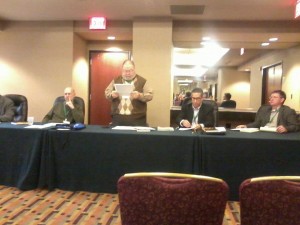
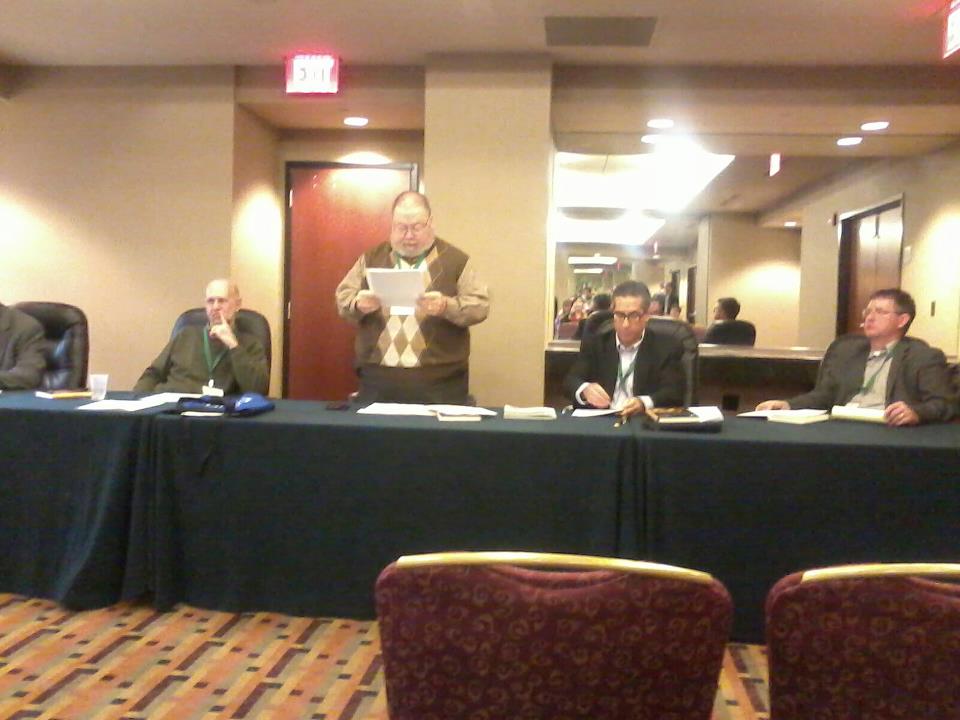
    Panel on Protestant PurgatoryIn addition to our own presentations, we attended a number of sessions such as Mike Austin’s talk on “Analytic Moral Theology”, Frank Beckwith’s response to the recent  “After Birth Abortion” paper published in the Journal of Medicine and Ethics, Paul Copan’s discussion on Acts 17, Charles Taliaferro’s Lecture on Environmentalism, a very stimulating panel discussion on Jerry Wall’s new book which offers a Protestant Defense of Purgatory, among various other presentations including sessions on religious pluralism and the Evangelical Theological Society’s panel discussion on environmentalism.
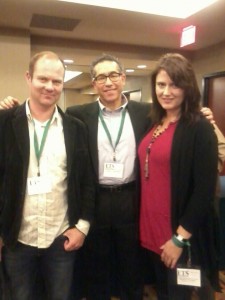
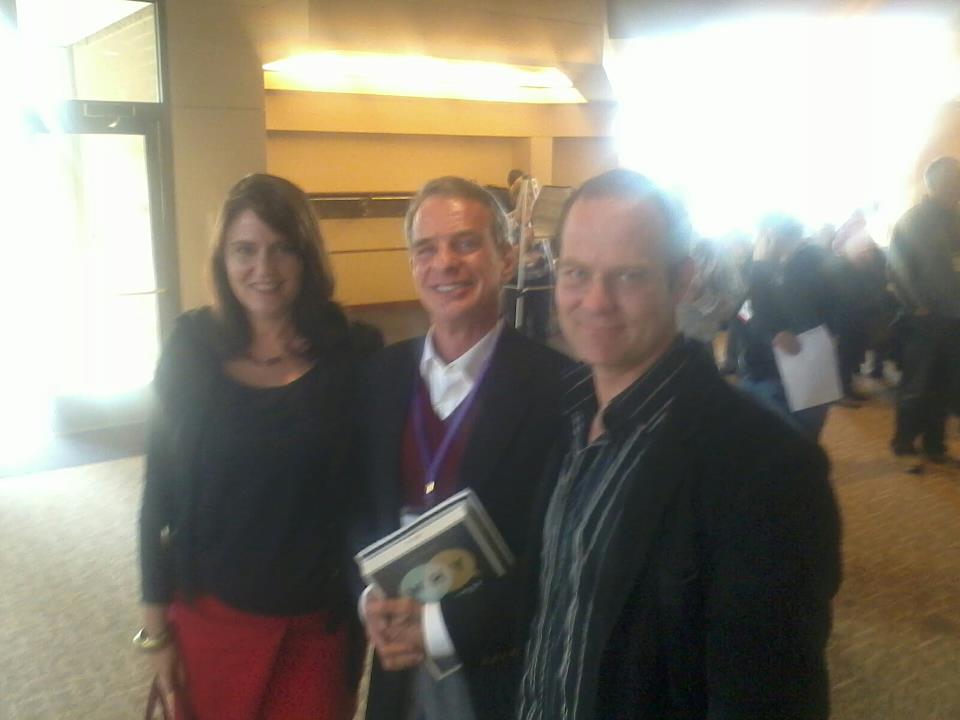
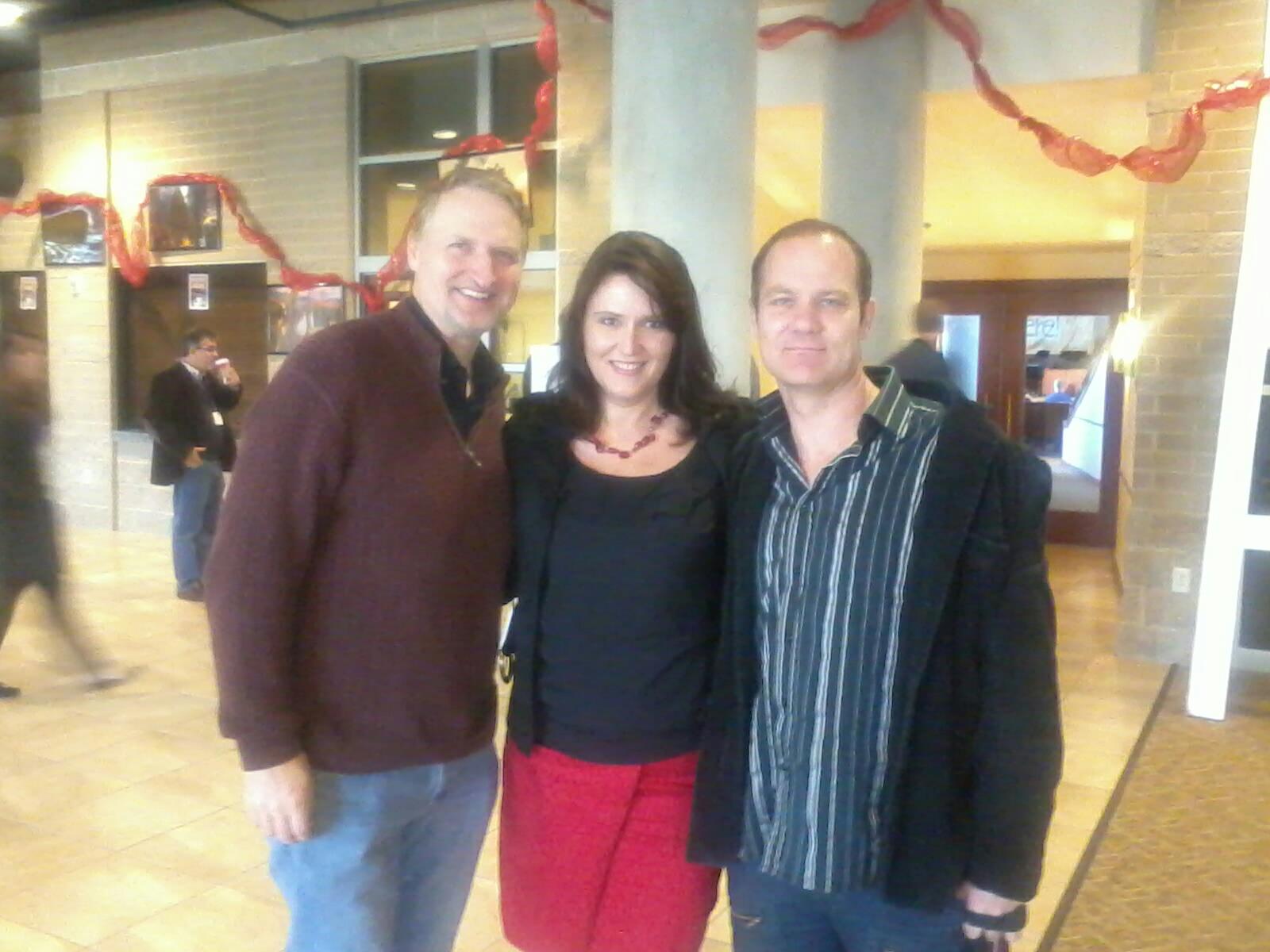
    Me, Frank Beckwith, MadeleineBy the time the EPS Apologetics conference started both Madeleine and I were knackered. Despite this we attended sessions on God and Morality by Frank Beckwith, Jeremy Evans’ session on Theism and the Meaning and Purpose of Life, David Baggett’s discussion of Moral Scepticism, Mike Austin’s talk on “Evangelical Blogging”, Angus Menuge, the new Evangelical Philosophical Society President’s talk on Religious Language, Gary Habermas’ talk on the Resurrection, and Mary Jo Sharp’s very useful session on effective public speaking.
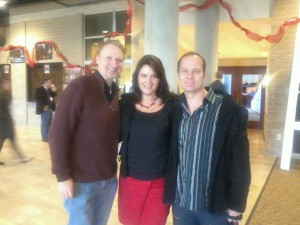
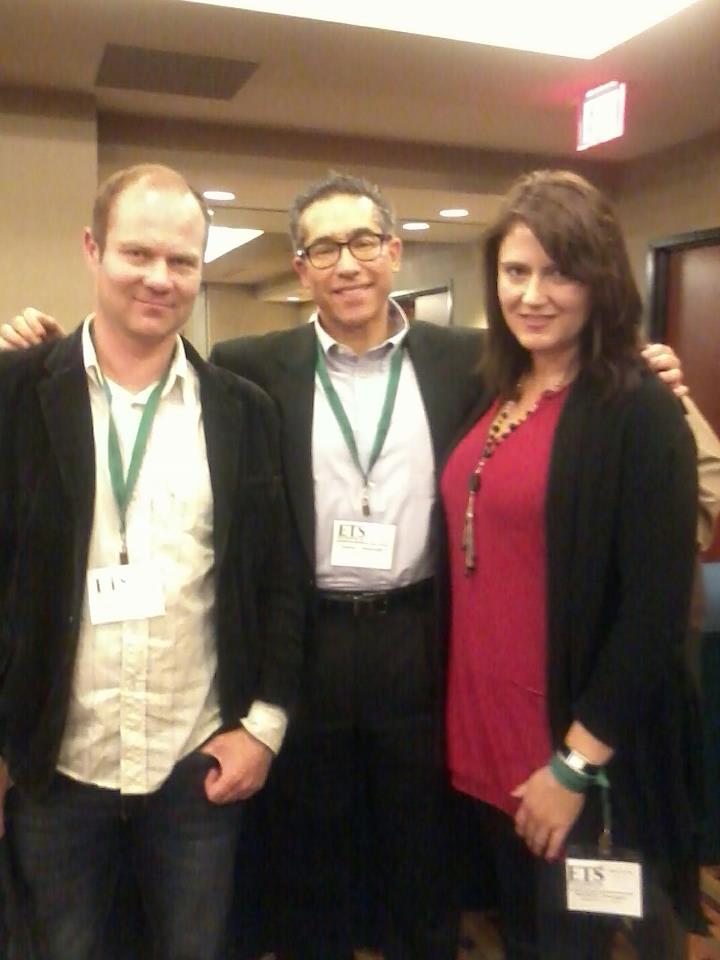
    Paul Copan, Madeleine and IIn addition to the papers and sessions there was a lot of general networking going on. Paul Copan, Madeleine and I and met with a prospective publisher about co-writing a book on the moral issues surrounding the conquest narrative; it looks likely that Baker Books will accept our proposal, I will keep readers posted. I signed my publishing contract with Baker for an earlier publication. Madeleine had an interesting experience with Lee Strobel, Mary Jo Sharp, Mark Mittelberg and Chad Meister dialoguing with a prospective seeker. Mary Jo Sharp and Madeleine plotted prospective joint debate projects. Frank Beckwith and Madeleine discussed their shared religion in public life/philosophy meets law interests; Frank and I discussed possible joint projects on the abortion issue. Discussions were had with Craig Hazen about the Biola Faculty, Mark Mittelberg, Mary Jo Sharp and William Lane Craig about the possibility of their visiting New Zealand. We also met with Ratio Christi regarding the possibility of  a New Zealand chapter being formed.

    Mary Jo Sharp and Madeleine

    Since we got back, I have been following up on several potential employment opportunities that have arisen from the trip, a couple in New Zealand, a couple overseas, as well as possibility of 3 further books, one co-written with Madeleine, and various other potential projects involving ministry writing and speaking.

    In addition to the scholarly stuff, I got to see the Atlantic Ocean for the first time,  I saw the New York sky line, the Statue of Liberty and the New World Trade Centre. I visited a Nascar Centre, was present in the US during the re-election of Barack Obama and Cyclone Sandy. We discovered Wisconsin Cheese, Wisconsin Frozen Custard and Madeleine got to indulge in her favourite lollie flavours (candy to the US readers): cinnamon and root beer (she is happy to receive donations of either or both via post).

    Needless to say we arrived home on Tuesday extremely tired but extremely grateful to everyone who supported us in making this trip from those who donated – we love you all – through to people like Simon Brace who organised the Charlotte leg, Paul Copan who shared his hotel room with us, Ratio Christi who shouted us meals, our eldest daughter Sheridan who took on the task of primary caregiver to her younger siblings – no mean task given the severe Autistic Spectrum Disorder and Anxiety issues of our youngest child – Mike Austin and Doug Geivett who invited Madeleine and I to speak on their Book Panel, among others (this is by no means an exhaustive list!).

  • Hear Matthew Flannagan Preach on Genesis 32 (Mp3)

    Matt's SermonsHear Matthew Flannagan preach on Genesis 32.

    Genesis 32 – Jacob Prepares to Meet Esau

    32 [a]Jacob also went on his way, and the angels of God met him. 2 When Jacob saw them, he said, “This is the camp of God!” So he named that place Mahanaim.[b]

    3 Jacob sent messengers ahead of him to his brother Esau in the land of Seir, the country of Edom.4 He instructed them: “This is what you are to say to my lord Esau: ‘Your servant Jacob says, I have been staying with Laban and have remained there till now. 5 I have cattle and donkeys, sheep and goats, male and female servants. Now I am sending this message to my lord, that I may find favor in your eyes.’”

    6 When the messengers returned to Jacob, they said, “We went to your brother Esau, and now he is coming to meet you, and four hundred men are with him.”

    7 In great fear and distress Jacob divided the people who were with him into two groups,[c] and the flocks and herds and camels as well. 8 He thought, “If Esau comes and attacks one group,[d] the group[e] that is left may escape.” (more…)

  • Hear Matthew Flannagan Preach on Genesis 31 (Mp3)

    Matt's SermonsHear Matthew Flannagan preach on Genesis 31.

    Genesis 31 – Jacob Flees From Laban

    31 Jacob heard that Laban’s sons were saying, “Jacob has taken everything our father owned and has gained all this wealth from what belonged to our father.” 2 And Jacob noticed that Laban’s attitude toward him was not what it had been.

    3 Then the Lord said to Jacob, “Go back to the land of your fathers and to your relatives, and I will be with you.”

    4 So Jacob sent word to Rachel and Leah to come out to the fields where his flocks were. 5 He said to them, “I see that your father’s attitude toward me is not what it was before, but the God of my father has been with me. 6 You know that I’ve worked for your father with all my strength, 7 yet your father has cheated me by changing my wages ten times. However, God has not allowed him to harm me. 8 If he said, ‘The speckled ones will be your wages,’ then all the flocks gave birth to speckled young; and if he said, ‘The streaked ones will be your (more…)

  • Hear Matthew Flannagan Preach on Genesis 30 (Mp3)

    Matt's SermonsHear Matthew Flannagan preach on Genesis 30.

    Genesis 30

    30 When Rachel saw that she was not bearing Jacob any children, she became jealous of her sister.So she said to Jacob, “Give me children, or I’ll die!”

    2 Jacob became angry with her and said, “Am I in the place of God, who has kept you from having children?”

    3 Then she said, “Here is Bilhah, my servant. Sleep with her so that she can bear children for me and I too can build a family through her.”

    4 So she gave him her servant Bilhah as a wife. Jacob slept with her, 5 and she became pregnant and bore him a son. 6 Then Rachel said, “God has vindicated me; he has listened to my plea and given me a son.” Because of this she named him Dan.[a] (more…)