My paper, “Can a Divine Command Theory Vindicate the Objectivity of Morality?” was published in Philosophia Christi, vol 21. No 1 2025. A copy is now available online at my academia.edu page. The abstract is below. Abstract:Defenders of divine command metaethics (DCM) often argue that one of its key advantages is its ability to vindicate […]
Entries Tagged as 'Theology'
New publication Online: “Can a Divine Command Theory Vindicate the Objectivity of Morality?”
May 17th, 2026 No Comments
Tags: David Brink · Divine Command Theory · Elizabeth Tropman · Michael Huemer · Objectivism
Star of Wonder: Matthew’s Nativity Narrative and it’s Critics, Part three
February 5th, 2026 Comments Off on Star of Wonder: Matthew’s Nativity Narrative and it’s Critics, Part three
I have been considering the hypothesis that the star referred to in Matthew’s Gospel was a comet recorded by Han-dynasty astronomers in 5 BC. In a previous post, I examined an objection to this view that rested on two claims: First, that in the late first century BC comets were universally interpreted as negative omens. […]
Tags: Christian History · Star of Bethlehem
Star of Wonder: Matthew’s Nativity Narrative and its Critics, part two
January 2nd, 2026 Comments Off on Star of Wonder: Matthew’s Nativity Narrative and its Critics, part two
In a previous post, I addressed the claim that no star could exist that moves or behaves in the way described in Matthew’s Gospel. I argued that Matthew’s Gospel uses language found in Greco-Roman writings to describe comets, and that a comet could act in the way Matthew described. I also argued that we have good […]
Tags: Christian History · Christmas · Matthew's Gospel · Nativity · Star of Bethlehem
Star of Wonder: Matthew’s Nativity Narrative and its Critics, part one.
December 17th, 2025 Comments Off on Star of Wonder: Matthew’s Nativity Narrative and its Critics, part one.
Recently, I have been thinking about Matthew’s birth narrative. In particular, I want to discuss three claims that are sometimes made by critics of the narrative’s historicity. First, it is claimed that no star could exist that moves or behaves in the way described in Matthew’s Gospel. According to this objection, Matthew depicts a star […]
Tags: Apologetics · Bible · Matthew's Gospel · Star of Bethlehem
The Beatitudes: Part One
October 14th, 2025 Comments Off on The Beatitudes: Part One
Here is a talk I gave on the Beatitudes a few weeks ago.
Tags: Bible · Sermon on the Mount · Sermons
Some subversive thoughts about immigration part two: replies to objections
October 8th, 2025 Comments Off on Some subversive thoughts about immigration part two: replies to objections
Recently, I shared some reflections on the issue of immigration. Drawing on Deuteronomy 23:15–16 and the way this passage was interpreted and applied by 18th-century abolitionists, I argued that our present situation is analogous to that of illegal overstayers fleeing certain forms of degradation in their home countries. Below are some of the responses I […]
Tags: immigration
Sinnott-Armstrong on God, Secularism and “reasons” to be moral. Part Three: Can Religious theories answer the question, “Why be moral?”
September 13th, 2025 1 Comment
In a previous post, I observed that Walter Sinnott-Armstrong concedes that secular accounts of moral obligation cannot vindicate the thesis that agents always have decisive (all-things-considered) reasons to avoid wrongdoing. To mitigate this problem, he argues: Is this limitation a problem for secular accounts of morality? I doubt that, too. If we demand this extreme […]
Tags: Divine Command Theory · Dualism of Practical Reason · God and Morality · Walter Sinnott-Armstrong · Why be Moral?

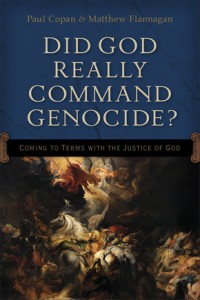 A common objection to belief in the God of the Bible is that a good, kind, and loving deity would never command the wholesale slaughter of nations. In the tradition of his popular Is God a Moral Monster?, Paul Copan teams up with Matthew Flannagan to tackle some of the most confusing and uncomfortable passages of Scripture. Together they help the Christian and nonbeliever alike understand the biblical, theological, philosophical, and ethical implications of Old Testament warfare passages.