Category: Science and Religion

  • The Sceptic and the Scientist: Ed Feser on Richard Dawkins and PZ Myers

    String TheoryHe is not one to pull punches and true to form, in To a Louse, Ed Feser holds a mirror up to the kind of reasoning that is all too common amongst Dawkins and Myers fans with this fictional dialogue between a scientist and a science sceptic;

    Skeptic: Science is BS. Physicists believe in these things called “quarks,” which are little flavored particles that spin around and work like magic charms. Their evidence is that they read about them in a James Joyce novel. Some of them think the universe is made up of tiny shoelaces tied together, though they admit that they have no evidence for this and have to take it on faith. Einstein said morality is all relative – which is why he stole his ideas from this guy who worked in a patent office, and why Richard Feynman stole atomic secrets during WWII. Meanwhile, the chemists contradict the physicists and believe instead in little colored balls held together by sticks. Biologists believe monkeys can give birth to human beings. What a bunch of crap! It’s child abuse to teach kids about this stuff in schools.

    Scientist: Are you joking? If not, I suggest that you actually read some science before criticizing it.

    Skeptic: I’ve already read a lot about it, in blog comboxes like this one. And why should I waste my time reading anything else? I already know it’s all BS! Didn’t you hear the examples I just gave?

    Scientist: No, you’re missing my point. You’ve completely distorted what scientists actually say. It’s not remotely as silly as you think it is. In fact it’s not silly at all. But you need to actually read the stuff to see that.

    Skeptic: So you deny that physicists believe in quarks? What flavor are your quarks, chocolate or vanilla? Do you deny that they think we came from monkeys? Which monkey was your mother?

    Scientist: No one says that monkeys gave birth to humans. That’s a ridiculous caricature. And of course I don’t deny that physicists believe in quarks, but you’re badly misunderstanding what they mean when they attribute “flavor” to them. They don’t mean that literally…

    Skeptic: Oh so it’s just empty verbiage, then. See, you’re just proving my point for me.

    Scientist: No, it’s not empty verbiage. It’s technical terminology.

    Skeptic: I see, like magic spells. That’s why (more…)

  • John Lennox on the “Religion v Science” Myth

    John Lennox will arrive in Auckland in less than two weeks for his New Zealand tour.

    If you are not familiar with Lennox watch this video “The “Religion v Science” Myth.” In it Lennox examines the historically ignorant myth that religion is and always has been at odds with science.

    Details of Lennox’s upcoming New Zealand tour are here: Hear John Lennox in New Zealand.

    Hat tip: Glenn Peoples

  • Hear John Lennox in New Zealand UPDATED

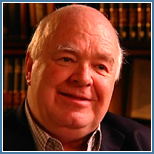
    John LennoxProfessor John Lennox of the University of Oxford will arrive in New Zealand in a fortnight for a brief public speaking tour in the centres of Auckland, Wellington and Christchurch.

    His New Zealand speaking itinerary of public events is below; all public events are free.

    Auckland

    Sunday 27 February

    9:30 – 11:00am Preaching at Howick Baptist Church on the corner of Picton and Wellington Streets, Howick, Auckland. Facebook Event Page.

    1:00 – 3:00pm Science and Religion Q&A at the Salvation Army East City Corps, 37-45 Wellington Street, Howick Auckland. Facebook Event Page.

    7:00 – 9:00pm Preaching at Greenlane Christian Centre, 17 Marewa Rd, Greenlane, Auckland.

    Monday 28 February

    7:00 – 9:00pm “Christ Among the Philosophers” at St Paul’s Church, Symonds St, Auckland. Facebook Event Page.

    Organised by Compass, “Dr Lennox will address questions such as, is faith delusional? Is it reasonable? How can we live faithfully in the public square? How might one engage faithfully as a Christian in the academy?”

    Tuesday 1 March

    12:00 – 1:00pm (this talk will be repeated in the same room from 1:00-2:00pm) “Has Science Buried God?” Public lecture at Auckland University at the Cap and Gown Lounge (Bar), Level 3, Students Union, Auckland University Campus. Facebook Event Page.

    Organised by TSCF: “Science and reason seem to be claiming to have disposed of our need of God. But have they? Prof John Lennox, author of “God’s Undertaker”, engages with the issues in an accessible, thoroughgoing and scientifically sound way. As a world renowned academic mathematician and the only Christian academic that Richard Dawkins has been happy to engage in public debate, John brings illumination, humour and challenge (as well as a cool accent) into this tense and controversial area.”

    7:30 – 9:30pm “So you want to change the world?” Student Meeting TSCF Offices, 441 Queen Street.

    Wellington

    Wednesday 2 March

    7:00 – 9:00pm “Why God Loves Richard Dawkins?” or “God and Stephen Hawking” at St Michael’s, Upland Road, Kelburn, Wellington. Facebook Event Page.

    “Hawking’s book argues that invoking God is not necessary to explain the origins of the universe, and that the big bang is the consequence of the laws of physics alone. Hawking has said, “One can’t prove that God doesn’t exist, but science makes God unnecessary”. Professor Lennox will discuss the flaws in Stephen Hawking’s logic and demonstrate that, far from disproving a creator, Hawking’s argument make the existence of God far more probable.”

    Christchurch

    Sunday 6 March

    9:00 – 10.30am Speaking at Spreydon Baptist Church, Corner Lyttelton & Cobham StreetsSpreydon,Christchurch

    Biography

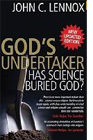
    God's Undertaker: Has Science Buried God?Dr John Lennox is a Professor of Mathematics at the University of Oxford, a Fellow in Mathematics and the Philosophy of Science and (more…)

  • Alexander Pruss on Scientific Rigour

    Cookie-cutter scienceGiven the debate raging on JT’s Progressive Enslavement: The Seductions of Scientism I thought it timely to share this comment left on The Prosblogion by Baylor University Associate Professor of Philosophy and blogger Alexander Pruss,

    “Given the pessimistic meta-induction, or given the fact that we know that at least one of the two central theories in physics (relativity and quantum mechanics) is false (since the two are incompatible), I don’t think scientific standards of proof should be something for Christians to aspire to. We should aspire to something stronger. And the fact is that the Christian apologetic tradition does contain many very strong arguments.”


  • Progressive Enslavement: The Seductions of Scientism

    One of the silly characteristics of our age is the credulous and naive veneration of science. It has led to the emergence of what we call scientism–faith in science as the ultimate source of truth and wisdom. This faith is pervasive.  How many social issues or ethical questions are falsely claimed to be resolved by the magisterium of “scientists say . . . “, or “science tells us . . . “? Consider the insinuation of “science” into the humanities: social “science”; political “science”; anthropological “science”; and “scientific” pedagogy, to name but a few.  Recall how global warming propagandists have tried to pull a swift one by asserting, “the science is settled” by which is meant that infallible truth has been discovered, and that all must now stop debating, stop questioning. Reflect on how politicians crave “scientific” warrant for crazy schemes. Consider how the adjective “unscientific” is used to bludgeon the views of opponents. It is the ultimate evisceration of an opponent’s argument.
    "Mee-mee-mee meep"How did it come to this?  Whilst not alone, probably the most influential protagonist in the English speaking realm for “science”  and the “scientification” of all of life has been John Dewey.  He moved things along a bit from the first phase of the Enlightenment which had held to the idea that Nature was governed by a collage of immutable laws.  Darwin had taught Dewey and his contemporaries otherwise.  Darwin and his popularizers had “convinced” the West that Nature was not fixed, but was changing; mankind, therefore, could not be said to have an immutable nature.  Mankind was now seen as also changing and developing.

    But, reasoned Dewey, this opened up the opportunity for mankind to seize the day.  Mankind had become so advanced and developed that he could now take charge of and manage his own evolutionary development.  “Following Bacon’s prescription, the power to manipulate nature with a view to human purposes had been exercised to remarkable effect.  But the [old] belief  in a fixed human nature meant that the power unleashed by science had not yet been applied in a thorough fashion to our essentially plastic human nature and political society.” (J. Judd Owen, Religion and the Demise of Liberal Rationalism: The Foundational Crisis of the Separation of Church and State (Chicago: University of Chicago Press, 2001), p.19)  If the scientific method were applied to humanity, we would be able to take effective charge of our evolutionary development.  Humanity would therefore progress more effectively and more quickly.

    Here is Dewey, writing in 1931:

    The entrenched and stubborn institutions of the past stand in the way of our thinking scientifically about human relations and social issues.  Our mental habits in these respects are dominated by institutions of family, state, church, and business that were formed long before men had an effective technique of inquiry and validation.  It is this condition from which we suffer today.  Disaster follows in its wake. (Cited by Owen, ibid, p.21)

    Note the radical nature of the claims here. We must, says Dewey learn to think scientifically about human relations and social issues.  Science alone has an effective technique of “inquiry and validation”; the verities of the past (family, church, state) are relics.  If we continue to resist the “sciencing” of society, we will face disaster.  He means by this that we will not be able to take control of our development–which opens up the possibility, if not probability, that mankind will self-extinguish, proving unfit to survive.  Because Nature is evolving, old verities are worthless.

    Dewey  went on to assert that the Great Scientific Revolution was still awaiting.  We ain’t seen nothing, yet.

    In spite, then, of all the record of the past, the great scientific revolution is still to come.  It will ensue when men collectively organize their knowledge for application to achieve and make secure social values; when they systematically use scientific procedures for the control of human relationships and the direction of the social effects of our vast technological machinery.  (Ibid, p.22)

    The hard, natural sciences had allowed man to understand and then to control and exploit nature to his own advantage.  Dewey says the same rigorous methodology, when applied to humanity and society will allow us to “secure” social values (picking out the best from the emergent changing value grid); then controlling human relationships and setting the direction of society.  “Science” will enable humanity to take control of its own destiny; control its own evolutionary development.

    Two postulates immediately follow: “science” must be elevated into a quasi-infallible status, which explains why scientism is an intrinsic part of the new idolatry.  The ultimate answer to all public and human problems becomes, What does “science” tell us? or, What is the scientific approach?  Secondly, science must control humanity–which is to say that a power nexus of science-government must be formed to order everything, which helps explain the relentless expansion of state powers in the twentieth century to “make things right”.

    The natural law theorists of the early Enlightenment elevated natural law to the place of God.  This meant that mankind was subject to the natural order and could only succeed as he worked in accordance with natural law or “the way the world worked”.  As Rushdoony has astutely pointed out, (more…)

  • False Alarm: Falsificationism and its Misapplication

    A fair number of people are fond of the claim that if one is to be able to take a claim seriously, it really ought to be falsifiable. One easy response is that it’s difficult to see how this particular claim, about how we are to go about accumulating knowledge and believing stuff, is itself falsifiable; but if that seems a bit too quick a dismissal, there are other fairly well documented reasons to be dubious of ‘falsificationism’ and its claims to epistemological kingship.

    Some ideas can be tested reasonably well e.g. with this early electron microscope. Others await the examination of evidence in different ways.

    The idea is commonly associated with the scientific method; a purportedly precise way of doing things that many (perhaps particularly scientists, surprisingly enough) are pretty sure everyone should be keen on. If you want to know something, use science – it works. Indeed, the requirement of falsifiability is sometimes seen as a shibboleth for rationality, or at least orthopraxy amongst ‘reasonable’ people. In the discipline of the philosophy of science itself however, it would appear to be considerably less popular than among certain popularisers of science; an intriguing sociological fact. Falsificationism is a dumbed-down version of the views of method which Karl Popper offered the scientific community. Yes, science involves testing claims against the evidence, but there is more to it than that. A requirement of falsifiability may be seen as a suitably sceptical approach; even (as I’ve seen) contrasted with the blind faith apparently invested by religious people in their beliefs. This is problematic for a number of reasons, some of which will become clear. Lying behind it is a conveniently selective scepticism which puts aside the complexities of science and assumes or pretends that the project of explicating the order in the universe is a natural fit with naturalism. If you want to know why science works, it’s not science and it may not be falsifiable theories which will give good answers.

    Perhaps the most pressing issue behind this post is widespread allegiance amongst many naïve people to some form of ‘scientism’. I and other Christians who decry this trend away from genuine rationality and accompany the hand-wringing with good arguments are often assured that it does not in fact exist (more…)

  • Watch the Video of “The New Atheism, Science & Morality” with Glenn Peoples

    The unofficial video of Glenn Peoples’ talk at Auckland Uni “The New Atheism, Science & Morality” is online.

    Hat Tip: E†B