Category: Science and Religion

  • Star of Wonder: Matthew’s Nativity Narrative and its Critics, part two


    In a previous post, I addressed the claim that no star could exist that moves or behaves in the way described in Matthew’s Gospel. I argued that Matthew’s Gospel uses language found in Greco-Roman writings to describe comets, and that a comet could act in the way Matthew described. I also argued that we have good evidence for the existence of a comet in 5 BC, the time Jesus was born.

    However, the idea that the star in Matthew’s Gospel was a comet faces an important challenge:

    At this time in history (and all the way into the Middle Ages), comets were regarded as omens of doom and destruction—the very opposite of good tidings. This was in part because of comet behavior. They were perceived in ancient times as breaking into the sky, ignoring the highly ordered and repetitive clockwork movement of the heavens. The Almighty could have chosen to use an ominous sign for the birth of Christ. Presumably, He can do whatever He likes. But if the purpose of the Star was to communicate something joyful to humankind, a comet seems an unlikely choice.

    There are two claims encapsulated in this objection:

    • First, that at this time in history (the 1st century BC) comets were universally interpreted as negative omens.
    • Second, that this is contrary to how the star is presented in Matthew’s Gospel.

     This post will address the first of these claims. The second will be addressed in a later post.

    Were Comets Universally Interpreted as Negative Omens?

    First, the claim that comets were universally interpreted as negative omens is misleading. In the first century BC, comets were almost universally seen as threats to the established political order. According to the 1st-century astrological poem Astronomica, they were harbingers of significant political upheaval affecting entire nations, and particularly kings—such things as the collapse of social order, civil wars, rebellion, death of kings, the arising of rivals to the throne, and the overthrow or replacement of kings.[1]

    The fact that comets signify political upheavals that threaten the current political order means they are a bad omen for the current political order and particularly for incumbent rulers. However, it does not mean they signify something that is bad for everyone. On some occasions, the downfall of one ruler could be construed as beneficial to another. When this happened, the beneficiary could interpret comets as a positive omen.

    Several examples will illustrate this:

    Example 1: Mithridates VI
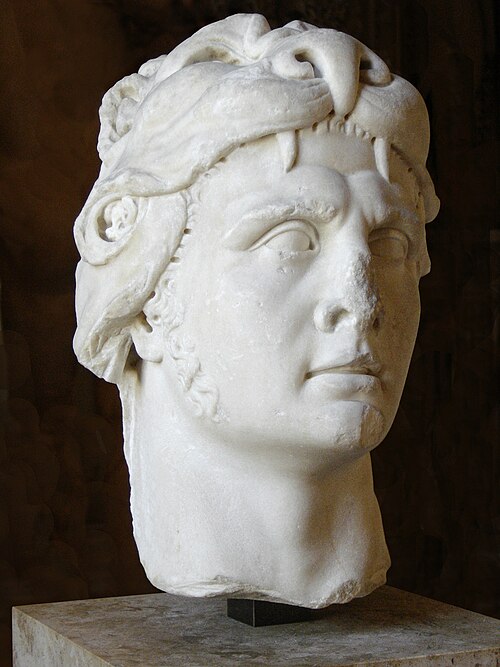
    First, consider  these coins minted by Mithridates VI (134–63 BCE). Mithridates fought a series of wars against the Romans. In his day, Persian and Zoroastrian traditions were being interpreted to predict a king who would overthrow Rome (this is interesting because the Magi were Zoroastrian priests). Mithridates promoted himself as the fulfillment of these prophecies. You’ll notice the coins have stars on them. As part of this promotion, Mithridates minted comets on these coins.

    The context is provided by the Roman historian Justin:

    The future greatness of this prince even signs from heaven had foretold; for in the year in which he was born, as well as in that in which he began to reign, a comet blazed forth with such splendour, for seventy successive days on each occasion, that the whole sky seemed to be on fire. It covered a fourth part of the firmament with its train, and obscured the light of the sun with its effulgence; and in rising and setting it took up the space of four hours.[2]

    Justin writes around AD 160–230. However, he is paraphrasing from Pompeius Trogus’ work The Philippic Histories, written in the first century BC. Justin refers to two comets, one at Mithridates’ birth and another at his ascension. The existence of such comets used to be dismissed as legendary. However, subsequent studies of Chinese astrological records have confirmed that two such comets did appear at the time of his birth and ascension.[3] So, Mithridates and Trogus are referencing a real celestial event.

    What is important for us is how this event was interpreted. Justin cites a first-century author stating that a comet which appears for 70 days was a sign from heaven foretelling the rise of a great prince. For Rome, this was an ominous sign. Justin said Mithridates had an exceptional destiny. This destiny resulted in the attempted overthrow of Roman power in the eastern Mediterranean. Mithridates successfully overthrew and conquered several neighboring kingdoms and Roman-controlled territories, expanding his realm into a major empire around the Black Sea and Asia Minor. He also massacred tens of thousands of Roman citizens. This was bad news for the established Roman status quo. Mithridates was an obvious threat to the political order.

    Mithridates obviously viewed his mission differently. He did not view the comets as a negative omen. The idea that he was a serious threat to Roman power in the eastern Mediterranean was something he embraced. In effect, he is saying: “The cosmic sign that terrified the world was about me—I am the terror to your Roman oppressors.” This was a bad omen for the Romans but a positive one for their enemies. By minting coins bearing these comets, Mithridates shows he expected his subjects to interpret them in the same way he did.

    The takeaway is this: In the first century BC, a comet could be interpreted by people in the East as signifying the birth of a new ruler who would rise to overthrow and replace the existing rulers. This would be a negative omen for the existing social order and the incumbent rulers. However, it could also simultaneously be embraced as a positive sign by partisans of the new king.

    Example 2: Augustus Caesar
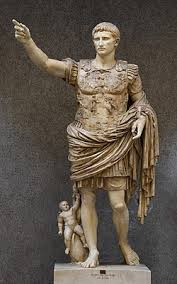
    Consider next these coins  from Augustus Caesar (63 BC–AD 14), who was the Roman Emperor at the time of Jesus’ birth. Augustus promoted himself as “son of God,” “saviour of the world,” “lord,” and described his reign as “the good news”[4] that Augustus had ushered in peace and stability. These coins are part of that promotion. Notice the coins have comets on them. Why? Pliny explains:

    The deified Augustus had deemed this comet very propitious to himself; as it had appeared at the beginning of his rule, at some games which, not long after the decease of his father Caesar, as a member of the college founded by him he was celebrating in honour of Venus Genetrix. In fact he made public the joy that it gave him in these words: “On the very days of my Games a comet was visible for seven days in the northern part of the sky. It was rising about an hour before sunset, and was a bright star, visible from all lands. The common people believed that this star signified the soul of Caesar received among the spirits of the immortal gods, and on this account the emblem of a star was added to the bust of Caesar that we shortly afterwards dedicated in the forum.” This was his public utterance, but privately he rejoiced because he interpreted the comet as having been born for his own sake and as containing his own birth within it; and, to confess the truth, it did have a health-giving influence over the world.[5]

    Pliny refers to a bright comet that appeared around 44 BC, commonly referred to as the Sidus Iulium (“Julian Star”) or Caesaris astrum (“Caesar’s star”) in ancient literature. The existence of this comet has been confirmed from Chinese records.[6] It appeared shortly after Julius Caesar’s assassination and was interpreted by the common people as evidence that Julius Caesar had been made a god. Augustus was Julius Caesar’s adopted son. So the inference can be made that he (Augustus) was declared the son of God. Pliny says that, in contrast to the common interpretation, Augustus himself took the comet as signifying him and as “containing his birth,” and Pliny accepts that the omen had foretold the positive influence his life and reign would have over the world.

    Here Caesaris astrum is viewed as a positive omen, signifying the benefits of Augustus’ reign. However, in the previous paragraph, Pliny has described comets as “a terrifying star and not easily expiated,” because “they overturn kingdoms, stir up wars, and change the condition of peoples.” As examples, he mentions comets that appeared during the civil war of 87 BC where Octavius was overthrown and replaced by Marius; the struggle between Caesar and Pompey, where Caesar gained control of Rome making himself emperor; and the poisoning of Claudius where Nero took control of the empire. These are all cases of significant political upheaval resulting in a change in regime.

    Is Pliny contradicting himself here? I don’t think so. Both these things can be true at the same time. Caesar’s death did herald political upheaval. It resulted in the War of Mutina, the Second Triumvirate, and the civil war between Antony and Octavian. These resulted in the end of the Roman Republic and the rise of the Roman Empire. Augustus rose victorious from these struggles and was the beneficiary of these upheavals.

    So, in Pliny we see both that comets were terrible signs predicting political upheaval involving an overthrow of the current kingdom and, at the same time, that they could be reinterpreted or reframed as positive signs of endorsement for the ruler who benefits from the change and also as signs of whatever benefits his reign brings about.

    Example 3: Tacitus and Nero — The Comet of AD 60
    Tacitus records a comet during the reign of Nero Caesar around AD 60:

    Meanwhile, a comet blazed into view—in the opinion of the crowd, an apparition boding change to monarchies. Hence, as though Nero were already dethroned, men began to inquire on whom the next choice should fall; and the name in all mouths was that of Rubellius Plautus, who, on the mother’s side, drew his nobility from the Julian house. … A belief spread that he was the candidate marked out by the will of deity; and he found numerous supporters in the class of men who nurse the eager and generally delusive ambition to be the earliest parasites of a new and precarious power. Nero, therefore, perturbed by the reports, drew up a letter to Plautus, advising him “to consult the peace of the capital and extricate himself from the scandal-mongers: he had family estates in Asia, where he could enjoy his youth in safety and quiet.” To Asia, accordingly, he retired with his wife Antistia and a few of his intimate friends.[7]

    Nero proceeds to have Plautus murdered while in exile.

    The same pattern is seen here. Tacitus tells us that a comet was widely understood as an “apparition boding change to monarchies.” This is clearly a negative omen for the current king, Nero. It signals to the people that he has been dethroned by the gods and will be replaced by a rival king. Nero is “perturbed” and attempts to eliminate rivals. However, the same omen is simultaneously interpreted by the same people as a divine endorsement of the new king and so gives their support to Plautus. The reason Nero exiles and murders Rubellius Plautus is because the people believe he is the candidate “marked out by the deity” and he wins “numerous supporters” as a result.

    So, in the first century AD, comets could and were interpreted as a sign that a king would be replaced by a new rival. This could be and was interpreted as a negative sign by the current king—so much so that he might murder potential rivals. At the same time, it could also, and did, signal divine endorsement of the rival, and hence motivate people to support him.

    Example 4: Josephus and the Zealots
    A fourth example is Josephus. In a previous post, I mentioned Josephus’ reference to Halley’s Comet as “a star resembling a sword, which stood over the city.” The full context is:

    Thus were the miserable people persuaded by these deceivers, and such as belied God himself; while they did not attend nor give credit to the signs that were so evident, and did so plainly foretell their future desolation, but, like men infatuated, without either eyes to see or minds to consider, did not regard the denunciations that God made to them. Thus there was a star resembling a sword, which stood over the city, and a comet, that continued a whole year.[8]

    He goes on to explain this:

    But now, what did the most elevate them in undertaking this war, was an ambiguous oracle that was also found in their sacred writings, how “about that time, one from their country should become governor of the habitable earth.” The Jews took this prediction to belong to themselves in particular, and many of the wise men were thereby deceived in their determination. Now this oracle certainly denoted the government of Vespasian, who was appointed emperor in Judea. However, it is not possible for men to avoid fate, although they see it beforehand.[9]

    Again, we see the same pattern. Both Josephus and the Zealots interpret the star (or comet) as a sign that a new king would rise up who would become governor of the earth. G. J. Goldberg explains that both Josephus and the Zealots’ interpretation is shaped by Jewish apocalyptic tradition.[10]⁸ The oracle of Balaam—“a star shall come out of Jacob, and a sceptre shall rise out of Israel” (Num. 24:17)—was widely used in Second Temple literature to predict the coming of a ruler. In this context, a star could naturally be understood as the sign preceding a messianic ruler.

    The difference between them is over who the relevant king is. The Zealots take the comet as an omen from God that Roman rule in Judea will be overthrown. This would be a negative omen for Rome. Consequently, they see it as a divine endorsement of their decision to rebel, and a positive omen for them. By contrast, Josephus sees the comet as an omen that the regime in Jerusalem will be overthrown—a negative sign sent from God against the Zealots. However, Josephus simultaneously understands the comet to be a sign of endorsement for Vespasian; it predicted his ascension to the throne.

    So, in first-century Judaism, a comet could be and was interpreted as a sign that a new king would arise and replace the current regime. This could be and was interpreted in light of messianic expectations. Such a comet was a negative sign for the current rulers who would be overthrown or replaced, but it would also be a sign of endorsement for the new regime.

    Example 5: Chaeremon of Alexandria
    My final example is Chaeremon of Alexandria, who was one of the leading Stoic philosophers of the first century AD—and significantly, a tutor to the young Nero prior to AD 47. One of Chaeremon’s works was a treatise On Comets. No surviving manuscripts of this work exist; however, fragments of it occur in the writings of Origen. Origen writes:

    It has been observed that, on the occurrence of great events, and of mighty changes in terrestrial things, such stars are wont to appear, indicating either the removal of dynasties or the breaking out of wars, or the happening of such circumstances as may cause commotions upon the earth. But we have read in the Treatise on Comets by Chæremon the Stoic, that on some occasions also, when good was to happen, comets made their appearance; and he gives an account of such instances. If, then, at the commencement of new dynasties, or on the occasion of other important events, there arises a comet so called, or any similar celestial body, why should it be matter of wonder that at the birth of Him who was to introduce a new doctrine to the human race…[11]

    Again, we have the same pattern: Origen tells us that, in his day, comets were understood to indicate significant upheavals in terrestrial affairs, such as “the removing of dynasties.” This causes “commotion” and hence indicates negative things are to occur. However, he tells us that Chaeremon had documented and taught that comets could also indicate that “good was about to happen,” such as at the “commencement of new dynasties.” This is the pattern we have seen above. In each case, a comet has been seen; in each case, it is taken as a negative omen for the dynasty being removed, but also as an endorsement of the replacement.


    [1] Manilius, Astronomica 1.809–814; 2.150–159, trans. G. P. Goold (Cambridge, MA: Harvard University Press, 1977), 67–69, 123–25.

    [2] Justin, Epitome of the Philippic History of Pompeius Trogus 37.2.1–3, trans. J. C. Yardley (Atlanta: Scholars Press, 1994), 197.

    [3] Ho Peng Yoke, “Ancient and Mediaeval Observations of Comets and Novae in Chinese Sources,” Vistas in Astronomy 5 (1962): 127–225.

    [4] Here I am not putting a Christian “spin” on Augustus’s claims. It is common place in New Testament studies to observe that the Messianic language used by early Christians to describe Christ is the same language used to describe the roman emperor and the imperial cult.

    [5] Pliny, Natural History 2.93–94, trans. H. Rackham (Cambridge, MA: Harvard University Press, 1938), 207–09.

    [6] Ho Peng Yoke, “Ancient and Mediaeval Observations,” 144–45.

    [7] Tacitus, Annals 14.22, trans. J. Jackson (Cambridge, MA: Harvard University Press, 1937), 283–85.

    [8] Josephus, Jewish War 6.288–300, trans. H. St. J. Thackeray (Cambridge, MA: Harvard University Press, 1928), 459–63.

    [9] Josephus, Jewish War 6.288–300, trans. H. St. J. Thackeray (Cambridge, MA: Harvard University Press, 1928), 459–63.

    [10] G. J. Goldberg, “The Star of Bethlehem and Josephus,” Journal for the Study of the Pseudepigrapha 13 (1995): 59–77

    [11] Origen, Contra Celsum 1.58, trans. Henry Chadwick (Cambridge: Cambridge University Press, 1953), 39.




  • Star of Wonder: Matthew’s Nativity Narrative and its Critics, part one.

    Recently, I have been thinking about Matthew’s birth narrative. In particular, I want to discuss three claims that are sometimes made by critics of the narrative’s historicity.

    First, it is claimed that no star could exist that moves or behaves in the way described in Matthew’s Gospel. According to this objection, Matthew depicts a star acting in ways that we now know real stars cannot and do not act.

    Second, it is claimed that stars of the sort described by Matthew would not have been interpreted as signs of kingship. Instead, such phenomena are said to have been universally regarded as negative omens.

    Finally, it is claimed that the account of the massacre of the children is incompatible with what we know of Herod’s reign.

    Let us begin with the first issue. Matney observes.  

    [I]t has long been recognised that Matthew 2:9 presents a particular challenge: the ‘going before’ and ‘stopping’ behaviour does not seem to conform to the motion of any known natural celestial object. Typical astronomical objects– stars, planets, comets – appear to rise in the east and set in the west, due to the diurnal rotation of the Earth. Such objects do not normally pause at a particular southerly azimuth for several hours, nor would they typically ‘stop’ overhead for any length of time.[1]

    Matney cites Adair who writes ” the key problem is that the description of the movements of the star is outside what is physically possible for any observable astronomical object”

    Matthew describes two features of the star’s behaviour. First, in verse 9, the star is said to have “stopped” over the place where Jesus was born. Second, the same verse says that the star “went ahead of them”.

    Let us examine each of these claims in turn.

    The NASB translates the relevant phrase as “until it stopped over the place where the child was”. The literal Greek, however, reads “until it stood over”.

    What does this phrase mean? When reading the Bible—or any ancient text produced in a culture very different from our own—it is important to ask how such language was actually used by contemporaries. When we do so, a striking pattern emerges.

    Ancient Usage of “Stood Over”
    In 12 BC the Roman statesman and general Marcus Agrippa died. The Roman historian Cassius Dio wrote the following about his death:

    The death of Agrippa, far from being merely a private loss to his own household, was at any rate such a public loss to all the Romans that portents occurred on this occasion in such numbers as are wont to happen to them before the greatest calamities. Owls kept flitting about the city, and lightning struck the house on the Alban Mount where the consuls lodge during the sacred rites. The star called the comet hung for several days over the city.[2]

    A very similar description appears in Josephus’s Jewish War, where he describes events preceding the Jewish–Roman war of AD 66:

    Thus there was a star resembling a sword, which stood over the city, and a comet.[3]

    Notice how closely this language parallels Matthew’s. Both Dio and Josephus refer to a comet, though they also use the term “star”. This is not contradictory.  Greek and Roman authors frequently used the word star refer to comets. Pliny for example states “There are also stars that suddenly come to birth in the heaven itself …The Greeks call them ‘comets,”[4] Seneca called them “hairy stairs”[5].  Numerous references to ceasers comet in 44 AD, refer to it with the unmodified term ἀστήρ (astēr) or various Latin synonyms (e.g., sidus, astrum).[6]

    What is important however is this: In both cases, the authors describe the star or comet as “standing” or “hanging” over a city—Rome or Jerusalem. The language Matthew uses to describe a star “standing over” a location is the same language used by contemporary and near-contemporary authors to describe comets. Moreover, this language appears to be uniquely associated with comets. As Colin Humphreys notes, “phrases such as ‘stood over’ and ‘hung over’ appear to be uniquely applied in ancient literature to describe a comet, and I can find no record of such phrases being used to describe any other astronomical object.”[7]

    Further details reinforce this interpretation. Josephus explains that the star “stood” over the city “like a sword”. Similar imagery appears in Marcellinus, who describes a comet “hanging like a column”. Comets have tails that point away from the sun, and although they are always moving, from certain vantage points they can appear to hang or stand over a particular location, pointing down towards it. To an observer on the ground, such a phenomenon would naturally be described as a star standing over a city.

    A modern illustration helps make this clear. In July 2020, a widely circulated photograph by Amr Abdulwahab showed Comet NEOWISE above the Pyramid of Khafre at Giza. The image was commonly captioned “Comet NEOWISE in the night sky above the Pyramid of Khafre”, and many reposts used language strikingly similar to that found in Marcellinus, describing the comet as “hanging” over the pyramid.

    Are these references to real celestial phenonena?

    Comet NEOWISE was, of course, a real astronomical object. But what about the comets described by Cassius Dio and Josephus? Are these merely legendary embellishments, or do they refer to genuine celestial events?

    It is widely accepted that both authors are describing real phenomena. In fact, they provide the only surviving Greco-Roman references to appearances of Halley’s Comet. Halley’s Comet was visible in the skies over Rome in 12 BC and over Judea in AD 66. These facts raise an obvious problem for critics who argue that Matthew’s gospel cannot be referring to any real celestial phenomena because it refers to a star that “stands over” a location. Outside of Matthew’s gospel this language is used to refer to a real phenomenon.

    How do we know Josephus and Cassius Dio referred to a real comet? Halley’s Comet does not follow a perfectly regular orbit. Gravitational and non-gravitational forces slightly alter its path and period over time. While astronomers can model these effects accurately for recent appearances, the accumulated uncertainties make it impossible to extrapolate its orbit reliably prior to about AD 800 using modern data alone. To go further back, astronomers require fixed anchor points—historical observations of known dates.

    These anchor points come from ancient records. Several ancient cultures recorded astronomical phenomena, but the most important records come from China, particularly during the Han Dynasty (206 BC–AD 220). The Han maintained state-sponsored observatories staffed by trained officials whose role was to monitor the heavens for omens and portents. As a result, they kept systematic records of celestial events, including comets. These records typically note the date of first appearance, position in the sky, direction of motion, tail shape, duration of visibility, and associated interpretations.

    These records have proven to be remarkably reliable. Earlier scholarship in the mid-twentieth century suggested that such records might have been politically manipulated, but modern reassessments have largely rejected this view. David Pankenier, for example, compared 127 solar eclipse records from Han sources with NASA’s Five Millennium Catalogue of Solar Eclipses and found them to be highly accurate, with only rare errors attributable to copying mistakes rather than fabrication[8]. When cross-checked against Babylonian and Greco-Roman sources, the Chinese records consistently prove to be the most reliable ancient astronomical data we possess. [9]Using these records, astronomers have been able to reconstruct the path of Halley’s Comet prior to the eighth century and identify its appearances in 12 BC and AD 66.

    At a common-sense level, this methodology is straightforward. Suppose I claim that it rained last Saturday. How would you check this? You would consult reliable meteorological records for that time and place. If those records confirm rainfall, you would reasonably conclude that my statement was true. The same logic applies here. If an ancient author reports a comet at a particular time, we consult reliable ancient records. In this case, the Chinese records confirm the appearance of such comets.

    Application: The 5 BC Comet

    What is less widely known is that these same Chinese records also report a significant comet around the time traditionally associated with the birth of Jesus. The Han Shu records the following:

    In the second year of Jianping of Emperor Ai, during the second lunar month, a broom-star appeared in Qiān Niú and remained visible for more than seventy days. It is said: “The broom star serves to eliminate the old and establish the new. Qiān Niú is the place whence the sun, moon, and five planets arise, the origin of calendrical reckoning, and the starting point of the three standards. The long duration of the comet’s appearance indicates the greatness of the event to come.[10]

    A “broom star” is the Chinese term for a comet—a star with a tail like a broom. The second lunar month of the second year of Jianping corresponds to approximately 4 March–6 April 5 BC in the Gregorian calendar. During this period, a comet was visible for over seventy days, even though the monsoon season.

    The Chinese astrologers interpreted this event as signalling the replacement of the old with the new—the beginning of a new epoch—and regarded the comet’s long duration as indicating an event of great significance.

    The date is noteworthy. Historians generally place Jesus’ birth within the final years of Herod the Great’s reign. Matthew and Luke both situate Jesus’ birth during Herod’s rule[11], and Luke states that Jesus was about thirty years old when he was baptised by John the Baptist in the fifteenth year of Tiberius Caesar.[12] This date corresponds to around AD 27–28[13]. Since Herod died in 4 BC, Jesus’ birth is usually dated to around 6–4 BC. The comet recorded in the Han Shu falls squarely within this period.

    How could the star “lead” the Magi to Bethlehem?

    What, then, of the claim that the star “led” the Magi to Bethlehem? This is often misunderstood. Many assume the text implies that the Magi followed the star like a kind of celestial GPS. That is not what Matthew says. In Matthew 2, the Magi arrive in Jerusalem after their journey and say that they had seen the star earlier—either “in the east” or “at its rising”. This implies a past observation, prior to their travel. They do not know where to go and must ask Herod where the king is to be born. The star does not guide them directly to Bethlehem.

    After they leave Jerusalem, Matthew writes: “And the star they had seen when it rose went ahead of them until it stood over the place where the child was.” This must be read carefully. The Greek tense indicates that, when they set off south towards Bethlehem, they noticed that the star—already in motion—was now ahead of them and standing over Bethlehem.

    The same verb translated “went ahead” appears elsewhere in Matthew with a similar sense. For example:

    • Matthew 14:22: “He compelled the disciples to get into the boat and to go ahead of him to the other side…”
    • Matthew 21:31: “The tax collectors and the prostitutes go ahead of you into the kingdom of God.”
    • Matthew 28:7: “He is going ahead of you into Galilee; there you will see him.”

    In each case, the phrase does not mean “guiding” in the sense of leading someone step by step to a destination. Rather, it means going ahead in the sense of getting to the destination first. In Matthew 2, the verb’s direct object is “them”; Matthew is describing the star’s position relative to the Magi, not some extraordinary behaviour against the fixed background of stars.

    This is entirely consistent with a comet. As Humphreys notes, visible comets typically move through the stellar background at about one to two degrees per day. If the Magi first saw a comet in the east and then undertook a journey of one to two months to Jerusalem, it would not be surprising for the comet to appear in the southern sky from their new location. Humphreys explains:

    It is suggested that the Magi originally saw the comet in the east in the morning sky. They travelled to Jerusalem, a journey of one to two months, during which time the comet moved through about 90 degrees from east to south, consistent with typical cometary motion. From Jerusalem, Herod’s advisers directed them to Bethlehem, six miles to the south. Setting off the next morning, they saw the comet ahead of them in the southern sky. Hence it appeared that the comet “went ahead of” them on the final stage of their journey.[14]

    In conclusion, I have defended three claims.

    First, the language Matthew uses to describe the star closely matches the language used by contemporaries and near-contemporaries to describe comets.

    Second, the same ancient records that allow us to confirm that writers such as Josephus and Cassius Dio were describing real comets also indicate that a prominent comet was visible around the time of Jesus’ birth.

    Third, if the star was a comet, its reported movements are entirely consistent with Matthew’s description.


    [1] Matney, Mark. “The Star That Stopped: The Star of Bethlehem & the Comet of 5 BCE.” Journal of the British Astronomical Association 135, no. 6 (December 3, 2025):390. https://doi.org/10.64150/193njt

    [2] Cassius Dio, Roman History 45.17.

    [3] Josephus, Jewish War 6.289.

    [4] Pliny the Elder, Natural History II.22.

    [5] Seneca, Natural Questions VII.17.

    [6] Ramsey J. T. & Licht A. L., The Comet of 44 B.C. and Caesar’s Funeral Games, Scholars Press, Atlanta, GA, 1997, pp. 155–177

    [7] Humphreys, Colin J. 1992. “The Star of Bethlehem, A Comet in 5 BC and the Date of Christ’s Birth.” Tyndale Bulletin 43, no. 1 (May): 36. https://doi.org/10.53751/001c.30475 [tyndalebulletin.org]

    [8] Pankenier, David W. “On the Reliability of Han Dynasty Solar Eclipse Records.” Journal of Astronomical History and Heritage 15, no. 3 (2012): 200–212.– Available as a PDF from Lehigh University: “On the Reliability of Han Dynasty Solar Eclipse Records”.

    [9] Xu, Z., Pankenier, D. W. & Jiang, Y. (2000): East-Asian Archaeoastronomy.

    [10] Ban Gu 班固. Han shu 漢書 (Book of Han), vol. 26, Tianwen zhi 天文志. In Hanshu zhudi, edited by Kang Xiangcheng 康祥成 and Xu Ke 徐克, 917–23. Beijing: Zhonghua Shuju, 1962.

    [11] Matt 2:1, Luke 1:5, 26

    [12] Luke 3:1,23

    [13] Luke uses inclusive counting, whereby part of a year counts as a whole year. The exact date depends on whether he counts from Augustus and Tiberius’s co regency in 11/12 AD or his ascension in 14 AD. The phrase “about 30 years old” means Luke is saying Jesus was approximately this age, it means he was in his early thirties or late twenties.

    [14]Humphreys, Colin J. 1992. “The Star of Bethlehem, A Comet in 5 BC and the Date of Christ’s Birth.” Tyndale Bulletin 43, no. 1 (May): 36. https://doi.org/10.53751/001c.30475 [tyndalebulletin.org]

    .

  • Hear Matt’s Three Talks on “Questions People ask”

    Recently Matt spoke at  Orewa Community Church, as part of their series on “Questions People ask”. His three talks: “How can there be just one religion?”, “How does God allow suffering?”, and “Hasn’t Science disproved Christianity?” are all available to listen online to here.

    Real Questions People Ask

  • God or Natural Law: A False Dichotomy

    A few weeks ago someone showed me a newspaper article entitled “New theory could prove how life began and disprove God”, which was published in the UK newspaper The Independent. Now I have, of course, heard media pronouncements of the nature published in this article frequently, reporters often seem to have a knack for making provocative pronouncements about the theological and philosophical implications of various theories (and one can usually take such prouncemants with a grain of salt), but this one caught my attention because of the unstated premise it contained. This premise is, I think, common in discussions about religion and science, which makes it worth addressing in its own right.

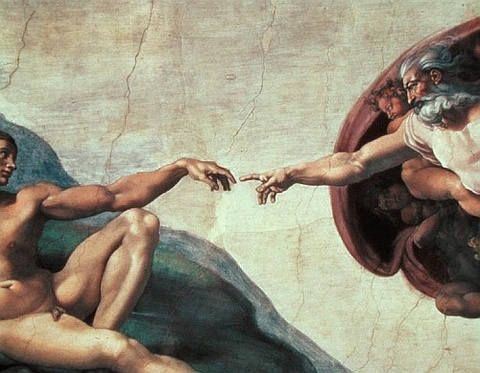
    Michelangelo's 'God Creates Adam

    The author’s commentary opens as follows:

    “A new theory could answer the question of how life began – and throw out the need for God. A writer on the website of Richard Dawkins’ foundation says that the theory has put God “on the ropes” and has “terrified” Christians. It proposes that life did not emerge by accident or luck from a primordial soup and a bolt of lightning. Instead, life itself came about by necessity – it follows from the laws of nature and is as inevitable as rocks rolling downhill. …”

    According to the author, the ‘new theory’ proposes that life arose from non-life by “natural necessity”, that is: according to the laws of nature. Interestingly, the author assumes the fairly standard account of ‘laws of nature’ whereby they are more than just regularities, they involve a kind of necessity that explains or grounds regularities.  The author draws the conclusion from the new theory that God does not exist.

    Now the author is not exactly clear on why this conclusion follows. One argument he seems to grope towards is that the new theory provides all sorts of problems for belief in God because someone on Richard Dawkins’ website says it does.  I suspect, however, that – apart from simple affirmations of faith in Dawkins blog – the author has something a bit more sensible in mind in his thinking.

    The premise is that: life arose from non-life, according to the laws of nature; the conclusion is that: God did not create life. The unstated assumption seems to that: if you can explain something by natural law then it follows that God did not do it.  Implicit in the reasoning is the assumption that appeals to natural law and God are rival and incompatible hypothesises; the truth of one excludes or rules out the other.

    I think anyone familiar with the history of theological thought should find this assumption odd. For (more…)

  • Jerry Coyne on Deception and the Omission of Facts

    In 2011 I wrote a criticism of Jerry Coyne’s USA Today article, “As  atheists know, you can be good without God.” My critique, “When Scientists make bad Ethicists,” attracted some attention motivating Coyne to write a response. I wrote a following up piece the next year, “Jerry Coyne on God and Morality Revisited,” my conclusions were not flattering. I wrote:

    “Nothing in Coyne’s follow up leads me to revisit my initial conclusion. Misrepresenting people’s views, calling people names, quoting from articles out of context, denigrating others’ scholarly qualifications and confidently asserting a position whilst reasoning in a circle, and ignoring objections, are not the same as actually addressing them.  I doubt such sophistry would pass muster in the scientific community when people write on scientific topics, and it does not pass muster when scientists comment on theology or philosophy.”

    Jerry CoyneRecently I discovered Coyne’s latest riposte on the issue of divine commands: “William Lane Craig answers a distressed reader: ‘If ISIS’s god were mine, should I do what he says?’”  which  has   subsequently  been posted on richarddawkins.net. Little, it seems, has changed. Coyne begins by sarcastically referring to William Lane Craig as a “sophisticated theologian” and commending him for addressing a question “not often taken up by theologians”. I am not sure which “sophisticated theologians” Coyne has read because, contrary to what he says, almost every major monograph on divine command theory (“DCT”) in the last thirty years has discussed the problem he refers to in his post, as do most articles on the subject. Undeterred by these facts, or perhaps unaware of them, Coyne suggests in closing that “sophisticated theologians” like Craig who defend DCT are like real estate salesman in Florida.

    Apart from sarcastic names and insinuations of dishonesty Coyne’s central argument purports to highlight an inconsistency in Craig’s divine command theory. The inconsistency relates to a distinction Craig (and others like Baggett and Walls) draw between a voluntaristic and a non voluntaristic DCT. According to Craig’s account of a voluntaristic DCT ,“God’s commands are based upon His free will alone”; God “arbitrarily chooses” what we are required to do.”[1] On a non-voluntaristic  account, “Our duties are determined by the commands, of a just and loving God. God is essentially compassionate, fair, kind, impartial, and so forth, and His commandments are reflections of His own character”;[2] because he has these character traits, essentially, “it is logically impossible for Him to issue certain sorts of commands”.[3]

    I think Craig’s use of the term “voluntarism” is somewhat inaccurate. Yet he is correct when he adds that most (if not all) divine command theorists are non-voluntarists, as he defines the term. Coyne thinks this “is bait and switch”. This is because “Craig himself seemed in at least one case to hold to the voluntarist view of the DCT.”  Coyne quotes from Craig:

    “But God has no such prohibition [the prohibition not to take an innocent life]. He can give and take life as He chooses.  We all recognize this when we accuse some authority who presumes to take life as “playing God.” Human authorities arrogate to themselves rights which belong only to God. God is under no obligation whatsoever to extend my life for another second.  If He wanted to strike me dead right now, that’s His prerogative …

    … On divine command theory, then, God has the right to command an act, which, in the absence of a divine command, would have been sin, but which is now morally obligatory in virtue of that command.”

    Coyne rejoins, “If that’s not voluntaristic DCT, I don’t know what is.” Coyne provides a link to the article in question, so presumably he expects his readers – good free thinkers who accept nothing blindly on authority – to check his quote and verify what he says. When one does, however, the (more…)

  • Comparing the Old & New Teleological Arguments

    Robin Collins

    The “New Teleological Argument” is a theistic argument which attempts to show that theism is more probable than the postulate of an “atheistic single universe”[i]. There are number of reasons why this argument is termed the “New” teleological argument. Chief among these reasons is that its explanandum i.e. the incredible fine tuning of the laws and constants of physics have only been discovered in the past 20-30 years[ii] [iii]. By contrast, the explanandum of “Old Teleological Arguments” has long since been available to theologians and philosophers of religion. Of course the relatively recent origin of the “New” Teleological argument is not the only feature which distinguishes it from its historical counterpart. Whereas historical versions of design arguments (such as Paley’s famous watchmaker argument) rest on an argument from analogy, contemporary versions of the argument rest on what the philosopher of biology Elliot Sober calls the “Likelihood Principle”[iv] [v]. In other words, rather than relying on an analogy between the explanandum and some obviously contrived entity such as (in Paley’s case) a watch, contemporary versions of the teleological argument argue that the explanandum (the fine tuning of the laws and constants of physics) is more probable given the hypothesis of theism as opposed to the postulate of an atheistic single universe[vi].

    The Conditions of Success
    Throughout the rest of this post, I hope to argue that, on purely philosophical grounds, there is little which will allow us to say which version of the argument (be it contemporary or historical) is more or less plausible. In this respect, it seems only fair that we should assess the strength of David Hume’s critiques, since they are popularly regarded as decisive refutations of teleological arguments.[vii] [viii] It’s important to note also, that while the failure of the Humean critiques would not guarantee the conclusion that the design arguments are equally plausible, it is suggestive thereof. After all, if the joint failure of natural theological and atheological arguments should suggest that it’s impossible to arbitrate (on the evidence) between theism and atheism, then similarly, the failure of stock arguments against either of the design arguments should lead us to think that it’s impossible to arbitrate between them.  In spite of the fact that both contemporary and historical versions of the design argument are equally plausible, I will argue that the contemporary version of the argument has a number of key dialectic advantages which may warrant us in thinking that it is “dialectically speaking”, more successful than its historical counterpart. More precisely, I am saying that the relative success of the new teleological argument is a function of the fact that it does not turn on premises that are as deeply controversial as the commitments required by the historical version.

    The Contemporary Version of the Argument
    The most prolific contemporary defender of the design argument is Robin Collins who, rather than arguing from facts about biology, argues from recent discoveries in physics[ix]. As we noted earlier, this is one of the main reasons why it is termed the “New” teleological argument. Collins frames his rendition of the argument as follows:

    (1)     The existence of fine tuning is not improbable under theism[x]

    (2)     The existence of fine tuning is very improbable under the atheistic single-universe hypothesis[xi]

    Therefore, given the prime principle of confirmation[1] [xii],

    (3)     The existence of fine tuning is evidence for theism over the atheistic single-universe hypothesis[xiii]

    By “fine tuning”, I mean the very precise arrangement of the fundamental laws and constants of physics that must be met in order for our Universe to fall into the very narrow life permitting range.[xiv] [xv] According to contemporary physics, these conditions seem to be arranged in such a way that, were they to vary by even the tiniest amount, life (or more precisely, sentient life) would not be a physical possibility. For example, as P.C.W. Davies points out, a change in “the weak force”[2] by only 1 part in 100100 would make the Universe uninhabitable.[xvi] Similarly, if the cosmological constant[3] were just a fraction faster, matter would spread apart so quickly that even relatively small clumps of matter would have insufficient time to form[xvii].

    The Plausibility of the Premises
    Premise (1) amounts to the claim that if God exists, then it is entirely within His creative capability to create the universe finely tuned as it is. Hence the observation that there is a universe which exhibits teleo-functional properties is not surprising given the postulate of theism. Considering that the traditional conception of God holds that He is an omnipotent being, this is a fairly straightforward premise that we should accept.

    Premise (2) amounts to the claim that if God does not exist and if the single universe hypothesis is true, then the apparent fine tuning of the universe is a very surprising fact. After all, the fundamental laws and constants of physics seem to be arranged in such a way that their placement seems guided. But if God doesn’t exist, it doesn’t seem likely that there would be any intelligent, guiding mind such that it could plausibly account for this apparent fine tuning. Hence premise (2) seems (more…)

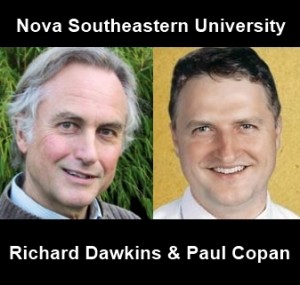
  • Religion, Science, 9/11 and the Moon: Dawkins’ Response to Copan

    Richard Dawkins and Paul CopanParchment and Pen, has an audio of a brief exchange between Paul Copan and Richard Dawkins who was speaking in Ft. Lauderdale at Nova Southeastern University on “The Fact of Evolution.” (The following week, Paul Copan spoke on “The Fact of God” at Nova Southeastern and gave a direct response to Dawkins.) This MP3 of Paul Copan and Richard Dawkins’ exchange is from the Q&A of Dawkins’ talk.

    In it Paul alludes to an argument advanced by C S Lewis, Alvin Plantinga, Michael Rea, Victor Reppert and also alluded to by Patrica Churchland, Thomas Nagel, William Whewell and Friedrich Nietzche. The argument is that if our cognitive faculties evolved by natural selection, unguided by God, then our cognitive faculties cannot be rationally relied on to give us truth. The literature on this argument is interesting but I won’t comment on that here.

    What interests me is the comment Dawkins made in the MP3 which got the applause of the audience. Dawkins appears to not grasp the point of the argument and takes it to be asking for a reason why he supports “scientific rationalism”. He said he believes in scientific rationalism because it “works”. He then provided an example of how it “works”, it is that “science flies us to the moon, while religion flies planes into buildings.”

    Much could be said here but I want to limit myself to a single point, the evidence Dawkins cites that science works and religion does not. Dawkins offers that science has done good things such as getting us to the moon; religion has done bad things like destroying the World Trade Centre on 9/11. In other words, the positive things science does commends it as a something we should trust whereas the negative things religious does commends it as some thing which we should not trust.

    So let’s look at the claim Dawkins made that “science” got us to the moon. Now how does a subject, get us to the moon? Presumably what he means is that it was through science that we developed the rocket propulsion technology which enabled us to get to the moon.

    But here is the problem. If the fact that science developed the propulsion technology that got us to the moon means that science is responsible for the flight to the moon, and can take credit for it, then science must be responsible for the flight into the World Trade Centre; science developed the propulsion technology of aeroplanes, hence, it should be science not religion that is blamed.

    Moreover, rockets are used for other things apart from space and air travel (more…)