A little while back we published a post linking to some talks by Tim McGrew on Undesigned Coincidences in the Gospels. For some bizarre reason this post of ours prompted fellow kiwi blogger Deane Galbraith to write a post on the Bulletin for the Study of Religion, linking to our post, on the separate topic of Tim […]
Entries Tagged as 'Deane Galbraith'
Guest Post: Tim McGrew defends “The Argument from Miracles: A Cumulative Case for the Resurrection of Jesus of Nazareth”
May 9th, 2011 50 Comments
Tags: Bayesian Probability · Deane Galbraith · Guest Post · Lydia McGrew · Probability of the Resurrection · Resurrection · Tim McGrew
A Response to The Dunedin School’s “Thinking in Tatters: Moral Relativism and So-Called ‘Counter-Examples’”
January 2nd, 2010 9 Comments
In my previous post, A Response to The Dunedin School’s “Thinking in Tatters: Moral Relativism and Hidden Objectivist Assumptions”, I addressed some criticisms levelled at a talk I gave on moral relativsm by Deane from The Dunedin School (TDS) blog. In a follow up post, which, once again, I cannot link directly too as TDS […]
Tags: Bad Reasoning · Deane Galbraith · Relativism · The Dunedin School
A Response to The Dunedin School’s “Thinking in Tatters: Moral Relativism and Hidden Objectivist Assumptions”
December 29th, 2009 7 Comments
http://www.youtube.com/watch?v=-S-OGWCeLws”>a
A while ago I did a series of semi-popular posts on moral relativism beginning with Cultural Confusion and Ethical Relativism I. These posts grew out of a talk I gave in Tauranga in 2008. Later I presented essentially the same talk at Laidlaw College for Thinking Matters Auckland which was posted on You Tube and […]
Tags: Bad Reasoning · Deane Galbraith · Relativism · The Dunedin School

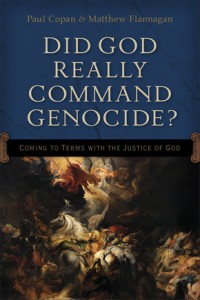 A common objection to belief in the God of the Bible is that a good, kind, and loving deity would never command the wholesale slaughter of nations. In the tradition of his popular Is God a Moral Monster?, Paul Copan teams up with Matthew Flannagan to tackle some of the most confusing and uncomfortable passages of Scripture. Together they help the Christian and nonbeliever alike understand the biblical, theological, philosophical, and ethical implications of Old Testament warfare passages.