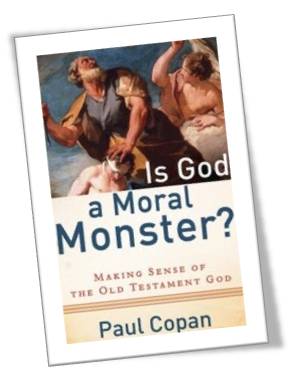
Tag: Is God a Moral Monster?

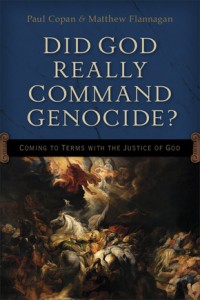
  • Out Now: Did God Really Command Genocide? Coming to Terms with the Justice of God by Paul Copan and Matthew Flannagan

    Did God Really Command Genocide?Well done Matt and Paul. 🙂

    Out now!

    Get your copy today of Did God Really Command Genocide? Coming to Terms with the Justice of God, by Paul Copan and Matthew Flannagan, published by Baker Books.

    More here.

    Buy from Baker Books
    Buy on Amazon in paperback
    Buy for your Kindle
    Buy from Book Depository

    (The New Zealand store launch is not until 31 January 2015 but Book Depository do free international posting.)

  • Did God Really Command Genocide? A new book by Copan and Flannagan

    Did God Really Command Genocide?Coming to a bookstore near you in November 2014: Did God Really Command Genocide? Coming to Terms with the Justice of God by: Paul Copan and Matthew Flannagan

    From Baker Publishing Group’s page:

    “Reconciling a violent Old Testament God with a loving Jesus
    Would a good, kind, and loving deity ever command the wholesale slaughter of nations? We often avoid reading difficult Old Testament passages that make us squeamish and quickly jump to the enemy-loving, forgiving Jesus of the New Testament. And yet, the question remains.

    In the tradition of his popular Is God a Moral Monster?, Paul Copan teams up with Matthew Flannagan to tackle some of the most confusing and uncomfortable passages of Scripture. Together they help the Christian and nonbeliever alike understand the biblical, theological, philosophical, and ethical implications of Old Testament warfare passages.”

    Some of the endorsements are below, you can read more here:

    “The Old Testament describes God as a warrior who directs his people to fight the Canaanites. Divine violence in the Bible is a theme that has aroused the ire of atheists and the discomfort and confusion of many Christians. Copan and Flannagan address the arguments of the atheists who use these texts to undermine belief and confidence in God. Not only are they adept at biblical interpretation and philosophy as they effectively counter this challenge, but they also write in a deeply compelling way that will appeal to both students and laypeople.”

    Tremper Longman III, Robert H. Gundry Professor of Biblical Studies, Westmont College, Santa Barbara, California

    “In their wide-ranging book, Copan and Flannagan go beyond standard treatments of Old Testament warfare; they incorporate biblical, theological, philosophical, ethical, legal, and historical perspectives on a much-debated but often misunderstood topic. This volume makes important strides forward in laying out a case for the coherence of divine command theory in connection with these Yahweh-war texts.”

    William Lane Craig, research professor of philosophy, Talbot School of Theology, La Mirada, California

    “As a full-scale follow-up to the excellent popular treatment of the topic in Is God a Moral Monster?,this book provides the most thorough and comprehensive treatment of the problem of violence in the Old Testament that I have encountered. The authors tackle the aggressive charges of the new atheists, as well as other equally sceptical but less strident critics of ‘the God of the Old Testament.’ And they do so with a blend of careful biblical exegesis and incisive moral argumentation. The book reaches deep, but remains readable, and the summaries at the end of every chapter are a great help in following the case as it is steadily built up. All of us who, in teaching or preaching the Old Testament, are constantly bombarded with ‘But what about the Canaanites?’ will be very grateful for these rich resources for a well-informed, gracious, and biblically faithful reply.”

    Christopher J. H. Wright, International Ministries Director, Langham Partnership, author of Old Testament Ethics for the People of God and  The God I Don’t Understand

    Chapter 1 is available here.

    Pre-order your copy now on Amazon, Book Depository or Mighty Ape (or wherever you normally get your books).

  • Hector Avalos and Careful, Non-Selective Citation of Sources

    On Debunking Christianity, Hector Avalos has posted a response to my critique of his post A Reply to Hector Avalos’ “Why Flannagan Fails History”. His latest post is entitled Flannagan Versus Westbrook: Understanding the Problem; it pretty much repeats points I have addressed in my critique, basically Avalos pretends I did not answer them.

    In the comments section, Avalos pretty much admits that Westbrook holds the view I maintained he does. When a questioner asks Avalos about the lex talionis he stated:

    “This is a highly contested issue. Some think that the literal interpretation could still be held even in post-Christian Jewish texts (I cited some in my initial post). Westbrook believes that both the literal and monetary co-existed, each applied depending on circumstances, in the biblical period.”

    Compare this with my comment to Max explaining my position:

    “Westbrook argues that serious wrongs “gave rise to a dual right in the victim or his family, namely to take revenge on the culprit, or to make composition with the culprit and accept payment in lieu of revenge”. He goes on to note, “[t]his right was a legal right, determined and regulated by the court”. The courts could “fix the level of composition payment” making “revenge a contingent right, which was only revived if the culprit failed to pay”.

    When talionic legal formulae occur in A.N.E. legal texts they merely express that the punishment be proportional to the crime. This could involve punishment in kind (which would be proportional to the crime) but in most cases it would probably involve monetary compensation.”

    Avalos is aware of my dialogue with Max as he quotes from it in his post. Readers will note the position he now attributes to Westbrook. This is almost exactly the view I said Westbrook held in my response yet, oddly, this comment by Avalos occurs under a post he entitled “Flannagan versus Westbrook” where he continues to argue to Debunking Christianity’s readers that I misrepresented Westbrook’s position.

    I am flat tack with mid-semester marking at the moment, in the coming month I have two conferences looming I am giving papers to, I am moderating a panel discussion and speaking in another so unfortunately I cannot respond to all of Avalos’ claims. However, I do want to address one objection he raised in Why Dr. Flannagan Fails History, Dr. Hector Avalos Responds, which was part of  Avalos’ case that I engaged in “a very selective and uncritical reading of the sources” I cited to support my position:

    “As it is, Flannagan might need to update his Copan readings. On page 121 of Is God A Moral Monster: Making Sense of the Old Testament (Grand Rapids, MI: Baker Books, 2011), Copan reluctantly admits that Deuteronomy 25:11-12 might be “the only biblical instance of punishment by mutilation.” So now Copan has gone from arguing that the Bible represented an advance over other cultures that practiced legal mutilation to making a case for the Bible’s superiority because it might have ONLY ONE case of mutilation for a poor woman helping to save her husband. What a magnificent improvement.”

    MirrorThe conclusion people are supposed to draw from this is that I am unaware of Copan’s latest writings. However, as my readers know, I have read Copan’s book (Paul sent me an electronic copy before it was published because he wanted my feedback on the manuscript; he also sent me post publication electronic and hard copies as well). It is worth comparing Avalos’ citation, and summary with a copy and paste from the original, as it is revealing to do so. Here is what Copan actually says on page 121 (more…)
  • Stark Wars

    Darth VaderThom Stark has written a lengthy response (304 pages!) to Paul Copan’s book Is God a Moral Monster? which he has published on his blog, Religion at the Margins; it is entitled Is God a Moral. Compromiser? A Critical Review of Paul Copan’s. “Is God a Moral Monster?” In it, alongside his criticisms of Copan, Stark makes several criticisms of the work of Richard Hess and Matt.

    Matt has not yet had time to read Stark’s book-length review, much less respond to it, but Copan and Hess have. Copan has published the following blog posts on his blog, Parchment and Pen:

    Is God a Moral Monster Revisited: Preliminary Replies to Thom Stark

    Richard Hess’s Response to Thom Stark

    Matthew Flannagan’s Interactions with Thom Stark

    Stark has responded to these posts with:

    Copan and Company, Part 1: A Brief Introduction

    Copan and Company, Part 2: Response to Matt Flannagan

    Copan and Company, Part 3: Response to Paul Copan

    Copan and Company, Part 4: Response to Richard Hess

    Other blogs have chimed in:

    Thom Stark’s Sweeping Claims by Christopher Copan Scott

    Reflections on the Thom Stark-Paul Copan debate by Randal Rauser

    Matt has on his ‘to do’ list an intention to wade through Stark’s review and write a response, at the very least, to the parts that critique his work. He also intends to answer Stark’s questions put to him on this blog post. However, Matt has several publication, conference and marking commitments to meet first and Matt simply cannot churn material out at the prolific rate Stark can.

    RELATED POSTS:
    Thom Stark on Wolterstorff and Hagiographic Hyperbole
    Is God a Moral Monster? A Review of Paul Copan’s Book
    God and the Genocide of the Canaanites Part I: Wolterstorff’s Argument for the Hagiographic Hyperbolic Interpretation
    God and the Genocide of the Canaanites Part II: Ancient Near Eastern Conquest Accounts
    God and the Genocide of the Canaanites Part III: Two Implications of the Hagiographic Hyperbolic Account

  • Unbelievable? Is God a Moral Monster? Paul Copan & Norman Bacrac

    Paul Copan recently debated Norman Bacrac on the topic “Is God a Moral Monster?” on a recent episode of Unbelievable? on the UK station Premier Christian Radio.

    Matt and I just listened to it and we both thought it was worth sharing as Copan really handled himself well and very clearly articulated his position on the hyperbolic reading of the Canaanites (a position he has co-authored with Matt on). The interaction between Copan, Bacrac and the show’s host Justin Brierly was very good too.

    Unbelievable?Listen here: Unbelievable? 9 Apr 2011 – Is God a Moral Monster? Paul Copan & Norman Bacrac
    [If the link will not load the Copan v Bacrac debate directly go to the Unbelievable? page then locate the 9 April 2011 episode ]

    The blurb from the show is:

    Richard Dawkins describes the Old Testament God as “a vindictive, bloodthirsty ethnic cleanser” (among other things).  Paul Copan is a Christian apologist and has written a book, “Is God a Moral Monster?” aiming to show why God’s actions in the Old Testament are not immoral when taken in context.

    Norman Bacrac is an atheist humanist and part ot the South place Ethical Society. He believes that Old Testament morality was barbaric and we don’t need a God to tell us how to behave.  He holds that God’s morality is called into question if we take the Old Testament literally.

    So how do we interpret passages where the Israelites were commanded to wipe out whole towns including women and children?

    “The blog of Matthew and Madeleine Flannagan in New Zealand” rates a mention from the host, Justin Brierly, about 38 mins in 😉

  • Is God a Moral Monster? A Review of Paul Copan’s Book

    On 11 September 2001 Islamic terrorists flew two planes into the World Trade Centre, killing thousands of innocent people. Ostensibly they did this because they believed God commanded them to do so. This event has reinvigorated a fear that has been latent in Western psyche since the 17th century when religious wars tore Europe apart. The fear of religious fanaticism, of people willing to murder hundreds in the name of God, has been whipped up by the new atheists–Richard Dawkins, Sam Harris, Christopher Hitchens, et al.

    The phenomenon is not just limited to the popular atheological literature. These fears went centre stage recently at a conference entitled “My Ways Are Not Your Ways” which was put on by the Centre for Philosophy of Religion at the University of Notre Dame. Sceptics presenting at the conference argued passionately that the God of the Bible issues commands which are at odds with modern understandings of morality; adultery is punished with death, God is portrayed as commanding the killing of non-combatants in “holy wars” against the Canaanites, God commanded Abraham to sacrifice his son, the Bible appears to approve of slavery and polygamy, and so forth.

    Is God a Moral Monster?In Is God a Moral Monster? Paul Copan attempts to address some of these concerns. What’s novel about Copan’s approach is that, unlike many standard philosophical responses to the above problems, Copan draws on recent conservative Old Testament scholarship by people like Gordon Wenham, Tremper Longman, Christopher Wright, Walter Kaiser, Richard Hess and numerous others. This is novel as much of what has been going on in evangelical discussions of Old Testament ethics for decades has been done almost in isolation from contemporary philosophy of religion and vice versa. Copan, who has degrees both in Philosophy and in Biblical Studies, brings this material together in an accessible manner.

    There is no point in hiding the fact that I am a fan of Copan’s book. In a few places Copan cites my own writings as sources of ideas and in other places the overlap with my own thoughts on these issues is considerable. I have recommended it to my son who intends to read it as soon as he has finished William Lane Craig’s On Guard. However, this review will not simply be an exercise in cheer-leading; I will attempt to both summarise Copan’s work and add critical comments.

    The Review
    Is God a Moral Monster? opens with a discussion on the new atheism in general. In chapters 3 and 4 Copan addresses the charge that God in the Old-Testament is both jealous and egocentrically demands worship. Then in chapter 5 he turns to the binding of Isaac. I will touch briefly on this (more…)