Tag: Paul Copan

  • Back from San Francisco: A Belated Report

    MandM has been quite of late, this is because Madeleine and I have been very busy.  With moving house in the midst of Christmas and New Years and Madeleine working part-time in a law firm and so on, we’ve had little time to blog. We are now set up, to some extent, and so this post will be a belated comment on my recent trip to San Francisco.

    In November I flew to San Francisco where I attended I attended the  Meeting of the Evangelical Theological Society (ETS), The Annual Meeting of the Evangelical Philosophical Society (EPS), The Evangelical Philosophical Society Apologetics Conference and The Annual Meeting of the Society for Biblical Literature (SBL) and American academy of religion.(AAR). While I would love to give detailed commentary on each session, to do so would require several blog posts of inordinate length, instead I will simply summarise what went down.

    I arrived in San Francisco at around 4pm  on the 15th. I presented my first paper at 8:30am the next morning. My paper was a critique of Walter Sinnott Armstrong’s arguments against divine command theory meta-ethics. Armstrong contends that the nature of moral obligation is best explained by identifying moral obligations with the natural property of harming others without justification, and, focusing largely on Craig’s work, argues this is superior to divine command ethics. I argued: (a) his argument fails to note the conditional nature of Craig’s (his main target’s) contention that if theism is true moral obligations are best explained as divinecommands (b) Armstrong’s does not provide a better account of moral objectivity (c) Armstrong’s account is not more economical than a divine command theory. (d) Even if it were an economical account, it does not explain various features of obligation such as (i) the social nature of moral obligations (ii) the fact that moral obligations constitute a decisive reason for acting and (iii) the specific moral content of obligations; as well as a divine command theory. All in around 30 minutes!!! The paper was very well received, with several people asking me to forward them a copy. I plan to get it published later this year.

    The rest of the morning was filled with me hearing various papers on moral theory and philosophy of religion all of which were interesting and stimulating. These panellists all shared similar perspectives yet were astutely critical of each other’s arguments. Particularly interesting was the dialogue between Baggett and Craig. Some of the issues here were technical and deserve further discussion so I plan to blog on this dialogue in more detail in the future. But in sum: Craig has defended a counterfactual: if God did not exist then moral obligations would not exist. Baggett  argued for various reasons that this is too strong; if God, the creator and sustainer of the universe, did not exist, the universe would not exist. To make sense, Craig’s claim needs to envisage a compossible world, which is like the actual world in all respects except that God does not exist, if it’s like the world in all other respects however, then it has all the features of the world God has created – and hence the resources for something like moral obligations to exist. Instead, Baggett contended, one should argue that a world with God provides a better explanation of the nature and existence of moral obligations than a world without God does. This means the theist does not have to argue, with Craig, that there is no adequate secular account of the existence of moral obligations, only that a divine command theory is more plausible than such accounts. Both Craig and Baggett made telling points which I will have to elaborate on some other time. highlight of Wednesday was the afternoon session. A panel discussion of David Baggett and Jerry Wall’s new book “Good God: The Theistic Foundations of Morality”. This book is the latest defence of divine command theory ethics, recently published by Oxford University Press. Baggett and Walls sketched briefly the content of the book and Paul Copan and William Lane Craig offered critical commentary, to which Baggett and Walls responded.

    Thursday started with an excellent critique of evolutionary (more…)

  • Response to William Lane Craig’s Question 225: “The ‘Slaughter’ of the Canaanites Re-visited” Part II

    Samuel rebukes SaulIn my last post “Response to William Lane Craig’s Question 225: “The ‘Slaughter’ of the Canaanites Re-visited” Part I” I discussed William Lane Craig’s position on the Canaanite Conquest account (in light of the fact that Craig referred to my argument in his question of the week: “Question 225: The “Slaughter” of the Canaanites Re-visited”). I clarified the delineations as to where he agrees and disagrees with the position I presented at the Evangelical Philosophical Society’s session at the Society for Biblical Literature Meeting in Atlanta last year and I established that the point of divergence in our agreement rests on 1 Samuel 15.

    In my Atlanta paper I argued that Nicholas Wolterstorff’s reading of the Canaanite conquest accounts in Joshua can also be applied to the account of Saul exterminating the Amalekites in 1 Sam 15.

    First, the so-called ‘genocide accounts’ in 1 Sam 15 are part of a broader context that includes the rest of Samuel and also other canonical books, such as 2 Samuel and the book of Chronicles. When one reads the whole sequence, one observes that while 1 Samuel 15 describes Saul, at God’s command, exterminating the Amalekites, later passages in Samuel and Chronicles proceed on the assumption this never literally happened.

    The key passage is God’s command to Samuel, “strike [nakah] Amalek [the Amalekites] and utterly destroy [haram] all that he has, and do not spare [hamal] him; but put to death both man and woman, child and infant, ox and sheep, camel and donkey.”[1] The text goes on to explicitly state that the Amalekites were all wiped out:

    “So Saul defeated [nakah] the Amalekites, from Havilah as you go to Shur, which is east of Egypt. He captured Agag the king of the Amalekites alive, and utterly destroyed [haram] all the people with the edge of the sword. But Saul and the people spared [hamal] Agag and the best of the sheep, the oxen, the fatlings, the lambs, and all that was good, and were not willing to destroy them utterly; but everything despised and worthless, that they utterly destroyed.” [2]

    A few verses later (15:33) the text records that Agag, the sole survivor, was executed. So, read literally, this passage states that all the Amalekites were killed and all their livestock were either destroyed or taken as plunder to be sacrificed to God at Gilgal.[3]

    Now the language of “defeated” (or struck), “utterly destroyed”, the reference to “sparing” and to livestock parallels the language of the command in 15:3. Given this, it seems implausible that we should interpret the command in verse 3 as literal but the fulfilment, just 4 verses later, as hyperbolic; the text requires that the command and fulfilment be read in the same sense.

    That said, when one reads this passage as part of as a single narrative a literal reading appears untenable; the proceeding text states quite emphatically that the Amalekites were not, in fact, literally wiped out. In 1 Samuel 27:8-9 David invaded a territory full of Amalekites:

    “Now David and his men went up and raided the Geshurites, the Girzites and the Amalekites. (From ancient times these peoples had lived in the land extending to Shur and Egypt.) Whenever David attacked an area, he did not leave a man or woman alive, but took sheep and cattle, donkeys and camels, and clothes. Then he returned to Achish.”

    Not only does this text affirm that the Amalekites still existed but the reference to Egypt and Shur states that they existed in the very same area that Saul ‘utterly destroyed every single one of them’ in in the previous passages. Moreover, David took sheep and cattle as plunder; again, livestock was another of the things Saul was said to have already eradicated.

    After the text has told us that Saul “utterly destroyed all the people”, including King Agag, and despite the text telling us that when David attacked an area (the very same areas as Saul) he did “not leave a man or woman alive”, three chapters later we read that a sizeable Amalekite army attacked Ziklag![4] David apparently pursued this army and fought a long battle with them and 400 Amalekites fled on horseback!![5] Where are all these Amalekites coming from?

    These are not the only examples. In 2 Samuel 1:8 an Amalekite took credit for killing Saul –but didn’t Saul “utterly destroy all the people”? In 1 Chronicles 4:43 Amalekites were still around in battle-ready numbers during the reign of Hezekiah who reigned after Saul and David.

    Read literally, the narrative affirms both that the Amalekites were and were not totally wiped out. This apparent contradiction in the Samuel narrative is (more…)

  • Response to William Lane Craig’s Question 225: “The ‘Slaughter’ of the Canaanites Re-visited” Part I

    Every week William Lane Craig answers a question on his website; this week’s question of the week is entitled “The “Slaughter” of the Canaanites Re-visited”. The questioner asked what Craig thinks of the Canaanite Conquest account. I got a mention in Craig’s reply:

    The EPS Session at the SBL: Richard Hess, Randal Rauser, Paul Copan, me, Michael Rea

    “The topic of God’s command to destroy the Canaanites was the subject of a very interesting exchange at the Evangelical Philosophical Society session last November at the Society of Biblical Literature Convention in Atlanta. Matt Flannagan defended the view put forward by Paul Copan in his Is God a Moral Monster? that such commands represent hyperbole typical of Ancient Near Eastern accounts of military conquests. Obviously, if Paul is right about this, then the whole problem just evaporates. But this answer doesn’t seem to me to do justice to the biblical text, which seems to say that if the Israeli soldiers were to encounter Canaanite women and children, they should kill them (cf. Samuel’s rebuke of Saul in I Sam. 15.10-16).”

    Craig raises an important issue. In God and the Genocide of the Canaanites I, II and III I defended Nicholas Wolterstorff’s take on the Canaanite massacre in “Reading Joshua”.[1] Wolterstorff argued that the book of Joshua is a highly figurative, hagiographic and hyperbolic account of Israel’s early skirmishes and it is not intended to be taken literally in its details. My adaptation of Wolterstorff’s argument consists of three points.

    First, taken as a single narrative, and taken literally, Joshua 1-11 gives a contradictory account of events to that narrated by Judges and also to that narrated by the later chapters of Joshua itself.

    Second, those who put these books into a single narrative would have been well aware of the obvious contradictions mentioned above. These editors were not mindless or stupid, particularly if we hold that God spoke through them.

    Third, while Judges reads more like “down-to-earth”[2] history, a careful reading of Joshua shows it to be full of ritualistic, stylised accounts and formulaic language. I supported this third point with research into Ancient Near Eastern conquest accounts. Studies show such accounts are hyperbolic, hagiographic, figurative and follow a common transmission code. Comparisons between these accounts and the early chapters of Joshua suggest Joshua was written according to the same literary conventions and transmission code. I suggest these three points, taken together, provide compelling reasons for thinking that one should interpret the text as a hyperbolic, hagiographic and figurative account of what occurred; it was not meant to be taken as literally true in all its details.

    Craig’s objection to my position (and that of Paul Copan’s whose position is very close to mine) is a reference to 1 Samuel 15. Craig referred specifically to verses 10-16, where Samuel rebuked Saul “because [Saul] has turned away from [God] and has not carried out [God’s] instructions.”[3] The instructions in question were given in verse 3; God commanded Saul, “Now go and strike [nakah] Amalek [the Amelekites] and utterly destroy [haram] all that he has, and do not spare [hamal] him; but put to death both man and woman, child and infant, ox and sheep, camel and donkey.”[4] Craig suggests this “seems to say that if the Israeli soldiers were to encounter Canaanite women and children, they should kill them”. I think Craig pushes an important objection (more…)

  • Guest Post: Paul Copan Replies to Hector Avalos – Deuteronomy 25:11-12, an Eye for an Eye, and Raymond Westbrook

    My book review of John Loftus’s The Christian Delusion: Why Faith Fails prompted several responses from Hector Avalos, one of the book’s contributors. Avalos has offered critiques of not just my arguments but also those of my good friend Paul Copan. This Guest Post, written by Paul Copan, responds to some of Avalos’s charges. Paul Copan writes:

    Paul CopanRecently Hector Avalos has responded to a particular argument in my book Is God a Moral Monster? (Baker).  In it, I follow biblical scholar Jerome Walsh’s interpretation of Deuteronomy 25:11-12:[1] If two men, a man and his countryman, are struggling together, and the wife of one comes near to deliver her husband from the hand of the one who is striking him, and puts out her hand[yad] and seizes his genitals, then you shall cut off her hand [kaph]; you shall not show pity.

    I first came across Walsh’s perspective by way of Richard Davidson’s book on sexuality in the Old Testament, Flame of Yahweh (Hendrickson)—a book I highly recommend.  I follow both Walsh and Davidson on the view that this text is not referring to amputating the hand, but rather depilation.  This was a punishment of humiliation involving shaving a woman’s pubic hair in thekaph—the curved region below the waist.  I won’t elaborate on what my book says, but I’ll simply address Deuteronomy 25:11-12 in the bulk of this blog posting.  In the post, I’ll address the question of lex talionis (“an eye for an eye”) and the work of Raymond Westbrook.

    1. Preliminary remarks: I have been in communication with Jerome Walsh, who prefers to stay out of the discussion.  Walsh has read Avalos’s post, though, and noted too that he did not see anything new in Avalos’s arguments that he hasn’t encountered before.  He simply saw nothing linguistically to persuade him to alter his views.

    Avalos’s repeated identification of kaph = “hand” as the “literal” meaning is misleading.  While it may be the commonest meaning, the term has less-common usages too (the bowl of a spoon, the frond of a palm tree).  It’s unproductive to start from the assumption that commonest meaning is the only one allowable unless one can prove otherwise.  The point in the article is that yad tends to refer to the hand without connotation or nuance, or when the hand is envisaged, as an instrument of pointing, hitting, doing.  Kaph, so far as he can see, connotes the hand as an instrument of grasping and holding, thus the curvature and the focus on the palm.

    In Walsh’s estimation, Avalos seems to be operating from the position of a methodological absolutism:  “X” is the common opinion, and unless one can definitively prove not-X, then one must espouse X.  He doesn’t appear to leave much room for “more likely” or “less likely” as the possible evaluation of a hypothesis.

    Avalos cites Marc Cortez for support: “The Law on Violent Intervention: Deuteronomy 25.11-12 Revisited,” Journal for the Study of the Old Testament 30:3 (2006), 431-47.  As I note in my book, though, it is unfortunate that Cortez fails to interact with Walsh’s essay, which had been published two years earlier.

    In correspondence with Walsh (May 2010), he commented on an online version of Cortez’s article.  He pointed out that while Cortez dismisses Eslinger’s attempt to identify kaph with gynecological exactitude (and he can agree with Cortez on that point), Cortez does not deal with the fact that kaph is used not just for the palm of the hand, but for several other curved, arched objects, both corporeal (sole of foot) and not (bowl of a spoon, frond of a palm tree).  Walsh’s argument simply treats kaph as the curve of the groin, a very likely meaning in Song of Solomon, and (pace Cortez) in Genesis as well.

    Cortez wants to retain without discussion the understanding of kaph as “hand.”  But Walsh notes that Cortez’s explanation of why a “talionic” law would equate “hand” as an instrument of offense with “palm of the hand” as the object of “cutting-off” is, basically, “why not?”  That begs the question.  Further, he ignores completely that there is no reason whatsoever for treating the qal of qatsats as if it were the piel.  In the piel, it clearly means “to cut off.”  In the few other instances of its appearance in the qal, it means “to cut (hair).”  Why, in this unique case, should the qal be translated as if it were a piel?

    Now, Walsh readily acknowledges that his article is not the standard reading of the passage, and that Cortez’s evaluation of others’ interpretations of Deut 25:11-12 is judicious, careful, and sober.  He would agree with Cortez completely that the peculiarities of this unique law in the Israelite corpus have led scholars to some truly egregious attempts to make sense of its oddity.  And Cortez is very good indeed at identifying the unpersuasive lengths to which some scholars have gone.  But he, like all of those scholars, has not looked at the words.  This is the contribution that Walsh’s article proposes to make.  Instead of accepting unquestioningly that “you shall cut off her hand” is what the Hebrew words mean, he has argued that that is a misreading of the Hebrew terms.  To put the disagreement in a nutshell, let me quote a line from Cortez’s article.  Cortez says:  “The first and most important question that must be addressed with respect to the woman’s punishment is (more…)

  • Hector Avalos and Careful, Non-Selective Citation of Sources

    On Debunking Christianity, Hector Avalos has posted a response to my critique of his post A Reply to Hector Avalos’ “Why Flannagan Fails History”. His latest post is entitled Flannagan Versus Westbrook: Understanding the Problem; it pretty much repeats points I have addressed in my critique, basically Avalos pretends I did not answer them.

    In the comments section, Avalos pretty much admits that Westbrook holds the view I maintained he does. When a questioner asks Avalos about the lex talionis he stated:

    “This is a highly contested issue. Some think that the literal interpretation could still be held even in post-Christian Jewish texts (I cited some in my initial post). Westbrook believes that both the literal and monetary co-existed, each applied depending on circumstances, in the biblical period.”

    Compare this with my comment to Max explaining my position:

    “Westbrook argues that serious wrongs “gave rise to a dual right in the victim or his family, namely to take revenge on the culprit, or to make composition with the culprit and accept payment in lieu of revenge”. He goes on to note, “[t]his right was a legal right, determined and regulated by the court”. The courts could “fix the level of composition payment” making “revenge a contingent right, which was only revived if the culprit failed to pay”.

    When talionic legal formulae occur in A.N.E. legal texts they merely express that the punishment be proportional to the crime. This could involve punishment in kind (which would be proportional to the crime) but in most cases it would probably involve monetary compensation.”

    Avalos is aware of my dialogue with Max as he quotes from it in his post. Readers will note the position he now attributes to Westbrook. This is almost exactly the view I said Westbrook held in my response yet, oddly, this comment by Avalos occurs under a post he entitled “Flannagan versus Westbrook” where he continues to argue to Debunking Christianity’s readers that I misrepresented Westbrook’s position.

    I am flat tack with mid-semester marking at the moment, in the coming month I have two conferences looming I am giving papers to, I am moderating a panel discussion and speaking in another so unfortunately I cannot respond to all of Avalos’ claims. However, I do want to address one objection he raised in Why Dr. Flannagan Fails History, Dr. Hector Avalos Responds, which was part of  Avalos’ case that I engaged in “a very selective and uncritical reading of the sources” I cited to support my position:

    “As it is, Flannagan might need to update his Copan readings. On page 121 of Is God A Moral Monster: Making Sense of the Old Testament (Grand Rapids, MI: Baker Books, 2011), Copan reluctantly admits that Deuteronomy 25:11-12 might be “the only biblical instance of punishment by mutilation.” So now Copan has gone from arguing that the Bible represented an advance over other cultures that practiced legal mutilation to making a case for the Bible’s superiority because it might have ONLY ONE case of mutilation for a poor woman helping to save her husband. What a magnificent improvement.”

    MirrorThe conclusion people are supposed to draw from this is that I am unaware of Copan’s latest writings. However, as my readers know, I have read Copan’s book (Paul sent me an electronic copy before it was published because he wanted my feedback on the manuscript; he also sent me post publication electronic and hard copies as well). It is worth comparing Avalos’ citation, and summary with a copy and paste from the original, as it is revealing to do so. Here is what Copan actually says on page 121 (more…)

  • A Reply to Hector Avalos’ “Why Flannagan Fails History”

    It seems my recent Philosophia Christi review of  John W. Loftus’ The Christian Delusion: Why Faith Fails has hit something of a nerve. Professor Hector Avalos, who wrote “Yahweh is a Moral Monster” in The Christian Delusion, has written a response entitled “Why Dr. Flannagan Fails History, Dr. Hector Avalos Responds”.

    Avalos raises several points which I cannot address in a single post. Here I will simply address his claim that I that I relied “on a very selective and uncritical reading of the sources”, misrepresented the views of Raymond Westbrook and utilised “careless scholarship”.

    1. My Sources
    In my review I stated,

    “On p215, Avalos dismisses Copan’s contention that the lex talionis does not call “for bodily mutilation, but rather just (monetary) compensation” as “mere assertion”. However, only a page later, Avalos criticizes Copan’s comments about the manumission of slaves citing the authority of “Raymond Westbrook, one of the foremost biblical legal specialists”. In fact, Westbrook has defended Copan’s position on the lex talionis [“The Character of Ancient Near Eastern Law” in A History of Ancient Near Eastern Law (Boston: Brill Academic Publishers, 2003) 74].”[1]

    Here I state the position that Avalos attributes to Paul Copan, the position that that the lex talionis does not call “for bodily mutilation, but rather just (monetary) compensation”, has been defended by Raymond Westbrook in a particular book that I referenced. Avalos contended I have “misrepresented Westbrook”; he provides four arguments for this conclusion. None of them is sound.

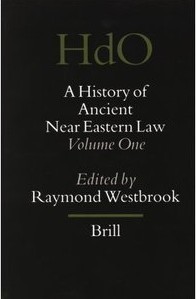
    A History of Ancient Near Eastern Law by Raymond WestbrookFirst Avalos stated that I offered “no actual quote to support this allegation so that we can verify whether he is even reading Westbrook correctly.” This is false, I did provide a way of verifying my claim. While, due to word count restrictions, I did not give a direct quote, I did provide a reference; I referred the reader to page 74 of Westbrook’s “The Character of Ancient Near Eastern Law” in A History of Ancient Near Eastern Law (Boston: Brill Academic Publishers, 2003). This is clear from the quotation above, which, oddly, Avalos cited in his criticism.

    Moreover, even if I did not provide a citation (which I patently did) Avalos’ conclusion that I misrepresented Westbrook would not follow from this. What would follow would be that he would have no way of checking that I had not misrepresented Westbrook; however, the fact one cannot check that something  is not the does not mean it is, in fact, the case. From my living room in New Zealand tonight I cannot check the whether Loftus has  not robbed a bank, so can I conclude he is a bank robber? Of course not.

    It is logical howlers like this in Avalos’s work that has lead me to be so critical of it. If Avalos cannot check whether my citation was accurate then he cannot know I misrepresented it, which raises the question: why then has he claimed that I did?

    2. Wrong Book
    Avalos’ second argument was to ignore my citation and refer to a different book by Westbrook. He states:

    “Westbrook has made himself quite clear in Everyday Law in Biblical Israel: An Introduction[Louisville: Westminster/John Knox Press, 2009], pp. 78-79). Therein he discusses how later Rabbinic literature, and specifically Mekhiltah Neziqin 8 to Exodus 21:24, claimed that “An eye for an eye’ [means] money.”

    Westbrook comments: ‘This interpretation seems strained to a modern reader. The introduction to the formula in Leviticus 24:19 is unequivocal: “If anyone maims a fellow, as he had done so shall it be done to him.’” [Emphasis Avalos’]

    There are several problems here.

    First, this does not refute my claim. I said Westbrook defended a certain position in his article “The Character of Ancient Near Eastern Law” in A History of Ancient Near Eastern Law. Pointing out that Raymond Westbrook argued for a different view in a different book, does not show that my claim was false or a misrepresentation.

    Second, the quote Avalos provided from the different book by Westbrook does not contradict my claim. By prefacing the quotation with “Westbrook has made himself quite clear”, “Therein he discusses how … and specifically…” and “Westbrook comments”, Avalos creates the impression that Westbrook claimed that the rabbinic position is “strained” and is “unequivocally” contradicted by the biblical text.  However, the careful reader will note that the citation does not actually say this. In the citation, (more…)

  • Stark Wars

    Darth VaderThom Stark has written a lengthy response (304 pages!) to Paul Copan’s book Is God a Moral Monster? which he has published on his blog, Religion at the Margins; it is entitled Is God a Moral. Compromiser? A Critical Review of Paul Copan’s. “Is God a Moral Monster?” In it, alongside his criticisms of Copan, Stark makes several criticisms of the work of Richard Hess and Matt.

    Matt has not yet had time to read Stark’s book-length review, much less respond to it, but Copan and Hess have. Copan has published the following blog posts on his blog, Parchment and Pen:

    Is God a Moral Monster Revisited: Preliminary Replies to Thom Stark

    Richard Hess’s Response to Thom Stark

    Matthew Flannagan’s Interactions with Thom Stark

    Stark has responded to these posts with:

    Copan and Company, Part 1: A Brief Introduction

    Copan and Company, Part 2: Response to Matt Flannagan

    Copan and Company, Part 3: Response to Paul Copan

    Copan and Company, Part 4: Response to Richard Hess

    Other blogs have chimed in:

    Thom Stark’s Sweeping Claims by Christopher Copan Scott

    Reflections on the Thom Stark-Paul Copan debate by Randal Rauser

    Matt has on his ‘to do’ list an intention to wade through Stark’s review and write a response, at the very least, to the parts that critique his work. He also intends to answer Stark’s questions put to him on this blog post. However, Matt has several publication, conference and marking commitments to meet first and Matt simply cannot churn material out at the prolific rate Stark can.

    RELATED POSTS:
    Thom Stark on Wolterstorff and Hagiographic Hyperbole
    Is God a Moral Monster? A Review of Paul Copan’s Book
    God and the Genocide of the Canaanites Part I: Wolterstorff’s Argument for the Hagiographic Hyperbolic Interpretation
    God and the Genocide of the Canaanites Part II: Ancient Near Eastern Conquest Accounts
    God and the Genocide of the Canaanites Part III: Two Implications of the Hagiographic Hyperbolic Account