This three-part blog series is essentially the talk I gave at the recent Clearing the Air Forum, which was entitled “Discovering Truth in the Synthesis of Science and Faith.” The audience was comprised of scientists, church leaders, journalists and other interested parties so this is a fairly lay introduction to epistemology.
In my first post, Epistemology 101: Science, Faith and Authority Part I, I set out some basics about epistemology, I now want to turn to one particular way we know things: testimony. Nicholas Wolterstorff defines paradigmatic cases of testimony as: believing X on the say so of someone else Y. There is a highly influential tradition of epistemology which is sceptical or critical of beliefs based on testimony.
Testimony
In his Essay on Human Understanding John Locke argued that one had a duty to not believe any proposition merely on the authority of another person. One should trust the testimony of another only if one has:
(a) good reasons for thinking that the testifier is reliable; or,
(b) good reasons for believing the truth of the proposition itself.
Taking another persons word for something in the absence of independent evidence is irrational. Locke hinted that such gullibility was socially dangerous, tied up with intolerance, authoritarianism and oppression.
Something like this lurks in contemporary culture and is often encapsulated in quotes such as “think for yourself.” The problem is that a little reflection shows that this view of testimony is mistaken.
CAJ Coady summarises the problem, if one is going to have evidence for the reliability of a testifier then this evidence will either include some other testimony or it will be based upon sources apart from testimony. The first option is obviously a non-starter, any evidence based on testimony will have to, by Locke’s position, be shown to be reliable by further testimony and so on, ad infinitum, until we reach some non-testimonial source. However, if we embrace the second option and we exclude what we know by way of testimony from our evidence base then we will have so little to go on that such grounds will be almost impossible to come by.
To demonstrate this consider an example from Greg Dawes in a paper he wrote on faith,
Very many of our beliefs are held on the basis of testimony. (In this context I shall sometimes refer to these as beliefs held on the basis of authority.) Does e=mc2 represent the rate at which matter can be transformed into energy? I believe so, although I would not have the faintest idea how to demonstrate its truth I have it on good authority that it is true…Of course, there is a sense in which I do believe this on the basis of evidence. I have reasons to believe in the trustworthiness of the sources from which I gained the information.[1]
Like Locke, Dawes suggests that a non-physicist such as himself can rationally believe e=mc2 because he has reasons to believe that his sources are trustworthy. I believe this last comment is incorrect. Consider, for example, what reasons he could offer for believing that the source of his information was reliable? Presumably, it would be because the author of the book where he read it or the person who told him the information was a physicist. Nevertheless, how does Dawes know this? He could have read the person’s qualifications off a faculty list, off the dust-jacket of the book or have been told them by the person in person but in each case he is relying on testimony and so, in the absence of further reasons, he cannot believe these sources. Suppose, however, Dawes was to investigate thoroughly and locate the address of the university where the degree in physics was claimed to be awarded in order to travel there and personally check the original records. Yet again, he will be relying on testimony in the form of an address list and records. He also would have to have trusted the testimony of maps and road signs in getting to the institution in question.
Consider then what Dawes would have left to go on if he did not use testimony. He could not rely on any information that he himself did not observe first-hand. This would exclude any information about events prior to his own lifetime, any events in his own lifetime that he did not remember witnessing first-hand and any event that happened in a place other than where he was at the time. Nothing read in journals, books, heard in lectures, taught to him by his parents or teachers could be used. Nothing heard on the news, read on the computer, told over the phone or reported on in the media could be included. Almost everything he had learnt through his entire education would be excluded because nearly all of it is based on testimony. It seems, then, that if Dawes were really to comply with the epistemic standards that he laid down, he could not rationally believe in e=mc2. It appears he is mistaken in thinking that one needs to have reasons for thinking a given authority is reliable in order to be warranted in believing in testimony.
I think this example shows that this is not isolated. What we know, by way of being told by others, accounts for a huge and pervasive amount of what we believe. Everything I know about other places, other times, everything learned at school, university, from my parents, friends, books, newspapers, television, etc is based on testimony. If I were to try to verify any of these beliefs without first relying on some other piece of testimony, I would be unable to. The kind of critical attitude where one deplores believing things on faith or on the say so of others is un-viable. As social beings with a limited perspective in time and space, and with limited areas of speciality, we need to trust the testimony of others for most of what we know.
Testimony Beliefs as Basic Beliefs
For this reason the idea that one cannot accept something on the say so of testimony until it is verified is problematic. Instead I am inclined to accept a different picture of the role that testimony and faith in authorities should play in our knowledge. The picture that testimony beliefs are properly basic beliefs.
To see what I mean by this consider the following point by Roy Clouser,
If everything needs to be proven then the premises of every proof would need to be proven. But if you need a proof for every proof, you need a proof for your proof, and a proof for your proof of a proof and so on-forever. Thus it makes no sense to demand that everything be proven because an infinite regress of proofs is impossible.[2]
Clouser notes that the appeal to evidence, in the form of premises from which one infers a conclusion, have to terminate somewhere if we are to avoid being sceptical about everything.
The terminus is a set of ultimate premises called basic beliefs, which are those beliefs that form the foundation of our knowledge. We are justified in believing them independently of any argument or proof for them.
If this seems counter-intuitive consider that there are plenty of things we believe that are not based on arguments. Our belief in the existence of the past or our belief that it is wrong to rape women or our belief that other people exist or that basic axioms of logic are true are not based on inferences to the best explanation so that they are rationally believed because they explain some phenomena better than all alternatives. It is rather that these beliefs are part of the background data that we use to assess proposed explanations against.
Usually basic beliefs are grounded in some form of experience. We recognise these as true because we experience or see them to be true. For example, I see that the basic axioms of logic are self-evident, I remember the existence of a past event, I intuitively see that rape is wrong and think anyone who does not see this is simply morally blind. I see the chair in front of me, I hear the car outside and so on. These beliefs function as fundamental premises that we argue to other theories from.
It is important to note that while we are justified in believing basic beliefs in the absence of evidence for them, their justified status can be defeated if we gain good reasons for rejecting these beliefs. For example, on a Tuesday evening I have a vivid experience of my brother entering my room, I form the basic belief that “my brother is in my room.” The next morning I hear that my brother was out all evening. I also discover that the medication I took the night before has hallucinatory side effects. The basic belief, grounded in my perceptual experience of observing my brother entering the room on Tuesday night is defeated. There are two ways basic beliefs can be defeated, undercutting defeaters involve a reason a person acquires which, when added to their stock of beliefs, gives them reasons for thinking that the source of the basic belief is unreliable – my discovery of the hallucinatory side effects is an example of this. Rebutting defeaters, on the other hand, are reasons one acquires for thinking the belief itself is false. My discovery that my brother was not home is a rebutting defeater, if he was not home then he was not in my room.
The picture I want to suggest is that in many circumstances beliefs held on the basis of testimony function as basic beliefs. When a person, whom we take to be a competent authority, affirms a proposition P then in the absence of defeaters we are rational in accepting P. We do not need to prove that what the person says is true before we can accept it and nor do we have to prove that they are a reliable authority before we have to accept it. We do, however, have to take seriously any purported defeaters we are confronted with. We have to take seriously evidence we have that the authorities in question are not actually a reliable guide in the area in which they are speaking and we have to take seriously arguments given against what we accept.
Translating this into a current context, contrary to what is often thought, most of our knowledge of scientific facts is, in fact, on the basis of testimony. As a child I ask questions, why does this happen? what caused this? and so on, my parents tell me answers and I believe them. I go to school and I am taught science and later physics and chemistry, I go to university and attend lectures, I read text books, I might do some experimental work myself but it is in the context of what I have already learned from testimonial sources. I read about studies scientists have done in journals and I believe what is written in these journals. Despite the bravado of self-professed free thinkers, our acquisition of scientific knowledge is pervasively shot through with faith – faith in authorities, faith that others are being honest to us and are trustworthy and so on. It can be no other way. Hence, to believe some fact about the world merely because another has told you it is true is not irrational but in fact a sensible thing to do.
Consider an example, I am in my car listening to the radio and Keisha Castle-Hughes is on air talking about climate change. The media are praising her for her brave efforts to educate the public. How should I respond? In this instance I am inclined to think that I face some defeaters. I know Castle-Hughes is an actor and has no real expertise in the area in which she is talking. I also know that actors are good at being very convincing at playing a role, which is not real. I know Castle-Hughes is quite young and is unlikely to have had a very substantial science education, much less time to specialise in climatology. I know the media are notoriously unreliable, journalists tend to be very political, their deadline give them limited time to research and they are not experts in science at all. In this instance, I think that I have real reasons to be sceptical of what Castle-Hughes is saying. Even if what she is saying, in fact, is true, I should not believe it just because she says so.
Here is another example. I read a book by Richard Dawkins. He claims that the evidence quite conclusively suggests there is no God. Now in some places Dawkins offers arguments and I can assess these using my ability to reason deductively but in other places he simply tells his readers things. He puts forward various arguments for God’s existence, which he says these are representative of the case for theism, he attributes these to Thomas Aquinas, talks of first-cause arguments and the like. This is a bona fide, scientist with a professorship at Oxford. His specialty is zoology.
However, accurately representing Aquinas’ arguments for God requires knowledge not in zoology but in medieval philosophy. A knowledge of what arguments have been put forward for theism, which are the most representative, which are the best, requires knowledge of a discipline called philosophy of religion. Dawkins’ position as a zoologist means his knowledge is in a very different field. Hence, his being a scientist gives me no reason to accept his work on Aquinas.
This underscores an important point. If a person has some bone fide authority in a field it means he has authority in that field, it does not mean he or she has any authority in another field. Scientists qua scientists are experts in science, not morality, public policy, law, ethics, theology and what have you. Similarly, pastors are trained in biblical exegesis and theology, their knowledge, therefore, is in those fields and not science. One of the problems with the rise of the Internet is that people can get information on any subject any where from any source. In this context it is important to examine carefully whether we have good reasons for questioning whether the source is authoritative.
It is not a bad idea to make our starting place be that we will accept what we are told by authorities but we should not always end there.
In my final post in this series, Part III, I will look at what we should do when authorities clash.
[1] Greg Dawes, “Faith and Reason”, a paper presented to the University of Otago Theology and Religious Studies Faculty. This is contained in Dawes, Philosophy of Religion (so far unpublished) 34.
[2] Roy Clouser Knowing With the Heart (IVP: Downers Grove, 1999) 69.
RELATED POSTS:
Epistemology 101: Science, Faith and Authority Part I
Epistemology 101: Science, Faith and Authority Part III
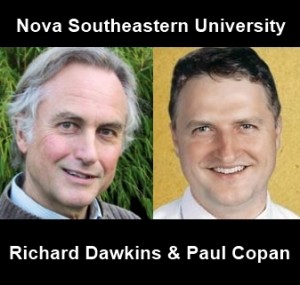 Parchment and Pen, has an audio of a brief exchange between Paul Copan and Richard Dawkins who was speaking in Ft. Lauderdale at Nova Southeastern University on “The Fact of Evolution.” (The following week, Paul Copan spoke on “The Fact of God” at Nova Southeastern and gave a direct response to Dawkins.) This MP3 of Paul Copan and Richard Dawkins’ exchange is from the Q&A of Dawkins’ talk.