
My paper, “Is Theism Incompatible with the Pauline Principle?” has been published in a special issue of Religions, devoted to the topic Do We Now Have A Logical Argument From Evil? The abstract is as follows:
This paper criticises James Sterba’s use of the Pauline principle to formulate a logical version of the problem of evil. Sterba’s argument contains a crucial premise: If human agents are always prohibited from doing some action, God is also prohibited from doing that action. This implies that the Pauline principle applies to both Divine and human agents. I argue that any Theist who affirms a divine command theory of ethics can consistently and coherently deny this premise and its implication. If a divine command theory is coherent, a theist can affirm that the Pauline principle governs human agents’ actions but not God’s actions. I will also criticise Sterba’s criticisms of a divine command theory and argue that they fail.
Enjoy.
Tags: Alvin Plantinga · Deontological Argument from Evil · Divine Command Theory · George Berkeley · James Sterba · John Mackie · Pauline Principle · Problem of Evil · Theological Utilitarianism · UtilitarianismNo Comments

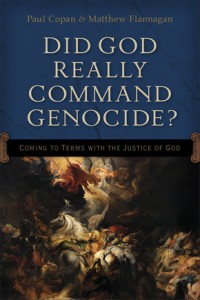 A common objection to belief in the God of the Bible is that a good, kind, and loving deity would never command the wholesale slaughter of nations. In the tradition of his popular Is God a Moral Monster?, Paul Copan teams up with Matthew Flannagan to tackle some of the most confusing and uncomfortable passages of Scripture. Together they help the Christian and nonbeliever alike understand the biblical, theological, philosophical, and ethical implications of Old Testament warfare passages.


0 responses so far ↓
Comments on this entry are closed.