Author: Matt

  • Contra Mundum: Religion and Violence

    On 1 May 2011 the world received the news that Osama Bin Laden was dead; gunned down in Pakistan by an elite team of US Navy Seals. Even before his death Bin Laden had become a legendary persona. Not only was he a terrorist leader responsible for the deaths of thousands of innocents but he functioned as a contemporary paradigm of the fanatical religious nutter who promotes hatred, violence and intolerance – much like the symbol Adolf Hitler was to earlier generations.
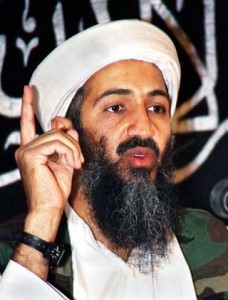
    Osama Bin LadenThe 9/11 terrorist attacks reinvigorated a fear that has lain dormant in the western psyche since at least the 17th century. This fear is encapsulated in an objection to belief in God known as the argument from historical atrocities. Many critics of religion refer to the religious wars that tore Europe apart during the 17th century, citing events such as the Inquisition and Crusades — although lately the Taliban have been the image of choice.

    Recently, whilst debating the viability of religious morality at the University of Notre Dame, best-selling author Sam Harris repeatedly cited the Taliban as a representative example of theological ethics. One need not read far into the literature of contemporary free thinkers to uncover this line of argument. Consider Jim Peron of the Institute for Liberal Values:

    “To admit religion into the “public arena” is “dangerous.” And long term the results will be just as bloody and violent as they were in the past. … To put religion into that sector is to ignore centuries of history and return to the conflict-ridden, bloody world of the Dark Ages.”

    Peron went on to refer to common motifs of the Inquisition: “crazy Puritans”, Servetus’ execution in Calvin’s Geneva and so on. Similar themes abound in the writings of Dawkins, Harris and Hitchens. The citation of historical cases is not in itself an argument so it is hard to discern the exact objection here. It appears to consist of two claims. Firstly, that some people who believe in God have committed atrocities against other people. Secondly, that if people who hold a belief commit atrocities then that belief is either false or should be avoided by liberal-minded people.

    Historians Ronald Numbers and David Lindberg point to recent research having discredited the portrayal of the early Middle Ages as “the Dark Ages” brought about by Christianity. Similarly, research into Inquisition archives reveal that while such tribunals did exist, many popular beliefs are based on embellishment, exaggeration and propaganda rather than a sober assessment of facts. The picture of the Inquisition that emerges from these studies is significantly more benign than has popularly been thought. Similarly, historian Leland Ryken’s studies on the Puritans have questioned many of the popular stereotypes Peron referred to.

    Take Peron’s allusion to the execution of Servetus. In his study on the life of Calvin, Oxford Theologian Alister McGrath argues (more…)

  • Pacifism and The Golden Rule

    The Golden RuleLast night I was part of a discussion panel looking at the Ethics of War; I defended classical just war theory. Speaking in defence of pacifism was one of the Waihope three who offered the argument that you cannot use force against an oppressor because of the Golden Rule, typically stated as: ‘do to others as you would have them do to you.’ His idea seemed to be that if you were an oppressor you would not want force used against you so therefore no one should use force against oppressors – this is what the Golden Rule teaches.

    This struck me as odd. One problem with this line of argument is that it interprets the Golden Rule as stating we should do to others what we want them to do to us. This interpretation is obviously problematic. I want a million dollars, does it follow that therefore I should give a million dollars to everyone? I want a nice car does it follow that I should give nice cars to everyone? What the Golden Rule says is that there should be consistency between what we think that people are morally required to do for us and to us and what we are morally required to do for and to others; if I object to someone stealing from me in certain circumstances and condemn that person’s action in doing so as wrong then I am committed to not stealing from that person.

    Once this is understood, I do not think my fellow panellist’s argument works. I am quite happy to accept that if I was trying to kill or seriously maim another human being that others (including the state) would be morally permitted to use force to stop me; I may not want them to but that is not the issue. The issue is whether I think they are are required not to and the answer I think is obviously no.

    In fact, anyone who recognises the government as legitimate must accept that the state can use force against them if they violate certain rules. I would have thought that the laws against assault and homicide would be paradigm examples of this.

  • Friday Fallacy: Affirming the Consequent

    Wet GrassIn my last Friday Fallacy post, I looked at the fallacy of  denying the antecedent. There I discussed conditional statements, statements of the form “if P then Q”. Examples would be statements such as “if it is raining then the grass will be wet” or “if the US had not shot Bin Laden then he would still be alive”. I noted that conditionals  have  an “antecedent” and a “consequent”. In the above examples the antecedent is the claim “it is raining” or “the US had not shot Bin Laden”. In a conditional statement one talks about what occurs if the antecedent is true. The consequent is what is said to be true if the antecedent is correct; in the examples above the consequent is the proposition “the grass will be wet” or “he would still be alive” respectively.

    Conditionals are hypothetical statements; they affirm what would be the case, if something else were the case. They can be true even if the antecedent is false. Consider the claim that “if I had died yesterday, I would not be writing this blog post today.” This conditional is true, even though I did not die yesterday. So it is a mistake, albeit a common one, to reject a conditional because one thinks the antecedent is false. The issue is not whether it is false, it is what would be the case if it were true?

    This week I want to look at another fallacy that occurs with conditionals. Whereas last time I looked at the fallacy of denying the antecedent, this week I want to look at the fallacy of affirming the consequent. To understand this we need to recap two valid argument forms I mentioned last time: modus ponens and modus tollens.

    Modus Ponens

    Modus Ponens has the following form:

    1. If P then Q.

    2. P;

    Therefore:

    3. Q.

    To use our now belaboured example”

    1. If it is raining then the grass will be wet.

    2. It is raining;

    Therefore:

    3. The grass will be wet.

    In a modus ponens one first asserts that a conditional statement is true and then affirms the antecedent of the conditional and concludes that the consequent true. As I noted, this is a valid argument. If the conditional “if P then Q” is true, and P is true, then Q must also be true.

    Modus Tollens

    Modus Tollens  has the form:

    1. If P then Q.

    2’ Not Q;

    Therefore:

    3′ Not P.

    To take our example:

    1. If it is raining then the grass will be wet.

    2’ The grass is not wet;

    Therefore:

    3’ It is not raining.

    In modus tollens one first asserts that a conditional statement is true and then denies the consequent of the conditional and concludes that the antecedent is false. As I noted, this is also a valid argument. If the conditional “if P then Q” is true, and Q is false, then P must also be false.

    Affirming the Consequent

    This recap is necessary to focus on the fallacy I am going to discuss today. As (more…)

  • We’re Going to San Francisco!

    San FranciscoLast year I was invited to present at the Annual Evangelical Philosophical Society Apologetics Conference in Atlanta, Georgia. This was a real surprise to me and an honour. Some of the best evangelical Christian scholars in the world presented at this conference; speakers included Alvin Plantinga, William Lane Craig, Paul Copan, Gary Habermas, Mike Licona, Frank Beckwith and numerous others.

    I felt very out of my depth. Meeting Alvin Plantinga whose writings inspired me to take philosophy as a theological enterprise seriously was truly amazing and when Al changed the standard jokes (if you’ve seen a few of his lectures you’ll know what I mean) in both his key note addresses for jokes about New Zealanders it was something else. To have the greatest living philosopher of religion acknowledge the sole kiwi in the audience was something I did not expect.

    “Last year I spoke at only the Apologetics Conference and the Society for Biblical Literature Meeting but this year I will be presenting at all three.”

    Even more humbling was being asked to speak on the Evangelical Philosophical Society’s panel presentation to the Annual Meeting of the Society of Biblical Literature, which was running at the same time. Me, the blogger from MandM, presented alongside Richard Hess one of the best Evangelical Old Testament scholars in the world, Paul Copan, the President of the Evangelical Philosophical Society, an expert on God and Morality, and Randal Rauser, a top Analytic Theologian, who has done some great work getting theologians to take analytic philosophy seriously with Notre Dame’s Michael Rea, an outstanding philosopher of religion and meta-physician as chair. It was truly unreal engaging in a discussion on the relationship between divine command ethics and the Old Testament conquest narratives with these people. I kept wondering when they were going to realise they’d made a mistake inviting me! Even more so when one considers that the audience gathered to hear us and ask questions included people like Eric Seibert, Christopher Wright, Doug Geivett and William Lane Craig – all prestigious scholars who easily should have been presenting instead of me! The experience was extremely rewarding. There were various positive reviews of the panel from the Evangelical Philosophical Society, William Lane Craig, Claude Mariottini and various observers. I learnt a lot and discovered, somewhat to my surprise, that I could intelligently contribute in discussion at this level and that these other scholars were interested in what I had to say.

    Since coming back from Atlanta, my professional employment prospects have improved; while I still do not have full-time work, I am doing work on an increasingly steady flow of short-term projects. I have been asked to (more…)

  • Madeleine on Unbelievable?

    Recently we posted a link to an episode from Justin Brierly’s Unbelievable? show on the UK station Premier Christian Radio which featured a podcast of Paul Copan and Norman Bacrac discussing Is God a Moral Monster? Yesterday we were alerted to the fact that at the end of the Unbelievable? episode of 23 Apr 2011, “Rob Bell defends ‘Love Wins’“, Brierly had a  follow-up feedback session where he played calls and read out emails from listeners commenting on the issues raised in the Copan and Bacrac show. Several people were clearly confused by Copan’s argument and we were pleasantly surprised to hear Brierly positively offer a short hermeneutical piece written by Madeleine on the Unbelievable? forums as a response to the concerns of his listeners.

    To listen to the whole follow-up feedback session on the Copan Bacrac podcast click on Rob Bell defends ‘Love Wins’ and skip forward – just drag the slider forward – to 1:06:21 and play from there. (The section relating to Madeleine starts at 1:11:43.)

    We have had several requests for the text of what Madeleine wrote that Brierly read out, so here it is below:

    It does not follow that just because there is good textural and cultural evidence to read specific passages this way that all passages must now be read that way.

    Chocolate Cake

    If I wrote a book of memoirs of my life that included a poem I wrote to be read out at my wedding, my favourite recipe for chocolate cake and my first hand experience of surviving an earthquake do you read the part of my memoirs recording my experience and observations of the earthquake as a poem? Do you take the chocolate cake recipe as historical narrative of a natural disaster? Do you assume I am an idiot for mixing my genres in a single text? Of course not! you can recognise the different genres as you read your way through the book and strike them – doing this is easy when we are reading texts from our own culture and time but when we talking about another culture and time written in another language, it is a lot harder but it does not mean that the we stop looking for genre and context clues and we start saying if we are to interpret passage x as rhetorical flourish then we have to interpret everything as rhetorical flourish.

    It never ceases to amaze me that people fail to get this point which Madeleine makes in a far more pithy way than I could.

  • Contra Mundum: Stoning Adulterers

    Back in 2005 there was a minor furore when Labour MP Ashraf Choudhary stated he agreed with the Koran’s teaching that people who engaged in homosexual conduct or who committed adultery should be stoned to death. In the media spiral that followed, some commentators pointed out that it was not just Islam that held this view; Christians are committed to the same conclusion. Consider Deuteronomy 22:22 “If a man is found sleeping with another man’s wife, both the man who slept with her and the woman must die. You must purge the evil from Israel” or Leviticus 20:10 “If a man commits adultery with another man’s wife—with the wife of his neighbour—both the adulterer and the adulteress are to be put to death. Often passages like this motivate a rhetorical question “why don’t Christians today stone to death women who commit adultery? After all, this is what the Bible commands isn’t it?”

    Ten Commandments

    I’ll make two points in response to this. First, those who press this line of argument assume that these commands are addressed to contemporary Christians. This is a dubious assumption; the laws occur as part of a covenant or vassal treaty between the tribes of Israel and God. While some of the laws expounded in this treaty reflect rules of justice and equity applicable to all people, Gentiles were not parties to this treaty nor were gentile Christians required to be – something the New Testament spends a lot of time elaborating on.

    Second, and this will be my main focus, this line of argument assumes that these apparent laws function like modern statute law; the assumption is that they are literal and binding commands to kill people who had committed certain crimes. It is also assumed that the author of these laws expected them to be carried out. Interestingly, it is precisely this assumption which many scholars of these laws have questioned. Here I will spell out some reasons why they do so.

    Comparisons between Leviticus and Deuteronomy and other ancient Near Eastern (“ANE”) law codes suggest they are the same genre. One feature of such codes is seemingly harsh penalties. In old Babylonian law, the hand that assaults was severed; a man who kissed another’s wife was to have his lips cut off; a person who stole bees was to be stung by bees; a man who raped another’s wife would be sentenced to having his own wife or daughter raped; a negligent builder whose house collapsed and killed another’s son would be sentenced to having his own son killed, and so on.

    ANE expert Raymond Westbrook notes that these prescribed punishments are both inconsistent with the actual legal practice known to have occurred in these cultures and are often inconsistent with themselves. He notes, “some law codes impose physical punishments and others payments for the same offenses, while some codes have a mixture of the two.” The contradiction is only apparent because, “in highlighting one or the other alternative, the codes are making a statement as to their view of the gravity of the offence.” He argues that the laws “reflect the scribal compilers’ concern for perfect symmetry and delicious irony rather than the pragmatic experience of the law courts.” Westbrook concludes that the method used in ANE legal texts was “to set out principles by the use of often extreme examples.”

    A similar point is made by Old Testament scholar John Goldingay who suggests that many of these laws “were not intended to be enforced” but rather were “promulgated to indicate the moral and social priorities of the law giver.” They functioned to express certain ideals of behaviour, to denounce actions like adultery as really bad and intolerable rather than to define precise penalties for these actions.

    Westbrook points to the practice of (more…)

  • Fallacy Friday: Denying the Antecedent

    This week I will look at the fallacy of denying the antecedent. Before I can elaborate exactly what is involved in this fallacy, it is important to introduce and analyse some valid arguments that are superficially similar.

    Modus Ponens
    One of the very first valid inferences one learns in logic is modus ponens. To use the well worn example that was repeated ad nauseam when I was learning logic (and one I probably bored my students with too) a paradigmatic example of modus ponens is,

    1. If it is raining then the  grass will be wet.

    2. It is raining;

    Therefore:

    3. The grass will be wet.

    Put more abstractly, a modus ponens has the form:

    1’ If P then Q.

    2’ P;

    Therefore:

    3’ Q.

    UnicornModus ponens proceeds with the first premise contending that a conditional statement is true. A conditional statement is a statement about a hypothetical situation; in this case the claim is “if it is raining then the grass will be wet”. Notice that for this conditional to be true, it does not have to actually be raining. On a sunny day it is still true that if it starts raining the grass will be wet. A conditional statement tells us what will be the case if some other thing or event is the case – not what actually is the case.

    Conditional statements of the form “if P then Q” have what logicians call an “antecedent” and a “consequent”. P is the antecedent; in the above example the antecedent is the claim, “it is raining”. In a conditional statement one talks about what occurs if the antecedent is true. Q is the consequent; in the example above the consequent is the proposition “the grass will be wet”. The consequent is what is said to be true if the antecedent is correct.

    Modus ponens proceeds by first affirming that a conditional statement is true and then affirming the antecedent is true. If both a conditional statement is true and its antecedent is true then it is impossible for the consequent to not also be true. This is obvious upon immediate reflection. If the conditional ‘if P then Q’ is true, and P is true, then Q must also be true. Note, that in a valid modus ponens inference, one affirms the antecedent. (more…)