Author: Matt

  • Tough Questions on Life FM’s “The Forum” this Sunday feat. Madeleine Flannagan

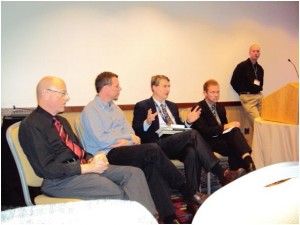
    Yesterday Madeleine was one of a panel who recorded a two-hour show answering tough questions about God, the Bible, Christianity, Church and life for Life FM’s “The Forum.”

    Radio MicrophoneThe show which, along with Madeleine, will feature Frank Ritchie, Dale Campbell and host George Penk, will air tomorrow night, Sunday 18 September from 9pm – 11pm NZT (5am-7am Sunday 18 September EDT).

    You can listen online here if you are not in New Zealand; the frequencies for if you are in New Zealand are here.

    Some of the questions Madeleine answered were:

    • Can people who never hear about Jesus go to heaven?
    • Is there any actual proof for the resurrection?
    • Is abortion ever justified?
    • A lot of movies push the idea of having a soul mate. If God has a plan for my life, does that include one specific person I’m supposed to marry?
    • Why aren’t Christians doing greater works than Jesus did, like he said they would in the Bible? (John 14:12)
    • Do you think that God is ok with the death penalty?
    • My friend is really into Harry Potter. Is there anything wrong with that?
    • Do you think people who commit suicide can still go to heaven?
    • Can you explain the existence of dinosaurs and Neanderthals? Humans never interacted with dinosaurs or there’d be evidence. If God made all the animals for humans, then what’s the point of animals that humans never encountered?
    • Is war ever ok in God’s eyes?
    • Do Christians, Jews and Muslims all worship the same God? If not, how do you know you’ve got the right one?
    • Why didn’t God stop my Dad dying of cancer?
    • What’s the point in praying? Does it change God’s mind? Does that mean that he is not already in control?
    • Is depression wrong? Is it ever ok for a Christian to have depression?
    • It doesn’t seem fair that somebody can get saved on their deathbed after never having to sacrifice for God, while other live for him for years. Will things in heaven be different for these two people?
    • I went to a church and they told me if I gave money that God would bless me ten times over. Do you think that actually happens? If not, is there a certain amount that I have to give?
    • With all the earthquakes and tsunamis etc recently, do you think that we are living in the end times?
    • I don’t get the whole trinity thing. How can God have three different parts without it being three gods? How can Jesus talk to God if they’re the same person?
  • Divine Commands Post 9/11

    The night of September 11, 2001, was a night we did not get much sleep in. By 4am September 12 (New Zealand time) our two-week old son and 14 month old daughter had woken us twice already. Frustratingly, I awoke again sometime after 4am to a different noise coming from the lounge; it turned out that our eldest son, then aged 6, was up watching television. I stumbled into the room and told him to go back to bed. As I got back into bed I told Madeleine “It’s OK hon, it was just Christian watching some movie about New York” (I’d seen the Twin Towers on the screen as I switched the TV off). Less than an hour later our sleep was interrupted again, this time by the telephone. Madeleine, awoken for the 4th time that night, angrily moaned “who the hell is ringing at this time? Don’t they know we have a newborn?” It was my Dad.

    “Matt” he told me tersely “I am just ringing to say I am alright. I got grounded at Heathrow airport and did not fly into the US as I had intended to this morning and so was not caught up in the drama that’s unfolded.”

    “What drama?” I said bewilderedly “why wouldn’t you be ok?”

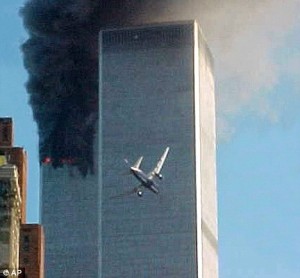
    “Haven’t you heard?” he responded “planes have been high-jacked; there has been a terrorist attack in America – the World Trade Centre has been hit, as has the Pentagon”.

    I suddenly was wide awake.

    9/11 World Trade Centre Terrorist AttackOne particularly poignant fact about the events of 9/11 is that the terrorists who carried out the attacks justified their actions by claiming God commanded them to do so. That fact has lead many contemporary commentators to argue that a divine command theory of ethics is indefensible. September 11 is just the most recent example in a series of incidents throughout history such as the Crusades, Inquisition and wars of religion. Divine command ethics is discredited by the fact that people appeal to such commands to justify terrorism.

    At first glance this objection is hard to take seriously; the premise is that some people have appealed to divine commands to commit atrocities. The conclusion is that any appeal to divine commands in ethics should be rejected.  This conclusion does not follow. To be valid the objector must assume a tacit premise: if people appeal to certain reasons to justify atrocities, then appeals to those reasons are always problematic. This premise is false.

    An analogous line of reasoning applies to appeals to right and wrong per se. Take any historical atrocity that people have attempted to justify; in almost every case the justifier will have argued that the action in question was the right action to do, the justifier invariably appeals to the purported rightness of their action. If the tacit premise is true then appeals to right and wrong are always problematic.

    Other examples illustrate the same point. The “reign of terror” during the French Revolution was justified by appeals to liberty, equality, fraternity and the rights of humankind; one victim of the guillotine famously remarked, “Oh, liberty, what crimes are committed in your name?” Millions have been slaughtered by appeals to the greater good of society or the liberation of the oppressed classes and it is well known that people have defended wars on the basis of justice and social peace. Should we therefore avoid liberty, equality, opposing oppression, seeking justice, social peace and so on? Obviously not.

    The fact that people have attempted to offer justifications for atrocities by appealing to some reason does not entail that any or all appeals to such reasons are problematic. This is a fairly innocuous claim. Take any premise you like – secular or theological – it is true that a person could appeal to this premise in an attempt to justify something but this fact does not mean the premise is problematic. For the appeals to atrocities argument to have bite one needs to show more than just that someone has tried to justify an abhorrent action by appealing to God’s commands; one would have to show that they did so successfully, that God actually commands such practises.

    The claim that God commands atrocities appears to be indefensible. We need to remember that we are not talking about the commands of just anyone; we are talking about God, who is typically defined as a being who is omnipotent, omniscient, and morally perfect. So, as the terms are defined, the claim that it is possible for God to command people to torture others for fun is true only if it is possible for a morally perfect person to command an atrocious thing. But this is not possible. The very reason that critics cite atrocities in their arguments against God is because they regard these actions as paradigms of conduct that no morally good person could ever (more…)

  • Response to William Lane Craig’s Question 225: “The ‘Slaughter’ of the Canaanites Re-visited” Part II

    Samuel rebukes SaulIn my last post “Response to William Lane Craig’s Question 225: “The ‘Slaughter’ of the Canaanites Re-visited” Part I” I discussed William Lane Craig’s position on the Canaanite Conquest account (in light of the fact that Craig referred to my argument in his question of the week: “Question 225: The “Slaughter” of the Canaanites Re-visited”). I clarified the delineations as to where he agrees and disagrees with the position I presented at the Evangelical Philosophical Society’s session at the Society for Biblical Literature Meeting in Atlanta last year and I established that the point of divergence in our agreement rests on 1 Samuel 15.

    In my Atlanta paper I argued that Nicholas Wolterstorff’s reading of the Canaanite conquest accounts in Joshua can also be applied to the account of Saul exterminating the Amalekites in 1 Sam 15.

    First, the so-called ‘genocide accounts’ in 1 Sam 15 are part of a broader context that includes the rest of Samuel and also other canonical books, such as 2 Samuel and the book of Chronicles. When one reads the whole sequence, one observes that while 1 Samuel 15 describes Saul, at God’s command, exterminating the Amalekites, later passages in Samuel and Chronicles proceed on the assumption this never literally happened.

    The key passage is God’s command to Samuel, “strike [nakah] Amalek [the Amalekites] and utterly destroy [haram] all that he has, and do not spare [hamal] him; but put to death both man and woman, child and infant, ox and sheep, camel and donkey.”[1] The text goes on to explicitly state that the Amalekites were all wiped out:

    “So Saul defeated [nakah] the Amalekites, from Havilah as you go to Shur, which is east of Egypt. He captured Agag the king of the Amalekites alive, and utterly destroyed [haram] all the people with the edge of the sword. But Saul and the people spared [hamal] Agag and the best of the sheep, the oxen, the fatlings, the lambs, and all that was good, and were not willing to destroy them utterly; but everything despised and worthless, that they utterly destroyed.” [2]

    A few verses later (15:33) the text records that Agag, the sole survivor, was executed. So, read literally, this passage states that all the Amalekites were killed and all their livestock were either destroyed or taken as plunder to be sacrificed to God at Gilgal.[3]

    Now the language of “defeated” (or struck), “utterly destroyed”, the reference to “sparing” and to livestock parallels the language of the command in 15:3. Given this, it seems implausible that we should interpret the command in verse 3 as literal but the fulfilment, just 4 verses later, as hyperbolic; the text requires that the command and fulfilment be read in the same sense.

    That said, when one reads this passage as part of as a single narrative a literal reading appears untenable; the proceeding text states quite emphatically that the Amalekites were not, in fact, literally wiped out. In 1 Samuel 27:8-9 David invaded a territory full of Amalekites:

    “Now David and his men went up and raided the Geshurites, the Girzites and the Amalekites. (From ancient times these peoples had lived in the land extending to Shur and Egypt.) Whenever David attacked an area, he did not leave a man or woman alive, but took sheep and cattle, donkeys and camels, and clothes. Then he returned to Achish.”

    Not only does this text affirm that the Amalekites still existed but the reference to Egypt and Shur states that they existed in the very same area that Saul ‘utterly destroyed every single one of them’ in in the previous passages. Moreover, David took sheep and cattle as plunder; again, livestock was another of the things Saul was said to have already eradicated.

    After the text has told us that Saul “utterly destroyed all the people”, including King Agag, and despite the text telling us that when David attacked an area (the very same areas as Saul) he did “not leave a man or woman alive”, three chapters later we read that a sizeable Amalekite army attacked Ziklag![4] David apparently pursued this army and fought a long battle with them and 400 Amalekites fled on horseback!![5] Where are all these Amalekites coming from?

    These are not the only examples. In 2 Samuel 1:8 an Amalekite took credit for killing Saul –but didn’t Saul “utterly destroy all the people”? In 1 Chronicles 4:43 Amalekites were still around in battle-ready numbers during the reign of Hezekiah who reigned after Saul and David.

    Read literally, the narrative affirms both that the Amalekites were and were not totally wiped out. This apparent contradiction in the Samuel narrative is (more…)

  • “Confronting the Challenge of Secularism” Madeleine to Speak at the Notre Dame Center for Ethics and Culture

    The Notre Dame Center for Ethics and CultureNot too long ago I wrote a post entitled We’re Going to San Francisco! In it I announced that in November 2011 Madeleine and I will jointly be giving a paper to the Society of Biblical Literature Annual Meeting, and that I will be giving a paper to the Evangelical Philosophical Association Annual Meeting and also to the Evangelical Philosophical Association’s Annual Apologetics Conference. Well, now we are also going to South Bend, Indiana.

    The Notre Dame Center for Ethics and Culture recently advertised a call for papers for its 2011 Flagship Fall Conference, “Radical Emancipation:  Confronting the Challenge of Secularism.” The stated aim of the conference is:

    “… to bring together a large number of respected scholars representing all the main academic fields, from Catholic, Christian, and secular institutions, to engage in a spirited discussion of this theme from the perspectives of philosophy, theology and religious studies, law, history, the social sciences, literature and the arts, as well as other fields of intellectual inquiry and endeavor.”

    Given that the conference will be held only a few days before the San Francisco cluster of conferences, given that both Madeleine and I work in religion in public life from within our separate disciplines of philosophy of law and analytic theology and both of us draw from the writings of Notre Dame scholars, we decided to both put in papers. It seems that a lot of other people had the same idea as an announcement appeared on the website “Record number of conference abstracts submitted!” This is not surprising given the reputation and calibre of the Notre Dame Center for Ethics and Culture so when we saw this we thought neither of us stood a chance.

    So, you can imagine our delight, and how proud I was of my wife, when she received the following email notification yesterday,

    “I am pleased to accept your paper proposal for presentation at the conference to be held at the University of Notre Dame from November 10-12, 2011. Congratulations! … This year, we turned down an unprecedented number of worthy paper proposals: well over 200 individuals submitted abstracts for consideration.”

    My paper was not successful but I have been invited to chair a session 🙂

    Madeleine wrote a very good abstract:

    “No Privileges, No Penalties” and the De-Privileging of Secularism

    Madeleine Flannagan – University of Auckland, New Zealand

    The dominant Establishment Clause jurisprudence reflects a separationist reading of the First Amendment that advances and protects the hegemony of secular perspectives in public life. Each test, Lemon, Endorsement and Coercion, requires the State to place a restraint on the exercise of religion in public life that effectively privatizes religion and contributes to the radical emancipation of man from God.[1]

    I will argue that the requirement of public conformity to secular perspectives exceeds the traditional understanding of separation of church and state by privileging secular perspectives over religious ones. A clear asymmetry in the way religious beliefs are treated by the State is visible in the requirement that religious believers bracket beliefs they hold as true, important and relevant when they participate in public life while secular citizens are free to utilize the beliefs central to their perspective.

    Vincent Phillip Muñoz has argued for a move away from Separationist jurisprudence and towards a test found in the writings of Founding Father James Madison, a “no privileges, no penalties” test.[2] I will argue that a “no privileges, no penalties” test could uphold freedom of religion and separation of church and state by permitting religion to have a place in public life as long as those who engage in public religious conduct do not gain a privilege for doing so and those who do not wish to participate are both free to opt out and are not penalized for doing so. The adoption of a “no privileges, no penalties” test would ensure that those seeking to bring balance to our secularized culture would not be restrained by the State from doing so.


    [1] The Lemon Test insists that public policy have a valid secular purpose; that a non-religious rationale be offered for all state actions. The Endorsement Test prohibits the state from “endorsing” religion over irreligion. The Coercion Test provides that the state must not coerce religious practice; not only must it not be required, but in Lee v Weisman the application was shifted to what Justice Scalia, in his dissent, termed a “test of psychological coercion”. The Supreme Court held that being one of few (or the only one) to opt out of a religious practice in a public setting is a form of state coercion by peer pressure. (Notably it did not hold that the same is true in reverse.)

    [2] Vincent Phillip Muñoz documents in God and the Founders: Madison, Washington and Jefferson (Cambridge University Press, Ney York, 2009) 33  that when Madison was editing the religious freedom amendment to Virginia’s Declaration of Rights, Madison proposed the following revision: “That Religion or the duty we owe to our Creator, and the manner of discharging it, being under the direction of reason and conviction only, not violence or compulsion, all men are equally entitled to the full and free exercise of it accord[in]g to the dictates of Conscience; and therefore that no man or class of men ought, on account of religion to be invested with peculiar emoluments or privileges, nor subjected to any penalties or disabilities …” [Emphasis mine]

    If you would like to make a donation to assist Madeleine and I in getting to the US for all of the above conferences this November please visit our “Support page” or see our “Donate” button in the side-bar.

    If you would like to book either of us to speak whilst we are in the US please let us know asap as we will be purchasing flight tickets very shortly.

  • Response to William Lane Craig’s Question 225: “The ‘Slaughter’ of the Canaanites Re-visited” Part I

    Every week William Lane Craig answers a question on his website; this week’s question of the week is entitled “The “Slaughter” of the Canaanites Re-visited”. The questioner asked what Craig thinks of the Canaanite Conquest account. I got a mention in Craig’s reply:

    The EPS Session at the SBL: Richard Hess, Randal Rauser, Paul Copan, me, Michael Rea

    “The topic of God’s command to destroy the Canaanites was the subject of a very interesting exchange at the Evangelical Philosophical Society session last November at the Society of Biblical Literature Convention in Atlanta. Matt Flannagan defended the view put forward by Paul Copan in his Is God a Moral Monster? that such commands represent hyperbole typical of Ancient Near Eastern accounts of military conquests. Obviously, if Paul is right about this, then the whole problem just evaporates. But this answer doesn’t seem to me to do justice to the biblical text, which seems to say that if the Israeli soldiers were to encounter Canaanite women and children, they should kill them (cf. Samuel’s rebuke of Saul in I Sam. 15.10-16).”

    Craig raises an important issue. In God and the Genocide of the Canaanites I, II and III I defended Nicholas Wolterstorff’s take on the Canaanite massacre in “Reading Joshua”.[1] Wolterstorff argued that the book of Joshua is a highly figurative, hagiographic and hyperbolic account of Israel’s early skirmishes and it is not intended to be taken literally in its details. My adaptation of Wolterstorff’s argument consists of three points.

    First, taken as a single narrative, and taken literally, Joshua 1-11 gives a contradictory account of events to that narrated by Judges and also to that narrated by the later chapters of Joshua itself.

    Second, those who put these books into a single narrative would have been well aware of the obvious contradictions mentioned above. These editors were not mindless or stupid, particularly if we hold that God spoke through them.

    Third, while Judges reads more like “down-to-earth”[2] history, a careful reading of Joshua shows it to be full of ritualistic, stylised accounts and formulaic language. I supported this third point with research into Ancient Near Eastern conquest accounts. Studies show such accounts are hyperbolic, hagiographic, figurative and follow a common transmission code. Comparisons between these accounts and the early chapters of Joshua suggest Joshua was written according to the same literary conventions and transmission code. I suggest these three points, taken together, provide compelling reasons for thinking that one should interpret the text as a hyperbolic, hagiographic and figurative account of what occurred; it was not meant to be taken as literally true in all its details.

    Craig’s objection to my position (and that of Paul Copan’s whose position is very close to mine) is a reference to 1 Samuel 15. Craig referred specifically to verses 10-16, where Samuel rebuked Saul “because [Saul] has turned away from [God] and has not carried out [God’s] instructions.”[3] The instructions in question were given in verse 3; God commanded Saul, “Now go and strike [nakah] Amalek [the Amelekites] and utterly destroy [haram] all that he has, and do not spare [hamal] him; but put to death both man and woman, child and infant, ox and sheep, camel and donkey.”[4] Craig suggests this “seems to say that if the Israeli soldiers were to encounter Canaanite women and children, they should kill them”. I think Craig pushes an important objection (more…)

  • Contra Mundum: Consenting Adults and Harm

    In debates over abortion, homosexual conduct, euthanasia, prostitution, drugs, those who call themselves liberals often mount the same basic argument; a socially or morally permissive stance is necessitated towards such practices because people have a right to choose do what ever they like with their own bodies. As John Stuart Mill put it in his book On Liberty:

    “The only part of the conduct of anyone, for which he is amenable to society, is that which concerns others. In the part which merely concerns himself, his independence is, of right, absolute. Over himself, over his own body and mind, the individual is sovereign.” [Emphasis added]

    John Stuart Mill

    Here Mill articulates the harm principle. He makes a distinction between other-regarding actions, actions that harm other people, and self-regarding actions, those that harm oneself. He argues that society, either by law or by social pressure, cannot justly regulate any action a person performs unless it is other-regarding; that is, it harms people other than the agent him/herself.

    As Mill’s position is typically interpreted, harm is understood to be governed by the principle volenti non fit injuria (where there is consent there is no injury); it refers to things done to other people without their consent. Mill states that a self-regarding action is one “which affects only himself, or affects others with their free and voluntary, and undeceived consent”.

    Mill intended his principle to be criteria as to what should and should not be made a criminal offence; he did not consider it criteria for determining what is right and wrong. Yet many contemporary liberals appear to use it in this latter way. They contend that as long as the action involves only consenting adults it is morally permissible. It is often asserted in our society, as though it were self-evident, that people have a moral right to do whatever they like with their own bodies.

    I think this claim is far from self-evident. Irving Kristol famously proposed this counter-example in a 1971 article in New York Times Magazine:

    “[T]he plain fact is that none of us is a complete civil libertarian. We all believe that there is some point at which the public authorities ought to step in to limit the “self-expression” of an individual or group even where this might be seriously intended as a form of artistic expression, and even where the artistic transaction is between consenting adults. A playwright or theatrical director might, in this crazy world of ours, find someone willing to commit suicide on stage, as called for by the script. We would not allow that-any more than we would permit scenes of real physical torture on the stage, even if the victim were a willing masochist. And I know of no one, no matter how free in spirit, who argues that we ought to permit gladiatorial contests in Yankee stadium, similar to those once performed in the Coliseum of Rome-even if only consenting adults were involved.”

    The examples Kristol gives are all cases where any person of common sense would condemn the act but where all the victims consent to be harmed.

    In his book Harmless Wrong Doing: Moral Limits of the Criminal Law, Liberal Political Philosopher Joel Feinberg considers Kristol’s objection as the most important and potentially-devastating counter-example to the harm principle and he spends considerable energy attempting to circumvent it. He offers four responses. Here I will argue that these responses fail.

    First, Feinberg questions whether such cases are really cases of consensual homicide. He suggests (more…)

  • “Are there Good Reasons for Abortion?” Wendy Savage and Madeleine Flannagan Debate on Unbelievable?

    Wendy Savage and Madeleine FlannaganThis week, the UK’s Christian Premier Radio show, Unbelievable?, aired an episode on the topic “are there good reasons for abortion?” The episode saw host, Justin Brierley, moderate a debate between this blog’s Madeleine Flannagan and Professor Wendy Savage, a representative of Doctors for a Women’s Choice.

    A range of topics related to the issue of abortion were raised which saw some interesting back and forth between Madeleine and Professor Savage.

    Amidst the discussion as to what counts as a good reason for having an abortion, they got into post-viability abortions, whether a fetus is human, whether brain activity or lack of dependency on the mother should be the criteria for humanity, the use of terms like fetus, abortion for fetal abnormalities, abortion to save a woman’s life, the  argument from backstreet abortion and so on. The episode provides a pretty good presentation of the alternative views in the debate.

    I am clearly biased but I think Madeleine offered the more persuasive position; her arguments were on the mark and very cogent yet she came off measured, humane and reasonable. You can listen to the Unbelievable? episode here: “Are there good reasons for abortion?“

    RELATED POSTS:
    Abortion and the Morality of Feticide: Part I
    Abortion and the Morality of Feticide: Part II
    My Body, My Choice? The Inconsistent Paternalism of Feminism
    Abortion and Viability
    Abortion and Sentience Part I
    Abortion  and Sentience Part II
    Abortion and Brain Death
    Illegal “Backstreet” Abortion
    Abortion and Child Abuse
    Is Abortion Liberal?
    Abortion and Capital Punishment: No Contradiction 
    See our Feticide and Abortion tags for more.