Category: Blogging

  • Auckland Bloggers Drinks – This Thursday

    The first Thursday of the month means Bloggers Drinks! The event for bloggers, blog trolls, blog groupies (bloupies) and blog readers who happen to be in Auckland.

    Past blogging celebrities in attendance include bloggers and blog readers from:

    Galbraiths21st Century Renaissance, And All These Things, Annie Fox, As Yourself Hermitage, Barnsley Bill, Beretta, Blondie, Bowalley Road, The Fairfacts Media Show, Stephen Franks, Fundy Post, Hard News, Island Life, Garfield Herrington, Bernard Hickey, Cactus Kate, Kiwiblog, MandM, No Minister, No Right Turn, Not PC, Roar Prawn, Lolly Scramble, SOLO, The Standard, Born on State Highway One, Whale Oil, WHOAR! and Wonderful Now.

    Come along, unwind, catch up and meet your favourite bloggers and discuss things bloggy!

    What: Auckland Bloggers Drinks
    When: Thursday 2 June, from 6.30pm
    Where: Galbraith’s Alehouse, 2 Mt Eden Rd, Auckland
    Who for: Bloggers, blog readers, blog trolls
    What for: The talking of nonsense and telling of lies

    RSVP on Facebook or just turn up – Matt and I will not get there til after 7pm.

  • Guest Post: One Less God

    Bethyada from True Paradigm writes:

    I have read a few posts on the ‘one less god’ proposition. Stephen F Roberts originally put it,

    “I contend we are both atheists, I just believe in one fewer god than you do. When you understand why you dismiss all the other possible gods, you will understand why I dismiss yours.”

    elsewhere he says,

    “We are all atheists, some of us just believe in fewer gods than others.”

    I have read a few responses against this illogical claim.

    Some of us just go one god further

    One retort is to state that Christians do believe in several gods, it is just that the lesser gods are demons and Christians claim allegiance to the true God. Yahweh is not just a local deity (1Ki 20:23) but the true God, creator heaven and earth

    And Hezekiah prayed before the LORD and said: “O LORD, the God of Israel, enthroned above the cherubim, you are the God, you alone, of all the kingdoms of the earth; you have made heaven and earth. (2 Kings 19:15)

    the most high God,

    Abram said to the king of Sodom, “I have lifted my hand to the LORD, God Most High, Possessor of heaven and earth,…” (Genesis 14:22)

    Though there is truth to this, depending a little on how one defines God, I do not think this rebutal gets to the crux of the problem.

    Another response is to state that polytheists believe in gods for different reasons than monotheists believe in God. Polytheists believe X and monotheists believe Y, thus the monotheist’s refutation of X does not refute Y, which the atheist is claiming. In other words, the reason Christians reject other gods is not the same as the reason they accept the Christian God. This is logically true, and hints at the atheist error, but does not get to the heart of it. It is inadequate though because it is not immediately obvious that polytheists and monotheists have significantly different reasons for theism. Romans 1 suggests that there are some basic reasons why all people are theists, but our fallen nature means this may be distorted such that theism becomes polytheism or, as per Romans, animism and pantheism.

    A related response is to state that Christians see polytheism is a distortion of monotheism. As such, removal of the distortion does not remove the argument. The dismissal of the wrong elements of theism is not an argument against theism. This gets closer to the problem.

    The primary problem with the atheist position is that it makes a category error. The following analogy demonstrates this central issue. As such the analogy is useful, but for several reasons I think it is inadequate and could be improved upon. Nevertheless, if it illustrates the problem it is helpful.

    “Let’s say that people are debating the best colour for stop signs. One person may prefer red for stop signs. Another green. Still others think that any colour can be used and no standardisation is necessary, and others promote the use of all colours on every sign.

    The atheist response is like saying you can’t agree on what colour to use because there are in fact no colours. Colours do not exist.”

    Debating colour preference is not the same as debating the existence of colours. Dropping from one god to no gods is not a continuation of the number-of-gods argument, it is a completely different argument.

    Consider the deity set. It is either empty: atheism; or not empty: theism. The argument over the number of members in a non-empty theism set is unrelated to argument about whether or not the set is in fact empty.

    Douglas Wilson put it well in his response to Sam Harris,

    “You say, “Understand that the way you view Islam is precisely the way devote Muslims view Christianity. And it is the way I view all religions.” Well, no, not exactly. And well, actually, no, not at all.

    Suppose we are considering a phenomenon that is, by most accounts, inexplicable by an unsupervised occurrence—three of us attend a sophisticated party uptown, and halfway through the evening at the party we find a trout in the punch bowl. At this point, the three of us divide into three schools of thought. I think that Smith, a practical joker, put it there; our friend Murphy thinks that Jones, the avant-garde performance artist, put it there; and you think that it has simply shown up as the result of natural forces. My central point is not to interact with the truth or falsity of your naturalistic position—except perhaps through the use of this absurd example of the punchbowl—but rather to show that you are arguing for something completely different from what Murphy and I are arguing. We all have an explanation but your explanation is of a different kind altogether.

    The differences between two of us (between Murphy and me) concern who put the trout in the punchbowl. The difference between the both of us together and you iswhether someone put a trout in the punchbowl. And who and whether represent different questions entirely. Quite apart from who is right and who is wrong about this, it is important to note that we are not disagreeing in the same way or over the same kind of issue at all. Murphy and I are disagreeing over the relative behaviours of Smith and Jones, but not over whether the trout calls for an explanation. Maybe I am more hostile to Smith than I ought to be, and maybe Murphy is deeply prejudiced against Jones. Maybe we are both wrong about who put it there. But thinking someone’s explanation is inadequate (when we agree the phenomenon must be explained) is quite different from arguing with someone who says it calls for no outside explanation whatever.” (Letter from a Christian Citizen)

    RELATED POST:
    Selling Atheism

  • Guest Post: Tim McGrew defends “The Argument from Miracles: A Cumulative Case for the Resurrection of Jesus of Nazareth”

    Tim McGrewA little while back we published a post linking to some talks by Tim McGrew on Undesigned Coincidences in the Gospels. For some bizarre reason this post of ours prompted fellow kiwi blogger Deane Galbraith to write a post on the Bulletin for the Study of Religion, linking to our post, on the separate topic of Tim and his wife Lydia McGrew’s article “The Argument from Miracles: A Cumulative Case for the Resurrection of Jesus of Nazareth” which was published in the The Blackwell Companion to Natural Theology.

    Here is a snippet of Galbraith’s post from the beginning:

    There are quite a few academic and quasi-academic studies in which statistical analysis seems to be employed as a substitute for thinking. It is, perhaps, fairly understandable why some people are tempted by the allure of numbers. Those mysteriously complex formulae, mindnumblingly boring statistics and obscure mathematical notations lend a magical aura of scientific objectivity and plausibility to even the most patently absurd claims.

    What gets me talking about this at this moment is my dumbfounded reading last night of an article published by Timothy McGrew and Lydia McGrew, entitled“The Argument from Miracles: A Cumulative Case for the Resurrection of Jesus of Nazareth” (2009). In this article, the McGrews utilize Bayesian probability in order to argue to the “scientific” conclusion that the probability of the resurrection of Jesus is a “staggering” 100,000,000,000,000,000,000,000,000,000,
    000,000,000,000,000 to 1.

    Are you staggered? overwhelmed? swooning? Were you previously skeptical about the Christian claim that Jesus was resurrected, but now you’re feeling pretty silly? Perhaps not.

    The post goes on in the same vein to accuse the McGrews of trying to trick people into belief in the resurrection. It is littered with terms like “flimsy basis”, “populist apologetics”, “fanciful” and “deeply and unavoidably farcical” and is illustrated complete with a giant white-robed Caucasian Jesus wistfully looking heavenward as he steps out of the tomb. It finishes with Galbraith laying out his understanding of their mathematical reasoning, the tone at this point is dripping with lashings of smug, self-congratulation at how easily he, PhD student from Otago whose research area is giants in the Old Testament narrative, had dispatched two of the top philosophers of religion working in this field, both specialists in probability theory.

    Not being qualified remotely in Bayesian probability theory myself, and therefore not wanting to presume anything beyond assessing the tone as exceedingly arrogant, I passed on Galbraith’s criticisms to the McGrews on Facebook. Well it turns out that Galbraith isn’t the only non-qualified liberal/atheist to take a punt at their reasoning on this piece. Tim McGrew explains that straw men have been popping up all over.

    Straw Men Burning: Misinterpretations of our Article on the Resurrection

    One of the hazards of writing technical philosophy is the risk that someone who lacks the appropriate expertise will attempt to critique it. In the case of the article on the resurrection that Lydia and I wrote for The Blackwell Companion to Natural Theology, this has already happened. It is hard enough to correct misimpressions of this sort on a relatively neutral topic; when the subject rouses passions of the sort that, as Hume reminds us, religious disputes are apt to generate, then the difficulties are redoubled.

    But one thing that we did not anticipate is that (more…)

  • The Top 10 Beretta Podcast Episodes

    Say Hello to my Little Friend: The Beretta PodcastI have recently acquired a great interest in listening to philosophy of religion podcasts. My favourite podcast is the Beretta Podcast over at Say Hello to my Little Friend. My interest in the Beretta-cast came about after I clicked on a link on Facebook to a podcast on the notorious Zeitgeist ‘documentary’ and discovered it was created by none other than our close family friend, Glenn Peoples.

    I first encountered Zeitgeist when my biological father showed it to me as an attempt to dissuade me from my faith 3 years ago when I was 13. He said it was a ground breaking and shocking devastator of religion. I found some of the claims interesting and at first glance compelling but at other points it was ridiculously far-fetched like when it claimed Horus was the “lamb of God” and “the bread of life”. My sister had studied Egyptology in some depth and had shared a lot of her knowledge with me so I strongly doubted that the Horus claims were correct. I have since encountered kids at my school who referred to claims made in Zeitgeist during debates I had with them over the case for Christianity.

    So seeing a podcast examining the claims made by the movie was therefore compelling – especially on seeing who the author was. It was fantastic. I have listened to it now 6-7 times, I have played it for several of my friends and I even spent one lonely afternoon transcribing most of it so I could respond to a comment made by a sceptic on an animation forum.

    After listening to Glenn’s Zeitgeist podcast, I immediately wanted more. I have since downloaded and listened to most of the 40 episodes on Say Hello to my Little Friend. I have listened to other podcasts too but the Beretta-cast remains my favourite by far.

    A Beretta-cast episode is often hilarious and always offers a straightforward and fair analysis of the topic in some detail (Glenn’s badass original music at the start of each episode is pretty mean too!). Each podcast episode varies from giving an overview of a particular Christian view in a field or a cutting critique of Atheistic hostility towards the Christian faith. Given the intellectually engaging nature of the content contained, I advise anyone and everyone interested in these topics to check this podcast out!

    Below, I have made a list of 10 of my favourite Beretta-cast episodes below along with some comments on the highlights of each particular one (more…)

  • Ethical Naturalism and the Euthyphro Dilemma

    Some people argue that moral obligations can be grounded in scientifically verifiable facts about human wellbeing and flourishing. This view is a form of ethical naturalism.  For these people moral rightness is just the property of promoting or enhancing human flourishing.

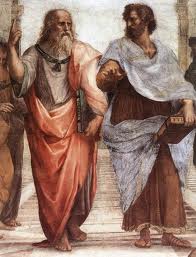
    Plato and Aristotle arguing in the School of Athens

    Plato refuted this argument over 2,000 years ago in his famous dialogue The Euthyphro. The Euthyphro argument is commonly appropriated in the form of a dilemma: “is an action right because it promotes human flourishing or does it promote human flourishing because it is right?

    If ethical naturalists take the second horn of this dilemma and claim that something promotes human flourishing because it is right then things are right prior to, and hence independently of, whether they promote human welfare; so the ethical naturalists’ position here is false.

    If the ethical naturalists take the former horn then morality is arbitrary. If rape or murder or cruelty for fun had the natural property of promoting happiness then rape and murder and cruelty for fun would be morally required but it is impossible for these things to be morally required; so ethical naturalism is clearly absurd.

    Moreover, if things are right because they have natural properties, like promoting human flourishing, then one cannot meaningfully say that human flourishing is good. To say “human flourishing”  is good is just to say that  “human flourishing is human flourishing,” which is just an empty tautology.

    So in short, Plato’s Euthyphro dilemma refuted ethical naturalism 2,000 years ago. Contemporary ethical naturalists who say otherwise just have not read Plato and have never come across this argument before.

    In any event, ethical naturalism is deeply problematic. Throughout history people have appealed to human flourishing and forms of ethical naturalism to justify atrocities. The Inquisition, for example, was often justified by Dominican Theologians on the basis that it was in accord with natural law, and natural law was understood to be grounded in human flourishing. Similarly, wars have been justified on the basis of moral theories based on human flourishing. Stalin and Lenin wanted to bring about human flourishing through a communist utopia and murdered millions in their pursuit of that. And the Americans dropped an atomic bomb on Japan because they wanted to promote the flourishing of American soldiers that were going to invade.

    Finally, it is obviously insulting to suggest that right and wrong are grounded in scientifically verifiable properties like this. There are a large number of people who live morally upright lives who do not believe in ethical naturalism. The suggestion that these people are all immoral is obviously false. Name me one moral action a person who is not an ethical naturalist cannot do? This unanswerable question shows that ethical naturalism is clearly false.

    RELATED POSTS: (more…)

  • Auckland Bloggers Drinks – This Thursday

    The first Thursday of the month means Bloggers Drinks! The event for bloggers, blog trolls, blog groupies (bloupies) and blog readers who happen to be in Auckland.

    Past blogging celebrities in attendance include bloggers and blog readers from:

    Galbraiths21st Century Renaissance, And All These Things, Annie Fox, As Yourself Hermitage, Barnsley Bill, Beretta, Blondie, Bowalley Road, The Fairfacts Media Show, Stephen Franks, Fundy Post, Hard News, Island Life, Garfield Herrington, Bernard Hickey, Cactus Kate, Kiwiblog, MandM, No Minister, No Right Turn, Not PC, Roar Prawn, Lolly Scramble, SOLO, The Standard, Born on State Highway One, Whale Oil, WHOAR! and Wonderful Now.

    Come along, unwind, catch up and meet your favourite bloggers and discuss things bloggy!

    What: Auckland Bloggers Drinks
    When: Thursday 3 March, from 6.30pm
    Where: Galbraith’s Alehouse, 2 Mt Eden Rd, Auckland
    Who for: Bloggers, blog readers, blog trolls
    What for: The talking of nonsense and telling of lies

    RSVP on Facebook or just turn up – Matt and I will not get there til after 7pm.

  • January Biblioblog Carnival

    Red BarnJim West has rounded up the best of the best posts, written in January, from as many biblioblogs as possible, for his entertainingly written, rodeo themed, January Biblioblog Carnival.

    Enjoy 🙂