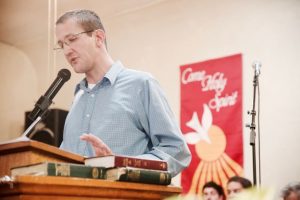
I gave a brief talk at Orewa Community Church on 10 January 2020. The talk was part of a short series OCC are doing on the book of proverbs. It is available here.
Category: Talks
-
The Psychopath Objection to Divine Command Theory: Presentation
Last year, I presented a talk entitled “The Psychopath Objection to Divine Command Theory: Another Reply to Erik Wielenberg” to the New Zealand Association of Philosophers conference in Auckland. This was a follow up to interaction I have had with the work of Erik Wielenberg.
In 2017 I wrote a critical response to Wielenberg’s book Robust Ethics: The Metaphysics and Epistemology of Godless Normative Realism. Some, of my criticisms, were discussed in the dialogue between William Lane Craig and Erik Wielenberg at North Carolina State University in 2018 which was subsequently published by Routledge . Wielenberg has since responded to these criticisms. The talk at the NZAP was my thoughts on his latest paper.
Over 2020, I have revised the substance of this talk substantially, and a version of the paper will be published in The European Journal for Philosophy of Religion next year. In November has the opportunity to present the revised paper at the annual meeting of the Evangelical Philosophical Society, which was held online in November. Below is a video of that paper.
Abstract: Recently, Erik Wielenberg has developed a novel objection to divine command metaethics (DCM). The objection is that DCM “has the implausible implication that psychopaths have no moral obligations and hence their evil acts, no matter how evil, are morally permissible”. This article criticizes Wielenberg’s argument. Section 1 expounds Wielenberg’s new “psychopath argument” in the context of the recent debate over the Reasonable Nonbelievers Objection. Section 2 discusses two ambiguities in the argument: in particular, Wielenberg’s formulation is ambiguous as to whether Wielenberg uses the word “obligation” in an objective or subjective sense. Section 3 argues that this ambiguity undercuts the argument. If Wielenberg is using the word obligation in a subjective sense, his arguments do not show that psychopaths “have no moral obligations”. By contrast, if Wielenberg is using the word obligation in an objective sense, his arguments do not show that divine command theorists are committed to denying that psychopaths have obligations.
-
FETICIDE IN CHRISTIAN MORAL THOUGHT Part two : Feticide in Patristic Thought
I teach NCEA Religious Studies, at level three, one standard is to “Analyse the response of a religious tradition to a contemporary ethical issue”. Officially students have to describe the response a religious tradition has made to a moral issue. Our school like a lot of schools looks at Christian responses to abortion. Because I did my PhD thesis on this very subject in the last year I have been going through my dissertation and simplifying, summarising and rewriting it into short sections I can use with my classes. Because there is some interest in this, I have decided to post some of these on MandM. I welcome any feedback or comments.
In our last lesson, we examined how Alexandrian Jews responded to feticide at the time that Christian churches first started coming into existence. While Christianity and Judaism differ in many important ways, the evidence suggests that on the question of feticide and abortion early Christian communities adopted the same position that Alexandrian Jews already held.
To show this, we will look first at the Patristic period. The word Patristic is used by scholars of early Christianity to refer to Christian theologians who lived between 90AD to 475 AD. When one examines the writings of the Patristics on the question of abortion, we find over and over the same two ideas: first, that killing a formed embryo or a fetus violates the fifth commandment; secondly, an appeal to the Septuagint and the formed/unformed distinction.
I. Feticide as a Violation of the Fifth Commandment.
An important document for the study of early Christianity is The Didache. The word Didache mean’s “the teaching”.
 The Didache contrasts two ways of living, “the way of life” and the “way of death”. The “Didache” was a training manual for converts to Christianity which summarises for a new convert the basic teachings of the Apostles. It is adapted from on manuals used by Jewish communities and used for instructing pagan converts to Judaism. This fact suggests the Didache is a very early Christian writing. Early Christianity was Jewish, the first Christian’s being a sect of Judaism, as time went on, however, the church broke from Judaism, and more and more non-Jewish people became Christians. Further evidence of an early date for the Didache is the primitive leadership structure of the church. The latter hierarchal structure of church leadership you find in the second century AD isn’t present instead – the Didache mentions a leadership structure of itinerant prophets and even mentions apostles. This suggests as are suggestive of a mid-first Century date for the document.[1] This would place the document within the same generation as the apostles. At the latest, the passage is dated Early-Second Century, less than a generation after the death of the apostles.
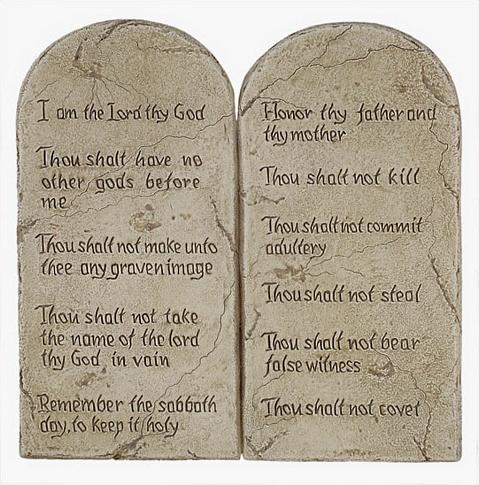
There is a line in the Didache which says “you shall not murder a child by abortion nor kill that which is born”. This line occurs in a section which explains to the readers what the ten commandments require of Christians, and the prohibition on abortion occurs alongside various other commandments such as the fifth commandments prohibition of murder and the commandment against adultery. The Didache shows us that very early on, within at least a generation of the Apostle’s early Christian communities viewed the killing of a fetus as a form of homicide. It was considered to violate the fifth of the ten commandments.
This community that produced the Didache were not alone in this. The position laid down in the Didache appears to have been widely accepted. Every theologian from the Patristic period who wrote on the question comes to the same conclusion. Here are some examples:
- Athenagoras (133–190AD) called abortion murder and compared it to infanticide.[2]
- Tertullian (155 – c. 240) calls it “speedier man-killing”[3]And states the Law of Moses condemns it.
- Minucius Felix (150 and 270AD) see abortion it as “parricidium”[4]A Roman legal term for homicide.[5]
 Cyprian (200 –258 AD) calls it murder and views violations of this command as more serious than violating the laws against idol worship.[6]
- Hippolytus (170 – 235 AD) describes abortion as murder and, like adultery, as against God’s commands.[7]
- The author of the Apocalypse of Paul (end of 4th century) describes feticide as “destroying the image of God” and as “contrary to God’s commandments”. [8]
- Augustine (354 430 AD) says that Gods law declares killing a formed fetus as murder[9] and that abortion at any stage is a cruelty akin to infanticide.[10]
- Jerome (347-420) declares feticide to be murder.[11]
- Basil (330-379) classifies it as homicide alongside killing one’s spouse and killing a person in a highway robbery.[12]
- Ambrose (340 – 397) views it as “taking away life before birth”.[13]
- Chrysostom (349 407 AD) states that abortion is “murder before birth” that abortionists turn a woman’s womb into a “chamber for murder” and in doing so “fight against His [God’s] laws”.[14]
We mentioned Philo of Alexandria in the last section and mentioned how he appealed to Jewish teaching on abortion to reject the Greek and Roman practise of infanticide. Like Philo, numerous, Early-Christian writers appealed to this teaching to offer arguments against infanticide.
In the first few centuries after Christ, Christianity was viewed with suspicion and Christians were often falsely accused of all sorts of horrible things. One accusation was that Christians engaged in infant sacrifice. Athenagoras, for example, responded to this accusation by saying Christians couldn’t support killing infants because; “we say that those women who use drugs to bring on abortion commit murder, and will have to give an account to God for the abortion”.[15] If killing a fetus was murder then infanticide must be as well. Christians “are in all things always alike and the same, submitting ourselves to reason, and not ruling over it”.[16] Tertullian responded to the same accusation by noting that for Christians, infanticide is “murder” because Christians “may not destroy even the fetus in the womb”.42 Minucius Felix responded by turning the tables arguing that it was, in fact, the pagans who practised infanticide of which because killing a fetus was merely to “commit a parricide before they bring forth”.[17]
II. Formed/Unformed Distinction and the Septuagint
In addition to seeing feticide as a violation of the fifth commandment, numerous, early Christians followed Philo in basing this conclusion upon the Septuagint and the formed/unformed distinction found in Greek Philosophy. Here are some examples:
 Tertullian (155 – c. 240) stated “The embryo, therefore, becomes a human being in the womb from the moment that its form is completed. The law of Moses, indeed, punishes with due penalties the man who shall cause abortion.”[18]
- Jerome (347-420) wrote, “The seed gradually takes shape in the uterus, and it [abortion] does not count as killing until the individual elements have acquired their external appearance and their limbs”.[19]
- Lactantius (250 – 325) argued that a fetus is formed on the 40th day and it is this stage when it is ensouled and a full human being.[20]
- Gregory of Nyssa (335–395) wrote “ [J]ust as it would not be possible to style the unformed embryo a human being, but only a potential one, assuming that it is completed so as to come forth to human birth, while as long as it is in this unformed state, it is something other than a human being.”[21]
- Cyril of Alexandria: (376 – 444) cites the Septuagint and argues a fetus becomes human at 40 days when it acquires form.[22]
- Ambrosiaster (366 and 384) argues that a human soul is infused into a fetus when the conceptus is formed, and hence abortion of a formed fetus is homicide [23].
By the end of the Patristic period, two church councils adopted policies on dealing with the killing of a fetus. The councils of Elvira and Ancyra, held in 305 A.D. and 314 A.D. respectively. The Council of Elvira declared that a woman had an abortion to cover up an affair could not be re-admitted to full communion for the rest of her life. The reason the council gives for this is that the woman has committed a double sin; she has not just committed adultery she has made this worse this by committing homicide as well.[24] This practice reflected the very harsh discipline that existed in the Early Church where serious sins committed after baptism were not forgiven. This harsh discipline was relaxed by the council of Ancyra only a few years later. Those who attended Ancyra referred to the earlier practice (reflected in Elvira) and ruled “more humanely” and required only 10 years penance before one could be received back into the fold.[25]
It seems safe to say that, throughout the patristic period, almost every Christian theologian who addressed the question of feticide did so by articulating two basic premises [1] that God has commanded people to refrain from killing a human being, and [2] that a fetus, or a formed embryo, is a human being.
However, we should be careful about interpreting these statements to mean that the early church condemned abortion absolutely in every single possible situation. There some evidence that Christain’s also permitted abortion in those rare circumstances where a woman’s life was in danger. The only Christian writer to address this situation was Tertullian. Tertullian refers to a situation where a child gets “twisted” in the womb and cannot be delivered alive without killing the mother. He describes the process of killing it with strong negative language as “a criminal deed” “infanticide” “robber in the dark” and “cruelty” however he also describes it as a “necessary crime” and “necessary cruelty” While Tertullian isn’t clear, many scholars think Tertullian here assumes that when continuing the pregnancy will kill the mother abortion is a necessary evil.
We can summarise the early churches position then as follows:
Premise: [1] Killing a human being without justification violates the law of God.
Premise: [2] A formed embryo (i.e. a fetus) is a human being.
Premise: [3] In the case of feticide (at least in the majority of cases) insufficient or no justification is forthcoming.
[1] John Robinson, Redating the New Testament, (Philadelphia, PA: Westminster, 1976), 324-27.
[2] Athenagoras, A Plea for the Christians, 35.
[3] Tertullian, Apology, 9.8.
[4] Minucius Felix, Octavius, 30.
[5] John Noonan, Contraception: A History of its Treatment by the Catholic Theologians, (Cambridge, MA:
The Bellknap Press of Harvard University, 1965), 91. Noonan notes that ‘parricidium’ was the specific Latin term for the unlawful killing of a close relative such as a parent or brother.
[6] Cyprian, Letters, 48.
[7] Hippolytus, Refutation of all Heresies, 9.7.
[8] Apocalypse of Paul 40.
[9] Augustine, Commentary on the Heptateuch, 2. 80.
[10] Augustine, On Marriage and Concupiscence, 1.17.
[11] Jerome, Letters, 22.13 and 121.4.
[12] Basil, Letter CLXXXVIII, 8.
[13] Ambrose, Hexameron, 5.18.58.
[14] Chrysostom, Homily 24 on Romans.
[15] Athenagoras, A Plea for the Christians, 35.
[16] Ibid. 42 Tertullian, Apology, 9.8.
[17] Minucius Felix, Octavius, 30.
[18] Tertullian, Treatise on the Soul, Ch VII.
[19] Jerome, Letters, 121.4.
[20] Lactantius, De Opifico Dei, 12, 17.
[21] Gregory of Nyssa, On the Holy Spirit Against Macedonius
[22] Cyril of Alexandria, De Adoratione in Spirtu et Veritate, 8.
[23] Ambrosiaster, QQ Veteris et Novi Testamenti, 23.
[24] John Connery, Abortion: The Development of the Roman Catholic Position (Chicago: Loyola University Press, 1977), 47-48
[25] Ibid., 48-49.
-
Reflections on Annihilationism, Traditionalism and the Problem of Hell
Last year I gave a paper entitled “Reflections on Annihilationism, Traditionalism and the Problem of Hell’ at the Rethinking Hell conference in Auckland. This talk is now available online.
-
The challenge of Moral Relativism: Relativism vs Objectivism: understanding the issues:
This post is the first of a series of posts which reproduce a talk on Moral Relativism I gave at both the Auckland and Tauranga Confident Christianity Conference’s and was given earlier in the year as part at a series of talks on apologetics at Orewa Community Church.
In moral debates about you will hear slogans like “if you don’t like abortion don’t have one” or “if you don’t like pornography don’t watch it.” The basic idea is that if you think a particular action is morally wrong, then you shouldn’t do it, however, it is mistaken or inappropriate to claim that people who don’t share your opinion shouldn’t do it. The slogans in question assume that moral principles correctly apply only to people who believe in those principles.
The pervasiveness of this kind of thinking can be seen in a media report I watched several years ago. A pornographer
 had organised a festival on the main street of Auckland, called “Boobs on Bikes”. It involved people, including topless women, riding down Queenstreet displaying erotica. There was some controversy over this event. During the media coverage journalists interviewed several people present. What was interesting was how many people responded by saying something like this: “It is the 21st century” or “we live in a liberal society”. Notice what happens when people do this. They were asked whether a particular action or policy was right or wrong. They answered by appealing to what they perceived to be currently fashionable or conventionally accepted. The assumption is that what is right or wrong is determined by what is conventionally accepted or fashionable.
These responses reflect a position called Relativism by moral philosophers. In a bestselling book. The Closing of the American Mind. The prominent philosopher Alan Bloom opened by saying:
There is one thing a professor can be certain absolutely of: almost every student entering the university believes, or says he believes, that truth is relative. If this belief is put to the test, one can count on the students’ reaction: they will be uncomprehending. That anyone should regard the proposition as not self-evident astonishes them, as though he were calling into question 2 + 2 = 4. These are things you don’t think about. The students’ backgrounds are as various as America can provide. Some are religious, some atheists; some are to the Left, some to the Right; some intend to be scientists, some humanists or professionals or businessmen; some are poor, some rich. They are unified only in their relativism and in their allegiance to equality. And the two are related in a moral intention. The relativity of truth is not a theoretical insight but a moral postulate, the condition of a free society, or so they see it. They have all been equipped with this framework early on, and it is the modern replacement for the inalienable natural rights that used to be the traditional American grounds for a free society. That it is a moral issue for students is revealed by the character of their response when challenged – a combination of disbelief and indignation: “Are you an absolutist?,” the only alternative they know, uttered in the same tone as “Are you a monarchist?” or “Do you believe in witches?” This latter leads into the indignation, for someone who believes in witches might well be a witch-hunter or a Salem judge. The danger they have been taught to fear from absolutism is not error but intolerance. Relativism is necessary to openness; and this is the virtue, the only virtue, which all primary education for more than fifty years has dedicated itself to inculcating. Openness – and the relativism that makes it the only plausible stance in the face of various claims to truth and various ways of life and kinds of human beings – is the great insight of our times. The true believer is the real danger. The study of history and of culture teaches that all the world was mad in the past; men always thought they were right, and that led to wars, persecutions, slavery, xenophobia, racism and chauvinism. The point is not to correct the mistakes and really be right; rather it is not to think you are right at all. (Bloom 1987)
Bloom was beginning a scathing critique of what is often called moral relativism. Note that Bloom mentions students entering university. One reason for this is that relativism is not a common position in contemporary philosophy or ethics, and most philosophers I know of think it is pretty clearly a mistaken position. However, it is extremely common at the popular level. Because relativism is is an important challenge to Christian ethics it is important to reflect on how Christians respond to this challenge.
- Relativism vs Objectivism: understanding the issues:
Christian’s like Muslims and Jews, believe God has issued commands to human beings, and our moral duties are related to these commands.
However, or not God exists or issues commands doesn’t depend on whether we think he does. If God created the world, then this is a fact that occurred well before we were born and my believing or not believing it makes no difference to whether it occurred. If God did not create the world, hoping and wishing he has doesn’t make the past change. The same is true of God’s commanding, if God has issued commands then this is a fact, people may disagree with what he demands, but this disagreement doesn’t make any difference to whether the commands exist.
To illustrate the point here, return to the slogan I opened this talk with. Suppose someone was contemplating jumping off the sky tower. You responded “if you do that you’ll die” only to get the response. ‘Who are you to impose your belief in the law of gravity onto me?” I doubt anyone would be impressed by this response. Whether or not the laws of gravity exist doesn’t depend on whether you believe it. God’s moral laws don’t differ from the laws or decrees by which he governs the universe. They either exist or they don’t.
This means that Christians are objectivists about morality. Objectivism holds that: certain moral standards are correct independently of whether you, I or our society believe they are or accept that they are. Some moral principles apply to people regardless of whether they choose to accept these principles, and if people do not accept these principles, they are making a mistake.
By contrast, relativists hold that moral hold that all moral judgements are correct or incorrect relative to different cultures or individuals. Howard-Synder (1999) highlights two major kinds of relativism:
- Cultural relativism holds an action is wrong for a person because their society condemns that action.
- Subjectivism holds that actions are right and wrong relative to individual opinions. An action is wrong for a person because he or she thinks it is wrong
If relativism is true, then moral standards apply only to people who themselves or whose society accepts those standards. This is the assumption you see reflected in the slogans I mentioned at the start of my talk.
References
Bloom, Alan. 1987. The Closing of the American Mind: How higher education has failed democracy and impoverished the souls of today’s students. New York: Simon and Schuster.
Howard-Snyder, Frances. 1999. “Christianity and ethics.” In Reason for the Hope Within, edited by Michael Murray, 376-377. Grand Rapids, MI: Eerdmans.
-
Annihilationism and the Infinity of Hell: Bawulski and the Disproportionality Argument
This is part of a talk I gave at the Rethinking Hell Conference in Auckland earlier this year.
Evangelical Annihilationist’s such as John Stott, Edward Fudge, John Wenham, and various others challenge the traditional view that hell is a place of eternal conscious torment. They contend that biblical language such as “eternal fire,” “eternal destruction,” “death,” “perish,” “everlasting contempt,” “eternal punishment,” “unquenchable fire,” “second death,” “killing the body, “soul,” “lake of fire,” “the smoke of their torment rises forever,” “blackest darkness” are better interpreted as signifying the permanent destruction of the wicked. Hell is eternal in the sense that the ultimate punishment inflicted in hell, death, is permanent; one is dead forever and never to be resurrected or reincarnated to live another life.
Shawn Baluski contests this. In “Annihilationism, Traditionalism and the problem of Hell” Baluski contends that, if Annihilationism is true, then punishment in Hell is finite in duration. He offers two arguments for this conclusion. In a previous post, I discussed one of these arguments. This post will look at his second argument, which I will call the disproportionality argument.
The Disproportionality Argument
In his dialogue with liberal theologian David Edwards John Stott, a well-known evangelical annihilationist, gave several exegetical arguments for annihilationism. [1] However, in addition to these exegetical arguments, Stott offered a moral objection to traditionalism:Would there not, then, be a serious disproportion between sins consciously committed in time and torment consciously experienced throughout eternity? I do not minimise the gravity of sin as rebellion against God our Creator, and shall return to it shortly, but I question whether ‘eternal conscious torment’ is compatible with the biblical revelation of divine justice.[2]
Stott’s argument here is that annihilationism isn’t subject to a moral challenge which the traditionalism is. Traditional conceptions of hell make the punishment disproportionate to the offence. Annihilationism doesn’t have this implication.
This argument by Stott serves as the backdrop to Bawulski’s response. Bawulski argues that unless hell is finite, Annihilationism cannot answer the disproportionality problem. He offers two claims in support of this conclusion.
First, Bawulski argues; if annihilation is an infinite or eternal punishment, then the only morally relevant difference between traditionalism annihilationism is that in the former the involves conscious existence and the latter does not.
If annihilation is an infinite punishment, then to resolve the disproportionality problem the annihilationist must argue that a certain type of infinite punishment (that which ends in annihilation) is a just sentence for a sin of finite seriousness despite the punishment being, in fact, infinite. Presumably, this will be done by attempting to link the disproportion to something other than the infinite nature of the punishment, and the most likely candidate is everlasting conscious existence.[3]
Second, Bawulski contends that the mere existence or absence of conscious existence makes no difference to the severity of the punishment.
If annihilation is an infinite punishment: it is not obvious that extinction is genuinely a lesser and more proportionate punishment than that of the traditional view. Assuming there is some validity to the analogy, there is no consensus as to which is more severe: life imprisonment or capital punishment. If annihilation is a lesser punishment the annihilationist needs to argue this point persuasively, and I have not encountered any argument to that effect.[4]
I will respond to each of these points below.
Is Conscious existence the only relevant difference?
Let’s look at the first claim, Bawulski thinks that if that if both traditionalism and annihilationism involve infinite punishment, then, the only difference between them is that in the former the involves conscious existence and the latter does not. This seems to ignore an obvious issue. The traditional view of hell involves not just conscious existence, but also the notion of eternal conscious torment. And the presence or absence of torment is obviously relevant to assessing the severity of punishment.And it is precisely this feature of traditionalism that Stott objects to. Consider Bawulski’s discussion of John Stott, only a few pages earlier:
Not surprisingly, annihilationists often cite their view’s supposed ability to dodge the traditionalist’s disproportionality problem as a great virtue. For example, in his defense of annihilationism, John Stott says, “Would there not, then, be a serious disproportion between sins consciously committed in time and torment consciously experienced throughout eternity? . . . no finite set of deeds that individual sinners have done could justify such an infinite sentence.”[5]
It’s clear that what Stott considers disproportionate is not just the infinite duration of the sentence or even the fact that the people are conscious. What is disproportionate are “sins consciously committed in time” and “torment consciously experienced throughout eternity”. (emphasis added)
Is Annihilation a less severe punishment?
This brings me to Bawulski’s second claim; that the mere existence of conscious existence isn’t morally relevant. Bawulski asks us to compare which is more severe: life imprisonment or capital punishment. But, the answer to that question depends crucially on the kind of prison being envisaged. If I were under house arrest at a beautiful Manson at Mount Maunganui, a life sentence would be less severe than capital punishment. But, that is not what’s being envisaged when hell is construed as eternal conscious torment. Here we are being asked to compare capital punishment with a life of torture. The analogy is someone imprisoned for life in the tower of London perpetually hooked up to a rack, or, being continually alive while they slowly experience searing and burning on hot coals. I submit that, under these conditions, the claim that life imprisonment is less severe than capital punishment is implausible.Jonathan Kvanvig objects that the kind of argument I offer here attacks a straw man. He says that “our ordinary conceptions of punishment … view capital punishment as a far more severe kind than life imprisonment.” He grants that “ If the traditional view is embellished with vivid images of the sort that appear in Jesus’ parable of the Lazarus and Dives, or in Dante’s descriptions of hell, Annihilationism can be seen as preferable” But, “ the fundamental tenets of the traditional view do not involve these embellishments.”[6]
To foreclose this kind of response, I will simply point the reader to what Bawulski himself states a few pages later. In a footnote on p 69 he argues:
[A]nnihilationism has not accounted for the interconnectedness of texts like Matt.25:31-46, Rev. 14:9-11, and Rev. 20:9-15, all of which share the same referent-the place/state of eternal punishment. In this eternal fire the smoke of the torment of the condemned goes up forever and ever; the condemned will have no rest, day or night; Satan, the beast and the false prophet are “tormented day and night forever and ever.” In Rev. 20, the finally impenitent are cast into this place, and there is nothing to indicate that their experience there will be any different from that of the other beings who reside there (Satan and the demons): tormented day and night forever and ever. In fact, reading Rev. 20:9-15 in light of Rev. 14:9-11, Matt. 25:31-46[7]
Here Bawluski describes the difference between annihilationism and traditionalism not merely in terms of eternal conscious existence. But, conscious torment.[8] His interpretation of phrases such as “eternal fire” scripture doesn’t commit him merely to the view that the state of eternal punishment involves consciousness. It involves, people “tormented day and night forever and ever” and he faults Annihilationism for not taking this feature of the imagery seriously. In light of this its hard to understand why he seems to think the only significant difference between annihilationism and traditionalism is conscious existence.
The line Kvanvig takes seems to me to undercut the exegetical case traditionalist make to support their doctrine. Consider the image of a lake of fire. I can understand how a person can interpret an image of fire as signifying destruction. Fire, after all, consumes and destroys, anything thrown into the fire would normally be consumed and destroyed. Similarly, I can understand how people can interpret this image as torment, being thrown in fire clearly would be painful. However, the suggestion that this metaphor signifies some nefarious conscious existence, analogous to simple incarceration in a high-quality western prison, stretches credibility.
I have looked at two arguments Bawulski gives for the conclusion that annihilationism entails the finitude of hell. The first contended that punishment must be experienced to count as punishment. I offered the example of capital punishment as a counter-example. His second argument, in my opinion, fares no better, only by ignoring the emphasis on eternal conscious torment does his argument have any merit. However, seeing the exegetical case for traditionalism relies on interpreting specific images as signifying torment and conscious suffering. This is an unjustified omission.
[1] David L. Edwards and John Stott, Evangelical Essentials: a liberal-evangelical dialogue (Hodder & Stoughton Religious: 1988) 312-329 available at https://www.truthaccordingtoscripture.com/documents/death/judgement-hell.php#.Wk4HL1WWbIU
[2] Ibid
[3] Shawn Bawulski “Annihilationism, Traditionalism, and the Problem of Hell” Philosophia Christi 12.1(2010) 66
[4] Ibid
[5] Shawn Bawulski “Annihilationism, Traditionalism, and the Problem of Hell” Philosophia Christi 12.1(2010) 65
[6] Jonathan Kvanvig, “Heaven and Hell”, The Stanford Encyclopedia of Philosophy (Winter 2012 Edition), Edward N. Zalta (ed.), available at https://plato.stanford.edu/archives/win2012/entries/heaven-hell/
[7] Shawn Bawulski “Annihilationism, Traditionalism, and the Problem of Hell” Philosophia Christi 12.1(2010) 69.
[8] For an annihilationist response to Bawulski’s exegesis here see Ralph G. Bowles “Does Revelation 14: 11 Teach Eternal Torment? Examining a Proof-text on Hell” available at https://biblicalstudies.org.uk/pdf/eq/2001-1_021.pdf
-
Annihilationism and the Infinity of Hell: Bawulski and the Experience Argument
This is part of a talk I gave at the ReThinking Hell Conference in Auckland earlier this year.
The traditional conception of hell understands the punishment of the finally impenitent to be conscious eternal torment. The punishment of hell is eternal in the sense of it being of an unending duration, and it involves conscious torment.
Evangelical Annihilationist’s such as John Stott, Edward Fudge, John Wenham, and various others challenge the traditional view. They argue the traditional view is contrary to scripture. They contend that, in scripture, the punishment of hell is eternal destruction, which involves the total and irreversible destruction of the wicked. Hell is eternal in the sense that the ultimate punishment inflicted in hell, death, is permanent; one is dead forever and never to be resurrected or reincarnated to live another life.
Much of the debate over this in evangelical circles is exegetical. It focuses on the meanings of biblical phrases such as “eternal fire,” “eternal destruction,” “death,” “perish,” “everlasting contempt,” “eternal punishment,” “unquenchable fire,” “second death,” “killing the body, “soul,” “lake of fire,” “the smoke of their torment rises forever,” “blackest darkness [that] has been reserved forever,” “outer darkness where there is weeping and gnashing of teeth”, and so on. Traditionalists take these passages to refer to eternal conscious torment. Annihilationists argue that, in their contexts, they signify the permanent destruction of the wicked.
Sometimes, however, more philosophical considerations are raised. One example is Shawn Bawulski’s article
“Annihilationism, Traditionalism and the problem of Hell” which argues that Annihilationism cannot answer particular moral and philosophical questions as well as the traditional view.There is a lot in this article and space presents a detailed consideration of all the issues. Here I want to focus on one question. Central to Bawulski’s argument is the contention that if Annihilationism is true. Hell is not infinite in duration and hence finite. This implication Bawulski believes to be philosophically and theologically problematic.
I noted above that Annihilationists typically reject the claim that Hell involves finite punishment. They contend Hell involves the punishment of eternal destruction or eternal death. The ultimate punishment inflicted in hell, death, is permanent; one is dead forever and is never resurrected or reincarnated to live another life. Bawulski offers two arguments against this conclusion. This post will look at one of these arguments. This is what I will call the argument from conscious experience.
Punishment and ExperienceA key argument Bawulski offers is that punishment must be experienced. For something to count as a punishment the person punished must experience it or be conscious of it. Bawulski illustrates this with the example Irreversible Coma:
It is hard to see how we might punish an offender who is in a coma, especially if that coma were irreversible. We might be able to extract compensation from her estate, but we would normally consider this means of punishment to be a contingency-plan sentence in lieu of punishment that involved the offender’s knowledge and recognition of her wrongdoing.[1]
I tend to agree that it would be difficult to punish someone in already in an irreversible coma. However, I don’t think this fact shows that punishment must be experienced. To see this, imagine a different case. John engages in a rape and murder spree and is shot by the police; he lies in the hospital in a temporary coma from which he will wake in three months. While he is unconscious the court, on the basis of compelling evidence, sentences John to die and so before he wakes he is given a lethal injection. Has John been punished?
This is because John has in fact been deprived of something quite valuable: the life he would have had he been left to wake in six months. John has been executed, and his future life snuffed out. Paradigmatically when someone is killed, they are harmed due to the fact they lose their life. But its obviously not their past life that is lost, nor is it the instantons present that is taken from them, what they lose is their future life. The life they would have lived and enjoyed had they not been killed.
It’s precisely the difficulty of envisaging any valuable or (even any conscious) future, from life in an irreversible coma that makes people reluctant to suggest it can be plausibly punished. The situation envisaged by the Annihilationist, however, is in stark contrasts. Under an annihilationist conception of hell. The alternative to annihilation is eternal life. The alternatives are being destroyed or continued living forever in eternal bliss. Being killed therefore deprives one of a great good you otherwise would have had. A life of eternal bliss.
Hell must be experienced
Later Bawulski suggests a more limited thesis: it’s not that punishment must be experienced, but rather, that punishment, as it occurs in hell, needs to be experienced. “This, coupled with several biblical texts that describe the reprobate as aware of and experiencing their punishment, point to the conclusion that a criterion of the punishment of hell is that it be experienced.[2]“It’s difficult to understand however why the punishment envisaged by annihilationists wouldn’t be experienced. Annihilationists believe that the “wages of sin is death”, that God will destroy, i.e. kill, the body and soul in hell. Normally when we punish a person with death or kill him, they experience it. Suppose Tom is sentenced to die by electric chair, or by hanging or by firing squad. Is it plausible to suggest he doesn’t experience anything?
Its true once he is dead, he will experience nothing. But killing or executing someone usually involves a process, and that process can be experienced, it can be, and often is when carried out, been terrifying, and painful. So it beggars reality to suggest that sentencing someone to death means they don’t experience the punishment.In fact, the existence of capital punishment, as a paradigmatic example of punishment seems to undermine both Bawulski’s arguments here. A person typically does experience the process of death involved in the execution, and the fact they die and lose consciousness when they are hanged or electrocuted doesn’t seem to lead us to conclude they not punished.
Bawulski’s response:
Bawulski seems loosely aware of this response and offers two responses to it. In a footnote, he states “the death sentence as retributive punishment is not a counterexample because the Christian doctrine of a final universal resurrection means that state implemented capital punishment is not personal annihilation, merely a penal ending of this life.”[3]This, however, seems inadequate. True, the death penalty only involves the penal ending of this life. But it’s hard to see how this features of capital punishment make a difference in this context. Whether or not a person rises again at a resurrection after death makes no difference to whether a person who is executed experiences the punishment. Nor does it make a difference to whether or not we consider capital punishment to involve punishment.
The following example will illustrate this. Suppose after being executed that God decided not to raise ted Bundy from the dead. Would it follow that Ted Bundy didn’t experience anything when he was executed, or that Gods refusal to resurrect meant Bundy hadn’t been punished? Obviously not. The facts remain, Bundy, was deprived of a future life; a life he would have lived, had he not been killed. And the act of killing Bundy involved a process which he experienced.
In the main body of the text, Bawulski offers a different response:
It must be noted that most annihilationist’s claim annihilation does not occur at physical death or even immediately after the final judgment, but posit a finite period of conscious punishment leading up to final annihilation. The problem then becomes this: the only penal aspect related to annihilation is the dreadful anticipation of the upcoming annihilation. Yet if the antecedent period of punishment is finite and the anticipatory period of dread is finite, even if the annihilation is permanent and in that sense infinite in consequence, the punishment itself is finite. punishment.[4]
I find this line of argument, frankly, strange. Bawulski suggests that if in the process of being killed, the victim consciously experiences his punishment, then it follows that this is the only penal aspect involved.
But surely this is implausible, precisely for the reasons just mentioned, Suppose someone is executed by lethal injection in their early 20’s, would we really suggest that, would anyone seriously suggest that only punishment this person received was a prick in the arm for a few seconds. Or suppose a person is sentenced to death in the electric chair when this happens do we really think the only punishment administered is a few seconds of electric shocks.
Obviously, these are unpleasant aspects of the punishment, but the punishment is death. These aspects don’t stand alone from the punishment but are part of the process that death is brought about. If serial killers were just pricked in the arm and then got up and walked away, we wouldn’t consider the punishment of death to have been carried out. We would contend they had escaped their punishment.
This point was made by Augustine of Hippo. Augustine himself no friend of Annihilationism, stated:
Then as to the award of death for any great crime, do the laws reckon the punishment to consist in the brief moment in which death is inflicted, or in this, that the offender is eternally banished from the society of the living? And just as the punishment of the first death cuts men off from this present mortal city, so does the punishment of the second death cut men off from that future immortal city. For as the laws of this present city do not provide for the executed criminal’s return to it, so neither is he who is condemned to the second death recalled again to life everlasting[5]
The death penalty is a paradigmatic example of a case where someone is punished. When a death penalty is inflicted the criminal usually experiences it, he experiences the shame, anticipation and even the pain involved in the process of killing. However, this while part of the punishment is not the whole of it, the punishment involves much more it involves cutting him off from the life we would have had and enjoyed. And this is a significant part of, if not the most significant part of his punishment. The fact the criminal doesn’t consciously experience these years doesn’t mean his being deprived of them isn’t a punishment.
Annihilationists understand the punishment of hell to literally involve a death sentence, one that is permanent and irreversible. If one wouldn’t contend that a person executed today isn’t punished, or that his punishment consisted only in unpleasant experiences he had prior to death and didn’t involve the loss of life itself; then one shouldn’t contend that annihilation of the finally impenitent involves these things.
[1] Shawn Bawulski “Annihilationism, Traditionalism, and the Problem of Hell” Philosophia Christi 12.1(2010): 66
[2] Bawulski “Annihilationism, Traditionalism, and the Problem of Hell” 66
[3] Ibid 66
[4] Ibid
[5] Augustine City of God Bk 22 chapter 11