Category: Personal

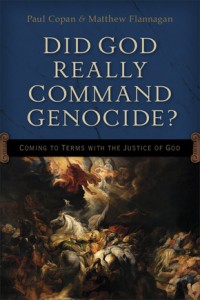
  • Did God Really Command Genocide? A new book by Copan and Flannagan

    Did God Really Command Genocide?Coming to a bookstore near you in November 2014: Did God Really Command Genocide? Coming to Terms with the Justice of God by: Paul Copan and Matthew Flannagan

    From Baker Publishing Group’s page:

    “Reconciling a violent Old Testament God with a loving Jesus
    Would a good, kind, and loving deity ever command the wholesale slaughter of nations? We often avoid reading difficult Old Testament passages that make us squeamish and quickly jump to the enemy-loving, forgiving Jesus of the New Testament. And yet, the question remains.

    In the tradition of his popular Is God a Moral Monster?, Paul Copan teams up with Matthew Flannagan to tackle some of the most confusing and uncomfortable passages of Scripture. Together they help the Christian and nonbeliever alike understand the biblical, theological, philosophical, and ethical implications of Old Testament warfare passages.”

    Some of the endorsements are below, you can read more here:

    “The Old Testament describes God as a warrior who directs his people to fight the Canaanites. Divine violence in the Bible is a theme that has aroused the ire of atheists and the discomfort and confusion of many Christians. Copan and Flannagan address the arguments of the atheists who use these texts to undermine belief and confidence in God. Not only are they adept at biblical interpretation and philosophy as they effectively counter this challenge, but they also write in a deeply compelling way that will appeal to both students and laypeople.”

    Tremper Longman III, Robert H. Gundry Professor of Biblical Studies, Westmont College, Santa Barbara, California

    “In their wide-ranging book, Copan and Flannagan go beyond standard treatments of Old Testament warfare; they incorporate biblical, theological, philosophical, ethical, legal, and historical perspectives on a much-debated but often misunderstood topic. This volume makes important strides forward in laying out a case for the coherence of divine command theory in connection with these Yahweh-war texts.”

    William Lane Craig, research professor of philosophy, Talbot School of Theology, La Mirada, California

    “As a full-scale follow-up to the excellent popular treatment of the topic in Is God a Moral Monster?,this book provides the most thorough and comprehensive treatment of the problem of violence in the Old Testament that I have encountered. The authors tackle the aggressive charges of the new atheists, as well as other equally sceptical but less strident critics of ‘the God of the Old Testament.’ And they do so with a blend of careful biblical exegesis and incisive moral argumentation. The book reaches deep, but remains readable, and the summaries at the end of every chapter are a great help in following the case as it is steadily built up. All of us who, in teaching or preaching the Old Testament, are constantly bombarded with ‘But what about the Canaanites?’ will be very grateful for these rich resources for a well-informed, gracious, and biblically faithful reply.”

    Christopher J. H. Wright, International Ministries Director, Langham Partnership, author of Old Testament Ethics for the People of God and  The God I Don’t Understand

    Chapter 1 is available here.

    Pre-order your copy now on Amazon, Book Depository or Mighty Ape (or wherever you normally get your books).
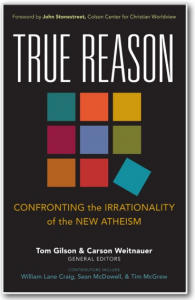
  • True Reason: Confronting the Irrationality of the New Atheism – in Paperback

    True Reason: Confronting the Irrationality of the New AtheismThe paperback version of the Kindle book, True Reason: Christian Responses to the Challenges of Atheism,  which Matt wrote a chapter for, recently arrived from the publishers. This release has been re-released as True Reason: Confronting the Irrationality of the New Atheism (the link takes you to the book’s official website).

    True Reason is still edited by Tom Gilson and Carson Weitnauer and is still published by Kregal Publications; however, this edition has been updated and expanded and it has two additional chapters. The table of contents is as follows:

    1. The Party of Reason?
      Tom Gilson
    2. The Irony of Atheism
      Carson Weitnauer
    3. Dawkins’s Delusion
      William Lane Craig
    4. Richard Dawkins’s Illusions
      Chuck Edwards
    5. Unreason at the Head of Project Reason
      Tom Gilson
    6. John Loftus and the “Outsider-Insider Test for Faith”
      David Marshall
    7. Atheism and the Argument from Reason*
      Lenny Esposito
    8. The Explanatory Emptiness of Naturalism
      David Wood
    9. Reason in a Christian Context
      Peter Grice
    10. The Marriage of Faith and Reason
      David Marshall
    11. Faith and Reason in Historical Perspective*
      David Marshall and Timothy McGrew
    12. A Sun to See By—Christianity, Meaning, and Morality
      Samuel J. Youngs
    13. Are Science and Christianity at Odds?
      Sean McDowell
    14. God and Science Do Mix
      Tom Gilson
    15. The Problem of Evil and Reasonable Christian Responses
      John DePoe
    16. Historical Evidences for the Gospels
      Randy Hardman
    17. Did God Command the Genocide of the Canaanites?
      Matthew Flannagan
    18. Christianity and Slavery
      Glenn Sunshine
    19. Epilogue
      Carson Weitnauer

    *Chapters Seven and Eleven are new additions in the second edition, not included in the Kindle version of True Reason.

    Read the author’s bios here.

    The blurb from Amazon is as follows:

    Today’s New Atheists proclaim themselves our culture’s party of reason. It is a claim they cannot sustain. Reason is the New Atheists’ weakness, not their strength and in fact, the Christian faith is a far better place to look for True Reason.

    In sixteen carefully constructed essays by more than a dozen Christian thinkers including William Lane Craig, Sean McDowell, and Timothy McGrew,True Reason unmasks the frequent irrationality displayed by leading atheists like Richard Dawkins, Sam Harris, and Christopher Hitchens. The authors go on to show the great extent to which the Christian faith has historically supported sound reasoning, and that Christian thinkers, past and present, have demonstrated real excellence in reasoned, rational thinking.

    Making their case accessible to the first-time inquirer as well as the serious student, this top-flight team of writers presents a sound defense and a strong introduction to the true reason uniquely found in Christianity.

    You can buy the paperback version of True Reason: Confronting the Irrationality of the New Atheism on Amazon here.

  • Back from Baltimore

    The following is a belated report of my recent trip to Baltimore. I began writing the post in December, but Christmas, New Year, the holidays, and various other things got in the way of me finally completing it.

    On Tuesday 26 November 2013 I flew back to New Zealand having attended the annual conference of the Evangelical Theological Society (ETS), Evangelical Philosophical Society (EPS), and Evangelical Philosophical Society Apologetics (Apologetics) conferences in Baltimore. My trip year was shorter than my month long tour the previous year and a lot more intense, but it was still very rewarding.

    The first session I attended was a panel involving Micheal Bird, Al Mohler and Peter Enns and Van Hoozer on inerrancy. There were no surprises here. Al Mohler took the line that inerrancy, as defined by the Chicago statement, must be retained and that denying it was a kind of slippery slope to all sorts of doctrinal error. Peter Enns asserted a whole lot of alleged problems with inerrancy; he assumed that the issues he raised were a fait accompli, ignored any critical responses to them and dismissed theological arguments as a priori without engaging the premises. Van Hoozer spelt out his own position in terms of speech act theory.

    Michael Bird was perhaps the exception in terms of stating the expected; he pointed out correctly, in my view, that the debate on inerrancy tended to presuppose a North American context. He argued that the kinds of cultural battles which contributed to the American debate had not played out the same way in evangelicalism outside the USA. This, I think, is entirely correct. Unfortunately there was little engagement between speakers. I would have liked to heard how each responded to the premises and arguments of their opponents.

    The next session of note was David Baggett speaking on “the vices of virtue theory”. Baggett is working on a sequel to the book Good God: The Theistic Foundations of Morality which he co-wrote with Jerry Walls. In this paper Baggett raised some trenchant criticisms of Philippa Foot’s book Natural Goodness. Foot defends a naturalistic account of goodness in terms of the natural flourishing of a species. The gist of Baggett’s criticism was that Foot is unable to really rise above amoral accounts of goodness, such as when we say that a good tiger tears apart its prey well.

    In the afternoon I attended an interesting paper by Christian Milhut about whether resentment can be a virtue. Milhut was critical of the idea that our feelings of resentment and anger at perceived injustices are reliable. This paper elicited an interesting discussion about when such emotions are and are not appropriate in morality.

    The evening saw the EPS reception, where Gary DeWeese gave a thoughtful address on the role of fellowship in Christian philosophy. This was followed by nibbles, socialising and mingling.

    On the Wednesday I began at 8:30 am by attending a paper by Peter Payne on “Objectivity in debates over whether Ethics needs God”. This was followed by a paper by Harry Bunting entitled “Divine Authority A Kantian Perspective”. Bunting’s paper was excellent. He noted that while Immanuel Kant viewed morality’s content as dependent on reason, but maintained Kant believed the moral law was only obligatory on humans because God held human beings accountable to the standards reason laid down. Bunting brought this perspective of God’s authority being linked to him holding humans accountable into dialogue with Mark Murphy’s celebrated position on divine authority in “an essay on divine authority”. Bunting’s paper was extremely interesting and I hope to get a copy of this paper in the future as (more…)

  • Matt Nominated for Evangelical Philosophical Society Executive

    Evangelical Philosophical SocietyI am pleased to announce that this blog’s Matthew Flannagan has been nominated as one of the candidates for the three vacant executive committee positions for the 2013 Executive Committee of the Evangelical Philosophical Society (EPS). Matt is the only New Zealander to have been nominated.
    If you are a member of the EPS please make sure you check out the full candidate list, there are some very good candidates on it, and vote! Voting began today, it closes 8 November 2013.

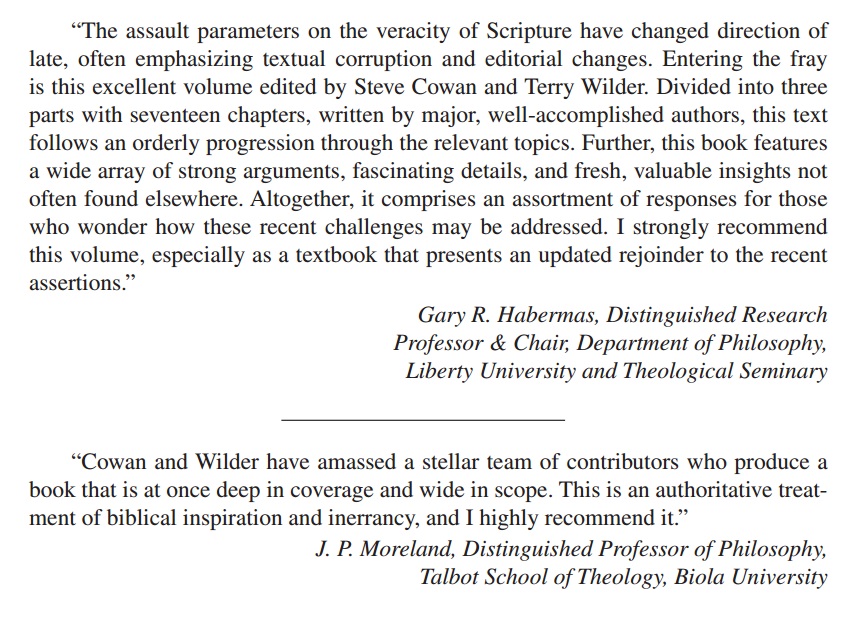
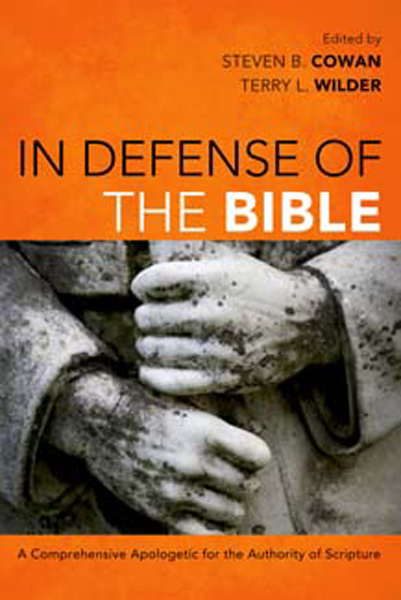
  • In Defense of the Bible: A Comprehensive Apologetic for the Authority of Scripture

    In Defense of the Bible: A Comprehensive Apologetic for the Authority of Scripture

    In Defense of the Bible: A Comprehensive Apologetic for the Authority of Scripture

    Another of the books Matt has contributed to arrived from the publisher’s today. In Defense of the Bible: A Comprehensive Apologetic for the Authority of Scripture addresses and responds to the major contemporary challenges to the divine inspiration and authority of Scripture. It is edited by Steven B Cowan and Terry L Wilder and published by B&H Academic.

    The blurb from the publishers:

    In Defense of the Bible begins by looking at philosophical and methodological challenges to the Bible—questions about whether or not it is logically possible for God to communicate verbally with human beings; what it means to say the Bible is true in response to postmodern concerns about the nature of truth; defending the clarity of Scripture against historical skepticism and relativism.

    Contributors also explore textual and historical challenges—charges made by Muslims, Mormons, and skeptics that the Bible has been corrupted beyond repair; questions about the authorship of certain biblical books; allegations that the Bible borrows from pagan myths; the historical reliability of the Old and New Testaments.

    Final chapters take on ethical, scientific, and theological challenges— demonstrating the Bible’s moral integrity regarding the topics of slavery and sexism; harmonizing exegetical and theological conclusions with the findings of science; addressing accusations that the Christian canon is the result of political and theological manipulation; ultimately defending the Bible as not simply historically reliable and consistent, but in fact the Word of God.

    Contributors include R Douglas Geivett, William A Dembski, Mary Jo Sharp, Darrell L Bock and Paul Copan, with whom Matt co-authored a chapter entitled “Does the Bible Condone Genocide?”

    A couple of endorsements:

    Endorsements

    In Defense of the Bible is available in both Kindle and Paperback formats. Get your copy from Amazon or Book Depository or wherever you like.

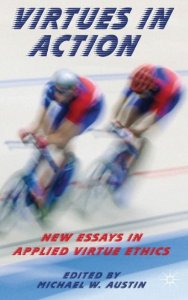
  • Matt’s Latest Publication: Virtues in Action – New Essays in Applied Virtue Ethics

    Matt’s lastest publication in a book arrived by courier today. The book is Virtues in Action: New Essays in Applied Virtue Ethics; it is an an edited collection of new work in applied virtue ethics.

    Virtues in Action: New Essays in Applied Virtue EthicsVirtues in Action is edited by Michael W. Austin, who is Professor of Philosophy at Eastern Kentucky University, a specialist in ethics and philosophy of religion, author of Conceptions of Parenthood (2007), and editor or co-editor of several works, including The Philosophy of the Olympics (2012) and Being Good: Christian Virtues for Everyday Life (2012) – Being Good was the book Matt and each gave a paper on at the 2012 Evangelical Philosophy Society’s Annual Meeting in Milwaukee. Mike blogs at Ethics for Everyone.

    The chapter Matt wrote is called “Some Critical Reflections on Abortion and Virtue Theory.”

    From the Publisher:

    “In recent decades, many philosophers have considered the strengths and weaknesses of a virtue-centered approach to moral theory. Much less attention has been given to how such an approach bears on issues in applied ethics. The essays in this volume apply a virtue-centered perspective to a variety of contemporary moral issues, and in so doing offer a fresh and illuminating perspective. Some of the essays focus on a particular virtue and its application to one or more realms of applied ethics, such as temperance and sex or humility and environmental ethics. Other chapters focus on an issue in applied ethics and bring several virtues into a discussion of that issue or realm of life, such as sport, education, and business. Finally, several of the chapters engage relevant psychological research as well as current neuroscience, which enhances the strength of the philosophical arguments.”

    Table of contents:

    Introduction
    PART I: PROFESSIONAL VIRTUE
    1. Virtue-Centered Approaches to Education: Prospects and Pitfalls; Gregory Bassham
    2. The Virtues of Honorable Business Executives; Dan Demetriou
    3. Sport as a Moral Practice: An Aristotelian Approach; Michael W. Austin
    PART II: SOCIAL VIRTUE
    4. Sex, Temperance, and Virtue; Stan van Hooft
    5. Extend Your Benevolence: Kindness and Generosity in the Family and Beyond; Heidi Giebel
    6. A Virtue Ethical Case for Pacifism; Franco V. Trivigno
    7. Some Critical Reflections on Abortion and Virtue Theory; Matthew Flannagan
    PART III: ENVIRONMENTAL VIRTUE
    8. Environmental Degradation, Environmental Justice, and the Compassionate Agent; Chris Frakes
    9. Humility and Environmental Virtue Ethics; Matthew Pianalto
    PART IV: INTELLECTUAL VIRTUE
    10. Hope as an Intellectual Virtue; Nancy E. Snow
    11. Virtue Ethics and Moral Failure: Lessons from Neuroscientific Moral Psychology; Lisa Tessman
    12. Getting Our Minds Out of the Gutter: Fallacies that Foul Our Discourse (and Virtues that Clean it Up); Robert K. Garcia and Nathan L. King

    Get your copy from Amazon.

  • Madeleine speaking to Kerre McIvor on Newstalk ZB re Flannagan v ACC

    This morning on my way to work I turned on Newstalk ZB to find that Madeleine and her recent ACC victory were the topic of Leighton Smith’s morning show – Kerre McIvor was filling in. Madeleine ended up speaking to Kerre on air – you can listen here:

    Or download here:

    NewstalkZB have also reported on the case:

    “An Auckland lawyer has won her own legal battle against the Accident Compensation Corporation.

    Madeleine Flannagan has been fighting to get ACC to overturn its decision to stop her entitlements.

    ACC claimed her injury-related pain was due to a degenerative condition.

    Ms Flannagan says the decision was based solely on a diagnosis made by its own specialist.

    “Every doctor and specialist who’d seen me at that point and subsequently, had said it was an accident.”

    ACC overturned its decision just in time to avoid being taken to the District Court.

    It claims the “consistency and rationale of two independent specialists’ opinion” is more compelling than that of its own specialist.

    However, Ms Flannagan has her doubts over ACC’s true motives.

    “They settled about two weeks after they were served my appeal papers so I am very sceptical that it was the compelling nature of my specialist’s report.” [which they’d received copies of from Madeleine’s lawyers 1-2 years prior to offering to settle]