Can you blame them? This was the rhetorical question I heard recently, posed by a speaker at a Conference of religious studies teachers that I attended. The answer to the question was supposed to be No, and most of the audience seemed to take this to be the correct answer. Nor is this atypical It’s […]
Entries Tagged as 'Personal'
On alleged Victim’s of Church abuse… “Can you blame them?”…. “Yes I can”
April 18th, 2018 Comments Off on On alleged Victim’s of Church abuse… “Can you blame them?”…. “Yes I can”
“Robust Ethics and the Autonomy Thesis” Now Online
April 3rd, 2018 Comments Off on “Robust Ethics and the Autonomy Thesis” Now Online
www.youtube.com/watch?v=6iVyVJAMiOY”>William
Recently, Philosophia Christi published Matt’s article “Robust Ethics and the Autonomy Thesis: A reply to Erik Wielenberg”. This article consisted of some critical commentary and responses to Erik Wielenberg’s book Robust Ethics: The Metaphysics and Epistemology of Godless Normative Realism. Since then Matt’s article has received a little bit of unexpected attention. One of my arguments […]
Tags: Autonomy Thesis · Divine Command Theory · Erik Wielenberg · God and Morality · Philosophia Christi · Publications · William Lane Craig
“Robust Ethics and the Autonomy Thesis” published in Philosophia Christi
February 3rd, 2018 Comments Off on “Robust Ethics and the Autonomy Thesis” published in Philosophia Christi
Matt’s article, “Robust Ethics and the Autonomy Thesis: A reply to Erik Wielenberg” has been published in the winter issue ( Vol 19 Num. 2 – Winter 2017) of Philosophia Christi. An overview of the contents of the full issue can be found here. The editor has given Matt permission to upload the article in […]
Tags: Divine Command Theory · Erik Wielenberg · God and Morality · Philosophia Christi
Contemporary Philosophy of Religion and NCEA Religious Studies: Part Four
October 23rd, 2017 Comments Off on Contemporary Philosophy of Religion and NCEA Religious Studies: Part Four
This is a talk I gave to the New Zealand Association of Philosophy Teachers annual conference at St Cutherberts College in September this year. Several people have asked me to make this talk available. I have broken my talk up into four parts. Part One introduces what philosophy of religion. In part two I will outline two […]
Tags: Graham Oppy · John Mackie · NCEA
Erik Wielenberg and the Autonomy Thesis: Part Three Standard Objections to the Autonomy Thesis, Human Rights and Dignity without God
March 25th, 2017 1 Comment
In my last post I looked at Erik Wielenberg’s response to the objection that, in the absence of God, people lack compelling reasons to comply with morality’s demands. A second objection Wielenberg briefly addresses is that without certain theological doctrines, one cannot provide a plausible basis for human rights and dignity. Wielenberg, here again, takes Craig […]
Tags: David Boonin · Erik Wielenberg · Infanticide · Loius Pojman · Nicholas Wolterstorff · Peter Singer · Rights · William Lane Craig
Erik Wielenberg and the Autonomy Thesis: Part Two Standard Objections to the Autonomy Thesis, Reasons to be Moral Without God
March 20th, 2017 3 Comments
The autonomy thesis contends that there can be moral requirements to φ regardless of whether God commands, desires, or wills that people φ. In his monograph, Robust Ethics: The Metaphysics and Epistemology of Godless Normative Realism,[1] Erik Wielenberg offers arguably one of the most sophisticated defences of the autonomy thesis to date. Wielenberg argues three […]
Tags: Erik Wielenberg · God and Morality · Robert Adams · Stephen Layman · Why be Moral? · William Lane Craig
Erik Wielenberg and the Autonomy Thesis: part one Wielenberg’s criticism of Divine command meta-ethics
March 11th, 2017 2 Comments
The autonomy thesis contends that there can be moral requirements to φ regardless of whether God commands, desires, or wills that people φ. In his monograph, Robust Ethics: The Metaphysics and Epistemology of Godless Normative Realism,[1] Erik Wielenberg offers arguably one of the most sophisticated defences of the autonomy thesis to date. Wielenberg argues that: […]
Tags: Divine Command Theory · Erik Wielenberg · God and Morality · Wes Morriston

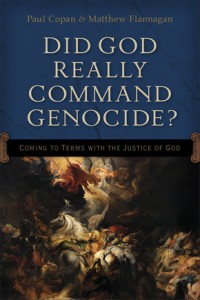 A common objection to belief in the God of the Bible is that a good, kind, and loving deity would never command the wholesale slaughter of nations. In the tradition of his popular Is God a Moral Monster?, Paul Copan teams up with Matthew Flannagan to tackle some of the most confusing and uncomfortable passages of Scripture. Together they help the Christian and nonbeliever alike understand the biblical, theological, philosophical, and ethical implications of Old Testament warfare passages.