Category: Personal

  • Singer on Matthew Flannagan in “Peter Singer Under Fire: The Moral Iconoclast Faces His Critics”

    Yesterday Matt went the library and did a little reading for his upcoming Evangelical Philosophical Society paper “Peter Singer, Human Dignity, and Infanticide“ and he discovered that email exchange he’d had with Peter Singer in 2006 had resulted in a few paragraphs in Singer’s book Peter Singer Under Fire: The Moral Iconoclast Faces His Critics.

    Here is a screen shot of what one sees when one uses the “search inside this book” function:

    Peter Singer Under Fire: The Moral Iconoclast Faces His Critics

    Matt does not feel that Singer accurately portrayed his counter example but the substance Singer presents of it is correct. Singer’s response to Matt seems to be that Matt is right in principle but in practice it would never be an issue.

  • My Faith Journey

    Like Jacob in the book of Genesis, my spiritual journey has been one of wrestling with God. Not physical wrestling, like that engaged in by Jacob, but wrestling intellectually with the questions and implications that have arisen from my realisation that God exists and Jesus Christ actually, in reality, rose from the grave.

    Faith JourneyI was not raised a Christian; in my early years my family attended an Anglican Church. This was part of the residual Anglicanism which is part of New Zealand’s heritage as a British colony.  We ceased attending in the early 80’s when I was around 6.  I was raised in a very secular environment where what are commonly referred to as ‘liberal ideals and values’ were taken for granted.

    Something kept drawing me to the reality of God. New Zealand has an amazingly beautiful country-side, which I spent a lot of my youth hiking and exploring in; I kept being aware of a spiritual presence, a glory, an amazingly awesome being reflected in the world around me and I felt it was providentially guiding me. I engaged in theological debates at intermediate and high school as I explored this sense.

    Then at 16 I began to ask serious questions about morality and my life. My parents had divorced, my friends were promiscuous, doing drugs and breaking the law. I had attended a very conservative upper-class boarding school and I had also attended a very permissive public school by then. I began to ask questions about how I should live, were the beliefs I had correct, what sort of person did I want to be? Who was correct, the Christians from the past or the moderns of today? And how do we tell – how can I know?

    These questions lead me to attend a Church in 1991, which was enthralled by the teachings of Bishop Spong. Spong was teaching that the bible was not authoritative, Christ did not rise from the dead, Christians needed to revise their views on sexuality, and so on. I was puzzled as to why a Church would teach things like this. The elders recommended I read some “modern critical scholarship”. This led me to encounter the debate over many of these issues for the first time. I discovered Josh McDowell, Alistair McGrath, Francis Schaeffer and serious evangelical scholarship for the first time.

    At a youth camp ran by the Methodist church in 1991 I ran into a small group of evangelicals who began sharing with me the Christian faith. I came before God in prayer and committed by life to following him. This was the most dramatic life changing experience I have ever had.

    I started University the next year. Waikato University was the most secular university in New Zealand, and my new beliefs came under concerted intellectual attack. For time-tabling reasons I was forced to do a philosophy degree and from day one everything I had committed to was assaulted intellectually in my classes. My wrestling with God continued. As my interlocutors raised questions I went to the library to find literature that was not on the reading lists, which helped me address these questions.

    I discovered the writings of Alvin Plantinga, Richard Swinburne, William Lane Craig and J P Moreland. I began to ask questions about how my faith related to politics or history or to the theoretical disciplines I was studying. There was no real place I knew of where evangelicals could get these questions answered so I went to the library and began to skim through the books on the shelf and read. I began using what I discovered to respond to my sceptical interlocutors. I soon found they were quite unprepared for the answers I gave. It seemed to me Christianity had lost the cultural battle by default with skeptics raising age-old questions that Christian writers had already addressed and taking the silent response as acquiescence.

    I also began to discover the great classics from Christian history. After disagreeing sharply with the very skeptical lecturer of my religious studies class I began checking primary sources. This led me to begin reading Athanasius, Augustine’s City of God, Calvin’s Institutes, sections of Aquinas and so on. I began to discover there was a wealth of history that I had not been made aware of and which my culture had caricatured.

    My wrestling with these questions transformed me radically. I went on to do a Masters degree in philosophy on the relationship between faith, reason and scholarship and a PhD thesis on ethics. I found myself estranged from the very anti-intellectual, pietistic evangelical traditions that dominate in New Zealand. I also felt estrangement from the mainstream academic community due to my commitment to a fairly conservative Christian faith.

    Despite this, I have felt in doing this I have been faithful to the call I perceived on my life at a young age. It ignited in me a passion to assist other Christians to wrestle with these questions and to come up with credible answers with which to engage the secular culture credibly.  It has led me to having a very Socratic pedagogy and a demand for a high level of logical rigour, cultural awareness, and faithful theological commitment to my endeavours. This is why I blog at MandM.

  • On fearing God more than men

    I do a lot of things that seem to scare other people. I run this blog; I think up ideas and put them forward in public in a context where I invite criticism on them, I risk falling flat on my face and looking stupid as I do so. I engage in this blog and on other blogs under my real name. I willingly engage in public speaking, I willingly engage in public debate on topics as polarising as religion, homosexuality and abortion – and I do so not just on the internet but in public venues and in print media, radio, television,  you tube. I chose as my career a role that sees me take my ideas and arguments and present them in court several times a week where they are vigorously tested and ruled on by a judge; if I get it wrong things like people’s safety and the custody of their children and their rights and freedoms and financial means are at stake.

    To me this is all normal and I thrive on it. I recently applied for and was auditioned for New Zealand’s Hottest Home Baker, I am a good cook and the challenges the show presents plus the opportunity to test my skills appealed. After I wrote that I had an audition for the show, one of my Facebook friends asked “does nothing scare you?” The question made me think, particularly today in the wake of having just yesterday read someone else’s thoughts on me and this issue. So this is my answer.

    I am aware that people think I am strange for being drawn to these types of activities – they are probably right.

    I am aware that people think I must be left-brained and have an A-type personality and am probably part-Aspie, like the males in my family – they are probably right.

    But when people think that I find doing the above easy, that I am not scared, that I feel no fear, that my confidence is such that I do not doubt, and that the knocks I take, the criticism, the vitriol, the anger, the slander that is sometimes directed at me does not hurt me or cause me distress – they are wrong.

    I am always struggling with being scared, fearful, plagued with doubts, sometimes frozen in indecision as I do the above. The criticism rattles me, the vitriol, anger and slander wounds me. Some days I crack. I freeze. In the worst instances I shut down and feel utterly flat, despondent and I get all weepy for hours or even a day or so and wonder how I can go on and see out an argument or a debate or a case and why I started it in the first place. Insecurities creep in and plague my mind. I am not tough and I am not thick skinned. So why do I look like I am?

    Two scriptures are firmly entrenched in my mind, my being, and have been for a long time – ever since I came to terms with and began to accept that I am wired differently and that being that way is ok:

    “From everyone who has been given much, much will be demanded; and from the one who has been entrusted with much, much more will be asked.” Luke 12:48b

    “Do not fear those who kill the body but are unable to kill the soul; but rather fear Him who is able to destroy both soul and body in hell.” Matthew 10:28

    The knowledge that I can push myself beyond what I feel, if I feel I should, and that when I do I am able to sometimes achieve things that are important to be achieved for a purpose more important than me is why I do it. I fear God more than men, but make no mistake: I fear. Because I know He has enabled me to be able to act competently and that He expects me to do so where it is right to, I act, but it does not mean that doing this is easy nor does it mean that I do not pay a price or feel the slings and arrows. I am human; like everyone else, I bleed.

  • Jesus, Hot Cross Buns, Easter Eggs, Ishtar and Constantine: Is Easter Pagan? Tim McGrew says No!

    Easter can be annoying.  My kids all want chocolate, this year the hot cross buns sold out and Matt brought crumpets home from the supermarket instead. People who don’t normally have any time for Christianity suddenly feel they must go to church, whilst some of my Christian friends refuse to let their children eat chocolate because Easter is a pagan festival. Navigating it does my head in sometimes.

    Easter

    In the past week we’ve had people phone, email, text and raise in conversation that Easter was invented by Constantine, that the bunnies and the buns are pagan and thus consuming them is an offence against God. We’ve heard that the dates are wrong and that Easter dates do not coincide with Passover, that it is a Roman festival, while others say that Easter is tied up with Ishtar. This wasn’t limited to people coming to us; Matt was on the Pat Brittenden Mornings Panel earlier in the week and because of that we heard that talkback radio was full of this too. So, it was very cool that Matt and I were able to have a word with the producers at Radio Rhema after the Panel, and put them in touch with Dr Tim McGrew whose interview as to Whether Easter is Pagan aired on Tuesday – click the link to listen.

    Tim is a good friend, a world renowned scholar whose expertise on miracles and particularly the historical accuracy of the resurrection qualifies him as an authority on some of these Easter-is-pagan claims. While he does not touch on all of the above in the interview he debunks a lot of it.

    Normally Matt and I try to do a Passover-ish meal – we do lamb, rosemary and red wine – and the kids all get to choose a king size block of chocolate each (they reason they get more chocolate for the money than buying Easter Eggs) and I try to ensure indulgement in a decent hot cross bun. Throughout the weekend we focus on Christ, his death and resurrection. We read relevant passages, we have conversations about the Passover and the fact that Christ is the fulfillment of it, in years gone by when the kids were younger we’ve made Easter story cookies. Basically we enjoy the food, the public holiday and we weave learning opportunities and ways to focus on Christ in as we go so that the thrust of Easter is on him.

    We are not worried about taking this approach because Christ conquered all and our focus and heart and intent is on him. Don’t get me wrong, it is important to pause and check that one is not engaging in Paganism but just because something at some point had something to do with Paganism does not mean it is Paganism presently. Tree worship is common among Pagans so must we eschew wood? What about Pythagorus’ theorem? If Easter was just Ishtar worship then we would not be celebrating it; how many of us wanting the spiritual side of Easter are heading to the local Ishtar temple this weekend? As for Constantine inventing Easter, direct evidence for Easter being celebrated by Christians can be identified in the 2nd century, some couple of hundred years prior to Constantine – Wikipedia can tell you that much.

  • Come Let Us Reason: New Essays in Christian Apologetics – Available on Kindle or Pre-Order the Book, Feat. William Lane Craig, Paul Copan, JP Moreland, Gary Habermas, Matthew Flannagan et al.

    The kindle edition of Come Let Us Reason: New Essays in Christian Apologetics, published by B&H Academic, edited by William Lane Craig and Paul Copan and featuring Craig, Copan, JP Moreland, Gary Habermas, Craig Keener, Mary Jo Sharp, this blog’s Matthew Flannagan, and others, with the foreword written by Rick Warren, is now available at the link above on Amazon.

    The book version of Come Let Us Reason: New Essays in Christian Apologetics can be pre-ordered at this link on Amazon.

    Matt’s chapter is “Did God Command Canaanite Genocide?” Here is the editorial review from Amazon:

    Come Let Us Reason: New Essays in Christian ApologeticsCome Let Us Reason is the third book in a series on modern Christian apologetics that began with the popular Passionate Conviction and Contending with Christianity’s Critics. The nineteen essays here raise classical philosophical questions in fresh ways, address contemporary challenges for the church, and will deepen the thinking of the next generation of apologists. Packed with dynamic topical discussions and informed by the latest scholarship, the book’s major sections are:

    • Apologetics, Culture, and the Kingdom of God
    • The God Question
    • The Gospels and the Historical Jesus
    • Ancient Israel and Other Religions
    • Christian Uniqueness and the World’s Religions

    Click to View the Table of Contents of Come Let us Reason

    Contributors include J. P. Moreland (“Four Degrees of Postmodernism”), William Lane Craig (“Objections So Bad That I Couldn’t Have Made Them Up”), Gary R. Habermas (“How to Respond When God Gives You the Silent Treatment”), Craig Keener (“Gospel Truth: The Historical Reliability of the Gospels”), and Paul Copan (“Does the Old Testament Endorse Slavery?”).

    Paul Copan is a professor and the Pledger Family Chair of Philosophy and Ethics at Palm Beach Atlantic University in West Palm Beach, Florida. He holds a Ph.D. in Philosophy from Marquette University.

    William Lane Craig is research professor of Philosophy at Talbot School of Theology in La Mirada, California. His Ph.D. in Philosophy is from the University of Birmingham in the United Kingdom.

    The Come let us Reason series is designed to bring scholarly work to the lay person so, depending on whether you prefer Kindle or book form, order or pre-order your copy now and let us know what you think.

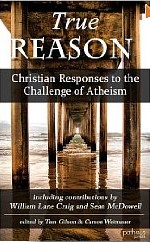
  • True Reason: Christian Responses to the Challenges of Atheism – on Kindle

    The kindle edition of new book featuring responses to the New Atheists, aimed to be readable at the popular level entitled True Reason: Christian Responses to the Challenges of Atheism is now available on Amazon. This blog’s Matthew Flannagan contributed to a chapter in it alongside William Lane Craig, Sean McDowell and others.

    Matt’s chapter is a reprint of his chapter “Did God Command Canaanite Genocide?” in the forthcoming in April B&H Academic book: Come Let Us Reason: New Essays in Christian Apologetics edited by Paul Copan and William Lane Craig.

    Here is the editorial review from Amazon:

    True Reason: Christian Responses to the Challenge of Atheism“While New Atheists like Richard Dawkins, Sam Harris, and others proclaim loudly their rationality, clear thinking, and incontrovertible scientific arguments, others are beginning to wonder how genuinely rational they are. Have they proved anything? Have they argued convincingly? Have they pinpointed any real challenges to the credibility of Christian faith?

    “True Reason,” edited by Tom Gilson and Carson Weitnauer, brings together a compendium of writers–philosophers, apologists, ethicists, theologians, historians–who look carefully at the best arguments atheism has and evaluate their validity, logic, assumptions, and naturalist conclusions.Authors include noted philosopher William Lane Craig and popular apologist Sean McDowell, along with Gilson, Weitnauer, John DePoe, Chuck Edwards, Matthew Flannagan, Peter Grice, Randy Hardman, David Marshall, Glenn Sunshine, David Wood, and Samuel Youngs. Each chapter tackles a different atheist argument and brings reason fully into the discussion.

    Which is more reasonable: atheism or Christianity? Read “True Reason” and think for yourself.”

    Get your copy now, read it, and let us know what you think both here and on Amazon 🙂

  • Madeleine Registered

    News that many may have missed while we were in our moving house and not blogging mode is that Madeleine has been admitted to the Register of Lawyers, this means that she may now practice law and work in the areas restricted by law for lawyers. You can even go to the New Zealand Law Society Register of Lawyers and look her up.

    The New Zealand Law Society Register of Lawyers

    I am also rather chuffed to share that after working for her firm, Coast Legal, for a relatively short time she has been offered and has accepted the position of Associate. As I understand it this was based on her performance thus far. She is currently working primarily in family law doing a number of child protection cases where her background in legal philosophy seems to really be an asset as well as the other general areas of family law. She also does a bit of criminal, traffic, estate, home schooling law and civil work and has recently been asked to first chair a High Court matter by another firm who are aware of her arguing skill; she’ll be doing that at the end of the month.