Those who have followed my recent discussions of Walter Sinnott-Armstrong’s writings on God and Morality. Might be interested in this review of Armstrong’s book “Morality without God” by Mark Murphy in Notre Dame Philosophical Reviews. Mark is a lecturer in moral philosophy at Georgetown University. He is is one of the leading critics of divine command ethics […]
Entries Tagged as 'Divine Command Theory'
Mark Murphy Reviews Walter Sinnott-Armstrong.
April 30th, 2012 3 Comments
Tags: Divine Command Theory · God and Morality · Mark Murphy · Walter Sinnott-Armstrong
Is Ethical Naturalism More Plausible than Supernaturalism? A Reply to Walter Sinnott-Armstrong: Part II
April 26th, 2012 7 Comments
This is the second part of the paper I presented to the Naturalisms in Ethics Conference at Auckland University last year. In my previous post, I noted that Robert Adams has argued that if God exists, then divine commands “best fill the role assigned to wrongness by the concept”.[1] He argues that if moral obligations are […]
Tags: Divine Command Theory · John Hare · Robert Adams · Stephen Layman · Walter Sinnott-Armstrong · William Lane Craig
Jerry Coyne on God and Morality Revisited
February 23rd, 2012 44 Comments
Late last year I, wrote a criticism of Jerry Coyne’s piece in USA today. Entitled, As atheists know, you can be good without God. My critique attracted some attention. Getting commentary from Mary Ann Spikes, Jason Thibodeau, Jeffery Lay Lowder, and Brian Zamulinski. Since the USA today article Coyne has written a follow up article where […]
Tags: Divine Command Theory · Jerry Coyne · New Atheists · Robert Adams · William Lane Craig
Is Ethical Naturalism more Plausible than Supernaturalism? A Reply to Walter Sinnott-Armstrong Part I
February 7th, 2012 9 Comments
This is first half of the paper I presented to the Naturalisms in Ethics Conference at Auckland University last year. In many of his addresses and debates William Lane Craig has defended a Divine Command Theory of moral obligation (“DCT”). In a recent article Walter Sinnott-Armstrong has criticized this contention.[1] Armstrong contends that even if […]
Tags: Divine Command Theory · God and Morality · Robert Adams · Walter Sinnott-Armstrong · William Lane Craig
Back from San Francisco: A Belated Report
February 3rd, 2012 2 Comments
MandM has been quite of late, this is because Madeleine and I have been very busy. With moving house in the midst of Christmas and New Years and Madeleine working part-time in a law firm and so on, we’ve had little time to blog. We are now set up, to some extent, and so this […]
Tags: Biblioblog · David Baggett · Evangelical Philosophical Society · Jerry Walls · Paul Copan · Publication; San Francisco · Society of Biblical Literature · Walter Sinnott-Armstrong · William Lane Craig
Contra Mundum: When Scientists Make Bad Ethicists
October 10th, 2011 399 Comments
One thing I find particularly frustrating is reading commentary on theology and philosophy written by scientists. To be fair, some scientists I have read are informed and do offer astute and insightful comments; commonly, however, one finds a person who is undoubtedly brilliant in their own field, writing with confident gusto, articles that fail to […]
Tags: Charles Darwin · Contra Mundum · Divine Command Theory · God and Morality · Investigate Magazine · Jerry Coyne · Robert Adams · Science and Religion
Skepticule Extra – A Podcast on the Euthyphro Dilemma Feat. Matthew Flannagan
September 16th, 2011 31 Comments
Recently Matt did a podcast on Divine Command Theory and the Euthyphro Dilemma for Skepticule Extra, aka the “Pauls to the Power of Three Podcast” hosted by Paul Baird, Paul Thompson (“Sinbad”) and Paul S. Jenkins. You can listen to that podcast here. Visit Skepticule for more listening options.
Tags: Divine Command Theory · Euthyphro Dilemma · Paul Baird · Paul Jenkins · Paul Thompson · Skepticule

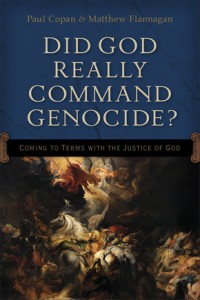 A common objection to belief in the God of the Bible is that a good, kind, and loving deity would never command the wholesale slaughter of nations. In the tradition of his popular Is God a Moral Monster?, Paul Copan teams up with Matthew Flannagan to tackle some of the most confusing and uncomfortable passages of Scripture. Together they help the Christian and nonbeliever alike understand the biblical, theological, philosophical, and ethical implications of Old Testament warfare passages.