Category: Divine Command Theory

  • New publication Online: “Can a Divine Command Theory Vindicate the Objectivity of Morality?”

    My paper, “Can a Divine Command Theory Vindicate the Objectivity of Morality?” was published in Philosophia Christi, vol 21. No 1 2025. A copy is now available  online at my academia.edu page. The abstract is below.

    Abstract:
    Defenders of divine command metaethics (DCM) often argue that one of its key advantages is its ability to vindicate the objectivity of moral judgments. Critics, however, contend that DCM is a subjectivist theory and therefore inherits the difficulties such theories face in accounting for the apparently objectivist features of moral thought. In this paper, I examine and critique three prominent versions of this objection: David Brink’s appeal to appraiser independence, Elizabeth Tropman’s appeal to stance independence, and Michael Huemer’s concept of observer independence. I argue that none of these criticisms succeeds.

  • Sinnott-Armstrong on God, Secularism and “reasons” to be moral. Part Three: Can Religious theories answer the question, “Why be moral?”

    In a previous post, I observed that Walter Sinnott-Armstrong concedes that secular accounts of moral obligation cannot vindicate the thesis that agents always have decisive (all-things-considered) reasons to avoid wrongdoing. To mitigate this problem, he argues:

    Is this limitation a problem for secular accounts of morality? I doubt that, too. If we demand this extreme kind of reason to be moral, then we are bound to be disappointed. The solution to our disappointment is to give up this demand, not to imagine a higher power that we want to fulfill an illegitimate demand. Besides, this limit on secular theories would be a problem only if the alternative religious account could provide a better reason to be moral. It can’t. That is what I will show in the next section.[1]

    There are three ideas here. First is the claim that the failure to vindicate this assumption is a problem for secular theories only if religious theories can adequately vindicate it. Second is the claim that religious theories cannot vindicate this assumption. Third, he claims that the assumption itself cannot be adequately vindicated.

    I want to focus on the last two of these claims.

    Can religious theories adequately vindicate this assumption?

    Sinnott-Armstrong argues that religious theories cannot adequately vindicate the thesis that agents always have decisive reasons to avoid wrongdoing. His argument involves two steps.

    First, he argues that any adequate theory of moral requirements must not only vindicate the assumption that agents have reasons to do what is right, but that those reasons must be of the right kind—they cannot be arbitrary. He illustrates this point with two examples.

    Imagine that “the King of Curls threatens to kill all of his subjects who do not shave their heads on May 21, though there is nothing special about that date.”[2] Do we have a reason to shave our heads? Yes—the threat of death gives us a reason to comply. However, this reason is arbitrary; it is based on naked force and bears no relation to the content of the command.

    Similarly, a mother is trying to teach her son to stop hitting his sister. She can do this in two ways: she can convince him that harming his sister is wrong, or she can simply threaten him with punishment if he doesn’t comply. The second approach gives the son a reason not to hit his sister, but it is the wrong kind of reason—it is arbitrary, based on force, and doesn’t teach him to care about his sister.[3]

    His second step is to argue that religious theories fail to provide the right kind of reasons for refraining from wrongdoing. They are arbitrary in the same way. His reasoning is as follows:

    Divine threats of Hell or promises of Heaven operate in the same way. If our only reason to be moral is to avoid Hell or get to Heaven, then our motivation is far from ideal. Even a total psychopath, who cares about nobody else but believes in Hell, would have this reason to be moral. But this reason would not give the psychopath any reason for the content of the moral restrictions themselves. The psychopath would still see moral restrictions as just as arbitrary as a law requiring him to shave his head on May 21.[4]

    The key premise here is that if God exists, the only reason we could have for following His commands would be to either get to Heaven or avoid Hell.

    But why think this? Sinnott-Armstrong doesn’t say.

    Earlier in the same chapter, he had rejected the idea that all interests are self-interested. He wrote: “Many reasons are not based on self-interest. That should be common ground between theists and [atheists].”[5] Later, he states:

    The fact that an act prevents harm to another person can be a reason for me to do that act. The fact that an act causes harm to another person can be a reason for me not to do that act. These facts are reasons, even if the other people are strangers. Crucially, these reasons are not self-interesting. They are facts about the interests of other people, not me.[6]

    So, Sinnott-Armstrong accepts that—even if theism is true—there can be non-selfish reasons for acting. But if that’s correct, why assume that the only reason an agent could have for obeying God is a selfish one? Why couldn’t agents also have non-selfish reasons to obey God?

    Remember the theist whom Sinnott-Armstrong is criticising. This theist understands God to have certain attributes: God is all-powerful, all-knowing, essentially benevolent, and impartial. So what God commands is co-extensive with prescriptions that a benevolent, impartial person would endorse—if that person were fully informed and reasoning correctly. It is quite plausible that agents would have unselfish reasons to follow such prescriptions. In fact, it is hard to see how Armstrong can say that we have unselfish reasons to do acts that benefit others, but no unselfish reasons to obey prescriptions that are justified from a perspective that aims to benefit others.

    Here we need to recall the challenge to secular ethics and how theism is purported to solve it. The challenge is this: Suppose we are not accountable to God. In that case, certain kinds of practical dilemmas will occur. Requirements that are justified from an impartial point of view—ones that promote the interests of others—will sometimes conflict with an agent’s long-term self-interest. Unselfish reasons will point one way, prudential reasons the other. If such dilemmas occur, we face a question: What reason is there to act unselfishly rather than in one’s self-interest? What reason do we have for always giving precedence to impartial demands in such cases?

    It is the inability of secular ethics to address this question that is the alleged problem.

    If we are accountable to God, this problem is avoided because such dilemmas never occur. Rewards and punishments change the balance of reasons for and against the act. However, they do so not by changing or negating the strength of the unselfish reasons against the act—they change the balance of prudential reasons in favour of the act. Because God is impartial and benevolent, we will still have the same kind of unselfish reasons—of the sort Sinnott-Armstrong refers to—to obey God’s commands. However, these reasons will never be matched or overridden by prudential demands to the contrary. Instead, prudential reasons will support and reinforce them.

    Can the assumption be adequately vindicated?

    Let’s turn to Sinnott-Armstrong’s second claim: that the thesis that agents always have decisive (all-things-considered) reasons to avoid wrongdoing cannot be adequately vindicated. He proposes the following dilemma:

    Different audiences react to this point in different ways. Some people really want a reason to be moral that will motivate psychopaths, even if it is not connected to any reason why certain acts are immoral. They are rightly scared of psychopaths, so they want a reason that will convince psychopaths to be moral. Other people want a reason to be moral that does not leave morality arbitrary, because the reason to be moral shows why those moral acts are moral. They want a moral reason rather than a selfish reason. I share the latter goal, but I can appreciate the former wish. Unfortunately, I doubt that the former wish can be fulfilled. No reason will succeed in convincing everyone to be moral. This is another obvious but hard fact of life that we need to learn to live with.[7]

    The proposed dilemma appears to be this: no meta-ethical theory can both vindicate the assumption that agents always have decisive reasons to refrain from wrongdoing and identify reasons of the correct type. If a meta-ethical theory entails that agents always have decisive reasons to be moral, the reasons it cites will be arbitrary or of the wrong kind. If we are to identify a fact that provides reasons for all people—including egoists and amoral individuals—it will need to appeal to something like self-interest; and self-interested reasons are the wrong kind of reason. By contrast, if a theory provides reasons of the right kind, it will fail to provide a reason strong enough or universal enough to ensure agents always have decisive reasons to be moral. The right kind of reasons are unselfish reasons, but these will not provide everyone—including egoists and psychopaths—with reasons to be moral, nor will they always be strong enough to override prudential or instrumental reasons to the contrary.

    Here, I think Sinnott-Armstrong relies on a false dichotomy. He assumes a meta-ethical theory must either appeal to selfish reasons to be moral or to unselfish reasons. However, his interlocutor’s point is that this is a false choice. If a divine command theory is correct, then what is in our long-term interest and what is justified from an impartial point of view coincide. So we have both types of reason at the same time. They are never in conflict.

    It is always in our interest to obey God and never in our interest to disobey—things such as eternal life are at stake. For this reason, there are strong self-interested reasons to be moral that are never overridden. These reasons provide even an egoist or a psychopath with reasons to comply.

    Because God is impartial and benevolent, we also have very strong unselfish reasons to be moral. What God commands us to do is what a fully informed, rational, impartial, benevolent person would command. The commands He gives are prescriptions justified from a perspective that equally considers the interests of all. These are reasons of the right kind.


    [1] Walter Sinnott Armstrong, Morality Without God 118

    [2] Walter Sinnott Armstrong, Morality Without God 95 (ebook)

    [3] Ibid, 96

    [4] Ibid

    [5] Ibid, 93

    [6] Ibid, 94

    [7] Ibid, 96

  • Sinnott-Armstrong on God, Secularism and “reasons” to be moral. Part One:

    In his book Morality Without God, Walter Sinnott-Armstrong argues that a secular account of the nature of moral properties—namely, that wrongness is constituted by the property of harming others—is preferable to a theistic account, in which wrongness is identified with the property of being contrary to God’s commands

    Chapter 6 is entitled “Why be moral?”
    In this chapter, Sinnott-Armstrong attempts to rebut the idea that secular meta-ethical theories—such as the one he proposes—cannot provide an adequate answer to this question.

    Sinnott-Armstrong begins his discussion by citing an argument that purports to show that secular accounts of morality cannot answer the question: why be moral? He summarises the argument as follows:

    “Harming others is sometimes in some people’s best interest, even considering probable costs. In those cases, some theists say that only a divine threat of Hell provides a reason to be moral. Since atheists and agnostics do not believe in God, they do not believe in divine retribution for sins, so they have to admit that sometimes some people could get away with immorality and then they have no self-interested reason to be moral. Does that mean that these people have no reason at all to be moral?”[1]

    He responds to this argument as follows:

    No. That conclusion would follow only if every reason had to be self-interested, selfish, or egoistic. There is no basis for that assumption. Many reasons are not based on self-interest. That should be common ground between theists and atheists… The fact that an act prevents harm to another person can be a reason for me to do that act. The fact that an act causes harm to another person can be a reason for me not to do that act. These facts are reasons, even if the other people are strangers. Crucially, these reasons are not self-interesting. They are facts about the interests of other people, not me. These unselfish reasons can answer the question, “Why be moral?”[2]

    There are some infelicities in the way this argument is described and set up. Sinnott-Armstrong’s version of the argument relies solely on the appeal to fear of Hell and divine retribution. He doesn’t, for example, couch the argument in terms of hope of eternal life. Moreover, in the paragraphs leading up to this one, he gives a sarcastic, literalistic reading of the Book of Revelation on the topic of Hell. These all rhetorically prime negative reactions in the reader; they also border on crude caricature.

    However, in this post and in future ones, I will focus on what I take to be the main thrust of Sinnott-Armstrong’s response to this argument. Sinnott-Armstrong makes three points. First, he argues that this argument is only sound if one assumes that “every reason” is “self-interested.” Second, he argues that this assumption is false. It should be granted by both theists and non-theists that there are “unselfish reasons” based on the fact that an action will “harm” (or benefit) other people. Third, he contends these unselfish reasons can answer the question of why they are moral.

    Does the argument assume that all reasons are selfish?

    Let’s look at the first point: does this argument assume that all reasons are selfish? That depends on how one interprets the phrase “reasons to be moral” and the rhetorical question “Why be moral?”

    When we talk of “reasons” to act, we can mean one of two things. Sometimes the word “reason” functions as a mass noun, referring to what we have decisive reasons to do—what we have reasons to do all things considered, when we consider everything that counts in favour of an action and against it. Alternatively, the word “reason” can function as a count noun, referring to what we have a pro tanto reason to do—what we have reason to do all else being equal. Here we ask whether there is anything that by itself counts in favour of the action.[3]

    An illustrative example: It is a rainy day, and I have to walk fifteen minutes outside to the bus. The fact I will get wet if I don’t take an umbrella is a pro tanto reason to take an umbrella. The fact that carrying an umbrella is cumbersome is a pro tanto reason against it. When I consider all the relevant factors—the burden of carrying the umbrella and the prospect of getting wet—I conclude that I have decisive, all-things-considered reasons to carry it.[4]

    Sinnott-Armstrong’s interlocutor asks: if we are not accountable to God for our actions, and harming someone promotes our long-term self-interest, what reason do we have to refrain from doing harm? He could mean two things:
    (a) He could be asking whether, in the given circumstances, we have a pro tanto reason to refrain from harm; or
    (b) He could be asking whether, in those circumstances, we have decisive reasons not to harm.

    If he means (a), then Sinnott-Armstrong’s criticism seems on point. The interlocutor is assuming that all reasons are selfish. He is saying that if it is not in our self-interest to avoid harming others, then there is no consideration of any sort at all against harming them. This follows only if all reasons are selfish.

    I suspect that this is how Sinnott-Armstrong interprets the argument in question. The problem is that this is a very idiosyncratic understanding of the question “Why be moral?” Normally, in philosophical discussions, this is not what is meant by the question.[5]

    Consider what  Sinnott-Armstrong himself writes in his Stanford Encyclopedia of Philosophy article on moral skepticism. He writes about a form of skepticism known as “practical skepticism,” which asks the question:

    “Why be moral?” This question is used to raise many different issues. Almost everyone admits that there is sometimes some kind of reason to be moral. However, many philosophers deny various universal claims, including the claims that there is always some reason to be moral, that there is always a distinctively moral reason to be moral, and/or that there is always enough reason to make it irrational not to be moral or at least not irrational to be moral…
    Practical moral skeptics usually deny that there is always enough reason for moral action.[6]

    In a supplementary paper, he explains:

    What such practical moral skeptics deny is that I always have reason to do what is morally required… Practical moral skeptics do not deny that there is sometimes reason not to do what is morally wrong. After all, some wrongdoers are caught and punished. However, practical moral skeptics can still deny that there is always reason to do what is morally required or to avoid what is morally wrong.
    How much reason? Some practical moral skeptics claim that sometimes there is no reason at all to do what is morally required. If all reasons are self-interested, this means that sometimes doing what is morally required does not serve the agent’s interest in any way. That extreme position would be refuted if doing what is morally wrong always creates even a slight risk of some negative repercussion. A more plausible and common version of practical moral skepticism denies, instead, that there is always an adequate (or non-overridden) reason to do what is morally required. To establish this position, practical moral skeptics need only one case where there is overriding reason not to do what is morally required. (emphasis mine)[7]

    So, according to Sinnott-Armstrong himself, if we interpret the rhetorical question “Why be moral?” charitably—in a way that reflects how the question is commonly used—it is not a denial that agents lack any pro tanto reasons to do what they are required to do. Instead, the interlocutor is challenging the idea that agents always have decisive reasons to refrain from harm when doing so is contrary to their self-interest.

    Suppose we interpret Sinnott-Armstrong’s interlocutor in terms of (b). In that case, he is arguing as follows: if there are cases where harming another is in our self-interest, then we will not always have all-things-considered reasons to refrain from harm. This argument does not assume that all reasons are selfish. Even if there are unselfish reasons based on the fact an action harms others, these reasons will not always be stronger or weightier than the selfish reasons we have to the contrary. One can accept that we have a pro tanto reason to do an action and also admit that when one considers everything that is relevant—for and against—the total balance of reasons does not support it.

    We can conclude our discussion as follows: Sinnott-Armstrong’s claim—that his interlocutor’s argument rests on a false assumption, namely that all reasons are selfish—is true if one interprets the question “Why be moral?” in an idiosyncratic and uncharitable way, contrary to how the question is typically used. However, if the question is interpreted charitably, in line with its usual philosophical usage, then  Sinnott-Armstrong’s claim is false.


    [1] Walter Sinnott-Armstrong, Morality Without God (Oxford: Oxford University Press, 2009). 114

    [2] Walter Sinnott-Armstrong, Morality Without God 117

    [3] See Stephen Darwall, “What Are Moral Reasons?” The Amherst Lecture in Philosophy 12 (2017): 2. Available at https://www.law.nyu.edu/sites/default/files/What%20Are%20moral%20reasons.pdf accessed 28 August 2025

    [4] See Stephen Darwall, “What Are Moral Reasons?” 2-3

    [5] This point is made by Mark Murphy’s review, Morality Without God, available at https://ndpr.nd.edu/reviews/morality-s-without-god-s/ accessed 28 August 2025

    [6] Walter Sinnott Armstrong, Moral Skepticism, available at https://plato.stanford.edu/entries/skepticism-moral/index.html accessed 28 August 2025

    [7] Walter Sinnott Armstrong, Practical Moral Skepticism, available at https://plato.stanford.edu/entries/skepticism-moral/supplement.html accessed 28 August 2025
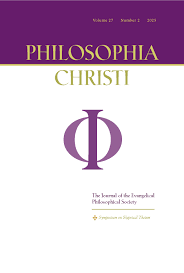
  • New publication: “Can a Divine Command Theory Vindicate the Objectivity of Morality?”


    My paper, “Can a Divine Command Theory Vindicate the Objectivity of Morality?” has been published in the latest issue of Philosophia Christi.

    Abstract:
    Defenders of divine command metaethics (DCM) often argue that one of its key advantages is its ability to vindicate the objectivity of moral judgments. Critics, however, contend that DCM is a subjectivist theory and therefore inherits the difficulties such theories face in accounting for the apparently objectivist features of moral thought. In this paper, I examine and critique three prominent versions of this objection: David Brink’s appeal to appraiser independence, Elizabeth Tropman’s appeal to stance independence, and Michael Huemer’s concept of observer independence. I argue that none of these criticisms succeeds.

  • Published: Theological Utilitarianism, Supervenience, and Intrinsic Value

    My paper, “Theological Utilitarianism, Supervenience, and Intrinsic Value” has been published in a special issue of Religions, devoted to the topic God and Ethics. The abstract is as follows:

    Erik Wielenberg has argued that robust realism can account for the “common-sense moral belief” that “some things distinct from God are intrinsically good”. By contrast, theological stateism cannot account for this belief. Hence, robust realism has a theoretical advantage over all forms of theological stateism. This article criticizes Wielenberg’s argument. Wielenberg distinguishes between R and D-supervenience. The coherence of Wielenberg’s robust realism depends upon this distinction. I argue that this distinction undermines his critique of theological stateism. I will make three points. First, once you utilize the distinction between R and D-supervenience, his argument for the incompatibility of theological stateism and intrinsic value fails. Second, theological stateism is compatible with intrinsic value. The historical example of theological utilitarianism, expounded by thinkers George Berkeley and William Paley, shows someone can accept that moral properties simultaneously R supervene upon God’s will and D supervene upon the natural properties of actions. Third, robust realism and theological stateism are in the same boat regarding intrinsic value once we distinguish between R and D-supervenience.

  • Is Theism Incompatible with the Pauline Principle? Comments on James Sterba’s Argument from Evil

    My paper, “Is Theism Incompatible with the Pauline Principle?” has been published in a special issue of Religions, devoted to the topic Do We Now Have A Logical Argument From Evil? The abstract is as follows:


    This paper criticises James Sterba’s use of the Pauline principle to formulate a logical version of the problem of evil. Sterba’s argument contains a crucial premise: If human agents are always prohibited from doing some action, God is also prohibited from doing that action. This implies that the Pauline principle applies to both Divine and human agents. I argue that any Theist who affirms a divine command theory of ethics can consistently and coherently deny this premise and its implication. If a divine command theory is coherent, a theist can affirm that the Pauline principle governs human agents’ actions but not God’s actions. I will also criticise Sterba’s criticisms of a divine command theory and argue that they fail.


    Enjoy.

  • Thinking Matters Talk: Does Morality Need God? Part Three:


    This year the New Zealand apologetics organization Thinking Matters ran a “Confident Christianity Conference” in Auckland. I was asked to speak at this conference on the topic. Does Morality Need God? Below is a slightly streamlined version of the talk I gave.

    This brings me to my second contention: If God exists, a divine command theory would provide a coherent account of our fundamental assumptions about moral requirements.

    I outlined four assumptions about the kind of requirements morality imposes upon us. These were

    1. Inescapability: moral requirements apply to us irrespective of whether following them contributes to any ends or aims we currently desire.
    2. Impartiality: moral requirements are justified from an impartial perspective.
    3. Authority: agents always have conclusive reasons to do what is morally required and never have sufficiently good reasons for doing what is morally wrong.
    4. Accountability: if something is morally required, we are guilty and liable to blame if we fail to do it and lack an adequate excuse.  

    I will make three points.

    First, If God exists, the assumption that wrongness is identical to the property of being contrary to God’s command would coherently account for all these assumptions. Consider the fact that moral requirements are “inescapable.” If God commands someone to do something, this command is addressed to them, regardless of whether it contributes to any ends or aims they currently desire. So, the imperative in question is inescapable.  Similarly, consider the impartiality of moral requirements. God is an all-powerful, all-knowing, essentially benevolent, and impartial agent. So what God commands is co-extensive with prescriptions that a benevolent, impartial person who was fully informed and reasoning correctly would endorse.  A command is also a paradigmatic example of a prescription that involves a demand for which we hold people accountable through standard practices such as blaming. That is how a command differs from other prescriptions, such as a piece of advice or a suggestion. So, if the property of being morally required is identical to the property of being commanded by God,  we would expect it to be true that we are accountable to moral requirements.

    Second, if God exists, the thesis that wrongness is identical to the property of being contrary to God’s command would vindicate the assumption that it is always in our long-term self-interest to follow impartial demands. A divine command theory entails that moral requirements are what we are accountable to God for doing. Unlike human beings, God’s commands are co-extensive with what is demanded from an impartial point of view, and people can never violate these norms secretly without being detected.  

    Third,  all attempts to refute a divine command theory have failed. It’s widely claimed that divine command theories were refuted by an argument called “The Euthyphro Objection.” This objection is named after a dialogue written by the ancient Greek philosopher Plato in the 4th century BC. Plato’s original argument is somewhat obscure and applied only to polytheistic religions (those religions that believe in many gods). However, the version used by philosophers today is an adaptation of Plato’s argument for use against monotheistic faiths. Critics of divine command theories appeal to three arguments loosely associated with Plato’s dialogue. These are (1) the anything goes objection, (2) the arbitrariness objection, and (3) the vacuity objection. I will address each of these briefly in turn.

    The Anything Goes Objection

    One objection is that a divine command theory makes morality arbitrary because anything at all could be right or wrong. King and Garcia explain the alleged problem in this way:

    [Divine command theory] implies that it is possible for any kind of action, such as rape, not to be wrong. But it seems intuitively impossible for rape not to be wrong. So [Divine command theory] is at odds with our common-sense intuitions about rape.[1]

    This objection assumes it is possible for God to command rape. Divine command theorists contest this assumption. They do not contend that moral requirements depend on the commands of just anyone. They base moral obligations on the commands of God conceived in a particular way. God is an all-powerful, all-knowing, essentially loving, just, immaterial person who created the universe on their conception. Given this, the claim that God could command people to perform a horrendous act like rape holds only if it’s possible for an all-knowing, loving, and impartial person to command rape. This is unlikely. The reason critics use examples like rape is that they view them as actions that no virtuous person could ever knowingly entertain. However, suppose, for the sake of argument, it is possible for a just and loving, omniscient person to command rape. Rape would only be commanded in situations where a just and loving person, aware of all the relevant facts, could endorse it– and under these circumstances, it’s hard to see how one could take for granted it was morally wrong.

     Arbitrariness

    A pervasive objection is that divine command theories make morality arbitrary because that nothing is right or wrong prior to God’s command; God can have no reasons for issuing one set of commands instead of another. Oppy explains the objection.

    Could it have been, for example, that murder, rape, lying, stealing, and cheating were good because God proclaimed them so? Surely not! But what could explain God’s inability to bring it about that murder, rape, lying, stealing and cheating are good by proclaiming them so, other than its being the case that murder, rape, lying, stealing, and cheating are wrong quite apart from any proclamations that God might make?[2]

    However, this is implausible. Suppose God has character traits such as being essentially loving and impartial. In that case, God can and would have reasons for prohibiting actions like rape, murder, or cheating, quite apart from whether these actions are antecedently wrong. Antecedent to any command on God’s part, these actions won’t have the property of being morally prohibited. But they could still have other properties such as being cruel or harmful or unjust or detrimental to human happiness— or being expressions of hatred, for example. And a loving and impartial God could prohibit these actions because these actions have these non-moral properties.

    Divine command theories do not entail that morality is arbitrary. If anything, the opposite is the case. A divine command theory entails that actions will be wrong in virtue of certain non-moral properties those actions have. Non-moral properties would provide an informed, loving, and impartial person with reasons to prohibit those actions.

     Vacuity Objection

    A third objection is that divine command theories entail that the doctrine of the goodness of God is rendered vacuous. Someone can only be morally perfect if he has duties and acts in accordance with them. But, seeing God does not issue commands to himself, a divine command theory entails that God has no obligations. Consequently, God cannot be God.

    This objection assumes that God’s goodness should be explicated in terms of God faithfully discharging his duties. But there is no reason why we must understand God’s goodness in this way. In Christian creeds like the Westminster Confession, God’s goodness is understood as possessing certain character traits, such as being loving, impartial gracious, merciful, long-suffering, truthful, forgiving, etc. If God’s commanding an action makes it required, God cannot have an obligation to do these things; that does not mean God does not do them. God does not have to have a duty to do something in order to do it.

    To recap: unless we assume that prudential and impartial commands never conflict, we cannot account for our fundamental intuitions about morality. Second, secular accounts of the kind of accountability we have to morality undermine this assumption. Fourth, a divine command theory would, if true, both vindicate this assumption and coherently account for our fundamental assumptions about morality.  Finally, standard objections against a divine command theory fail. The conclusion is this. If we assume God exists, a divine command theory can coherently and defensibly account for these fundamental assumptions in a way a secular theory cannot.


    [1] Nathan L King, “Introduction”, in Is Goodness without God Good Enough: A Debate on Faith, Secularism and Ethics, eds. Robert K Garcia and Nathan L King (Lanham: Rowan & Littlefield Publishers, 2008), 11.

    [2]  Graham. Oppy, Best Argument against God (Hampshire: Palgrave Pivot, 2014), 44.