Tag: Plato

  • Thinking Matters Talk: Does Morality Need God? Part Three:


    This year the New Zealand apologetics organization Thinking Matters ran a “Confident Christianity Conference” in Auckland. I was asked to speak at this conference on the topic. Does Morality Need God? Below is a slightly streamlined version of the talk I gave.

    This brings me to my second contention: If God exists, a divine command theory would provide a coherent account of our fundamental assumptions about moral requirements.

    I outlined four assumptions about the kind of requirements morality imposes upon us. These were

    1. Inescapability: moral requirements apply to us irrespective of whether following them contributes to any ends or aims we currently desire.
    2. Impartiality: moral requirements are justified from an impartial perspective.
    3. Authority: agents always have conclusive reasons to do what is morally required and never have sufficiently good reasons for doing what is morally wrong.
    4. Accountability: if something is morally required, we are guilty and liable to blame if we fail to do it and lack an adequate excuse.  

    I will make three points.

    First, If God exists, the assumption that wrongness is identical to the property of being contrary to God’s command would coherently account for all these assumptions. Consider the fact that moral requirements are “inescapable.” If God commands someone to do something, this command is addressed to them, regardless of whether it contributes to any ends or aims they currently desire. So, the imperative in question is inescapable.  Similarly, consider the impartiality of moral requirements. God is an all-powerful, all-knowing, essentially benevolent, and impartial agent. So what God commands is co-extensive with prescriptions that a benevolent, impartial person who was fully informed and reasoning correctly would endorse.  A command is also a paradigmatic example of a prescription that involves a demand for which we hold people accountable through standard practices such as blaming. That is how a command differs from other prescriptions, such as a piece of advice or a suggestion. So, if the property of being morally required is identical to the property of being commanded by God,  we would expect it to be true that we are accountable to moral requirements.

    Second, if God exists, the thesis that wrongness is identical to the property of being contrary to God’s command would vindicate the assumption that it is always in our long-term self-interest to follow impartial demands. A divine command theory entails that moral requirements are what we are accountable to God for doing. Unlike human beings, God’s commands are co-extensive with what is demanded from an impartial point of view, and people can never violate these norms secretly without being detected.  

    Third,  all attempts to refute a divine command theory have failed. It’s widely claimed that divine command theories were refuted by an argument called “The Euthyphro Objection.” This objection is named after a dialogue written by the ancient Greek philosopher Plato in the 4th century BC. Plato’s original argument is somewhat obscure and applied only to polytheistic religions (those religions that believe in many gods). However, the version used by philosophers today is an adaptation of Plato’s argument for use against monotheistic faiths. Critics of divine command theories appeal to three arguments loosely associated with Plato’s dialogue. These are (1) the anything goes objection, (2) the arbitrariness objection, and (3) the vacuity objection. I will address each of these briefly in turn.

    The Anything Goes Objection

    One objection is that a divine command theory makes morality arbitrary because anything at all could be right or wrong. King and Garcia explain the alleged problem in this way:

    [Divine command theory] implies that it is possible for any kind of action, such as rape, not to be wrong. But it seems intuitively impossible for rape not to be wrong. So [Divine command theory] is at odds with our common-sense intuitions about rape.[1]

    This objection assumes it is possible for God to command rape. Divine command theorists contest this assumption. They do not contend that moral requirements depend on the commands of just anyone. They base moral obligations on the commands of God conceived in a particular way. God is an all-powerful, all-knowing, essentially loving, just, immaterial person who created the universe on their conception. Given this, the claim that God could command people to perform a horrendous act like rape holds only if it’s possible for an all-knowing, loving, and impartial person to command rape. This is unlikely. The reason critics use examples like rape is that they view them as actions that no virtuous person could ever knowingly entertain. However, suppose, for the sake of argument, it is possible for a just and loving, omniscient person to command rape. Rape would only be commanded in situations where a just and loving person, aware of all the relevant facts, could endorse it– and under these circumstances, it’s hard to see how one could take for granted it was morally wrong.

     Arbitrariness

    A pervasive objection is that divine command theories make morality arbitrary because that nothing is right or wrong prior to God’s command; God can have no reasons for issuing one set of commands instead of another. Oppy explains the objection.

    Could it have been, for example, that murder, rape, lying, stealing, and cheating were good because God proclaimed them so? Surely not! But what could explain God’s inability to bring it about that murder, rape, lying, stealing and cheating are good by proclaiming them so, other than its being the case that murder, rape, lying, stealing, and cheating are wrong quite apart from any proclamations that God might make?[2]

    However, this is implausible. Suppose God has character traits such as being essentially loving and impartial. In that case, God can and would have reasons for prohibiting actions like rape, murder, or cheating, quite apart from whether these actions are antecedently wrong. Antecedent to any command on God’s part, these actions won’t have the property of being morally prohibited. But they could still have other properties such as being cruel or harmful or unjust or detrimental to human happiness— or being expressions of hatred, for example. And a loving and impartial God could prohibit these actions because these actions have these non-moral properties.

    Divine command theories do not entail that morality is arbitrary. If anything, the opposite is the case. A divine command theory entails that actions will be wrong in virtue of certain non-moral properties those actions have. Non-moral properties would provide an informed, loving, and impartial person with reasons to prohibit those actions.

     Vacuity Objection

    A third objection is that divine command theories entail that the doctrine of the goodness of God is rendered vacuous. Someone can only be morally perfect if he has duties and acts in accordance with them. But, seeing God does not issue commands to himself, a divine command theory entails that God has no obligations. Consequently, God cannot be God.

    This objection assumes that God’s goodness should be explicated in terms of God faithfully discharging his duties. But there is no reason why we must understand God’s goodness in this way. In Christian creeds like the Westminster Confession, God’s goodness is understood as possessing certain character traits, such as being loving, impartial gracious, merciful, long-suffering, truthful, forgiving, etc. If God’s commanding an action makes it required, God cannot have an obligation to do these things; that does not mean God does not do them. God does not have to have a duty to do something in order to do it.

    To recap: unless we assume that prudential and impartial commands never conflict, we cannot account for our fundamental intuitions about morality. Second, secular accounts of the kind of accountability we have to morality undermine this assumption. Fourth, a divine command theory would, if true, both vindicate this assumption and coherently account for our fundamental assumptions about morality.  Finally, standard objections against a divine command theory fail. The conclusion is this. If we assume God exists, a divine command theory can coherently and defensibly account for these fundamental assumptions in a way a secular theory cannot.


    [1] Nathan L King, “Introduction”, in Is Goodness without God Good Enough: A Debate on Faith, Secularism and Ethics, eds. Robert K Garcia and Nathan L King (Lanham: Rowan & Littlefield Publishers, 2008), 11.

    [2]  Graham. Oppy, Best Argument against God (Hampshire: Palgrave Pivot, 2014), 44.
  • Divine Command Theory and the Euthyphro Dilemma: Part II

    This is a talk I gave to the Philosophy Club at Glendale Community College in Phoenix, Arizona, this weekend. The talk was followed by a long discussion with some faculty, students at the college, and others who zoomed in.

     In this talk, I introduced and defended a divine command theory of ethics. The talk was divided into three parts. In section I, I set out what modern divine command theories of ethics typically contend. I distinguished this from some common misunderstandings in section II. In Section III, I discussed the Euthyphro dilemma. I will suggest this objection is not the conclusive rebuttal it is often assumed to be. In my first post, I reproduced sections I and II. This post will begin my discussion of the Euthyphro objection in section III. 

    In my last post, I argued that semantic and epistemic objections to a divine command theory fail. However, the most famous and important objection to divine command theories is an argument known as “The Euthyphro Objection”. After a dialogue written by the ancient Greek philosopher Plato in the 4th century BC. Plato’s original argument is somewhat obscure and applied only to polytheistic religions (those religions that believe in many gods). However, the version used by philosophers today is an adaptation of Plato’s argument for use against monotheistic faiths. Critics of divine command theories appeal to three arguments that are loosely associated with Plato’s dialogue. These are (1) the anything goes objection, (2) the arbitrariness objection, and (3) the vacuity objection. I will take each in turn.

    The Anything Goes Objection

    One objection is that a divine command theory makes morality arbitrary in the sense that anything at all could be right or wrong. King and Garcia explain the alleged problem in this way:

    [Divine command theory] implies that it is possible for any kind of action, such as rape, not to be wrong. But it seems intuitively impossible for rape not to be wrong. So [Divine command theory] is at odds with our common-sense intuitions about rape.[1]

    We can formalise the objection as follows:

    (P1) If the divine command theory is true, then whatever God commands is morally required.

    (P2) God could command rape.

    (C1) So, if the divine command theory is true, rape could be morally obligatory.

    (P3) But rape could not be morally obligatory.

    (C2) Therefore, the divine command theory is false.

    In response, divine command theorists have contested (P2) Divine command theorists do not contend that moral requirements are dependent upon the commands of just anyone. They base moral obligations on the commands of God conceived in a particular way. God is an all-powerful, all-knowing, essentially loving, just, immaterial person who created the universe on their conception. Once we realize this, the horrendous deeds objection appears to be unsound.

    We can put this in terms of a dilemma: consider (P2): (P2) only holds if it is possible for a fully informed, rational, loving and just person to knowingly command rape. However, this is unlikely. Critics cite examples of rape because they view it as an action that no virtuous person could ever knowingly entertain. So (P2) appears to be false. However, suppose; I am mistaken about this. It is possible for an essentially loving and just person to command rape. Rape, then, would only be commanded in situations where a just and loving person aware of all the relevant facts could endorse it. Under these circumstances, it is hard to see how (P3) could be maintained.

    Once we realize that God, as conceived by the divine command theorist, is essentially loving and just, it is difficult, if not impossible, to see how both (P2) and (P3) can be true. Whatever reasons we have for thinking (P2) is true seem to undermine (P3). By contrast, whatever reasons we have for accepting (P3) undermine (P2).


    [1]Nathan L King, “Introduction”, in Is Goodness without God Good Enough: A Debate on Faith, Secularism and Ethics, eds. Robert K Garcia and Nathan L King (Lanham: Rowan & Littlefield Publishers, 2008), 11.


  • Ethical Naturalism and the Euthyphro Dilemma

    Some people argue that moral obligations can be grounded in scientifically verifiable facts about human wellbeing and flourishing. This view is a form of ethical naturalism.  For these people moral rightness is just the property of promoting or enhancing human flourishing.

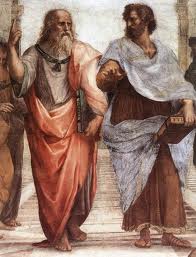
    Plato and Aristotle arguing in the School of Athens

    Plato refuted this argument over 2,000 years ago in his famous dialogue The Euthyphro. The Euthyphro argument is commonly appropriated in the form of a dilemma: “is an action right because it promotes human flourishing or does it promote human flourishing because it is right?

    If ethical naturalists take the second horn of this dilemma and claim that something promotes human flourishing because it is right then things are right prior to, and hence independently of, whether they promote human welfare; so the ethical naturalists’ position here is false.

    If the ethical naturalists take the former horn then morality is arbitrary. If rape or murder or cruelty for fun had the natural property of promoting happiness then rape and murder and cruelty for fun would be morally required but it is impossible for these things to be morally required; so ethical naturalism is clearly absurd.

    Moreover, if things are right because they have natural properties, like promoting human flourishing, then one cannot meaningfully say that human flourishing is good. To say “human flourishing”  is good is just to say that  “human flourishing is human flourishing,” which is just an empty tautology.

    So in short, Plato’s Euthyphro dilemma refuted ethical naturalism 2,000 years ago. Contemporary ethical naturalists who say otherwise just have not read Plato and have never come across this argument before.

    In any event, ethical naturalism is deeply problematic. Throughout history people have appealed to human flourishing and forms of ethical naturalism to justify atrocities. The Inquisition, for example, was often justified by Dominican Theologians on the basis that it was in accord with natural law, and natural law was understood to be grounded in human flourishing. Similarly, wars have been justified on the basis of moral theories based on human flourishing. Stalin and Lenin wanted to bring about human flourishing through a communist utopia and murdered millions in their pursuit of that. And the Americans dropped an atomic bomb on Japan because they wanted to promote the flourishing of American soldiers that were going to invade.

    Finally, it is obviously insulting to suggest that right and wrong are grounded in scientifically verifiable properties like this. There are a large number of people who live morally upright lives who do not believe in ethical naturalism. The suggestion that these people are all immoral is obviously false. Name me one moral action a person who is not an ethical naturalist cannot do? This unanswerable question shows that ethical naturalism is clearly false.

    RELATED POSTS: (more…)

  • Contra Mundum: Secular Smoke Screens and Plato’s Euthyphro

    In “Religion: A Barrier to Clear Thinking,” the final article in the award winning series of lay philosophy articles published in the Christchurch Press, Canterbury based Philosopher Simon Clarke addressed the question, “what is the biggest obstacle to thinking clearly about social and political issues?” Predictably he answered “Several answers suggested themselves but time and again I came back to the same thing: religion.” Clarke explained that “the fallacy of grounding morality upon religion was pointed out by Plato over two thousand years ago.” [1]

    Clarke was appealing to a famous argument that purports to show that ethics (what is right and wrong) is independent of religion. This argument is known by professional ethicists as “The Euthyphro Dilemma” or “Plato’s Euthyphro” and is named after a dialogue Plato wrote. The current version used against mono-theistic religions, such as Christianity, Islam and Judaism, is an adaptation (the original applied to poly-theistic religions, those religions that believe in many gods).

    The argument is usually framed in terms of a rhetorical question ‘are actions wrong because God prohibits them or does God prohibit them because they are wrong?’ As the question is framed, there are only two possible answers a person can offer.

    The first is to contend that actions are wrong because God prohibits them. This answer is said to suffer a debilitating problem, it makes morality arbitrary – anything at all could be deemed ‘right’ as long as God commanded it. Philosopher Michael Tooley has suggested this, “if God had commanded mankind to torture one another as much as possible, then it would follow that that action was obligatory. … many people, including many religious thinkers, are very unhappy with that consequence.” Therefore, the critics conclude, actions are not wrong just because God issues commands against them.

    The failure of the first answer means that the only possible way out is to claim that God prohibits actions because they are wrong; they are not wrong just because he prohibits them. This answer does not have the problems of the former. However, as Clarke points out, it entails that “there are independent standards for what we should do, independent that is of the dictates of religion.” Actions are wrong before God prohibits them. His commands simply tell us what is already wrong, quite independently of what he prohibits.

    This argument is something of a cliché in contemporary secular ethics and is found in almost every secular text book I have read (and will undoubtedly make its way into the Ethics section of the new NCEA Philosophy course). Typically “religious ethics” is mentioned and then dismissed with a short rendition of Plato’s Euthyphro. When I studied Philosophy Plato’s Euthyphro was one of the first things I was taught in first year Ethics. The lecturer spelled out the argument, contended that it showed “religious ethics” was mistaken/confused/ muddle-headed/whatever and from there would went on with the serious business of offering secular perspectives on topics such as abortion, affirmative action, euthanasia, homosexual rights and so on.

    Philosopher Peter Geach noted “In modern ethical treatises we find hardly any mention of God; and the idea that if there really is a God, his commandments might be morally relevant is wont to be dismissed by a short and simple argument that is generally regarded as irrefutable.” The short, simple argument he mentioned was, of course, Plato’s Euthyphro.

    Given this backdrop it is perhaps not so surprising that Clarke, after mentioning Plato’s argument, stated “… Plato’s pretty convincing demonstration has been ignored by the vast majority of people in the intervening millennia. Why are appeals to religion so common?”

    Despite the popularity of making claims like this, I still find them somewhat puzzling. Perhaps secular ethicists assume that theological ethicists have never read Plato or that, if they have, they have ignored him. In fact, the opposite is true. The last 40 years, in fact, has seen sustained defences of theological ethics including thorough refutations of Plato’s Euthyphro. These have been published in the philosophical literature at the highest levels – off the top of my head I can rattle off over 22 different articles and monographs which have offered rebuttals to Plato’s Euthyphro – yet secular ethicists and many textbooks blithely continue as though these answers had never been offered.

    I maintain that there is an answer to the Euthyphro dilemma, one that many have pointed out; it is to adopt the first of the answers I mentioned above, to contend that an action is wrong because God prohibits it. Contrary to popular claims, this option can succeed. The objections raised against it are not as debilitating as they are made out to be.

    The primary objection is that morality is made arbitrary; anything at all could be deemed ‘right’ as long as God commanded it – even atrocious commands. What is important to note here is that the objector assumes that it is possible that God could command atrocious things like ‘torturing people as much as possible.’ This assumption, however, seems very dubious. We need to remember that we are not taking about right or wrong as being based on the commands of just anyone, we are talking about these things being based on the commands of God. In the mono-theistic tradition that this line of argument seeks to criticise, God is typically defined as a being who is all knowing, all powerful, and is morally perfect.

    So, as the terms are defined, the claim that it is possible for God to command people to “torture one another as much as possible” is true only if it is possible for a morally perfect person to command such an atrocious thing. But this is unlikely. The very reason critics cite examples such as “torturing others as much as possible,” is because these actions are paradigms of conduct that no morally good person could ever entertain or endorse. The situation the critic envisages then is a situation which is impossible.

    Of course the critic could contend that he or she does not accept the existence of a being who is all knowing, all powerful, and is morally perfect. However, because those the critic is criticising do believe in such a being and also if the dismissal of theological ethics is to be based on an accurate understanding of what the various theological traditions actually believe and teach, and is not based on a caricature, then the sceptic must address what these traditions actually affirm.

    This answer typically generates a rejoinder. If some action is right or wrong because God permits or prohibits it then God cannot be said to be good in any meaningful sense. This answer renders the claim ‘God is good’ into no more than the claim that God obeys his own commands, if this is so, can God be said to have any duties at all?

    Philosopher William Lane Craig argues that “[duties] are not independent of God nor, plausibly, is God bound by moral duties, since He does not issue commands to Himself.” William Alston drew the same conclusion, “we can hardly suppose that God is obliged to love his creatures because he commands himself to do so!” William Wainwright suggests “the notion of commanding oneself to do something … is incoherent.”

    The rejoinder that, if God has no duties then he cannot be said to be good in any meaningful sense, has a grain of truth to it. If we are going to understand God’s goodness in terms of God having duties or obligations that he consistently fulfils then theological ethics, of the sort envisaged, has problems. However, it is not clear to me why the phrase ‘God is good’ should be explicated in terms of God having duties that He follows.

    Many theologians have suggested that one should not understand God’s goodness in this way. When God’s goodness is explicated in sacred texts like the Psalms or in official creedal statements such as the Westminster Confession of Faith it is often explicated in terms of God having certain character traits. To claim God is good is to claim that He is truthful, benevolent, loving, gracious, merciful, that He is opposed to certain actions such as adultery, murder and rape and so on. Now, even if God does not have duties, it does not follow that he cannot have character traits such as these. It is true that God may not be under any obligation to love others or to tell the truth or what have you, but that does not mean that He cannot love others or tell the truth. God does not have to have a duty to do something in order to do it.

    So there seems, on the face of it, nothing incoherent about contending that God is good, that he has certain attributes like being truthful, benevolent, loving and so on. It is not that theological ethicists have never read Plato or that they have ignored him – they have read him, found his arguments wanting and published responses explaining why – it is that some sceptics have never read the responses or they have chosen to ignore them.

    Perhaps these rebuttals do not work (though I think that they do) but even if I am wrong the onus is surely on the sceptic to demonstrate why. Simply ignoring them, misrepresenting the situation and then dismissing religion “as a barrier to clear thinking” is simply not good enough.


    [1] Clarke’s series “Clear Thinking” was awarded the Australasian Association of Philosophy Media prize in 2006.

    I write a monthly column for Investigate Magazine entitled Contra Mundum. This blog post was published in the March 10 issue and is reproduced here with permission. Contra Mundum is Latin for ‘against the world;’ the phrase is usually attributed to Athanasius who was exiled for defending Christian orthodoxy.

    Letters to the editor should be sent to: editorial@investigatemagazine.DELETE.com

    RELATED POSTS:
    Contra Mundum: What’s Wrong with Imposing your Beliefs onto Others?
    Contra Mundum: God, Proof and Faith
    Contra Mundum: “Bigoted Fundamentalist” as Orwellian Double-Speak
    Contra Mundum: The Flat-Earth Myth
    Contra Mundum: Confessions of an Anti-Choice Fanatic
    Contra Mundum: The Judgmental Jesus

  • Moral Issues and Direct Democracy

    I have been involved in a discussion over at MacDoctor Moments on various aspects of the abortion debate, though in this post I don’t want to talk about that issue. In the course of this discussion Chuck advocated for a policy of direct democracy to decide moral issues and it is this that I want to explore.

    Before addressing direct democracy I want to look at the term “moral issue.” Which issues are moral issues and which are not? What do people mean when they say this? Every piece of legislation is a moral issue to some extent. When legislators pass laws they have the power to restrict people’s freedoms or impose obligations and they have the state to back up these expectations with force for non-compliance. The question as to whether or not they should pass such laws is always a moral one because prima facie it is wrong to coerce others by force. Of course there may be instances were the state is justified in making a particular legislative move but to say that the state is justified is to make a moral claim.

    Those who refer to some issues as moral ones and others not, tacitly assume that unless one is talking about sex or something typically associated with moral conservatism the legislation the state passes is not moral. This is a very truncated view of what a person’s moral obligations are.

    Parliament has a standing practice of not using whips and allowing conscience votes on matters of “moral legislation.” There is something almost machiavellian about this because it suggests that governing is an a-moral exercise; that on most issues either an MP’s conscience has nothing to say or that an MP has no duty to do what is right but is rather obligatied to follow their peers. Proof positive that MP’s have a lot in common with teenagers.

    The arbitrary nature of this distinction can be seen in Chuck’s examples, he cites the “anti-smacking bill” and “abortion” as moral issues. However, why is smacking a moral issue and assault not? Why is abortion a moral issue and not homicide (or appendectomies if you are pro-abortion)?

    Consider taxation, surely one of the most fundamental issues of government. How is taxation not a moral issue? It involves appropriating other people’s property, oft obtained by hours and hours of work, by force. Moreover, taxation is often used to support the poor. Surely the method and means of supporting the poor is a moral question.

    Chucks reasoning in advocating for direct democracy involves a conflation between what is popular and what is just.

    I think it is outrageous that any militant group can force legislation that is opposed by 80% of the people whether it is to do with smacking or abortion.
    …
    If we had direct democracy on moral issues instead of allowing these issues to be determined by fanatical pressure groups we would have better law.

    …

    If they [MP’s] had a conscience they would support direct democracy and not be so arrogant.

    Note the assumption that if the majority support something then it is unjust for any government to pass a law contrary to it. This is clearly false. If the majority supported looting Asian stores on Thursdays the legislature would have an obligation to refuse to legalise this. The government owes a duty to protect the property and liberty of Asian store owners, even if they are a minority, even if the majority demand it. However, Chuck says that it is arrogant for people to suggest that the majority might be wrong.

    Now Chuck may seem like a colourful example who takes the whole concept slightly further than most but I think he is a good example of the inherent flaws in the binding referendum movement and his reasoning follows from their basic line of argument. Those who support binding referenda believe that if 51% of the population vote for something then the state is obligated to pass that directive into law. Further, the fact they want it binding is evidence that they think that any legislator who does not do what the majority wants is arrogant and above the people, they just don’t phrase it like Chuck but the assumption remains.

    However, the whole point of having a legislature is to ensure that justice prevails, not popularity or mob rule. The state has an obligation to protect the rights of all citizens, even unpopular minorities.

    Democracy has its problems but it remains the best option. As Wolff argued in his adaptation of Plato’s Republic (Plato was much more familiar with direct democracy than any of us are) if you had a medical problem you would consult someone with a degree of expertise in medicine, a doctor; you would not organise a vote on what the public think the appropriate diagnosis is. Likewise, why should those without a degree of expertise, the general populace, vote on matters of state when they are as ill informed about them as they are about medicine?

    Of course power corrupts and anyone in a position of power must be subject to checks and balances. The doctor has to answer to the medical council and is ultimately answerable to the Minister of Health. In the same way the MP has to answer to the public and the public has the power to vote them out of office. However, one must be careful to not confuse the right to participate in choosing who will govern with a right to choose which specific acts of government will be passed.