Critics of Christianity often ask how can a good and loving God command the extermination of the Canaanites as is taught the Old Testament? A clear assumption behind this question is that the Old Testament teaches that God did in fact command the extermination of the Canaanites, an assumption which is based on a straight-forward […]
Entries Tagged as 'Divine Command Theory'
Wolterstorff, the Canaanites and Hyperbole: A Response to Ken Pulliam
June 29th, 2010 47 Comments
Tags: Canaanites · Divine Command Theory · Genocide · Ken Pulliam · Nicholas Wolterstorff · Old Testament Ethics
Contra Mundum: Secular Smoke Screens and Plato’s Euthyphro
March 2nd, 2010 35 Comments
In “Religion: A Barrier to Clear Thinking,” the final article in the award winning series of lay philosophy articles published in the Christchurch Press, Canterbury based Philosopher Simon Clarke addressed the question, “what is the biggest obstacle to thinking clearly about social and political issues?” Predictably he answered “Several answers suggested themselves but time and […]
Tags: Contra Mundum · Euthyphro Dilemma · God and Morality · Investigate Magazine · Peter Geach · Plato · Simon Clarke · William Lane Craig
Van Inwagen, Divine Duties and the Deontological Argument from Evil
January 9th, 2010 1 Comment
In Tooley, Plantinga and the Deontological Argument from Evil Part I and Part II, I discussed Michael Tooley’s deontological argument from evil. In The Problem of Evil Peter Van Inwagen makes a reference to the type of argument I proposed. In this post I intend to make some critical commentary on Van Inwagen’s comments. Tooley […]
Tags: Divine Command Theory · Michael Tooley · Peter Van Inwagen · Problem of Evil
Walter Sinnott-Armstrong and Infantile Religious Morality
September 24th, 2009 71 Comments
In “Why Traditional Theism Cannot Provide an Adequate Foundation for Morality” Walter Sinnott Armstrong criticises William Lane Craig’s contention that theism, if true, provides an adequate foundation for morality. Armstrong contends that Craig’s position is “incredible”[1] and subject to a “cavalcade of devastating objections.”[2] He goes on to conclude that his criticisms do not just […]
Tags: Divine Command Theory · Ethics · God and Morality · Patrick Nowell Smith · Philosophy of Religion · Richard Mouw · Walter Sinnott-Armstrong
Tekton E-Book: John Loftus’ Why I Became an Atheist Refuted Feat. MandM
September 17th, 2009 5 Comments
Tekton Education and Apologetics ministries have released an online book, John Loftus’ Why I Became an Atheist Refuted, as a special edition for their E-Block Online Journal. While most of the book is authored by JP Holding, Chapter 2 is not completely, Chapter 2: “The Christian Illusion of Rational and Moral Superiority” — Two part […]
Tags: Divine Command Theory · E-Book · God and Morality · John Loftus · JP Holding · Tekton Apologetics Ministries
Walter Sinnott-Armstrong on God, Morality and Arbitrariness
July 17th, 2009 21 Comments
Is morality independent of religion? One common argument for this position is that denying it makes God’s commands arbitrary. Walter Sinnott-Armstrong argues, Let’s assume that God commanded us not to rape. Did God have any reason to command this? If not, his command was arbitrary, and then it can’t make anything morally wrong. On the […]
Tags: Atheist · Divine Command Theory · God and Morality · Philosophy of Religion · Walter Sinnott-Armstrong · William Wainwright
Tooley, Plantinga and the Deontological Argument from Evil Part II
May 27th, 2009 13 Comments
In my last post, Tooley, Plantinga and the Deontological Argument from Evil Part I, I sketched Tooley’s distinction between a deontological and an axiological argument from evil and argued that Tooley rejects the axiological version because it rests on controversial ethical claims that are likely to be rejected by many theists. I outlined Tooley’s deontological […]
Tags: Alvin Plantinga · Atheism · Divine Command Theory · Michael Tooley · Philosophy of Religion · Problem of Evil · William Alston

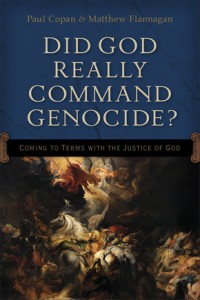 A common objection to belief in the God of the Bible is that a good, kind, and loving deity would never command the wholesale slaughter of nations. In the tradition of his popular Is God a Moral Monster?, Paul Copan teams up with Matthew Flannagan to tackle some of the most confusing and uncomfortable passages of Scripture. Together they help the Christian and nonbeliever alike understand the biblical, theological, philosophical, and ethical implications of Old Testament warfare passages.