Category: Divine Command Theory

  • God, Morality and Abhorrent Commands: Part I Kant

    In this three-part series I will look at some different ways of adjudicating conflicts between apparent divine commands and moral beliefs starting with Immanuel Kant.

    In “Commonsense Atheism and the Canaanite Massacre” I addressed a question put to me by Luke from Commonsense Atheism,

    “If Matt did think these events happened literally as described in the Bible, would he then conclude that God was an evil monster to command them? Or would he, in the end, agree with Bill Craig that genocide is okay as long as God feels like it?”

    In my response I pointed out Craig claims that killing non-combatants in war is permissible if a loving and just God commands it (which is an implication of a divine command theory). This conditional is arguably true. Either it is possible for a just and loving omniscient person to command genocide or it is not. If it is then genocide would only be commanded in situations where a just and loving person, aware of all the relevant facts, could endorse it; under these circumstances it is hard to see how genocide could be evil. On the other hand, if it is impossible for a just and loving omniscient person to ever command genocide then the situation Luke mentions is one with an impossible antecedent. On the standard accounts of counter-factual logic, conditionals with impossible antecedents are true. So far from being absurd there are reasons for thinking this conditional is true.

    The question Luke asks is really a species of a larger and important question in theological ethics. In Finite and Infinite Goods Robert Adams notes “A convincing defense of a divine command theory of the nature of obligation must address our darkest fear about God’s commands–the fear that God may command something evil.” Philip Quinn makes a similar point,

    “[I]t seems possible that a theist should have both good reasons for believing that God has commanded him to perform a certain action and good reasons for believing that it would be morally wrong for him to perform that action. Thus a theist can be confronted with moral dilemmas of a peculiar sort.”

    I suspect Luke is really asking how a theist can rationally respond to a dilemma of this sort. While I do not know what Luke’s opinion on this issue is, a common view is that if a theist has good reasons for believing an action is wrong then any claim that God has commanded should be rejected. The locus classicus for this position is Immanuel Kant; in Reason within the Bounds of Religion, Kant stated:

    “Abraham should have replied to this supposedly divine voice: “That I ought not kill my good son is quite certain. But that you, this apparition, are God — of that I am not certain, and never can be, not even is [read: if] this voice rings down to me from (visible) heaven.”

    Similarly, in the Conflict on the Faculties he states he states,

    “That to take a human being’s life because of his religious faith is wrong is certain, unless (to allow the most extreme possibility) a divine will, made known to the inquisitor in some extraordinary way, has decreed otherwise. But that God has ever manifested this awful will is a matter of historical documentation and never apodictically certain. After all, the revelation reached the inquisitor only through the intermediary of human beings and their interpretation, and even if it were to appear to him to have come from God himself (like the command issued to Abraham to slaughter his own son like a sheep), yet it is at least possible that on this point error has prevailed.”

    Kant, here, is discussing the kind of dilemma Quinn refers to. The dilemma can be spelled out as follows, in certain situations a theist might find him or herself with reason to affirm the following three propositions,

    [1] Whatever God commands is morally permissible;

    [2] God commands X;

    [3] It is wrong to do X.

    These three claims cannot all be true, so a rational person must reject one of them; the question is which one? Kant’s answer is that when faced with a dilemma of this sort the theist should reject [2].  It is worth elaborating on his position a bit.

    First, note that Kant accepts [1] he grants that if we knew that God commanded the killing of a particular human being, it would be permissible to kill that human being. Kant’s objection is that one cannot be rational in believing that God has, in fact, issued such a command. Philip Quinn notes that Kant’s argument involves an appeal to an epistemic principle: whenever two conflicting claims differ in epistemic status, the claim with the lower status is to be rejected.  Kant contends that moral claims such as “it is wrong to kill innocent people” are certain. However, claims that God commands or forbids a certain action are not certain and never can be. From these points it follows that a rational person will accept [3] and reject [2].

    Despite its appeal Kant’s argument is flawed for several reasons. Philip Quinn notes two problems. First, “Kant has an extremely optimistic view of our ability to attain epistemic certainty about principles of moral wrongness,” he thinks we can be certain of moral claims. This, however, is dubious. There are some moral claims of which I am fairly certain. I am certain, for example, that it is wrong to inflict as much pain on another as I can merely for my own entertainment. I am fairly certain that killing, assault, theft and lying are prima facie wrong and can only be justified if some overriding moral reason applies. However, many moral claims are highly controversial and are far from certain at all. Consider, for example, the debate over whether the bombing of Hiroshima was justified because it saved a huge number of lives by ending a war early. While I myself do not share this opinion, I would not say I am certain about it. Similarly, consider moral debates about capital punishment or euthanasia or affirmative action. While I believe there are defensible and justified answers to these questions, I doubt we can claim certainty about answers to these questions.

    Second, Kant claims that we can never be certain that God has prohibited a certain action. Quinn notes, “It would thus seem to be well within God’s power to communicate to us a sign that confers on the claim that God commands some intolerant behavior, for example, issuing threats to heretics, a fairly high epistemic status.” If God were to do this then we would have certainty that he had commanded the action. So it is not clear that beliefs about what God wills are always less certain than moral beliefs.

    I am inclined to push this criticism further. It seems to me that many sceptical worries that are raised about God and his commands apply with equal force to moral beliefs. Consider three common concerns sceptics raise about religion. One is the claim that the existence of God is not necessary to explain any empirical phenomena. The second is the concern that the claim God exists and has commanded a particular action cannot be empirically demonstrated or proven to exist. The third is the widespread pluralism with regard to both the existence of God and his nature. All three of these worries apply to moral beliefs. The existence of moral properties appears unnecessary to explain any empirical phenomena, almost any empirical phenomena can be explained equally well by accepting that moral beliefs are all false but that people think they are true. Attempts to prove that moral beliefs are true from non-moral premises alone are probably more controversial than any argument for the existence of God. And there is widespread pluralism over whether moral properties exist; nihilists and non-cognitivists deny such properties exist and amongst believers in the truth of moral beliefs, there is widespread disagreement over the nature of morality. Intuitionists contend it is a non-natural property, naturalists contend it is a natural property but disagree over what the natural property in question is, supernaturalists contend it is a divine command or a theological property and so on.

    In fact, Kant’s own argument provides an example of this point. Kant argues in The Conflict in the Faculties that we can never be certain that God has commanded an action because,

    “the revelation reached the inquisitor only through the intermediary of human beings and their interpretation, and even if it were to appear to him to have come from God himself (like the command issued to Abraham to slaughter his own son like a sheep), yet it is at least possible that on this point error has prevailed.”

    But this is equally true of many moral beliefs, a good amount of what people believe with regards to morality comes to them through the intermediary of human beings and their interpretation. Most westerners belief’s in liberal ideals, such as, the equality of women, opposition to slavery and so are mediated through human beings. Moreover, even if we directly intuit moral properties, it is possible that we are mistaken. Human moral intuitions and judgements are fallible and can err. So in many instances I am inclined to think that the sceptical worries people raise to conclude that theological beliefs are uncertain apply also to moral beliefs. To appeal to these concerns, so as to claim that belief about God’s will is less certain than moral beliefs, is to engage in special pleading.

    In my next post I will look at Robert Adams’ defence of Kant’s position and then I will look at Philip Quinn’s alternative.

    RELATED POSTS:
    God, Morality and Abhorrent Commands: Part II Robert Adams
    God, Morality and Abhorrent Commands: Part III Philip Quinn

  • Walter Sinnott-Armstrong and the Moral Scepticism Objection to Divine Commands

    In responding to William Lane Craig’s advocacy of a Divine Command Theory (DCT) Walter Sinnott-Armstrong makes the objection that,“The divine command theory makes morality unknowable.”

    He makes the following argument for this:

    To see why, consider whether or not it is immoral to eat pork. If the divine command theory is correct, we cannot answer this question simply by pointing out that eating pork causes harm to pigs or to us, unless we already know that God commanded us to avoid such harm. We also cannot know wether it is immoral to eat pork on the basis of other’s testimony or our own moral intuitions if we have no reason to think their testimony or our intuitions map onto divine commands, and we cannot have any such reason without knowing what God commanded. Thus, on Craig’s theory we cannot know what is morally wrong, if we cannot know what God commanded. Unfortunately, however we have no sound way to determine what God commanded.1

    Sinnott-Armstrong’s argument here is as follows:

    [1] If DCT is correct then we cannot know an action is wrong unless we know God prohibited it.

    [2] We have no sound way to determine what God has commanded or prohibited.

    From these it is concluded that

    [3] If DCT is correct we cannot know an action is wrong.

    In support of [1] he offers two premises,

    [1a] If DCT is correct then we cannot know an action a is wrong because it has property p, unless we know that God prohibits p

    [1b] If DCT is correct, then we cannot know an action a is wrong, on grounds g, unless we know that g “maps on to divine commands”.

    One serious problem with this argument is that [1] is false, as are the supporting premises [1a] and [1b]. According, to the DCT of Adams, Alston, and Evans, which Craig appropriates, the property of being wrong is constituted by the property of being contrary to Gods commands in the same way that the property of being water is constituted by the property of being H20. Sinnott-Armstrong thinks holding that moral duties are constituted by Gods commands, means, one cannot know if an action is wrong unless one knows it was forbidden by God. This seems to presuppose the following inference :

    I1: If A is constituted by B, then one cannot know if something is an A unless one knows it is a B.

    However, I1 is false. Consider the following counter example; water is constituted by H20. Yet people for thousands of years could perceive water, drink it, detect it, and use it etc without knowing anything about atomic theory. This example shows people can know something is an A (water), A can be constituted by something B (H20) and people not know A is a B.

    The same is true for [1a], the DCT claims that wrongness is constituted by God’s prohibition, Armstrong seems to think this means we cannot know if an action is wrong on the basis of some feature of that action unless we know that feature is prohibited by God. This seems to presuppose a similar inference

    I2: If A is constituted by B then we cannot know something is an A on the basis of it possessing p, unless we know that B has p.

    But again there are obvious counter examples to I2. Water is constituted by H20, if I2 is true it would follow one cannot tell that the cup of liquid I am drinking is water because of its taste unless I know that H20 tastes that way. But this is clearly false. Medieval men could recognize by taste a cup of water as well as any modern person despite not knowing anything about H20.

    [1b] faces similar difficulties, here Armstrong thinks, that if our duties are constituted by divine commands, this entails that we cannot know that an action is immoral on the basis of some ground, such as intuition or testimony, unless we have reasons for thinking that ground “maps onto divine commands”. But why think this? The argument seems to rely on the following inference

    I3. If A constitutes B, then one cannot know B exists on ground g, unless one has reason for thinking g reliably tracks A.

    But this is also false. Take the example I mentioned above. There are people do not know about atomic theory and yet know on the basis of perception that the glass in front of them contains water. These people do not need to have reasons for thinking that their eyesight tracts hydrogen and oxygen atoms before they can rationally trust their senses, they know about water quite independently of any knowledge about hydrogen or oxygen.

    So [1], [1a] and [1b] are all false. The error in each instance is the same, Armstrong assumes that the metaphysical claim that our duties are constituted by God’s commands entails that we cannot recognize or know whether an action is wrong unless we know what God commanded. This however is to conflate moral ontology with moral epistemology.

    Similar problems afflict Sinnott-Armstrong’s advocacy of [2] that “we have no sound way to determine what God commanded.” Immediately after making this claim Armstrong defends it by claiming the arguments from natural theology fail, he then states

    Theists often tell us what God commands, as if they knew, and the commands they ascribe to God are often (though not always) plausible. However, what makes us and them accept that God commands those actions rather than others is that we already and independently had a reason to think that certain acts are immoral. Assuming God is good, of course God would command us not to rape. But the only way we know God would issue that command is that we already know rape is wrong. There is no way to know what God does or would command without already knowing what is right or wrong.2

    Here Sinnott-Armstrong seems to contradict [2] when he contends that it’s plausible to claim God commands us not to rape and seems to countenance the conclusion that we can know what God would command on the basis of justified moral beliefs. But if this is true then [2] is false. Of course Sinnott-Armstrong contends such knowledge is dependent on moral beliefs and not revelation or natural theology. But, that is incompatible with [2], [2] does not state that we can’t know through revelation or natural theology it states we can’t gain such knowledge at all.

    Some of what Sinnott-Armstrong states here suggests he may have a different argument in mind. In “Morality: Religious and Secular”, Patrick Nowell-Smith refers to an argument that is “familiar to philosophers but of which the force is not always appreciated” which Smith contends refutes a divine command theory, the argument is:

    [We] must be persuaded independently of his goodness before we admit his right to command. We must judge for ourselves whether the Bible is the inspired word of a kind and benevolent God or a curious amalgam of profound wisdom and gross superstition. To judge this is to make a moral decision, so that in the end, so far from morality being based upon religion, religion is based upon morality.3

    James Cornman and Keith Lehrer have expressed essentially the same line of critique.4 I think this critique is based on a failure to make an important distinction. Take the claim that right and wrong is independent of God’s commands. This claim is ambiguous; it could mean (a), that ones knowledge of right and wrong is independent of ones knowledge of what God commands or (b), that right and wrong exist independently of God’s commands. The first claim states that beliefs about right and wrong are epistemologically independent of beliefs about divine commands. The second is that the existence of moral properties such as right and wrong are ontologically independent of God’s commands.

    Now the DCT denies (b). Divine command theorists claim that wrongness is constituted by the property of being contrary to God’s commands. Hence it postulates an ontological dependence between divine commands and moral properties such as wrongness. The arguments of Nowell-Smith above however do not refute this claim. If they show anything, they show not that (b) is the case but that (a) is the case. Nowell-Smith and Sinnott-Armstrong show that we can know what is right and wrong independently of knowing or believing in the existence of divine commands. Hence they show at most an epistemological independence.

    Showing that beliefs about right and wrong are epistemologically independent of beliefs about God’s commands does not show that right and wrong are ontologically independent of God’s commands unless epistemological independence entails ontological independence. The objector here assumes that if my knowledge of something does not depend upon my knowledge of something else then the two things can exist independently of each other.

    Again this assumption is false. The property of being water is constituted by the property of being H20; as such H20 and water are not ontologically independent. Yet, as noted, for thousands of years people could perceive water, drink it, detect it, and use it etc without knowing anything about atomic theory. Hence, our knowledge of water is independent of our knowledge of H20. Yet this fact does not mean that water is not constituted by H20. Sinnott-Armstrong’s objection therefore fails; it is hard to avoid Craig’s assessment that Sinnott-Armstrong’s critique is “pervaded by the conflation of moral ontology with moral epistemology.”5

    1. Walter Sinnott-Armstrong “Why Traditional Theism Cannot Provide an Adequate Foundation for Morality” in Is Goodness without God Good Enough: A Debate on Faith, Secularism and Ethics, Eds. Robert K Garcia and Nathan L King (Lanham: Rowan & Littlefield Publishers, 2008) 109.
    2. Ibid 110.
    3. Patrick H. Nowell-Smith, “Morality: Religious and Secular,” in Christian Ethics and Contemporary Philosophy, ed. Ian T. Ramsey (London: SCM Press, 1966) 97.
    4. James W Cornman & Keith Lehrer, Philosophical Problems and Arguments (New York: MacMillan, 1979) 429.
    5. William Lane Craig “This Most Gruesome Guests” in Is Goodness without God Good Enough: A Debate on Faith, Secularism and Ethics, Eds. Robert K Garcia and Nathan L King (Lanham: Rowan & Littlefield Publishers, 2008) 168.

    RELATED POSTS:
    Walter Sinnott-Armstrong on God, Morality and Arbitrariness
    Van Inwagen, Divine Duties and the Deontological Argument from Evil
    Walter Sinnott-Armstrong and Infantile Religious Morality
    Tooley, Plantinga and the Deontological Argument from Evil Part I
    Tooley, Plantinga and the Deontological Argument from Evil Part II

    Tooley, The Euthyphro Objection and Divine Commands: Part I
    Tooley, The Euthyphro Objection and Divine Commands: Part II
    Walter Sinnott-Armstrong, William Lane Craig and the Argument from Harm Part I
    Walter Sinnott-Armstrong, William Lane Craig and the Argument from Harm Part II
    On a Common Equivocation

  • Matthew Flannagan’s Opening Statement: Bradley v Flannagan Debate

    On Monday 2 August at the University of Auckland Emeritus Professor of Philosophy Dr Raymond Bradley and Dr Matthew Flannagan (of this blog) debated the topic “Is God the Source of Morality? Is it rational to ground right and wrong in commands issued by God?” For the benefit of those who could not be there, who are awaiting the editing and uploading of the video of the debate, we will be running a blog series where we bring you some of the debate in written form.

    DR CHRIS TUCKER’S INTRODUCTION

    Published here with permission

    Dr. Matthew Flannagan is quickly becoming a respected scholar on issues related to the philosophy of religion, ethics, and theology.  His articles and book chapters cover such weighty topics as, whether the Bible condones genocide, the ethics of holy war, abortion and tonight’s topic, the relationship of God and morality.  The importance of Dr. Flannagan’s work has led to many speaking engagements all over New Zealand and also in the United States.  Two of these speaking engagements were public debates, including one against Dr Bill Cooke, an erstwhile President of the New Zealand Association of Rational Humanists.  Dr Flannagan received his PhD in Theology from the University of Otago.  From the University of Waikato, he received his Master’s in Philosophy with First Class Honours.  You can follow Dr Flannagan’s work at mandm.org.nz, the blog that he co-authors with his wife, Madeleine Flannagan.  When he is not working, he enjoys spending time outdoors with his wife and four children. Please join me in welcoming Dr. Matthew Flannagan

    DR MATTHEW FLANNAGAN’S OPENING STATEMENT

    Is it defensible to ground right and wrong in the commands of God? In this debate I will defend an affirmative answer to this question. I will defend the position that moral rightness and wrongness consist in agreement and disagreement, respectively, with Gods commands1– this is what Philosophers call a divine command theory. In defending this thesis I will do two things. First I will argue the standard arguments against a divine command theory fail. Second I will argue that Ray’s attempts to refute this theory fail. God is the source of morality.

    1. Standard Arguments Against a Divine Command Theory

    Divine command theories are frequently said to suffer a debilitating problem, they make morality arbitrary – anything at all could be deemed ‘right’ as long as God commanded it, even torturing other people for fun. This objection assumes that it is possible that God could command atrocious things like torturing people for fun. This assumption, however, seems very dubious. We need to remember that we are not talking about right or wrong as being based on the commands of just anyone, we are talking about God defined by Ray as “omnipotent, omniscient, and morally perfect.”

    So, as the terms are defined, the claim that it is possible for God to command people to torture others for fun is true only if it is possible for a morally perfect person to command such an atrocious thing. But this is unlikely. The very reason critics cite examples such as torturing people for fun is because these actions are paradigms of conduct that no morally good person could ever entertain or endorse.

    A predictable rejoinder to this response is that if some action is wrong because God prohibits it then God cannot be said to be good in any meaningful sense. The claim ‘God is good’ turns into no more than the claim that God obeys his own commands, if this is so, can God be said to have any duties at all?

    The suggestion that if God has no duties then he cannot be said to be good in any meaningful sense, has a grain of truth to it. If we are going to understand God’s goodness in terms of God having duties that he consistently fulfils then a divine command theory cannot account for God’s goodness. However, why must the phrase ‘God is good’ be understood in terms of God having duties? I do not see why it should?

    Many theologians and philosophers have suggested an alternative, God’s goodness should be understood in terms of God having certain character traits. To claim God is good is to claim that he is truthful, benevolent, loving, gracious, merciful, that he is opposed to certain actions such as murder, rape, torturing people for fun and so on. Now, even if God does not have duties, it does not follow that he cannot have character traits such as these. It is true that God is not under any obligation to love others or to tell the truth or what have you, but that does not mean he cannot love others or tell the truth. God does not have to have a duty to do something in order to do it.

    So the standard criticisms of a divine command theory fail.

    2. Raymond Bradley’s Moral Argument

    Ray attempts a different tack. Ray argues the divine command theorist is committed to five inconsistent propositions:

    1. What God proposes for our belief–including beliefs about what we ought to do–is what we ought to believe or do.

    2. In his holy scripture God proposes for our belief that he has caused, committed, condoned, or laid down commands for us to obey, every one of the four types of crimes of types A, B, C, and D.

    3. It is morally wrong to cause, commit, condone, or command any of the crimes of types A, B, C, D.

    4. God is omnipotent, omniscient, and morally perfect.

    5. A morally perfect being would not do anything that is morally wrong.

    In response to this I will make three lines of criticism.

    I

    The first line of criticism is that even if Ray’s argument is sound it does not show that a divine command theory is false. Ray has argued that the Bible presents an indefensible picture of God. However, the question of biblical infallibility is not the topic of our debate tonight. While many divine command theorists believe in biblical infallibility, some do not. A divine command theorist could, for example, claim that the wrongness of an action is determined by God but we know what is right and wrong from our conscience and not from a written revelation. The Philosopher Philip Quinn suggested a theory like this.2 Alternatively he or she could accept some other revelation such as the Talmud or the Koran. So strictly speaking, Ray’s argument does not address the moot of the debate tonight. One could accept everything Ray says about the Bible and still defensibly embrace a divine command theory, the claim that God is the source of morality is untouched.

    II

    This brings me to my second line of criticism. Ray’s third proposition [3] is formulated as:

    3. It is morally wrong to cause, commit, condone, or command any of the crimes of types A, B, C, D.

    This claim is ambiguous; there are two ways it could be interpreted. The first is:

    [3a] It is morally wrong for human beings to cause, commit, condone or command any of the crimes of types A, B, C, D.

    or Ray could mean:

    [3b] It is morally wrong for any person (including God) to cause, commit, condone or command any of the crimes of types A, B, C, D.

    To be valid Ray’s argument needs to be interpreted in terms of [3b]. Ray argues that God, engages in wrongdoing when he causes, commits, commands and condones A B C and D. There are two problems with this interpretation.

    First, Ray’s argument does not justify this conclusion. Ray states “to deny (3) would be to … ally oneself with moral monsters like Ghenghis Khan, Hitler, Stalin, and Pol Pot.” This is false: Genghis Khan, Hitler and Stalin are human beings to condemn them we only need to accept [3a] not [3b].

    Second, Ray’s argument is circular, [3b] assumes that God has duties; however, on my view the wrongness of an action consists in its being forbidden by God. Given that God does not issue commands to himself it follows that he has no duties. To propose [3b] Ray has to assume that my view is unjustified, which is what he is supposed to be proving. He is reasoning in a circle.

    III

    My third line of criticism concerns Ray’s second proposition,

    2. In his holy scripture God proposes for our belief that he has caused, committed, condoned, or laid down commands for us to obey, every one of the four types of crimes of types A, B, C, and D.

    Actually none of the passages Ray cites contain commands to us. He cites some of God’s actions and he cites some commands God gave to Israel and to Joshua but one cannot directly infer from these that these are commands issued to us.

    We have to keep in mind that the Bible is a collection of Ancient Near Eastern (ANE) texts. It was written centuries ago in three different languages, none of which were English. The cultural methods of written communication back then differ significantly from what we are used to when we pick up the latest ‘new atheist’ book at Whitcoulls. Further, the Bible is made up of various books written in various literary genres. To interpret it correctly one needs to take what it says in context – as a whole – and in accord with the literary conventions governing ancient texts translated from foreign languages. Ray fails to do this,

    Instead he uses a selective, out of context, and excessively literalistic interpretation of these passages.

    let me cite some examples.

    1. The Slaughter of the Canaanites

    The first is the slaughter the Canaanites. Ray claims God “orders the slaughter, without compassion, of hundreds of thousands of women, children, and suckling babes.” Ray here alludes to the book of Joshua’s record of the conquest of the Canaanites. Critics, like Ray, are quick to point out that this text states Joshua “totally destroyed all who breathed”, left “no survivors” in “the entire land”, went through the land “exterminating them without mercy” at God’s command.

    What they do not note is that the text proceeds after this to state that the Canaanites were, in fact, not literally wiped out. Over and over the text affirms that the land was still occupied by the Canaanites, who remained heavily armed and deeply entrenched in the very same regions and the very same cities that Joshua was said to have “destroyed all who breathed” and left “no survivors” in. In light of this, it is unlikely that the author intended the language in question to be taken literally.3

    This conclusion is confirmed by research into Ancient Near-Eastern history writing. In a comprehensive comparative study of Ancient Near-Eastern historiography. Old Testament scholar, K Lawson Younger concludes that the Old Testament uses the same literary conventions as other Ancient Near-Eastern conquest accounts. He also establishes that within this genre the rhetoric of total conquest, complete annihilation, destruction of the enemy, killing everyone, leaving no survivors, and so on are frequently used as hyperbole4: the language functions like a person watching David Tua in a boxing match, yells, “Knock his block off! Hand him his head! Take him out!” or hopes that the All Blacks will “annihilate the Springboks” or “totally slaughter the Wallabies.”5 Now, sports fans do not actually want David Tua to decapitate his opponent or the All Blacks to become mass murderers. Understood in a non-literal sense, the phrases probably meant something like, attack them, defeat them, drive them out; not literally kill every man, woman, child, donkey, etc.

    2. Capital Punishment.

    My second example is Ray’s reference to at least 34 offences for which God prescribes the death penalty. (Actually there are only 15 such offences). Ray contends that these passages constitute literal commands to the courts to execute people. This is dubious. The Torah is is written according to the literary and rhetorical conventions of Ancient Near-Eastern legal writing. J J Finkelstein notes that capital sanctions in such texts,

    [W]ere not meant to be complied with literally even when they were first drawn up, [But rather they] serve an admonitory function. If one would be bold enough to restate Hammurabi’s 230 as a direct admonition it might run to this effect: “woe to the contractor who undertakes construction and in his greed cuts corners”.6

    One of the leading experts on Ancient Near-Eastern legal texts Raymond Westbrook states they “reflect the scribal compilers’ concern for perfect symmetry and delicious irony rather than the pragmatic experience of the law courts.”7 The method used was “to set out principles by the use of often extreme examples.”8 In Ancient Near-Eastern legal practice a person who committed a serious crime would be legally considered to have forfeited their life or limb – this, however, did not mean that they were executed or mutilated. Instead they could ransom their life or limb by making a monetary payment decided by the courts “the death sentence is mostly hyperbole,” a literary device designed to under underscore the seriousness of the crime.9

    A careful reading of the Torah confirms this. The clearest example occurs in Numbers 35. After laying out clearly and repeatedly that a person who kills in pre-meditation “shall surely be put to death” the text goes on to state “Do not accept a ransom for the life of a murderer, who deserves to die. He must surely be put to death… .” Unless there was an assumed practice of “ransoming” the lives of those under a capital sentence, this comment seems superfluous. Old Testament scholar Joe Sprinkle notes, “The availability of ransom seems to have been so prevalent that when biblical law wants to exclude it, as in the case of intentional murder, it must specifically prohibit it.”10

    3. Hell

    My third example is Ray’s discussion of hell. Ray cites the book of Revelation’s reference to “the lake of fire” where “they will be tormented with burning sulphur in the presence of the holy angels and of the Lamb, and the smoke of their torment ascendeth for ever and ever”. He maintains this text teaches God will torture people forever merely for not having the right religious beliefs.

    This is dubious, Revelation is apocalyptic literature. Apocalyptic literature is highly metaphorical and uses stock symbols drawn from the Old Testament. If one looks at how the symbols Ray refers to are actually used in the Old Testament, they do not support Ray’s conclusion. The imagery of sulphur being poured upon people and smoke rising is regularly used in the Old Testament to symbolise the destruction of various nations.(Deut 29:23; Job 18:15-17; Ps 11:6; Isa 30:33, Isa 34-8-11). Similarly the “lake of fire” is drawn from Daniel, where it symbolises the destruction of various world empires. In Rev 18, a few chapters later, the destruction of a city, named Babylon (probably a reference to Rome or Jerusalem) is symbolised by the city being tormented by fire and onlookers watch the rising smoke. The message is that Babylon has been judged and destroyed, not that it continues to be tortured forever.

    The same is true of Ray’s references to the Gospels; the phrase the “weeping and gnashing of teeth” occurs many times in both the Old Testament and the New Testament, and in almost every instance signifies hatred or rage and envy at God or the righteous – not the agony of pain and torture.(Job 16:9; Ps 35:16, Psalm 112:10, 36:16, 37:12; Lam. 2:16, Acts 7:54) In one instance, in fact, it states “they will gnash their teeth and waste away.” Similarly, the phrase “unquenchable fire” is used nine times in the Old Testament. There it refers not to a fire that tortures but one that consumes what it devours because it is never put out. (see Isa 1:31, 34:10, 11; Jer 4:4, 7:20, 17:27, 21:12; Ezek 20:47, 48; Amos 5:6).

    Ray cites from the King James version of 2 Thessalonians 1:7-8, “the Lord Jesus Christ shall be revealed from heaven with his mighty angels, in flaming fire taking vengeance on them that know not God.” He, however, snips the end off the quote, the full text states,

    God is just: He will pay back trouble to those who trouble you and give relief to you who are troubled, and to us as well. This will happen when the Lord Jesus is revealed from heaven in blazing fire with his powerful angels. He will punish those who do not know God and do not obey the gospel of our Lord Jesus. They will be punished with everlasting destruction and shut out from the presence of the Lord and from the glory of his might.

    In context the reference to fire clearly means destruction and not torture.

    Ray’s claim that the Bible teaches that people will be condemned ‘merely for having the wrong religion’ is equally dubious. An in context examination of the passages he cites show that the basis of judgement is a person’s actions not merely their beliefs.

    Conclusion

    First, even if Ray’s case is sound, at best it only amounts to an attack of the doctrine of biblical infallibility, the denial of which is perfectly compatible with a divine command theory of ethics.

    Second, his argument for proposition (3) commits the fallacy of equivocation and assumes the very thing the argument is trying to prove.

    Finally, Ray’s argument for (2) consists of citing a series of passages, often selectively, out of context and without regard for literary genre or literary conventions that are found within the texts itself.This might might be a sure-fire way to make the best-seller list at Whitcoulls but it is obviously not the way any serious biblical scholar should read a text.

    Divine command theorists are not committed to all of the five inconsistent propositions he refers to and so are not required, on pain of contradiction, to deny that God is the source of morality.

    1. Robert M Adams “Moral Arguments for Theism” in Robert Adams The Virtue of Faith (New York: Oxford University Press, 1987) 145.
    2. Philip Quinn “Divine Command Theory” in Blackwell Guide to Ethical Theory ed Hugh La Follette (Malden MA: Blackwell Publishing House, 2000) 67.
    3. See Nicholas Wolterstorff’s “Reading Joshua” in Divine Evil ? The Moral Character of the God of Abraham eds Micheal Rea, Michael Murray and Michael Bergmann (New York: Oxford University Press, 2010) forthcoming.
    4. K Lawson Younger Jr Ancient Conquest Accounts: A Study in Ancient Near Eastern and Biblical History Writing (Sheffield: Sheffield Academic Press, 1990).
    5. This example is adapted from Alvin Plantinga “Reply to Fales” and Nicholas Wolterstorff “Reading Joshua” in Divine Evil ? The Moral Character of the God of Abraham eds Micheal Rea, Michael Murray and Michael Bergmann (New York: Oxford University Press, 2010) forthcoming.
    6. J. J. Finkelstein The Ox that Gored (Philadelphia: American Philosophical Society, 1981) 35.
    7. Raymond Westbrook, “The Character of Ancient Near Eastern Law,” in A History of Ancient Near Eastern Law, Vol. 1, ed. Raymond Westbrook (Boston: Brill Academic Publishers, 2003) 74.
    8. Ibid.
    9. Walter Kaiser, “Gods Promise Plan and his Gracious Law,” Journal of the Evangelical Theological Society 35:3 (1992) 293. Joe M Sprinkle “The Interpretation of Exodus 21:22-25 (Lex Talonis) and Abortion,” Westminster Theological Journal 55 (1993) 238.
    10. Joe M Sprinkle “The Interpretation of Exodus 21:22-25 (Lex Talonis) and Abortion,” Westminster Theological Journal 55 (1993) 238.

    Please note that this series is not a transcript of the debate. Each post in this series is effectively a very close approximation of what was said on the night and has been put together from the papers and notes each speaker prepared and spoke from plus any additions each recalled making.

    RELATED POSTS:
    Video: Bradley v Flannagan “Is God the Source of Morality?
    The Podcast: Bradley v Flannagan
    Joint Communique: Bradley v Flannagan Debate
    Raymond Bradley’s Opening Statement: Bradley v Flannagan Debate
    Bradley’s Reply to Matt: Bradley v Flannagan Debate
    Flannagan’s Reply to Ray: Bradley v Flannagan Debate
    Glenn Peoples’ Review: Bradley v Flannagan Debate

    William Lane Craig, Raymond Bradley and the Problem of Hell Part One
    William Lane Craig, Raymond Bradley and the Problem of Hell. Part Two.
    Sunday Study: Joshua and the Genocide of the Canaanites Part I
    Sunday Study: Joshua and the Genocide of the Canaanites Part II
    Capital Punishment in the Old Testament: 1
    Capital Punishment in the Old Testament: 2
  • Raymond Bradley’s Opening Statement: Bradley v Flannagan Debate

    On Monday 2 August at the University of Auckland Emeritus Professor of Philosophy Dr Raymond Bradley and Dr Matthew Flannagan (of this blog) debated the topic “Is God the Source of Morality? Is it rational to ground right and wrong in commands issued by God?” For the benefit of those who could not be there, who are awaiting the editing and uploading of the video of the debate, we will be running a blog series where we bring you some of the debate in written form.

    PROFESSOR ROBERT NOLA’S INTRODUCTION

    Published here with permission

    It gives me great pleasure to introduce Ray Bradley to you.

    Ray was a student of philosophy at this university in the early 1950s. He also attended the Auckland Teachers’ Training College and become a school teacher.  But then he won scholarship to the ANU to do advanced research in Philosophy where he wrote a PhD thesis entitled ‘Free Will and Logic’.  One of his papers that emerges from this research is on fatalism ‘Must the Future be what it is going to be?”. This paper has been anthologised and it is a pretty good read about what is wrong with fatalism.

    After the ANU Ray spent a year at Oxford and then returned to teach philosophy in Australia.  He was appointed to the Chair of Philosophy at This University in 1964 at the very young age of 33 – he is most likely the youngest professorial appointment at this university. It was at this time that I first met Ray as a student in the Dept.   He was an energetic shaker of a number matters from the organisation of the dept and its courses to protesting against the Viet Nam war. And also debating about religion; he took on the professors of Botany and Classics in a series of about 20 debates.

    Unfortunately he left Auckland at the end of 1969 for a professorship at Simon Fraser University. There he produced many papers and two books: the co-authored ‘Possible Worlds’ and ‘The Nature of all Being’. When Ray retired from Simon Fraser he returned to NZ to live in Northland by the sea.

    Living in Canada gave Ray his chance to realise one of his great passions – skiing. He has won over 60 medals in National and International events, including three World Championships in the speed event known as Super G. You can read about this in the recent Sunday Times article on Ray: they devoted more space to Ray as a skier than Ray as a philosopher.

    One of Ray’s other abiding passions has been to combat religion. In his youth he was a believer but he gave this up in his teens. As a professional philosopher he entered into debates with a range of people from local advocates of religion in Auckland and those elsewhere such as William Lane Craig and Anthony Flew who had a late life conversion from atheism to religion. There are many of Ray’s papers on religion around, – you can find some of them on the web. One of the finest is Ray’s exposition of the claim by David Hume that the rivalry between religions discredit them all, that is, their rivalry shows that each is highly improbable. – see Ray’s paper ‘The rivalry of religions’.

    Tonight Ray is on one of his favourite themes – the connection, more strictly the lack of a connection, between God and morality.

    As I have indicated, Ray has debated issues about God at this University for over 50 years – tonight is yet another stage in Ray’s long engagement with the atheism and his presentation of it.

    Welcome to Ray Bradley.

    PROFESSOR RAYMOND BRADLEY’S OPENING STATEMENT

    Published here with permission

    I come not to praise God but to bury him along with the dead gods of now forgotten religions. Not to praise him as the source of all that’s good in the world, and hence the ultimate guide to human morals, but to indict him as the self-confessed source of all that’s wrong with it. When the Christian God says in his Holy Scriptures, that he is the creator of evil, I am prepared to take him at his word.

    I will assume the role of prosecutor in providing grounds for agreeing with God’s self-indictment. And having conducted God’s trial in accord with the principles of morality and logic, I will hope to see him put, first, into a straightjacket, and then forever in his grave, no longer to command the belief of men.

    Matt will act on God’s behalf as counsel for God’s defence, what theologians call an “apologist”.

    THE DEITY IN THE DOCK

    I’m going to indict God on four categories of charges. Each category has scores, if not hundreds or thousands of instances. If God is guilty of even one of these instances, that alone would be grounds for his conviction. Drawing upon evidence provided by God himself in his so-called Holy Scriptures, I hold that he’s guilty of them all.

    A. Crimes against Humanity

    The pagan religions typically invoked various gods as supernatural causes of natural phenomena: earthquakes, volcanic eruptions, floods, lightning, plagues, famines, and so on. The biblical god takes over the same sort of role, only he claims to be responsible for the lot. He boasts of repeatedly using natural events such as these to injure, maim, starve, drown, and in other ways kill off millions upon millions of people. Disease and disaster are God’s weapons of mass destruction.

    B. War Crimes

    This god is guilty of the crime of genocide. According to the story of Noah and the flood he wipes out “every living thing on the face of the earth”. In his role as Commander-in-Chief of his chosen people, God is guilty of ethnic cleansing. He orders the slaughter, without compassion, of hundreds of thousands of women, children, and suckling babes. He condones the taking of orphaned virgins for use as sex slaves by his conquering soldiers. He threatens, too, to have unborn children ripped out of their mothers’ wombs; and seems to relish the prospect.

    C. Licensing Moral Mayhem and Murder

    This God prescribes the death penalty for at least 15 alleged offences. These include being a stubborn and rebellious son (Deuteronomy 21:18-21), hitting or cursing one’s father and mother (Exodus 21:17, Leviticus 20:8), desecrating the Sabbath (Exodus 31:14), being a woman who cannot prove she was a virgin prior to marriage (Deuteronomy 22:20-21), being a woman who did not protest loudly enough when she was being raped (Deuteronomy 22:23-24), being a blasphemer (Leviticus 24:16), being an adulterer (Leviticus 20:10-12), worshipping some other gods (Deuteronomy 13:6-9), and being a homosexual (Leviticus 20:13). God’s recommended penalty? Stoning, usually.

    God tells us unambiguously that he’s committed all these crimes and countless more. And he never says sorry for any of them or even shows a trace of regret.

    But all of these crimes pale into insignificance compared with that for which I’m now about to indict him. For all of these are finite in duration, whereas the next is supposed to go on and on for all eternity.

    D. Crimes of Torture

    This god, in the person of his son, Jesus, commits the vilest of all crimes: torture of infinite duration in the fires of hell. For whom and why? The majority of the human race for the simple alleged offence of not having the right religious beliefs.

    There are at least thirteen passages in Matthew alone in which Jesus talks about the fate of those who will go to hell—a fate that he describes as “eternal”, as “fiery”, as a place of “unquenchable fire”, as a place where there will be “weeping and gnashing of teeth”. The apostle Paul (2 Thessalonians 1:8-9) looks forward to the time when, in his words, “the Lord Jesus Christ shall be revealed from heaven with his mighty angels, in flaming fire taking vengeance on them that know not God.” And the author of Revelation paints a picture of hell in all its voyeuristic obscenity when he reports that all whose names were not written in the book of life would be “cast into the lake of fire” (Revelation 20:15), a place where all non-believers will, in his words, “be tormented with burning sulphur in the presence of the holy angels and of the Lamb, and the smoke of their torment ascendeth for ever and ever” (Revelation 14:10-11). The expression “the Lamb”, scholars and theologians agree, refers to Jesus. Nice to know that Jesus will watch the eternal tortures of the damned, i.e., of many like me, and hosts of unbelievers like some of you.

    Is it any wonder that Christians who take God at his word have tortured themselves with fear about their own eternal prospects, have burned heretics at the stake so as to save their souls from eternal perdition, or have dashed infants’ brains out on the stones so they wouldn’t have a chance of becoming non-believers? Yet God, by virtue of his omniscience, knew all this.

    Is it any wonder that televangelists are able to use the fear of hellfire to bring money into their coffers?

    Who today, you may ask, would take this sort of moral primitivism seriously? Well, many Muslim fundamentalists certainly do: the Taliban, for instance. Arguably, the moral laws they and other Islamic fundamentalists seek to enforce are little more than the Islamic versions of the Old Testament, which Mohammed drew upon freely.

    Ditto with many Christian fundamentalists—the Christian Reconstructionists, for instance. Comprising a sizable and increasingly influential proportion of the Southern Baptist Convention—itself the most potent force for evangelical Christianity—the extreme Christian Right, like their Muslim brethren, demand their country become a theocracy and unflinchingly acknowledge that implementing God’s commands would inevitably result in the death of tens of millions of their fellow citizens: over 45 million, on one estimate. Welcome to a replica of Sharia Law.

    It’s not just the ultra-fundamentalists of theistic religions that take God’s precepts seriously. Even the relatively liberal branch of the Christian church–as represented by the Church of England and its Episcopalian offshoot–are troubled enough by God’s word to agonise over some of them, what he has to say about homosexuals in particular: that they are an “abomination” who should be killed in this world and spend the next in hell. Hence the prospect of another great schism in Christianity, and the pathetic excuse by gay bishop, Bishop Gene Robinson that the church is “still trying to figure out God’s will” on the subject. Robinson and Archbishop Rowan Williams (who’s on the other side of the debate), should read the Bible. It reported God’s will long ago.

    Has God changed his mind about any of his moral dictates? If so, he has kept it to himself. Yet acclaimed Christian philosopher and apologist, William Alston, claims God still communicates with sincere Christians. Could it be that all those sincere Christians who–for about two thousand years–have gone on crusades with God’s word on their lips, are listening to themselves, not God.

    Why don’t any ever report having heard God say clearly “Stop! You’ve got me wrong.”

    The biblical god is not what Saint Anselm thought he was: that than which no greater, no more morally perfect, can be conceived. Out of his own mouth God condemns himself as that than which no viler, no more evil, can be conceived.

    “God is love” is a sick joke. The pleasantry, “Do unto others as you would have others do unto you”, is little more than propaganda to cover up God’s true nature. The Golden Rule we might applaud, as a rough rule of thumb. But it’s a bit rich, don’t you think, coming from the mouth of someone, Jesus, who would send most of us to hell? No moral reciprocity there!

    How do God’s depictions of his own behaviour square with the belief that he’s perfectly good? Or that he’s the source of what some call “The Moral Law”? They don’t.

    Putting God and his Defenders in a Logical Straight-Jacket

    The fact that God himself chronicles all his crimes–often in graphic and gruesome detail–falsifies the belief that he is omnipotent, omniscient, and perfectly good. His self-revelation places both God and his followers, such as Matt, in a logical straightjacket. For there is no way of escaping from the following set of five mutually inconsistent propositions:

    1. What God proposes for our belief–including beliefs about what we ought to do–is what we ought to believe or do.

    2. In his holy scripture God proposes for our belief that he has caused, committed, condoned, or laid down commands for us to obey, every one of the four types of crimes of types A, B, C, and D.

    3. It is morally wrong to cause, commit, condone, or command any of the crimes of types A, B, C, D.

    4. God is omnipotent, omniscient, and morally perfect.

    5. A morally perfect being would not do anything that is morally wrong.

    Theists believe in all five. The trouble is that these five statements form an inconsistent set such that from any four one can validly infer the falsity of the remaining one. Thus, one can coherently assert (1), (2), (3) and (4) only at the cost of giving up (5); coherently assert (2), (3), (4), and (5) only at the cost of giving up (1); and so on.

    The problem is to decide which of these five statements to give up in order to avoid contradiction.

    To deny (1) would be to deny that we ought to do what he says we should believe as to matters of morals, or matters of fact. It would be to deny, for instance, that we ought to obey God’s commandments, such as those instanced in category C. It would be to deny that God is the ultimate authority on what is true or false, right or wrong.

    To deny (2) would be to deny the authority of scripture. It would be to say either (a) that God didn’t know how to say what he meant or (b) that he really meant what he so clearly said. But the first alternative would entail denying his linguistic competence and hence his omniscience. On the other hand, the second alternative would entail that we have to rely on human interpreters to tell us what he really did mean. That’s where the art of apologetics comes in. But in that case, the so-called Word of God becomes the word of man subject to rival, subjective, interpretations. All pretence of objective moral truth is then abandoned. We would then place ourselves in the same sort of position as primitives who wait on witch doctors to tell them what the chicken entrails really mean.

    To deny (3) would be to assert that it is morally permissible to cause, commit, condone, or command some of the vilest crimes imaginable. It would be to ally oneself with moral monsters like Ghenghis Khan, Hitler, Stalin, and Pol Pot.

    To deny (4) would be to deny that the god we are talking about has the properties that theologians regard as the defining, and distinguishing, properties of the Christian God. In short it would be to deny the core belief of theism.

    Finally, to deny (5) would be to deny a virtual truism. To deny it would to license the use of the word “good” so as to mean the equivalent of “evil”. It would be to play word games, like Humpty Dumpty who thought he could make words mean whatever he wanted them to mean–including their opposites.

    Which, I wonder, will Matt deny so as to avoid contradiction?

    Let’s wait and see.

    I’ll also challenge him to discuss the false scientific presuppositions of the story of God’s genocide by means of Noah’s Flood, and the dubious historical presuppositions to the stories about Jesus condemning unbelievers to eternal torment in Hell.

    Please note that this series is not a transcript of the debate. Each post in this series is effectively a very close approximation of what was said on the night and has been put together from the papers and notes each speaker prepared and spoke from plus any additions each recalled making.

    RELATED POSTS:
    Video: Bradley v Flannagan “Is God the Source of Morality?
    The Podcast: Bradley v Flannagan
    Joint Communique: Bradley v Flannagan Debate
    Matthew Flannagan’s Opening Statement: Bradley v Flannagan Debate
    Bradley’s Reply to Matt: Bradley v Flannagan Debate
    Flannagan’s Reply to Ray: Bradley v Flannagan Debate
    Glenn Peoples’ Review: Bradley v Flannagan Debate

  • Bradley v Flannagan Debate @ Auckland Uni “Is God the Source of Morality?”

    Raymond Bradley and Matthew Flannagan will debate the topic “Is God the Source of Morality? Is it rational to ground right and wrong in commands issued by God?”

    The debate will be held at the University of Auckland on Monday 2 August from 7-9pm in “The Centennial” 260 – 098 OGGB (the bottom level of the Business School) on 12 Grafton Rd, Auckland City.

    Raymond Bradley v Matthew Flannagan "Is God the Source of Morality"

    If you enjoyed the 2008 debate at Auckland University between William Lane Craig and Bill Cooke, you should enjoy this debate.

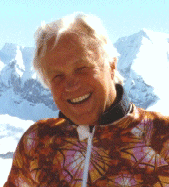
    Raymond BradleyBradley is an Emeritus Professor of Philosophy with areas of specialty in Philosophical Logic, Metaphysics, Logical Atomism; he has previously debated William Lane Craig, Edward Blaiklock and many other Christian scholars and describes himself as an older generation “new atheist”.

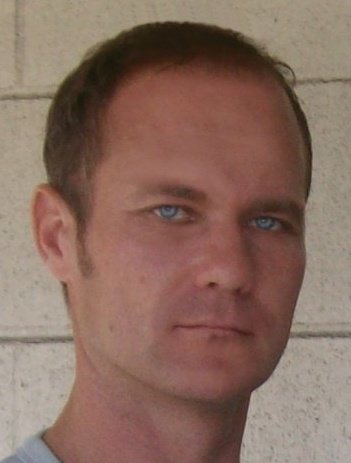
    Matthew FlannaganFlannagan is an Auckland based Philosopher and Theologian with areas of specialty in Philosophy of Religion, Ethics and Theology; he has previously debated Bill Cooke, Zoe During and, of course, writes for this blog.

    The format of the debate will be as follows:

    Dr Bradley: Opening Comments [20 min]
    Dr Flannagan: Opening Comments [20 min]
    Dr Bradley: Reply to Dr Flannagan [10 min]
    Dr Flannagan: Reply to Dr Bradley[10 min]
    Dr Bradley: Closing Comments [7 min]
    Dr Flannagan: Closing Comments [7 min]
    Questions from the floor: [30 min]

    The moderator for the debate will be John Bishop.

    Bradley will be introduced by Robert Nola.

    Flannagan will be introduced by Chris Tucker.

    Both Bradley and Flannagan are experienced and engaging public speakers who are practiced at pitching their topics to suit their audiences. So, invite all your friends, and block out the evening of Monday 2 August from 7-9 pm now and make sure you get to the debate early to locate parking and grab a good seat.

    This debate is brought to you by the Evangelical Union and the Reason and Science Society as part of the University of Auckland’s Jesus week/Atheist week, with support from Thinking Matters.

    The event will be videoed and will be published on this blog. Entry is free and any and all are welcome.

    There is even a Facebook page you can rsvp on and use to invite your friends.