Category: Philosophy of Religion

  • SBL Annual Meeting: Navigating Old Testament Ethics

    Matt has been invited to participate in a panel discussion at the annual Society of Biblical Literature (SBL) Annual Meeting in Atlanta, Georgia, which runs 20-23 November 2010. He will join leading Christian academics Paul Copan, Richard Hess and Randal Rauser in a segment entitled “Navigating Old Testament Ethics.” Matt’s contribution to the panel discussion will be on Divine Commands and Old Testament Ethics.

    Society of Biblical Literature Annual Meeting

    The SBL Annual Meeting is the largest gathering of biblical scholars in the world. Each meeting:

    • showcases the latest in biblical research,
    • fosters collegial contacts,
    • advances research, and
    • focuses on issues of the profession.

    At this meeting, scholars benefit from sessions on religion, philosophy, ethics, and diverse religious traditions.

    You can register here.

    If you would like to donate to help Matt get to America to speak at the SBL Annual Meeting please visit our support page.

  • EPS Apologetics Conference: God and the Genocide of the Canaanites

    Matt has been invited to speak at the annual Evangelical Philosophical Society (EPS) Apologetics Conference in Atlanta, Georgia, USA which runs 18-20 November 2010. He will be speaking alongside some big names in contemporary Christian philosophy including Alvin Plantinga and William Lane Craig.

    Evangelical Philosophical Society Apologetics Conference

    Experience seasoned teaching by Alvin Plantinga, William Lane Craig, Gary Habermas, Greg Koukl, Randy Newman, Frank Beckwith, Craig Evans, Craig Blomberg, Mike Licona and over twenty other influencers in Christian apologetics as they equip you about the issues facing contemporary Christian witness.

    The full line up of speakers is here.

    You can register here.

    Matt’s talk is entitled “God and the Genocide of the Canaanites,”

    How could a just and loving God command Joshua to genocide the Canaanites as is apparently taught in the Old Testament? Is God really a moral monster as Christianity’s critics use these passages to claim? Matthew will re-examine these passages in light of the context they were written in showing that the skeptics’ case against God relies on a questionable reading of the Old Testament.

    This talk will be based on Matt’s blog series, Joshua and the Genocide of the Canaanites Part I and Part II, his Contra Mundum column, “Did God Command Genocide in the Old Testament?” (forthcoming August 2010) and his chapter, co-authored with Paul Copan, “Ethics of ‘Holy War’ for Christian Morality and Theology” in Old Testament ‘Holy War’ and Christian Morality: Perspectives and Prospects (forthcoming 2011).

    If you would like to donate to help Matt get to America to speak at the EPS Apologetics Conference please visit our support page.

  • Contra Mundum: Fairies, Leprechauns, Golden Tea Cups & Spaghetti Monsters

    That belief in God is on par with belief in fairy tales is a fairly common charge levelled at Christianity. Highly regarded atheist Philosopher Michael Tooley argues,

    If there is no evidence in support of the existence of God, then it is reasonable to believe that God does not exist. The essential line of thought which I would hope to develop later on is that if you consider other things like fairies, leprechauns, golden teacups orbiting around Venus, and so on, I would suggest that we have no evidence against the existence of those sorts of things, but if I asked you whether you were agnostic I think the answer would be “no.” You would believe there are no fairies, no leprechauns, no golden teacups orbiting around Venus. That illustrates the general principle in regard to God’s existence that the burden of proof must fall upon the person who is arguing in support of God’s existence. If there’s no positive support for it, then the other side wins by default.

    Something like Tooley’s argument regularly features in popular discussions of religion where fairies, leprechauns and golden tea-cups are substituted for flying spaghetti monsters. The basic idea remains the same, to believe in God without providing compelling arguments or evidence for his existence is on par with believing in fairy tales and this is something no sensible, educated, intelligent person can take seriously.

    To address this argument it is first necessary to unpack it. Three separate claims are being made; first, it is assumed that the rational stance to take towards the existence of fairies, leprechauns, orbiting golden tea-cups and spaghetti monsters is not a stance of agnosticism but one of certain denial. Second, it is contended that the reason why this stance is correct is not because we have reasons for believing such things do not exist, but rather that we lack any positive evidence for the existence of these things. Third, the objector assumes that a person who advocates or defends belief in God, in the absence of compelling evidence for God’s existence, has no principled way of distinguishing the case for God from the case for the existence of fairies, leprechauns, et al. Now I grant the first of these claims, it is obviously silly and irrational to believe in things like fairies, leprechauns, orbiting golden tea-cups and spaghetti monsters. The real issue is whether the second and third claims are correct; I will argue that they are not.

    Turning to the second claim that the reason it is irrational to believe in fairies, leprechauns, et al is solely because we lack evidence for their existence and not because we have reasons for thinking that they do not exist. I am inclined to think this claim is false. Consider another claim for which we also lack evidence for thinking is true, that intelligent extra-terrestrial life (ET’s) exists somewhere in the universe. We lack compelling reasons for thinking this claim is true yet it seems mistaken to infer from this that such beings absolutely do not exist, at best all that we can say is that we do not know. Moreover, even in face of agnosticism, many scientists take the existence of ET’s quite seriously; for example, the SETI research site in California spends millions of dollars sending messages into outer space and searching the universe for signs of intelligent life. I note that they do not do the same in pursuit of the search for signs of fairies, leprechauns, orbiting tea-cups or spaghetti monsters and I cannot find any evidence of an agency anywhere in the world that does.

    This example suggests that the reason it is rational to deny the existence of the stuff of fairy tales cannot be simply the lack of positive evidence for these things, if it was we would take the same stance towards ET’s yet we do not. This is because there are important differences between ET’s and fairies, leprechauns, et al over and above the mere lack of evidence we have for their existence. ET’s are the sort of things that could exist even if we lack evidence that they do. ET’s fit with the picture of the world we hold, we know that intelligent life can evolve on planets. This is not the case with fairies, leprechauns, orbiting tea-cups, spaghetti monsters and so on.

    Leprechaun’s first appeared in fairy tales and folklore; in such tales they store their wealth in pots of gold at the end of rainbows. We know that the genre of fairy tales is fantasy. We know rainbows do not have ends in the way this picture envisages. Similarly tea-cups we know are artefacts made by human beings, seeing humans have not been to Venus it is unlikely that such things orbit Venus – even if they are made of gold. It is not just that we lack evidence for the existence of such things but that we have evidence against their existence. What we do know about the world provides us with reasons for doubting they can exist. With ET’s, on the other hand, we have no such reasons for doubting they can exist. Hence, in the latter case agnosticism is justified whereas denial is required in the former case.

    The insinuation that belief in God is on par with belief in fairies, leprechauns, et al is equally questionable. In the case of these things we have no evidence for their existence. With God, however, the situation is different. It is not that no evidence exists; on the contrary, sophisticated and rigorous arguments for God’s existence have been offered and are still being offered in the literature today, it is that experts in the field are divided on the cogency of these arguments. The best that sceptics can suggest is that the evidence is inconclusive. However, even if we grant this, those who defend belief in God can and have offered principled distinctions between God and things like flying spaghetti monsters.

    Two examples will suffice. The first stems from a tradition going back to William James and Blaise Pascal is that when one cannot avoid making a choice, one can act in hope or faith that a belief is true, even if there is no evidence for it, if the expected benefits of the thing hoped for outweigh the benefits of the alternatives. James Jordan provides an example,

    A castaway builds a bonfire hoping to catch the attention of any ship or plane that might be passing nearby. Even with no evidence that a plane or ship is nearby, he still gathers driftwood and lights a fire, enhancing the possibility of rescue. The castaway’s reasoning is pragmatic. The benefit associated with fire building exceeds that of not building, and, clearly, no one questions the wisdom of the action.

    Pascal argued that if one acts on the assumption that God exists and that assumption turns out to be incorrect then one has lost little but if one acts on the assumption that God does not exist and that assumption turns out to be incorrect the one has lost everything. Modified versions of this line of argument are still defended by philosophers today.

    A second reason is that even if one has insufficient evidence for the truth of some proposition, one can be rational in believing it if it is grounded directly in one’s experience. There are plenty of things we believe which are not based on evidence, our belief in the existence in the past or our belief that it is wrong to rape women, our belief that other people exist or that basic axioms of logic are true are not based on arguments or proofs. These things are true because we experience or see them to be true, for example, I remember the existence of a past event, I intuitively conclude that rape is wrong, I observe that other people exist, I see that basic axioms of logic are self-evident. Philosophers such as Alvin Plantinga argue that belief in God is like these beliefs; it is something a person directly sees as true via direct experience or intuition of some sort as opposed to the conclusion of an evidentiary proof.

    I am not in a short article like this going to be able to develop and defend these lines of argument further. I mention them only to show that according to two standard ways of defending belief in God in the face of inconclusive evidence a principled distinction between belief in God and the stuff of fairy tales can be made. People tend to not directly experience or perceive the existence of these things nor does one risk losing everything by acting on the assumption they do not exist. Moreover, if belief in fairies, leprechauns, orbiting tea-cups and spaghetti monsters did possess these features then it is no longer obvious that belief in such beings is irrational. Suppose that instead of there being no evidence for the existence of leprechauns there was in fact some evidence but it was not compelling, perhaps experts were in disagreement. Suppose also that if I failed to act on the assumption that leprechauns existed and it turned out that they did then I would lose everything but if it turned out that they did not I would gain little. In addition, suppose that I directly perceived a leprechaun in front of me or I remembered clearly seeing one a few days ago and I had no reason for thinking my perception or memory was unreliable. If these conditions were satisfied then it would cease to be obvious that belief in leprechauns was obviously irrational. The claim that believing in God is on par with believing in “fairies, leprechauns, golden teacups orbiting around Venus” and flying spaghetti monsters is then unjustified.

    I write a monthly column for Investigate Magazine entitled Contra Mundum. This blog post was published in the July 10 issue and is reproduced here with permission. Contra Mundum is Latin for ‘against the world;’ the phrase is usually attributed to Athanasius who was exiled for defending Christian orthodoxy.

    Letters to the editor should be sent to:
    editorial@investigatemagazine.DELETE.com

    RELATED POSTS:
    Contra Mundum: Secularism and Public Life
    Contra Mundum: Richard Dawkins and Open Mindedness
    Contra Mundum: Slavery and the Old Testament

    Contra Mundum: Secular Smoke Screens and Plato’s Euthyphro

    Contra Mundum: What’s Wrong with Imposing your Beliefs onto Others?
    Contra Mundum: God, Proof and Faith
    Contra Mundum: “Bigoted Fundamentalist” as Orwellian Double-Speak
    Contra Mundum: The Flat-Earth Myth
    Contra Mundum: Confessions of an Anti-Choice Fanatic
    Contra Mundum: The Judgmental Jesus

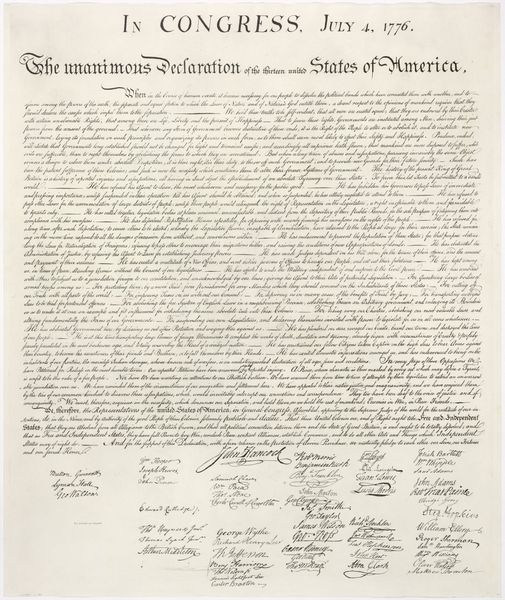
  • The Theology of the Declaration of Independence

    As I write this it is just beginning to be the 4th of July in the United States now, though its been 4th July for some time here in New Zealand.

    The 4th of July is, of course, Independence Day. Typically in New Zealand, those members of the secular blogosphere, who consider themselves to be classical liberals, have an annual rant on the 4th of July about the Declaration of Independence, praising the philosophy expounded in this document.
    Declaration of IndependenceNot PC’s Peter Cresswell, for example, states in Happy July 4th! that “with the exception of just a few words, the words could hardly be bettered today;” the declaration is, “A wonderful, wonderful anthem to freedom that rings down through the years.”  He bemoans, “if only the real meaning of those words could be heard and understood.”

    A few years ago Kiwiblog’s David Farrar made similar claims, he stated he would often “marvel at those marvelous words, written in the heat of oppression…Marvelous, absolutely marvelous.”

    I agree. I would simply point out to my secular, liberal, country-men what the words in this document actually say, and some of the philosophical ideas they expound.

    First, the declaration refers to God; it does so four times. Maverick Philosopher has an excellent analysis of the theological content;

    In the initial paragraph, we find the phrase “…Laws of Nature and of Nature’s God….” This phrase rules out pantheism: God is distinct from Nature. In the second paragraph, there is the phrase, “…endowed by their Creator with certain unalienable rights….” Putting these two references together, we may infer that the God being referred to is not merely a deistic initiator of the temporally first segment of the physical universe, but a being involved in the creation of the human race. For if God endowed human beings with rights, this endowment had to occur at the time of the creation of human beings, which of course occurred later than the beginning of the physical universe. In traditional jargon, God is a creator continuans rather than a mere creator originans. He is not a mere cosmic starter-upper, but a being who is continuously involved in maintaining the universe in existence.

    …

    The other two references are in the final paragraph. There we find the phrase, “…Supreme Judge of the World for the Rectitude of our Intentions….” near the beginning of the paragraph, and near the end, “…a firm Reliance on the Protection of divine Providence….” Now if God is the Supreme Judge, then he is more than a mere metaphysical cause responsible for the universe’s beginning to exist; he is also the supreme moral arbiter. And since he endows human beings with rights, as opposed to being merely a judge of rights antecedently possessed, then it seems we may infer that God is the source of moral distinctions (as opposed to a mere judge of them).

    The reference to divine providence is further evidence that the conception of God in the Declaration is non-deistic. For if God provides and protects, then God has an ongoing involvement with the world and its inhabitants such as would be ruled out by a deistic view. It should also be obvious that talk of providence (from the Latin, pro-videre) implies divine foreknowledge which implies intelligence and perhaps omniscience on the part of the deity. The God of the Declaration is not a blind metaphysical cause posited to explain why the universe began to exist, but a being with such attributes as moral goodness and intelligence…. So if by ‘deism’ is meant the doctrine that God is a mere metaphysical cause of the universe’s beginning to exist who is thereafter uninvolved in its continuing to exist, then the God of the Declaration is non-deistic.

    Second, the declaration claims that belief in a creator is self-evident; that is, it is a properly basic belief, which is rationally acceptable to hold in the absence of any proof.

    We hold these truths to be self-evident, that all men are created equal, that they are endowed by their Creator with certain unalienable Rights, that among these are Life, Liberty, and the pursuit of Happiness.

    Third, the declaration makes political pronouncements about public policy on the basis of these theological claims and expects these pronouncements to be taken seriously.

    Fourth, the declaration says that various rights, such as the right to life and liberty, are unalienable. That is, a person cannot alienate one’s life or freedom as they can legally alienate a piece of property. You can’t take my property if I do not consent to you having it but if I do consent, you can take it; property is alienable, life and liberty are not. The argument of the declaration reflects John Locke’s argument in the Second Treatise of Civil Government;

    To understand political power right, and derive it from its original, we must consider, what state all men are naturally in, and that is, a state of perfect freedom to order their actions, and dispose of their possessions and persons, as they think fit, within the bounds of the law of nature, without asking leave, or depending upon the will of any other man.[1]

    …

    But though this be a state of liberty, yet it is not a state of licence: though man in that state have an uncontroulable liberty to dispose of his person or possessions, yet he has not liberty to destroy himself, or so much as any creature in his possession, but where some nobler use than its bare preservation calls for it. The state of nature has a law of nature to govern it, which obliges every one: and reason, which is that law, teaches all mankind, who will but consult it, that being all equal and independent, no one ought to harm another in his life, health, liberty, or possessions: for men being all the workmanship of one omnipotent, and infinitely wise maker; all the servants of one sovereign master, sent into the world by his order, and about his business; they are his property, whose workmanship they are, made to last during his, not one another’s pleasure[2]

    …

    This freedom from absolute, arbitrary power, is so necessary to, and closely joined with a man’s preservation, that he cannot part with it, but by what forfeits his preservation and life together: for a man, not having the power of his own life, cannot, by compact, or his own consent, enslave himself to any one, nor put himself under the absolute, arbitrary power of another, to take away his life, when he pleases. No body can give more power than he has himself; and he that cannot take away his own life, cannot give another power over it.[3]

    The point here is that because your right to life and liberty are from God, no one can legitimately enslave or kill you, even if you consent to it. This was not a mere incidental addendum idea, it was central to Lockean political philosophy, which maintained (as the declaration does) that the government derives its powers from the consent of the governed. If a person can consent to be killed or enslaved then they can consent to the government enslaving them also to having the arbitrary power to kill them and hence tyranny can be legitimate. The reason tyranny is illegitimate is because, “No body can give more power than he has himself; and he that cannot take away his own life, cannot give another power over it.”

    The declaration then makes a metaphysical claim: God exists. It makes an epistemological claim about faith and reason: that belief in God is rational independent of proof. It makes an implicit claim of political philosophy: religion is not a private thing that should not influence public life but rather, theological claims should influence public life. Finally it makes a moral claim; that consenting adults do not have a right to do whatever they like with their own bodies, rather there are “Laws of Nature and of Nature’s God” that bind all human beings, that they are compelled to follow even if all parties consent otherwise. Governments are legitimate to the extent in which they respect these laws.

    I agree with PC, it is hard to improve on this philosophy; I have defended it in several places on this blog.

    Ironically, however, the militant secular liberals in NZ who parrot the declaration seem committed to attacking these ideas and rejecting them on every point. They argue that belief in God is irrational because it cannot be empirically proven, they claim that the public square should be secular, that religion should be private and not influence public policy and they argue that liberty means consenting adults can do whatever they like with their own bodies and lives. Far from being unalienable, a person’s life and freedom is his property to alienate as that person sees fit.

    It is also hard to disagree with PC’s sentiments that the declaration is “A wonderful, wonderful anthem to freedom that rings down through the years. If only the real meaning of those words could be heard and understood.” “Indeed, if only.”

    [1] John Locke Second Treatise of Civil Government Section II 4.
    [2] Ibid II6.
    [3] Ibid IV 23.

  • Ronald Hendel on Pascal, Evangelicals and The Society of Biblical Literature

    Ronald Hendel, of the Biblical Archeology review, has written a critical piece entitled “Biblical Views: Farewell to SBL“. His beef appears to be that the Society of Biblical Literature (SBL) is allowing into its membership, heaven forbid, various “evangelical and fundamentalist groups.” This, he suggests, compromises the group’s scholarly integrity.

    Much could be said about his comments, here I will only parse some of them. First, Hendel begins by citing from Pascal’s Pensées, “The heart has its reasons, which reason does not know.” Hendel clearly approves of Pascal’s contention and goes so far as to appropriate the sentiment, he elaborates Pascal’s position as follows,

    This famous line from Pascal’s Pensées draws a wise distinction between religious faith and intellectual inquiry. The two have different motivations and pertain to different domains of experience. They are like oil and water, things that do not mix and should not be confused. Pascal was a brilliant mathematician, and he did not allow his Catholic beliefs to interfere with his scholarly investigations. He regarded the authority of the church to be meaningless in such matters.

    While I am not a Pascal scholar this appears to be a caricature of Pascal’s position. Hendel  suggests that Pascal’s distinction between “reason” and the “heart” is a distinction between faith and reason. He goes on to state that Pascal believed the two did not mix and had different domains, and that the latter (the heart) had no bearing on mathematics or other scholarly investigations.

    Now the former seems plausible, just after the citation Hendel refers to Pascal states “It is the heart which experiences God, and not the reason. This, then, is faith: God felt by the heart, not by the reason.” However with regards to the latter points Hendel made, Pascal goes on to state,

    We know truth, not only by the reason, but also by the heart, and it is in this last way that we know first principles; and reason, which has no part in it, tries in vain to impugn them. The sceptics, who have only this for their object, labour to no purpose. We know that we do not dream, and, however impossible it is for us to prove it by reason, this inability demonstrates only the weakness of our reason, but not, as they affirm, the uncertainty of all our knowledge. For the knowledge of first principles, as space, time, motion, number, is as sure as any of those which we get from reasoning. And reason must trust these intuitions of the heart, and must base them on every argument. (We have intuitive knowledge of the tri-dimensional nature of space and of the infinity of number, and reason then shows that there are no two square numbers one of which is double of the other. Principles are intuited, propositions are inferred, all with certainty, though in different ways.) And it is as useless and absurd for reason to demand from the heart proofs of her first principles, before admitting them, as it would be for the heart to demand from reason an intuition of all demonstrated propositions before accepting them.

    Pascal is quite clear, far from being “oil and water” and having nothing to do with maths or any other scholarly discipline Pascal believed that the very foundations of all knowledge, whether mathematical or another form, are based on faith; reason reasons from these premises but cannot prove them (not that it needs to). When Pascal goes on to state that “those to whom God has imparted religion by intuition are very fortunate and justly convinced” the implication is that certain religious beliefs, known by faith, function as properly-basic beliefs’ at the foundation of ones knowledge and, as such, are the premises one can legitimately reason from to other conclusions without first needing to prove them.

    Second, Hendel’s objection to allowing evangelical groups into the SBL is wanting. His basic objection is that,

    The SBL online book review journal (Review of Biblical Literature) has featured explicit condemnations of the ordinary methods of critical scholarly inquiry, extolling instead the religious authority of orthodox Christian faith.

    Hendel’s concern here seems to be that some evangelical groups are opposed to critical and scholarly inquiry. He substantiates this further,

    Listen to this, from Bruce Waltke, widely regarded as the dean of evangelical Biblical studies: By their faith in the God of Abraham, Isaac, and Jacob, [evangelical scholars] … hear the voice of higher biblical criticism, which replaces faith in God’s revelation with faith in the sufficiency of human reason, as the grating of an old scratched record.

    This, however, is a non-sequitur. Waltke in this citation criticises “higher criticism,” Hendel concludes from this that he opposes critical and scholarly inquiry. But this is not the same thing, why can’t a person, for example, engage in critical and scholarly inquiry, engage in careful research, follow the rules of logic, and so on, and yet reject some of the methodological principles of higher criticism. Alvin Plantinga has offered a carefully argued epistemology of religious belief that provides the basis for a critique of higher criticism. He might be mistaken but surely one needs to actually engage his argument instead of simply assuming it is wrong. Hendel’s assumption, that it is impossible to do this, surely needs more than mere assumption and assertion.

    Hendel’s objections to Waltke are similarly mistaken. In response to the above citation he says,

    This is a quaintly stated position, which directly attacks the applicability of human reason to the study of the Bible. Instead of reason, “faith in the God of Abraham, Isaac, and Jacob”—as interpreted by evangelical scholars—should be the rule in Biblical scholarship. Waltke dismisses critical inquiry as an annoying nuisance, like the scratchy sound of an old LP.

    Here Hendel contends Waltke denies “the applicability of human reason” to the study of the bible. This again does not follow. In the above statement Waltke denies that reason, by itself without faith, is insufficient but to say reason is by itself insufficient does not entail it has no application at all; it simply states that it has to be supplemented by faith to get a true or accurate answer.

    In summary Hendel confuses the claim that reason, unimplemented by faith, is insufficient with the rejection of reason altogether. Moreover, he seems to think that reason and higher criticism are the same thing. This, however, simply appears to, at best, misunderstand and, at worse, caricature the views of faith and reason many evangelicals hold. Had Hendel reflected on what Pascal actually said, he might have understood this a bit more.

  • Wolterstorff, the Canaanites and Hyperbole: A Response to Ken Pulliam

    Critics of Christianity often ask how can a good and loving God command the extermination of the Canaanites as is taught the Old Testament? A clear assumption behind this question is that the Old Testament teaches that God did in fact command the extermination of the Canaanites, an assumption which is based on a straight-forward literal reading of some passages in Joshua and Deuteronomy. In an earlier blog series, Joshua and the Genocide of the Canaanites, I elaborated and defended the position of Nicholas Wolterstorff that such a literal reading of these passages is mistaken. The language of “leaving alive nothing that breaths” or “destroying” and other such language should be understood as hyperbole and hence is analogous to someone today saying after a ball game, “we totally slaughtered the opposition, we annihilated them just as coach told us to.”

    Ken Pulliam has taken issue with this defence so here I will respond to some of his criticisms. (I plan to address some of the other objections in future posts). Before doing so it is important to address some rhetorical tricks his article contains. To begin with Pulliam entitles his response “Grasping at Straws Part Eleven–Evangelicals Defend Genocide” and cites Wolterstorff and myself as examples. But neither Wolterstorff or I defended genocide, we argued that God did not command genocide. Moreover, referring to my argument, Pulliam states that I cited “external evidence of how other ANE nations reported their exploits of war [by citing] evangelical Kenneth Kitchen.” Now it is true that Kitchen is an evangelical and that I cite him, however, Kitchen is also a leading Egyptologist and I don’t just cite him I cite numerous examples of Ancient Near Eastern (ANE) reports of war where language similar to that used by Joshua and Deuteronomy are used hyperbolically. I also noted evidence that Joshua is written according to the literary conventions of such reports.

    Instead of addressing this evidence directly, Pulliam gives a series of arguments for the claim that the text is not hyperbolic but literal. One objection Pulliam raises is that this interpretation “fails to solve the other moral problems in the Hebrew Scriptures.” He asks, “are we to explain away all of the problems in the Old Testament by appealing to hyperbole?” The answer of course is no; it is hard to see why this is an objection. Why does an interpretation of one passage have to answer every question about every other passage in order for it to be plausible? Interpreting the first line of Pulliam’s post literally does not solve every problem I see in it should I, therefore, not take it literally?

    A second, objection Pulliam makes is that “it fails to take into account how these hyperbolic passages would be misused in the future by those who thought they were following divinely commanded principles.” Presumably Pulliam means that God, by allowing his word to be mediated through the literary conventions of ANE historiography, would forsee that future generations will misinterpret it. This, of course, is correct. Again, it is unclear why this means that the text should be taken literally. After all, it seems any language which God mediates his word through, whether literal or figurative, will have this implication. A message mediated through the more literalistic conventions of 21st century English, History and Moral Philosophy would be misunderstood by numerous people as well (his seems to be more a problem with verbal revelation per se rather than any particular interpretation of it).

    Pulliam’s other arguments are more on point. He argues that a hyperbolic interpretation “fails to appreciate that Judges 2:1-5 says that the Israelites did not obey the LORD in totally destroying the Canaanites, and that as a result, they will have problems for generations to come.” Pulliam poses a rhetorical question, “if the genocidal commands were never intended to be taken literally, why are the people scolded by Yahweh and told that their future problems will come as a result of their disobedience?” In fact, in articles which Pulliam refers to both Wolterstorff and I cite this passage and point out that, in fact, it says no such thing; it states,

    ‘I will never break my covenant with you,2 and you shall not make a covenant with the people of this land, but you shall break down their altars.’ Yet you have disobeyed me. Why have you done this?3 Now therefore I tell you that I will not drive them out before you; they will be thorns in your sides and their gods will be a snare to you.4

    Here Israel is criticised for disobeying an order to not make a covenant with the Canaanites and to destroy their altars. There is nothing at all present in these passages about extermination and genocide. Moreover, both Wolterstorff and myself pointed this out.

    Pulliam further objects that,

    One must ask if Wolterstorff’s opinion that Joshua uses “highly figurative” language is based on literary considerations or is it driven more by his need to solve the moral problems involved? He does not provide any direct parallels between Joshua and other literature which is clearly recognized as hagiographic and figurative.

    This again is simply a distortion of the situation. In my original post I gave a large number of direct parallels between Joshua and other literature which is both figurative and hagiographic (in Wolterstorff’s sense of the term). Given that I did this and that Pulliam has clearly read the post (he did link to it) one wonders why he claims no such parallels have been offered. Moreover, Wolterstorff, in the article he cites from, does provide several literary considerations for his thesis. It seems evident that several of Pulliam’s arguments involve simply ignoring what Wolterstorff and I have written and distorting the evidence.

    Equally puzzling is Pulliam’s argument, “If Joshua is hagiography, why shouldn’t one believe that the Gospels are as well? Why should one take their stories as literal history?” This is puzzling because my post addressed this. There is compelling textual evidence both from within the text itself and also via comparisons between Joshua and other ANE texts to suggest that it is hyperbolic. These parallels and textual considerations are not present with the gospels. Similarly, in his book Divine Discourse: Philosophical Reflections on the Claim that God Speaks Wolterstorff discusses the genre of the gospels and cites comparisons with ancient Greek biographies to defend the claim that the gospels are ancient Greek biography. Again Pulliam’s response appears to be to ignore what those he criticises actually wrote.

    It is worth noting that this kind of argument relies on a peculiar assumption, that if one grants that one part of a text is non-literal then one cannot, non-arbitrarily, take any other part of the text as literal. Pulliam’s own writing falsifies this claim. He concludes that “Wolterstorff is more sophisticated than some of the other harmonization attempts we have seen, it is in reality just another case of grasping at straws.” Surely, his phrase “grasping at straws” is a non-literal figure of speech (I am assuming he did not mean to refer to real straws) does it follow then that we should not take anything else he says in his post literally?