On Monday 2 August at the University of Auckland Emeritus Professor of Philosophy Dr Raymond Bradley and Dr Matthew Flannagan (of this blog) debated the topic “Is God the Source of Morality? Is it rational to ground right and wrong in commands issued by God?” While the video is still being edited and formatted, Thinking Matters […]
Entries Tagged as 'Philosophy of Religion'
Bradley v Flannagan “Is God the Source of Morality? Is it Rational to Ground Right and Wrong in Commands Issued by God?” The Podcast
August 7th, 2010 5 Comments
Tags: Debates · God and Morality · Matthew Flannagan · Podcast · Raymond Bradley · Thinking Matters
Matthew Flannagan’s Opening Statement: Bradley v Flannagan Debate
August 7th, 2010 11 Comments
On Monday 2 August at the University of Auckland Emeritus Professor of Philosophy Dr Raymond Bradley and Dr Matthew Flannagan (of this blog) debated the topic “Is God the Source of Morality? Is it rational to ground right and wrong in commands issued by God?” For the benefit of those who could not be there, who […]
Tags: Alvin Plantinga · Canaanites · Capital Punishment · Chris Tucker · Debates · Divine Command Theory · God and Morality · J J Finkelstein · Joe M Sprinkle · K Lawson Younger · Nicholas Wolterstorff · Philip Quinn · Raymond Bradley · Raymond Westbrook · Robert Adams · Walter Kaiser
Raymond Bradley’s Opening Statement: Bradley v Flannagan Debate
August 5th, 2010 53 Comments
On Monday 2 August at the University of Auckland Emeritus Professor of Philosophy Dr Raymond Bradley and Dr Matthew Flannagan (of this blog) debated the topic “Is God the Source of Morality? Is it rational to ground right and wrong in commands issued by God?” For the benefit of those who could not be there, who […]
Tags: Debates · God and Morality · Matthew Flannagan · Raymond Bradley · Robert Nola
Joint Communique: Bradley v Flannagan Debate
August 4th, 2010 4 Comments
On Monday 2 August at the University of Auckland Emeritus Professor of Philosophy Dr Raymond Bradley and Dr Matthew Flannagan (of this blog) debated the topic “Is God the Source of Morality? Is it rational to ground right and wrong in commands issued by God?” With a turnout of 400-500 people, this debate was the largest […]
Tags: Debates · Matthew Flannagan · Raymond Bradley
Dissecting the Bradley v Flannagan Debate
August 2nd, 2010 40 Comments
We’re just in from the debate at Auckland University where Raymond Bradley and Matt debated “Is God the Source of Morality? Is it rational to ground right and wrong in commands issued by God?” and we see the discussion from those there has started in more than one place on the net – including here. […]
Tags: Debates · Glenn Peoples · Matthew Flannagan · Raymond Bradley
Contra Mundum: Did God Command Genocide in the Old Testament?
August 1st, 2010 147 Comments
Perhaps the most perplexing issue facing Christan believers is a series of jarring texts in the Old Testament. After liberating Israel from slavery in Egypt, the Israelites arrived on the edge of the promised land. The book of Deuteronomy records that God then commanded Israel to “destroy totally” the people occupying these regions (the Canaanites); […]
Tags: Alvin Plantinga · Canaanites · Contra Mundum · Investigate Magazine · James K. Hoffmeier · K Lawson Younger · Kenneth Kitchen · Old Testament Ethics
CANCELLED Is belief in God rational when you can’t prove God exists? @ Unitec
July 30th, 2010 13 Comments
THIS EVENT HAS NOW BEEN CANCELLED – sorry all! We are working with the organisers to reschedule it (apparently something went wrong with the on campus promotion). Matt is speaking on the topic “Is belief in God rational when you can’t prove that God exists?” at 12pm, Thursday 5 August in the Gold Lecture Theatre on the […]
Tags: Encounter Christian Centre · Faith and Reason · Unitec · Unitec Student Life

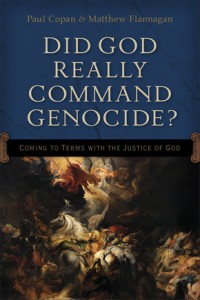 A common objection to belief in the God of the Bible is that a good, kind, and loving deity would never command the wholesale slaughter of nations. In the tradition of his popular Is God a Moral Monster?, Paul Copan teams up with Matthew Flannagan to tackle some of the most confusing and uncomfortable passages of Scripture. Together they help the Christian and nonbeliever alike understand the biblical, theological, philosophical, and ethical implications of Old Testament warfare passages.