Category: Series

  • Fallacy Friday: The Ubiquitous Ad Hominem

    In my previous posts, What is an Argument? and Assessing Arguments, I spelt out some basics as to what an argument is and how to assess arguments. There I noted that a sound argument is one where the premises of the argument is true and the argument is valid. It is impossible for an argument which is sound to have a false premise, this fact means that one cannot rationally reject the conclusion of an argument unless one also rejects either one of the premises or the argument’s validity.

    These concepts are essential to understanding fallacies because fallacies frequently involve rejecting a person’s conclusion or their argument on grounds other than their lack of soundness. Thus, a fallacy is an error in reasoning.

    Logicians have characterised and named the most common mistakes. Most have Latin names due to the fact that logic was a prerequisite to studying theology in the middle ages; Latin was the language of scholarship at that time so the classifications of fallacies were done in Latin.

    The first and perhaps most infamous fallacy that I want to look at today is the ad hominem fallacy. Ad hominem means “against the man.” An argument is ad hominem when the thrust of the argument is not made at against the  conclusion one is denying and neither is it made against the soundness of the argument by challenging either its validity or the truth of its premises, an ad hominem argument is one where the attack on the argument is directed against the person who has offered the argument or who has asserted its conclusion.

    Example
    A good example on an ad hominem occurred on MandM this week. The issue as to whether New Zealand has an established religion surfaced in a comment thread. Madeleine claimed,

    “I refer you to this guest post written by lawyer David Simpkin who sets out the law showing New Zealand does have an official state religion and denomination – the Church of England (Anglican). His legal analysis is dead right. Guest Post: No Official Religion in God’s Own?.”

    Here Madeleine referred the reader to an argument, made by a lawyer, which argued from certain premises to the conclusion that New Zealand has an official religion. Julian the Apostate responded to this as follows:

    “Could I also note Mr Simpkin’s former role as a member of Youth for New Zealand, a front group for the Christian Heritage Party?”

    Here Julian does not address the premises of Simpkin’s original argument, nor does Julian claim that the argument is invalid, instead he dismisses both the argument and its conclusion on the basis that the author of the argument, was once a member of a youth group connected with the Christian Heritage Party. (more…)
  • Contra Mundum: Is God a 21st Century Western Liberal?

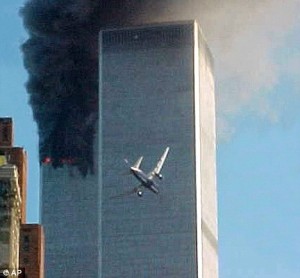
    World Trade Centre Terrorist AttackOn 11 September 2001 Islamic terrorists flew two planes into the World Trade Centre killing thousands of innocent people. Ostensibly they did this because they believed God commanded them to do so. This event has invigorated a fear latent in the Western psyche since the 17th century when wars of religion tore Europe apart, the fear of religious fanaticism, of people willing to murder hundreds in the name of God. These fears were centre-stage recently at a Conference held by the Centre for Philosophy of Religion at the University of Notre Dame. Sceptics presenting at the conference argued passionately that the God of the bible issues commands which are at odds with contemporary modern understandings of morality. Adultery is punished with death; on some occasions, God is portrayed as commanding the killing of non-combatants in “holy wars” against the local Canaanite population.

    There is a lot that can be said about these concerns and in a short column I cannot say everything. In many instances I think the sceptics fail to appreciate the context and genre of the passages they cite. They fail to appreciate, for example, that Ancient Near Eastern conquest accounts employ highly figurative rhetoric, which hyperbolically describe victories in terms of total annihilation of the enemy. They fail to appreciate that Ancient Near Eastern legal texts, as noted by Raymond Westbrook, “reflect the scribal compilers’ concern for perfect symmetry and delicious irony rather than the pragmatic experience of the law courts.” Or that, as JJ Finkelstein points out, they “were not meant to be complied with literally” but to “serve an admonitory function” and so probably do not command execution for the crimes mentioned. Sceptics can fail to grasp that claiming the bible is God’s word does not mean it did not come to us mediated through the writings of human beings who wrote in a particular time and place using the language, rhetoric and literary conventions of their time and so and frequently they fail to appreciate the bible is a Canon and that passages need to be read in their broader context i.e. taking into account the whole bible. A full articulation of these points, however, would take more space than I can here muster.

    Instead I will address another feature of this issue which concerns the general method in play here. In each case the sceptic takes a purported divine command and compares it to a moral belief that he takes to be correct. The conclusion he draws is that the purported command is inauthentic. This is of course a possibility; there is, however, another possibility that on at least some occasions, moral statements these sceptics are relying on are mistaken.

    This feature of the dialectic became clear to me after a public debate I had on these issues in August. A sceptic wrote to me claiming that (more…)

  • Fallacy Friday: Assessing Arguments

    In last week’s post, Fallacy Friday: What is an Argument?, we established that an argument is a set of reasons (or premises) offered in support of a conclusion. We noted that arguments always have  two components: premises and conclusions. We also observed that premises sometimes can be implicit or unstated.

    Is your argument a success or a failure?Of course knowing what an argument is, in and of itself, does not help us much to ascertain whether the argument in front of us is a good one or a bad one. When we are faced with conflicting arguments we want to know how to evaluate them; that is what logic and analytical philosophy is all about.  Here I will say a couple of things about how one goes about assessing an argument.

    First, note that in assessing arguments we are interested in truth. It should not need saying but arguments are not good arguments because the arguer makes us feel good or looks good or what they say sounds nice or like the easy option or like what all our peers think and so on.

    The exact definition of what truth is remains a matter of philosophical debate. Aristotle described the intuitive idea several thousand years ago when he stated,

    “To say of what is that it is not, or of what is not that it is, is false; while to say of what is that it is, and of what is not that it is not, is true.”

    A proposition or assertion is true when what it affirms is, in fact, the case and it is false when what it affirms is, in fact, not the case.

    However, merely having a true conclusion as part of our argument is not enough. As I noted last week, we can believe a true conclusion for really bad reasons, so we should not just aim at our argument having a true conclusion -we want to hold to true conclusions for good reasons. In working out whether an argument has good reasons and a true conclusion, two features are crucially important: these are validity and soundness.

    Validity
    In logic the word ‘valid’ has a technical and precise meaning; it means an argument is structured in such a way that it is impossible for the premises to be true and the conclusion false. An example would be as follows:

    Premise: All men are under 10 feet tall;

    Premise: John is a man;

    Conclusion: John is under 10 feet tall.

    This argument is valid because the premises cannot both be true and the conclusion false. If it is true that all men are under 10 feet tall and if it is true that John is a man then John cannot be over 10 feet tall. If it were possible for John to be over 10 feet tall then the first premise would mean he could not be a man, which, of course, would contradict the second premise.

    Note in this technical sense of ‘valid’, validity is a feature of an argument. In common colloquial language people talk of someone having a “valid point” but in logic we do not do this (more…)

  • Fallacy Friday: What is an Argument?

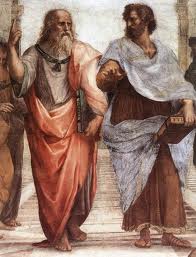
    Plato and Aristotle arguing in the School of AthensWhen I was doing my PhD at the University of Otago, Madeleine and I would try to save up for a “date night” once a fortnight.  Often we would go to the movies. On more than one occasion we would stand in the theatre and look at various options. Madeleine would suggest we see one movie and give some reasons, I would suggest another. After a few minutes we would settle on a movie and then buy a ticket.

    In the technical sense, in amicably settling on which movie we would see Madeleine and I had ‘had an argument.’ Now, in everyday language when we say a husband and wife have ‘had an argument’ we mean they have quarrelled, had a fight, come into conflict with each other and so forth. In logic, however, the phrase is more precise. An argument is defined as a set of reasons in support of a conclusion.

    This definition suggests an argument has two features:

    A Conclusion: the claim being proposed as true; and,

    Premises: a set of propositions or statements being made in support of a conclusion.

    It is important to note that these features are not the same thing. Simply asserting your conclusion is not an argument, it is a statement. Asserting random facts does not constitute an argument either, unless these facts are offered in support of some conclusion. Grasping the distinction between a premise and a conclusion is important because it is possible, and in many cases likely, that you will come across an argument which has a conclusion you agree with and yet the premises offered for it are either false or do not support this conclusion. Consider the following:

    Premise [1] The sun is divine;

    Premise [2] Whatever is divine would exist in the centre of the solar system and have all other planets orbiting it;

    Therefore:

    Conclusion [3] The sun is at the centre of the solar system and all the other planets orbit it.

    Pretty much all of us would accept the conclusion of this argument. However, few of us would accept the premises. It is important to note this because one real problem that exists in our current society is that people fail to draw the distinction between (more…)

  • Fallacy Fridays

    Over the past few years I have occasionally been asked by para-church, church and home-schooling groups to put together a critical thinking or “mini logic” course, with a focus on fallacy spotting, and teach it to their youth. I have done this from time to time and have often found as many adults in attendance as youth; the demand for this sort of thing seems to be fairly high if the turnouts of these events are anything to go by.

    Invalid ArgumentCourses of this sort are common in a first year university philosophy programs but there are not many that are accessible to younger students of high school age or those not enrolled in such programs. It also seems that there are not many resources out there for self-teaching that are lay friendly in general. Madeleine and I subscribe to the email lists of a few home schooling groups and it is not uncommon for us to see people asking where they can find resources of this nature to use in their small groups and within their families. Those resources that get recommended are not always so user friendly and sometimes their quality is deficient.

    So, given that Thinking Matters Tauranga have been particularly keen for some time now for me to formally put together what I have been doing ad hoc (along with a few other other groups) I have decided to do a short piece on this every Friday on MandM entitled “Fallacy Friday”. This should enable me to both actually get on with sorting through the rough notes I normally work from into tidier form and get critical feedback on the material itself – some understanding of how others will understand what is said and so on would be very useful before I turn this into a course I offer to small groups.

    The first few Fallacy Friday posts will cover some basics then I will move into common fallacies proper with examples and application. To navigate the series as we go on, use the tag.

    Apologetics 315 are producing an audio version of this series, also released every Friday. Subscribe to the Fallacy Friday Podcast using:
    • RSS Feed, or
    • Via iTunes, or
    • one-click to your feed-reader

  • Contra Mundum: In Defence of Santa

    I grasped the sponge, water dripped down my wrist as I took aim. The man from the McGillicuddy Serious Party raised his voice and said “now throw!” The sponge flew through the air from my hand and struck Santa solidly on the chest soaking his red costume. Santa laughed and said “throw another one!”

    It was my second year at university and the McGillicuddies were running their annual “throw a sponge at Santa” event. This was done ostensibly to protest materialistic consumerism of which they saw Santa as a modern icon. I was simply sick of the whole hypocritical façade that was Christmas. An event that for many, myself included, has deeply religious significance was being trivialised by a fat man in a red suit from the north-pole. It really irked me.

    Years have passed since this event and with age comes (I hope) more reserve and wisdom. I have learned more about the cultural icon known as Santa and I have come to appreciate, at least from an historical perspective, why this icon exists. I agree that today the historical meaning of this icon has been forgotten. However I think that the solution to this forgetfulness is to re-awaken our cultural memory by addressing the theological and historical ignorance prevalent in our culture; attempts to cut ourselves off from the past even further are not the right approach.

    Nicholas of Myra

    The reference to Santa as an icon is apt because the original Santa, Nicholas of Myra, became an icon in religious art. In earlier times there was no printing press and illiteracy was widespread so vivid art became an important way of communicating a message. Characters had to be readily recognisable, in religious art Nicholas was represented by the figure of a man with a large white beard. Given that he was a Catholic bishop, he was portrayed in red robes. The figure of a white-bearded man in red robes became a symbol for an historical person, and the story of Nicholas was kept alive because of its immediate relevance for the present.

    Nicholas of Myra was probably (more…)

  • Contra Mundum: The Number of the Beast

    The OmenRecently TV3 screened The Omen. This classic horror is a about a boy called Damian who is the predicted anti-Christ and appropriately has the number 666 on his head. This film epitomises how the book of Revelation is understood in contemporary culture; apparently it predicts a future person, the beast or the anti-Christ who will take over the world. Associated with this is the number 666 which is literally inscribed into people’s heads or hands.  I think this pop-theology is mistaken.

    The relevant section in Revelation says:

    And the dragon stood on the shore of the sea. And I saw a beast coming out of the sea. He had ten horns and seven heads, with ten crowns on his horns, and on each head a blasphemous name. The beast I saw resembled a leopard, but had feet like those of a bear and a mouth like that of a lion. The dragon gave the beast his power and his throne and great authority… The whole world was astonished and followed the beast. Men worshiped the dragon because he had given authority to the beast, and they also worshiped the beast and asked, “Who is like the beast? Who can make war against him?” (Rev 13:1-2, 3b-4)

    The text proceeds:

    Then I saw another beast, coming out of the earth. He had two horns like a lamb, but he spoke like a dragon. He exercised all the authority of the first beast on his behalf, and made the earth and its inhabitants worship the first beast … He also forced everyone, small and great, rich and poor, free and slave, to receive a mark on his right hand or on his forehead, so that no one could buy or sell unless he had the mark, which is the name of the beast or the number of his name. This calls for wisdom. If anyone has insight, let him calculate the number of the beast, for it is man’s number. His number is 666. (Rev 13:11,16-18)

    Most English translations mention the number 666, (more…)