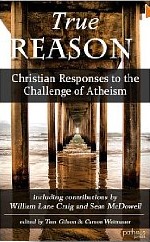
In a previous post, I observed that Walter Sinnott-Armstrong concedes that secular accounts of moral obligation cannot vindicate the thesis that agents always have decisive (all-things-considered) reasons to avoid wrongdoing. To mitigate this problem, he argues: Is this limitation a problem for secular accounts of morality? I doubt that, too. If we demand this extreme […]
Entries Tagged as 'Eschatology'
Sinnott-Armstrong on God, Secularism and “reasons” to be moral. Part Three: Can Religious theories answer the question, “Why be moral?”
September 13th, 2025 1 Comment
Tags: Divine Command Theory · Dualism of Practical Reason · God and Morality · Walter Sinnott-Armstrong · Why be Moral?
Sinnott-Armstrong on God, Secularism and “reasons” to be moral. Part two: Do unselfish reasons answer the question, “Why be moral?”
September 8th, 2025 Comments Off on Sinnott-Armstrong on God, Secularism and “reasons” to be moral. Part two: Do unselfish reasons answer the question, “Why be moral?”
*** Walter Sinnott-Armstrong discusses the following objection: “Harming others is sometimes in some people’s best interest, even considering probable costs. In those cases, some theists say that only a divine threat of Hell provides a reason to be moral. Since atheists and agnostics do not believe in God, they do not believe in divine retribution […]
Tags: Dualism of Practical Reason · Hell · Mark Murphy · Walter Sinnott-Armstrong · Why be Moral?
Sinnott-Armstrong on God, Secularism and “reasons” to be moral. Part One:
September 3rd, 2025 Comments Off on Sinnott-Armstrong on God, Secularism and “reasons” to be moral. Part One:
In his book Morality Without God, Walter Sinnott-Armstrong argues that a secular account of the nature of moral properties—namely, that wrongness is constituted by the property of harming others—is preferable to a theistic account, in which wrongness is identified with the property of being contrary to God’s commands Chapter 6 is entitled “Why be moral?” In […]
Tags: Dualism of Practical Reason · God and Morality · Walter Sinnott-Armstrong · Why be Moral?
Reflections on Annihilationism, Traditionalism and the Problem of Hell
July 28th, 2018 Comments Off on Reflections on Annihilationism, Traditionalism and the Problem of Hell
Last year I gave a paper entitled “Reflections on Annihilationism, Traditionalism and the Problem of Hell’ at the Rethinking Hell conference in Auckland. This talk is now available online.
Tags: Annhilationism · Eschatology · Hell · Shawn Bawulski
Annihilationism and the Infinity of Hell: Bawulski and the Disproportionality Argument
January 5th, 2018 10 Comments
This is part of a talk I gave at the Rethinking Hell Conference in Auckland earlier this year. Evangelical Annihilationist’s such as John Stott, Edward Fudge, John Wenham, and various others challenge the traditional view that hell is a place of eternal conscious torment. They contend that biblical language such as “eternal fire,” “eternal destruction,” “death,” […]
Tags: Annihilationism · Hell · Shawn Bawulski
Richard Carrier and the “Infantile” objection to God’s command’s
October 27th, 2015 1 Comment
In his article, “Why Traditional Theism Cannot Provide an Adequate Foundation for Morality”, Walter Sinnott-Armstrong argued that a “Divine command theory makes morality childish.”[1] In my response to Armstrong, “Is Ethical Naturalism more Plausible than Supernaturalism?”[2] I made two points. First, I addressed a tangential point: that Armstrong’s argument caricatures divine command theory (“DCT”) by tacitly assuming that […]
Tags: Autonomy · Divine Command Theory · God and Morality · Hell · Richard Carrier · Walter Sinnott-Armstrong
Shawn Bawulski and the Problem of Hell: Part One
April 26th, 2014 4 Comments
The traditional conception of hell understands the punishment of the finally impenitent to be conscious eternal torment. The punishment of hell is eternal in the sense of it being of unending duration and it involves conscious torment. Annihilationists, on the other hand, argue the traditional view is contrary to scripture. They contend that, in scripture, the […]
Tags: Annihilationism · Apologetics · Hell · Philosophical Theology · Shawn Bawulski · Systematic theology

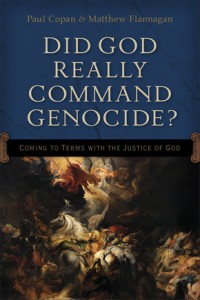 A common objection to belief in the God of the Bible is that a good, kind, and loving deity would never command the wholesale slaughter of nations. In the tradition of his popular Is God a Moral Monster?, Paul Copan teams up with Matthew Flannagan to tackle some of the most confusing and uncomfortable passages of Scripture. Together they help the Christian and nonbeliever alike understand the biblical, theological, philosophical, and ethical implications of Old Testament warfare passages.