Tag: Freedom of Religion

  • The Separation of Church and Self: Rethinking Separationism

    Is it just for a pluralistic society to ground its public policy on religious premises? What role should religion play in such a society? Debate over questions like these has figured in theology, philosophy, political science, jurisprudence and popular culture for centuries. In contemporary Western pluralistic society the debate continues. Even for those unfamiliar with its nuances at the higher levels the effect of the standard view, as described by Stephen Carter, is immediately familiar:

    “One good way to end a conversation – or start an argument – is to tell a group of well educated professionals that you hold a political position (preferably a controversial one such as being against abortion or pornography) because it is required by your understanding of God’s will. In the unlikely event that anyone hangs around to talk with you about it, chances are that you will be challenged on the ground that you are intent on imposing your religious beliefs on other people. And in contemporary political and legal culture, nothing is worse.”[1]

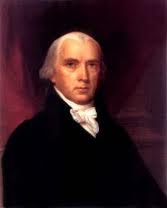
    James Madison

    Carter is referring to the separationist understanding of religion and public life, the idea that in a contemporary pluralistic society significant restraint must be put on the political role of religious reasons. This restraint is negative; when a functionary deliberates over a proposed policy it is not justified for that functionary to decide to support or oppose that policy on grounds derived from religion. A corollary of this is that citizens should not try to influence public policy by appealing to religious reasons. Separationists argue that the public policy of a pluralistic society must be able to be justified by a plausible secular justification in order for it to be just to all. Religious beliefs, while utilised and followed in private, should be kept separate from public policy debates, the administration of public institutions and the deliberation of public functionaries. (more…)

  • Middleton Grange, Free Exercise and the Gay Rights Movement UPDATED

    Over at GayNZ.com’s Proclamations of the Red Queen blog, Craig Young is in a celebratory  mood. Middleton Grange, a Reformed Evangelical Christian school has been forced by law to pay reparations and have their management undergo “human rights education” because they dismissed a netball coach on the grounds that he openly engaged in homosexual conduct.

    Middleton Grange is a school based in Christchurch. The school’s aim’s, as stated on its website, show that its first aim as a educational facility is to “Help pupils know and understand God and His ways and respond to Him in obedience, love and service.” The website further states,

    The school rests on a Reformed and Evangelical interpretation of Scripture which informs all aspects of governance and management. The Christian Schools’ Trust is responsible for safeguarding the Special Character of the school.

    Now it should be no surprise to any educated person that a reformed evangelical interpretation of scripture usually includes, among other things, the contention that sex between people of the same sex violates God’s commands. Nor should it be a surprise that, given the school’s stated purpose is to inculcate these beliefs, it will not hire or retain people whose example or teaching contradicts this purpose.

    The only question that really needs to be asked then is whether it should be legal for religious groups like this to set up such schools and teach these things and engage in these sorts of hiring practices. Should reformed evangelical Christianity be a tolerated religion? The alternative is, of course, to ban such schools, force parents to send their children to schools that will teach that their parents religious beliefs are false  – essentially not allow adults to propagate these values to their children. This is known as religious persecution.

    In fact by ruling that the school must hire/retain staff whose actions are inconsistent with the schools purpose and then requiring the staff to undergo “human rights education.” the Human Rights Commission (HRC) goes one step further. It states that not only must such schools not exist but it maintains that the adults running them must undergo compulsory re-education into the secular liberal way of thinking. Am I the only one who finds this sort of thing a tad draconian?

    Mr Young, however, seems to think otherwise, he states,

    Frankly, I’m surprised that this sort of collision between lesbian and gay teachers and backward fundamentalist enclaves has taken so long to materialise. I suspect that it’s because we shun such neurotic and hermetically sealed enclaves unless there is good reason to do otherwise

    Apparently the biggest problem in all this is that this sort of religious persecution and re-education has not happened sooner. As to why such schools should be persecuted, Young gives three reasons.

    First because it is a “malignant Christchurch fundamentalist” school. In other words, Young considers this school to expound fundamentalism and he considers such a religion to be “malignant.” This really is not the issue, the issue is whether the state should persecute such religious groups and subject the people within them to compulsory re-education. There are many religious perspectives I disagree with, some I find highly offensive yet this does not mean that the state should intervene in this way.

    Young’s second reason is,

    Founded in 1964, it was host to Graham Capill, Christian Heritage Party leader. His dad Don was Vice Principal until the eighties. I was a one-time inmate there. It served as a nexus for the abortive campaign against homosexual law reform in the mid-eighties.

    There are three reasons here (a) Young attended the school and did not like it, (b) a political leader Young is known to immensely dislike and who was convicted for sexual molestation once attended the school and this man’s father was once Principal; and, (c) the school promoted political views at odds with the secular liberal mainstream on issues like abortion and homosexuality.

    It is hard to see how any of these reasons justify the HRC’s actions. Is Young saying any school he does not like should be legally punished? Is Craig suggesting that if an old boy of a school is convicted of a crime years after leaving that the whole school should be held responsible? Does Young support a return to collective and vicarious punishments perhaps?

    The last reason Young gave is perhaps the most telling; schools should be subject to legal sanction if their politics are disagreeable. Again, am I the only one who finds it odd that this sort of crap is proposed by one of the voices for “tolerance” and “respect for diversity”?

    Craig then gives the usual red herrings; he states “Should it end there? Well, no. If Middleton Grange refuses to employ lesbian and gay teachers, then what about issues like LGBT suicide prevention? Or homophobic bullying?” While I agree that bullying of any human being is wrong (it being assault) and suicide of any person is tragic, the reasoning here lacks cogency. Suppose a fundamentalist Christian was severely bullied at school, the kids picked on him because they considered him to be an intolerant bigot or suppose that his refusal to have pre-marital sex or drink alcohol made him a social outcast? I take it that Young would support fundamentalist teachers coming into this school and teaching a fundamentalist interpretation of the bible to their students so as to re-educate those bullying him? Perhaps the HRC should force the management of any secular school that does not do this to attend church…

    The only remotely sensible comment Craig makes is a rhetorical question, “Should fundamentalist private schools be penalised by withheld operational funding if they refuse to obey mainstream New Zealand anti-discrimination laws?” Indeed that is the core question. Should private religious schools be allowed to teach and freely exercise their religion? Some segments of the gay rights movement and their supporters need to be honest and just outright admit that they support religious persecution instead of talking about “tolerance” and “the celebration of diversity” – values they clearly do not believe in.

    UPDATED BY MADELEINE

    In the comments below Joel, a blogger from the US, writes:

    There is no liberty in New Zealand, I take it, nor equality.

    And what about the human rights violated against the Christian school?

    I have chosen to respond this here as originally Matt and I had toyed with looking at this in this post anyway and so I don’t want it getting lost in the comments, which I anticipate will be prolific in number (just a hunch).

    New Zealand does not have an entrenched constitution, its Bill of Rights is a simple statute which is ultimately subordinate to any other statute it clashes with, see section 4:

    4.  Other enactments not affected
    No court shall, in relation to any enactment (whether passed or made before or after the commencement of this Bill of Rights),—

    (a) Hold any provision of the enactment to be impliedly repealed or revoked, or to be in any way invalid or ineffective; or

    (b) Decline to apply any provision of the enactment—

    by reason only that the provision is inconsistent with any provision of this Bill of Rights.

    Although, to be fair, for any clash the clashing rule, law or policy must be read in the way most conducive to it being consistent with the Bill of Rights, see section 6:

    6. Interpretation consistent with Bill of Rights to be preferred
    Wherever an enactment can be given a meaning that is consistent with the rights and freedoms contained in this Bill of Rights, that meaning shall be preferred to any other meaning.

    If a consistent reading cannot be achieved then the courts will either deem a policy inconsistent with the Bill of Rights or deem it a justified limitation,

    5. Justified limitations
    Subject to section 4 of this Bill of Rights, the rights and freedoms contained in this Bill of Rights may be subject only to such reasonable limits prescribed by law as can be demonstrably justified in a free and democratic society.

    The reality is that due to the fact the courts cannot strike statutes down or refuse to apply them and that there are no penalties for Bill of Rights breaches either beyond the stigma of being in breach of it, which only works if society values the right in question, if it is an unpopular group or cause being violated who cares right?

    So that is the context freedom of religion sits in in New Zealand, which is covered in the section on democratic and civil rights:

    13. Freedom of thought, conscience, and religion
    Everyone has the right to freedom of thought, conscience, religion, and belief, including the right to adopt and to hold opinions without interference.

    14. Freedom of expression
    Everyone has the right to freedom of expression, including the freedom to seek, receive, and impart information and opinions of any kind in any form.

    15. Manifestation of religion and belief
    Every person has the right to manifest that person’s religion or belief in worship, observance, practice, or teaching, either individually or in community with others, and either in public or in private.

    Now at a glance at these sections our US friends must be wondering how the tale Matt told above and the story in the newspaper article he linked to could happen; it appears that New Zealand requires the state to allow its citizens and private organisations the right to form any belief they like, impart it and act on it.

    The reason you are momentarily lulled into this false sense of reality is because you have not factored in the Human Rights Act. Remember earlier when I said the Bill of Rights is subject to other laws? Let’s take a look at section 22, I have highlighted the key bits to take note of in italics:

    22. Employment
    (1) Where an applicant for employment or an employee is qualified for work of any description, it shall be unlawful for an employer, or any person acting or purporting to act on behalf of an employer,—

    (a) To refuse or omit to employ the applicant on work of that description which is available; or

    (b) To offer or afford the applicant or the employee less favourable terms of employment, conditions of work, superannuation or other fringe benefits, and opportunities for training, promotion, and transfer than are made available to applicants or employees of the same or substantially similar capabilities employed in the same or substantially similar circumstances on work of that description; or

    (c) To terminate the employment of the employee, or subject the employee to any detriment, in circumstances in which the employment of other employees employed on work of that description would not be terminated, or in which other employees employed on work of that description would not be subjected to such detriment; or

    (d) To retire the employee, or to require or cause the employee to retire or resign,—

    by reason of any of the prohibited grounds of discrimination.

    Let’s take a look at the “prohibited grounds of discrimination” shall we? The definitions section states “prohibited ground of discrimination has the meaning given to it by section 21″. Section 21 is long so I have only included the relevant bits for our purposes,

    21 Prohibited grounds of discrimination

    (1) For the purposes of this Act, the prohibited grounds of discrimination are—

    (m) Sexual orientation, which means a heterosexual, homosexual, lesbian, or bisexual orientation.

    So there you have it, freedom of thought, conscience, religion, expression and the manifestation of those beliefs are trumped by the Human Rights Act (and the Education Act which permits private schools to educate and manage themselves along the lines of the special character of the school).

    Joel is right, New Zealand’s commitment to liberty and equality is lacking as is respect for freedom of religion.
  • Guest Post: No Official Religion in God’s Own?

    David Simpkin is a Hamilton based lawyer with an interest in church-state issues. He studied law at the University of Auckland and holds a BA majoring in history and political studies. David is married to Susan and has a infant son, Caleb. He attends Whitiora Bible Church in Hamilton. David writes:

    As a holiday weekend that coincides with the most significant festival on the Christian calendar, Easter, concludes we should reflect on the freedom of religion we have in this nation. The Human Rights Commission is calling for submissions on a draft statement on freedom of religion and belief that includes the statement:

    ‘New Zealand has no official or established religion.’

    Race relations conciliator Joris de Bres has publicly said that New Zealand’s absence of a state religion is a statement of fact[1]. Former Prime Minister Helen Clark was also quoted as saying there is no state religion, there will be no state religion[2]. These comments may be a surprise to those Kiwis who thought rugby has the role of a national religion!

    Given the above comments by influential New Zealanders and the tax payer supported Human Rights Commission it must be clearly correct legally to say that New Zealand has no official religion.

    Well, actually, no, it is not.

    Does New Zealand Have an Official Religion?
    An important distinction needs to be made at the outset. A state with an established religion is one in which a particular religion or church is effectively an arm of the state, and the state identifies with a particular religion. A state with an official religion gives special recognition or privileges to a religion. While an established religion and an official religion are usually found together, that is not always the case.

    One of the most (if not the most) important offices in New Zealand is that of our head of state. New Zealand is a constitutional monarchy and the head of state in New Zealand is our monarch, currently Queen Elizabeth II.

    The Accession Declaration Act 1910 provides New Zealand’s head of state’s oath of office’ This accession declaration states:

    “I … do solemnly and sincerely in the presence of God profess, testify, and declare that I am a faithful Protestant, and that I will, according to the true intent of the enactments which secure the Protestant succession to the Throne of my Realm, uphold and maintain the said enactments to the best of my powers according to law.”

    The accession declaration provides that the Queen must claim to be a Protestant. This is inconsistent with the notion that New Zealand has no official religion. It also refers to other laws which “secure the Protestant succession.” These other laws are the Bill of Rights 1688[3] and The Act of Settlement 1700[4]. All these acts of parliament were re-affirmed as part of the law of New Zealand by our parliament as recently as 1988 in the Imperial Laws Application Act (which, curiously given her comments above, Helen Clark voted in favour of passing[5]). The other laws that secure the Protestant succession are intended to ensure that the King or Queen of New Zealand is always a Protestant Christian. These laws are, incidentally, identical to the current law in the now multi-religious United Kingdom. Where New Zealand differs from the United Kingdom is that neither the Anglican nor Presbyterian churches are established.

    The legal requirement that New Zealand’s head of state must be a Protestant Christian means that in our constitutional form at least we are a Christian nation. Technically our official religion is Anglicanism[6]. Having an official religion of course in no way requires New Zealanders to profess a particular religion. But does an Official Religion pose a threat to Religious Minorities? To answer this question lets refer to some overseas examples.

    Having no official religion and a secular state has been no guarantee that freedom of religion and human rights generally will be respected in North Korea, Cuba and the People’s Republic of China, all of which have woeful human rights records.

    By contrast the Lutheran church is the established church in Norway (there is even a minister of church affairs). It would be fair to say that Norway is not known for its suppression of freedom of religion or for having a poor human rights record.

    Likewise, the established Anglican Church in England and the Presbyterian Church in Scotland has not led to a lack of freedom of religion. Indeed the tolerant Anglican Church is preferable for religious minorities to intolerant secularism.

    It may come as a surprise to learn that there are leading Muslim and Jewish scholars who are actually against disestablishing the Anglican Church in the United Kingdom. To paraphrase their argument, an established but tolerant Anglican Church is preferable to a nation where all reference to the religious or sacred is ruthlessly excluded from the public domain[7].

    The intolerant secularism rightly feared by religious minorities has been evident in France recently. France has already banned the Islamic headscarf and outward wearing of the crucifix, and other religious symbols, in state schools[8] and is considering banning the wearing of a burqa altogether, moves which are causing public discord in France[9].

    Having an official religion is not necessarily any threat to freedom of religion, and may actually be more beneficial to religious minorities than aggressive secularism. The advancement of the rights of religious minorities and multi-culturalism should not be mis-used as a Trojan horse to advance intolerant secularism.

    Conclusion
    As a nation we should celebrate our tolerant Christian tradition, not attempt to falsely deny the legal fact that Christianity is a part of our national constitution. Ironically denials that Christianity is our official religion are playing down the Christian religious tradition that bought about the very religious freedom and tolerance the Human Rights Commission is attempting to promote.

    We have nothing to fear and will gain by having a National Statement on Religious Diversity in New Zealand and a Draft Statement on Freedom of Religion and Belief that acknowledge the existence of New Zealand’s official religion rather than willfully ignore it.


    [1] “There’s No State Religion –De Bres” New Zealand Herald 19 February 2007.
    [2]
    As above.
    [3]
    The relevant section of Bill of Rights 1688 provides:

    And whereas it hath beene found by experience that it is inconsistent with the safety and welfaire of this Protestant Kingdome to be governed by a Popish Prince or by and King or Queene marrying a Papist the said Lords Spirituall and Temporall and Commons doe further pray that it may be enacted that all and every person and persons that is are or shall be reconciled to or shall hold communion with the See or Church of Rome or shall professe the Popish religion or shall marry a Papist shall be excluded and be for ever uncapeable to inherit possesse or enjoy the Crowne and Government of this Realme.

    [4] Section 3 of the Act of Settlement 1700 states (inter alia) “that whosoever shall hereafter come to the possession of this Crown shall joyn in Communion with the Church of England.”
    [5]
    Hansard, 1988 (4th Labour government 1984-1990).
    [6] The Head of State is required to be an Anglican – refer to footnote 4.
    [7]
    Tariq Modood “(Muslim) Establishment, Multiculturalism and British Citizenship,” Political Quarterly 65 (1994) pp.53-73; Rabbi Jonathan Sacks, Ibid at 63-64; also Jonathan Sacks, The Persistence of Faith: Morality and Society in a Secular Age, London, 1991, cited in R Ahdar and J Stenhous et al God and Government The New Zealand Experience, University of Otago Press 2000.
    [8] “Party Pushes Burqa Law Despite Public Discord” New Zealand Herald 10 January 2010.
    [9] Ibid.

    [Wikipedia have a chart showing which countries Queen Elizabeth II is currently head of state of.]

  • Chai Feldblum: “We Should not Tolerate Private Beliefs”

    In “Diatribe: To All Da Haters” (originally entitled “Queers and Destiny: Who Hates Who”) an article published a few years ago in Critic (the student magazine of Otago University) I wrote the following:

    … If teaching that homosexual conduct is wrong is akin to racism or propagation of apartheid, then the aforementioned religious organisations are the moral equivalent of the Ku Klux Klan. Those who propagate such arguments need to reflect on the implications of what they affirm. Imagine a society where the local synagogue or Mosque is treated as though it were the local Klan headquarters. Or where Muslim students are perceived and treated the way we currently relate to white supremacists. It is not difficult to see that the widespread dissemination and acceptance of this argument would lead to an atmosphere of pervasive religious intolerance – such intolerance is the very antithesis to what many of those protesters ostensibly claim to stand for.

    The solution to intolerance is tolerance. Tolerance of those ideas you may fervently disagree with and recognition of another’s right to freely hold and express them. Tolerance requires one to respond to disagreement with rational persuasion, not vilification. This cuts both ways.

    I was widely vilified and ridiculed for my comments and denounced as hate filled and bigoted. It is interesting to compare what I said with the comments of Chai Feldblum, the Georgetown University law professor nominated by Obama to serve on the Equal Employment Opportunity Commission.

    Just as wYes we can!e do not tolerate private racial beliefs that adversely affect African-Americans in the commercial arena, even if such beliefs are based on religious views, we should similarly not tolerate private beliefs about sexual orientation and gender identity that adversely affect LGBT [lesbian, gay, bisexual, and transgender] people,” the Georgetown law professor argued…

    For those who believe that a homosexual or bisexual orientation is not morally neutral, and that an individual who acts on his or her homosexual orientation is acting in a sinful or harmful manner (to himself or herself and to others), it is problematic when the government passes a law that gives such individuals equal access to all societal institutions.

    Of course those religions that believe homosexual conduct is sinful include Roman Catholicism, Eastern Orthodoxy, evangelical Protestantism, many neo-orthodox Protestants, Islam, Orthodox Jews, Mormons, Jehovah’s Witness’s, Seventh Day Adventists and so on. So presumably, if we are to take Feldblum at her word, none of these groups should be tolerated in Obama’s society and all should be denied equal access to societal institutions.

  • Religious Restraint and Public Policy: Part VI

    In my last posts, beginning Religious Restraint and Public Policy: Part I,  I set out the doctrine of religious restraint and critiqued some of the key arguments in support of it. I looked at the objection that the argument from respect is too thin, that applied consistently it excludes too much and Audi’s response to this. I examined and critiqued Gerald Gaus’ attempt to salvage the argument from epistemic inaccessibility and his idea of open justification. In this post I will look at the dangers of religion as a justification for its asymmetrical treatment within the DRR and conclude the series.

    B          The Dangers of Religion

    One explanation as to why this asymmetry is applied to religious reasons is offered by Quinn; “Some people fear that religious argument is apt to be dangerously divisive.”[82] Audi concurs, “[religious reasons] are special in relation to liberal democracy even by contrast with [secular reasons] … that are not accessible to any normal adult.” [83] He gives five “salient points” to support his case, all based on the idea that religious reasons are dangerous to society. [84]

    First Audi claims that religious reasons are often “directly or indirectly taken to represent an infallible authority”.[85] The second point is that religious people often “believe that anyone who does not identify with [the ultimate divine source] is forsaken, damned, or in some other way fundamentally deficient.”[86] Third, “religious reasons often dictate practices that are distinctively religious in content (such as prayer) or intent (such as preserving the fetus on the ground that it is a gift from God)”.[87] Fourth, with many religious leaders, especially leaders of cults, there is a risk that they are “cloaking their prejudices with absolute authority.”[88] Finally, Audi contends that religious people tend to be “highly and stubbornly passionate about the importance of everyone’s acting in accordance with religious reasons”.[89]

    Again these features are not unique to religion. As McGrew argues, all these features can be equally present in secular people and movements;[90]

    It is sadly amusing to read this list and to consider how well its negative aspects apply to secular people and movements. Communism, for example, is as fanatical as any conventional religion and demands group-think on an unrivaled scale. Contemporary feminism aspires to control worldview, language, and behavior. The New Atheists are exceedingly passionate about making people behave in accordance with their own beliefs (making sure children are taught Darwinism as unquestioned fact, for example), and Richard Dawkins and P.Z. Myers have an inflated sense of self-importance that would make many a Christian megachurch pastor look modest by comparison. Dawkins is infamous for having repeatedly and insistently called a religious upbringing “child abuse,” and while Dawkins has shied away from the obvious legal implications of this accusation, not everyone who thinks as he does is so cautious. Other secularists, self-styled “comprehensive liberals,” have expressly advocated the use of the power of the state to monitor and limit parents’ ability to transmit their religion to their children (see Hitchcock, 2004). As for the vicious condemnation of children who do not fully conform to their parents’ secular ideology, a good example of this phenomenon is the strange story of Rebecca Walker, daughter of feminist icon Alice Walker. And, on the other hand, there are plenty of religious people who do not display such negative characteristics. It simply does not appear to be true that we reduce fanaticism, self-important leadership, attempts at thought control, and the like in society by reducing the role of religion in public life.

    McGrew suggests there are secular analogues of even Audi’s third reason, that religious reasons often dictate practices that are distinctively religious in content or intent;[91]

    It would certainly be undesirable if people were being coerced to pray to any God, even the true God. But then, secular ideology can and sometimes does demand that we do homage to itself—in the form of changing our language to make it politically correct, for example, or treating two men or two women as “married” in all of our business activities. The problem with forcing people to pray to the true God is that the true God is not truly worshiped in that fashion. The problem with forcing people to pray to false gods and to pledge allegiance to false ideologies is that they are false. You will not avoid the problem of the coercion of conscience by limiting the role of religion in public life. You will only shift that problem so that the unreasonable coercion comes from some quarters rather than others.

    Audi’s first point invites a parallel rejoinder. He defines infallible propositions as those that are “impossible that they be both endorsed or accepted by God and false”.[92] On this definition of infallibility every proposition is infallible. God, as Audi understands him, is omniscient. God only believes true propositions. It follows then that any proposition God accepts cannot be false; this is true whether it is a religious proposition or a secular one.

    Audi’s main concern is that a person who believes an action is commanded by God believes that an omniscient, infallible being has endorsed that action. Appeals to purported divine commands are therefore problematic. However, some secular ethical theories face precisely the same problem.  One of the most influential secular theories, endorsed by ethicists as diverse as David Hume, Adam Smith, Henry Sidgwick, Richard Hare, Roderick Firth, John Stuart Mill, Tom Regan, Richard Brandt, Immanuel Kant and others, is the ideal observer theory. On this theory an action is wrong, if and only if, it would be proscribed by an ideal observer, by a person who is perfectly impartial and perfectly informed on all the relevant facts. A hypothetical ideal observer is no less infallible than religious believers take God to be. It is hard to see how invoking religious reasons is not acceptable but invoking the secular reasons is.[93]

    C         Argument from Religious Wars
    A more forcible danger of religion argument invokes the spectre of religious wars. Audi states “if religious considerations are not appropriately balanced with secular ones in matters of coercion, there is a special problem: a clash of Gods vying for social control. Such uncompromising absolutes easily lead to destruction and death”[94] Wolterstorff articulates the concern;[95]

    One reason which liberals have offered ever since the emergence of liberalism in the seventeenth century is that it’s just too dangerous to let religious people debate political issues outside of their own confessional circles, and to act politically, on the basis of their religious views. The only way to forestall religious wars is to get people to stop invoking God and to stop invoking canonical scriptures when arguing and determining politics.

    The adequacy of this argument can be contested on several grounds. First, Quinn, Greenwald and Wolterstorff note that while it was true of 17th century England, “social peace did depend on getting citizens to stop invoking God, canonical scriptures, and religious authorities when discussing politics in public”,[96] it is not plausible that such a danger exists in 21st century Western countries like New Zealand, Australia and the United States. Quinn notes, “current political debate in the United States exhibits failure to comply with Audi’s principles on a massive scale and yet shows no tendency to reignite the Wars of Religion of the early modern era.”[97]

    Wolterstorff makes two other related points. He notes that “the slaughter, torture, and generalised brutality of our century has mainly been conducted in the name of one or another secular cause–nationalism of many sorts, communism, fascism, patriotisms of various kinds, economic hegemony.”[98] Second, he notes that “many of the social movements in the modern world that have moved societies in the direction of liberal democracy have been deeply and explicitly religious in their orientation”[99] He cites the abolitionist movement, the civil rights movement and movements resisting communism, facism and apartheid as examples. The invocation of religious reasons risks war and civil strife when certain types of religious reasons are invoked in particular socio-political contexts. This is equally true of secular reasons; certain types of secular reasons can be dangerously incendiary in particular socio-political contexts. There seems no basis for an asymmetry between secular and religious reasons on these grounds.

    Eberle and Cuneo add that 17th century “confessional conflict … [was] typically rooted in egregious violations of the right to religious freedom, when, for example, people are jailed, tortured, or otherwise abused because of their religious commitments.”[100] Given that few, if any, who appeal to religious reasons advocate such violations or could plausibly bring them about, such appeals are unlikely to have tumultuous effects.

    In terms of protecting freedom of religion from these kinds of abuses it is not obvious that secular reasons fare any better, “secularists have a long history of hostility to the right to religious freedom and, presumably, that hostility isn’t at all grounded in religious considerations”.[101] Moreover when[102]

    religious believers have employed coercive power to violate the right to religious freedom, they themselves rarely have done so in a way that violates the DRR … when such rights have been violated, the justifications offered, even by religious believers, appeal to alleged requirements for social order, such as the need for uniformity of belief on basic normative issues. One theological apologist for religious repression, for example, writes this: ‘The king punishes heretics as enemies, as extremely wicked rebels, who endanger the peace of the kingdom, which cannot be maintained without the unity of the faith. That is why they are burnt in Spain’.

    Similarly, Aquinas, in a Rawlsian vein, famously justified the suppression of heretics by appealing to the accepted political culture of his day which required that counterfeiters be executed.

    Consequently, the religious wars of the 17th century were caused, not by the appeal to religious reasons per se but rather by the violation of religious freedom; this violation has often been defended on secular grounds. It is unlikely that the DRR provides a bulwark against such abuses.

    III        Conclusion

    On examining the DRR it appears that there is no good reason for singling out religious reasons for a particular restraint and limiting discourse to secular reasons. The grounds offered for doing so, the golden rule, the epistemic accessibility of religious premises, the dangers of religion and the potential for religious wars all apply with equal force to secular beliefs. Hence, the restriction appears arbitrary. Moreover, as applied, the DRR is often incoherent and if applied consistently would render most substantive coercive laws unjustified. The current practice of equating secularism with neutrality is flawed.

    As Carter eloquently puts it,[103]

    What is needed is not a requirement that the religiously devout choose a form of dialogue that liberalism accepts, but that liberalism develop a politics that accepts whatever form of dialogue a member of the public offers. Epistemic diversity, like diversity of other kinds, should be cherished, not ignored, and certainly not abolished. What is needed, then, is a willingness to listen, not because the speaker has the right voice but because the speaker has the right to speak. Moreover, the willingness to listen must hold out the possibility that the speaker is saying something worth listening to; to do less is to trivialize the forces that shape the moral convictions of tens of millions of Americans.

    This series was written as a supervised research paper in pursuit of my LLB.


    [82] Phillip Quinn “Political Liberalisms and Their Exclusions of the Religious” (1995) 69:2 Proceedings and Addresses of the American Philosophical Association 35, 143.
    [83]
    Robert Audi “Liberal Democracy and the Place of Religion in Politics” in Nicholas Wolterstorff & Robert Audi (eds) Religion in the Public Square: The Place of Religious Convictions in Political Debate (Rowman and Littlefield Publishers Inc, Lanham Md, 1997) 1-66, 31.
    [84]
    Ibid 31-32.
    [85]
    Ibid 31.
    [86]
    Ibid.
    [87] Ibid.
    [88]
    Ibid 31-32.
    [89]
    Ibid 32.
    [90]
    Lydia McGrew “The Irrational Faith of the Naked Public Square” (2008) 1 The Christendom Review (at 2 October 2009).
    [91]
    Ibid.
    [92]
    Audi, above n83, 63.
    [93]
    I am grateful to Matthew Flannagan for the development of this point.
    [94]
    Robert Audi Religious Commitment and Secular Reason (Cambridge University Press, New York, 2000) 103.
    [95]
    Nicholas Wolterstorff “Why we should Reject what Liberalism tells us About Speaking and Acting in Public for Religious Reasons” in Paul Weithman (ed) Religion and Contemporary Liberalism (University of Notre Dame Press, Notre Dame IN, 1997) 167.
    [96]
    Nicholas Wolterstorff “The Role of Religion in Decision and Discussion of Political Issues” in Nicholas Wolterstorff & Robert Audi (eds) Religion in the Public Square: The Place of Religious Convictions in Political Debate (Rowman and Littlefield Publishers Inc, Lanham Md, 1997) 67-120, 79.
    [97]
    Quinn, above n82, 39.
    [98]
    Wolterstorff, above n96, 80.
    [99]
    Christopher J. Eberle and Terence Cuneo “Religion and Political Theory” (2008) Stanford Encyclopedia of Philosophy (at 9 August 2009).
    [100]
    Ibid.
    [101]
    Ibid.
    [102]
    Ibid.
    [103]
    Stephen Carter The Culture of Disbelief: How American Law and Politics Trivialise Religious Devotion (Basic Books, New York, 1993) 230.

    RELATED POSTS:
    Religious Restraint and Public Policy: Part I

    Religious Restraint and Public Policy: Part II

    Religious Restraint and Public Policy: Part III

    Religious Restraint and Public Policy: Part IV

    Religious Restraint and Public Policy: Part V

  • Religious Restraint and Public Policy: Part V

    In my last posts, beginning Religious Restraint and Public Policy: Part I,  I set out the doctrine of religious restraint and critiqued some of the key arguments in support of it. I looked at the objection that the argument from respect is too thin, that applied consistently it excludes too much and Audi’s response to this. I examined Gerald Gaus’ attempt to salvage the argument from epistemic inaccessibility. In this post I will examine and critique Gaus’ idea of open justification in more detail.

    (ii)        Are religious reasons ever subject to open justification?

    Gaus might rejoin that commitments to freedom of religion can be defended in terms of open justification. Consider some of the cases that divide society that I listed earlier; at least one side in such debates is mistaken, has made an error in rejecting the purported open justification presented to them. This is entirely possible. It could also be true of Qutb; perhaps he mistakenly rejected a premise that, given other things he believes, he should have embraced.

    While this rejoinder would avoid the thinness objection, the problem is that it would no longer be clear or obvious, in the absence of substantive argument, that any viewpoint could be openly justified. Neither side in the above debates is likely to concede its position as the one in error. Cuneo and Eberle note the problem;[66]

    Were we to ask Qutb whether he would have reasons to support laws that protect a robust right to religious freedom if he were adequately informed and reasonable, surely he would say: no. Moreover, he would claim that his compatriots would reject the liberal protection of such a right if they were adequately informed about the divine authorship of the Quran and the proper rules of its interpretation. While Qutb’s say-so doesn’t settle the issue of who would believe what in improved conditions, liberal critics maintain that his response indicates just how complicated the issue under consideration is. Among other things, to establish that Qutb is wrong it seems that one would have to deny the truth of various theological claims on which Qutb relies when he determines that he would reject the right to religious freedom were he adequately informed and reasonable. That would require advocates of the standard view to take a stand on contested religious issues. However, liberal critics point out that defenders of the standard view have been wary of explicitly denying the truth of religious claims, especially those found within the major theistic religions.

    Gaus’ case for open justification can only succeed if one makes certain assumptions as to the merits of substantive contentions about morality, philosophy of religion, the truth or falsity of various religious doctrines and questions of meta-ethics. However, such contentions are controversial.

    An additional problem is that open justification commits one to the DRR only if one assumes that religious reasons can never be openly justified. Recall that Audi’s definition of a religious reason is one that possesses “normative force, that is, its status as a prima facie justificatory element, does not (evidentially) depend on the existence of God.” This suggests that proponents of the DRR must assume that belief in God cannot ever be openly justified. I would dispute this.

    Philosophers and theologians have offered arguments for God’s existence entailing that the beliefs most rational people already accept commit them to theism.  Richard Swinburne has written several works arguing that Christianity is more probable than not on the public evidence than any alternative.[67] Robert Adams has argued that the best account of moral obligation is such that they are the commands of a loving God.[68] Alvin Plantinga sketched 26 arguments for God’s existence, which are currently being defended in the literature.[69] Blackwell recently published an encyclopaedia containing 11 current arguments used to defend the existence of God.[70] Edward Feser agrees,[71]

    Versions of these arguments were defended by the likes of Plato, Aristotle, Augustine, Aquinas, Duns Scotus, Descartes, Leibniz, Locke, and Newton, and their defense had absolutely nothing to do with ignorance of modern science — indeed, some of these thinkers were among the founders of modern science — because the arguments do not ultimately stand or fall with any scientific results in the first place. … Among the contemporary defenders of the arguments are writers like Alvin Plantinga, Richard Swinburne, John J. Haldane, James F. Ross, Richard Taylor, William Lane Craig, David S. Oderberg, David Braine, Barry Miller, Robert Koons, Charles Taliaferro and many others — analytic philosophers highly respected within the field and applying the most rigorous methods of analysis and argumentation. … anyone familiar with the classical and contemporary literature on philosophical theology [cannot] deny that the arguments for the theistic worldview mentioned above are every bit as defensible today as any other philosophical argument.

    Just as there are numerous secular arguments, each defended by intelligent and capable scholars, held to be sound by their proponents even if rejected by their opponents, so too are there arguments for the existence of God that meet these criteria. In light of this it seems arbitrary to simply assume that religious arguments cannot meet the standard of public justification. Critics can argue the merits of these arguments and claim that only secular arguments can succeed but this will not give proponents of religious reasons a real reason for accepting such claims. Religious believers hold quite different assessments on the cogency of these arguments. Therefore, the demand of open justification does not appear to be a sufficient reason for the restriction of religious reasons but not others.

    (iii)       Are secular reasons for coercive laws subject to open justification?
    Gaus contends that religious reasons cannot be openly justified and that secular beliefs can. Many thinkers have argued that secular perspectives cannot justify the core commitments of a liberal democracy. Nihilist thinkers have argued that secular naturalistic views of the world entail that all moral claims are false.[72] Stephen Layman[73] and George Mavrodes[74] have argued that a secular view renders belief in morality irrational. Using a Kantian line, John Hare has argued that atheism makes the moral life rationally unstable.[75] Mark De Linville argues that atheism, when combined with evolutionary theory, provides good reason for thinking our moral beliefs are unreliable.[76] Alvin Plantinga has articulated the case for the conclusion that evolution, when combined with atheism, provides a reason for being sceptical about everything we believe (public policy would be no exception).[77] Michael Perry and Wolterstorff claim that human beings possessing inherent rights (a fundamental commitment of liberal democracy) cannot be adequately defended on secular grounds and is only defensible if one assumes religious doctrines.[78]

    As with many secular arguments, religious justifications for coercive policies have been advocated by intelligent and capable scholars, held to be sound by their proponents even if they are rejected by their opponents. It would be arbitrary to simply assume that secular arguments meet the criteria of open justification and that religious ones do not.  Cuneo and Eberle note the problem;[79]

    Liberal critics maintain that we are simply not in good epistemic position to judge the reasons an agent would have to support laws that protect basic liberal commitments were he better informed and more reasonable. More exactly, liberal critics maintain that we are not in a good epistemic position to determine whether a secular agent who is reasonable and better informed would endorse or reject the type of theistic commitments that philosophers such as Wolterstorff claim justify the ascription of natural human rights. The problem is that we don’t really have any idea how radically a person would change his views were he to occupy these conditions. The main, and still unresolved, question for this version of the standard view, then, is whether there is some coherent and non-arbitrary construal of the relevant counterfactual conditions that is strong enough to prohibit exclusive reliance on religious reasons but weak enough to allow for the justification of basic liberal commitments.

    Given the divide between intelligent and capable people over various arguments for and against particular coercive policies it is not prima facie evident that any of these arguments can meet the standard of open justification. Moreover, if an argument could, there appears to be no reason to assume that it could not be a religious one. Now Gaus could examine all currently unsettled policy disputes in society and defend the ones he agrees with and attack the others but the inevitable result will be that many who do not share Gaus’ position will likely be unconvinced. If this is the outcome, there seems no reason why those who do not agree should accept the DRR.

    Feser suggests that this arbitrary singling-out of religious reasons for restraint with little or no basis seems to be based more on ignorance and bigotry than reason,[80]

    The problem, in the view of many liberals, is that religious considerations are matters of faith, where “faith” connotes in their minds a kind of groundless commitment, a will to believe that for which there is no objective evidence. Opinions on matters of public policy, they would say, can only appropriately be arrived at via methods of argument assessable by all members of the political community, not by reference to the idiosyncratic and subjective feelings of a minority.

    If religious arguments were in general really like this, then I would agree with the liberal that they ought to be kept out of the public square. But in fact this liberal depiction of religion is a ludicrous caricature, and manifests just the sort of ignorance and bigotry of which liberals frequently accuse others.

    Jeremy Waldron makes a similar point,[81]

    Secular theorists often assume that they know what a religious argument is like: they present it as a crude prescription from God, backed up with threat of hellfire, derived from general or particular revelation, and they contrast it with the elegant complexity of a philosophical argument by Rawls (say) or Dworkin. With this image in mind, they think it obvious that religious argument should be excluded from public life, … But those who have bothered to make themselves familiar with existing religious-based arguments in modern political theory know that this is mostly a travesty;

    A common theme in the arguments from respect, despite both possessing the features considered relevant, is the asymmetry between religious reasons and secular reasons. On the golden rule argument, Audi privileges secular reasons over religious reasons even though secular reasons were potentially subject to the same charges of being false and burdensome. Similarly with the argument from epistemic inaccessibility, reasonable people are able to reject both secular and religious reasons in a pluralistic society yet Audi and Rawls use this fact to exclude the latter and not the former. Likewise, with open justification, prima facie, there is no reason to accept that religious beliefs cannot be openly justified whilst secular beliefs can. Nor is there a prima facie reason for assuming that liberal commitments can be openly justified on secular grounds. In both cases intelligent and capable scholars have advanced arguments from premises which they believe others are committed to holding. Further in both cases the cogency of these arguments can be reasonably disputed.

    In my next post, Religious Restraint and Public Policy: Part VI, I will look at the dangers of religion as a justification for its asymmetrical treatment within the DRR and conclude my argument.


    [66] Christopher J. Eberle and Terence Cuneo “Religion and Political Theory” (2008) Stanford Encyclopedia of Philosophy (at 9 August 2009).
    [67] Richard Swinburne The Coherence of Theism (Clarendon Press, Oxford, 1977); The Existence of God (Clarendon Press, Oxford, 1979); Faith and Reason (Clarendon Press, Oxford, 2005); Responsibility and Atonement (Clarendon Press, Oxford, 1989); Revelation (Clarendon Press, Oxford, 2007); The Christian God (Clarendon Press, Oxford, 1994); Providence and The Problem of Evil (Clarendon Press, Oxford, 1998).
    [68]
    Robert Adams Finite and Infinite Goods (Oxford University Press, New York, 1999); “Divine Command Meta-Ethics Modified Again” (1979) 7:1 Journal of Religious Ethics 66; “Moral Arguments for Theistic Belief” in Robert Adams (ed) The Virtue of Faith and Other Essays in Philosophical Theology (Oxford University Press, New York, 1987) 144; “Divine Commands and the Social Nature of Obligation” (1987) 4 Faith and Philosophy 262.
    [69] Alvin Plantinga “Appendix: Two Dozen (or so) Theistic Arguments” in Deane-Peter Baker (ed) Alvin Plantinga
    [70] JP Moreland and William Lane Craig Blackwell Companion to Natural Theology (Blackwell Publishing, Malden MA, 2009).
    [71]
    Edward Feser “How to Mix Religion and Politics” (20056) TCSDaily (at 6 October 2009).
    [72]
    Prominent examples are: JL Mackie Ethics: Inventing Right and Wrong (Penguin, Harmondsworth, 1977); Michael Ruse “Evolutionary Theory and Christian Ethics” in Michael Ruse (eds) The Darwinian Paradigm (Routledge, London, 1989) 251-273.
    [73]
    C Stephen Layman “God and the Moral Order” (2002) 19:3 Faith and Philosophy 304; “God and the Moral Order: Replies and Objections” (2006) 32:2 Faith and Philosophy 209.
    [74]
    George Mavrodes “Religion and the Queerness of Morality” in Robert Audi and William Wrainwright (eds) Rationality, Religious Belief and Moral Commitment (Cornell University Press, Ithaca, 1986) 213-226.
    [75]
    John Hare The Moral Gap (Clarendon Press, Oxford, 1996); “Naturalism and Morality” in JP Moreland and William Lane Craig (eds) Naturalism: A Critical Appraisal (Routledge, London, 2000) 189-211; “Kant and the Rational Instability of Atheism” in Andrew Dole and Andrew Chignell (eds) The Ethics of Belief (Cambridge University Press, Cambridge, 2005).
    [76]
    Mark D Linville “The Moral Argument” in JP Moreland and William Lane Craig (eds) Blackwell Companion to Natural Theology (Blackwell Publishing, Malden MA, 2009) 391 449.
    [77]
    Alvin Plantinga Warrant and Proper Function (Oxford University, New York, 1993) 216-239; “The Evolutionary Argument against Naturalism” and “Replies to Beilby and his Cohorts” in James K Beilby (ed) Naturalism Defeated? Essays on Plantinga’s Evolutionary Argument Against Naturalism (Cornell University Press, New York, 2002) 1-15 & 204-277; “Naturalism vs Evolution: A Religion Science Conflict” in Paul Draper (ed) God or Blind Nature? Philosophers Debate the Evidence (at 3 September 2009).
    [78]
    Nicholas Wolterstorff Justice Rights and Wrongs (Princeton University Press, Princeton NJ, 2008); Michael Perry Toward a Theory of Human Rights: Religion, Law, Courts (Cambridge University Press, Cambridge, 2006).
    [79]
    Eberle and Cuneo, above n 65.
    [80]
    Feser, above n 71.
    [81]
    Jeremy Waldron God, Locke, and Equality: Christian Foundations of John Locke’s Political Thought (Cambridge University Press, Cambridge, 2002) 20. Gaus appears to agree; in his book review of Eberle’s work on the subject he writes, “At the outset, however, let me stress that Eberle has written a very good book indeed. It is manifest that he has thought much harder and deeper about justificatory liberalism than justificatory liberals have thought about religious justification and belief. His analysis of religious epistemology and mysticism (ch. 8) clearly demonstrates the extent to which many liberals have attacked caricatures of religious justification. After Eberle’s book, secular liberals must be much more careful in their claims about religious beliefs and their justifications.” Gerald Gaus “Religious Convictions in Liberal Politics” (2003) Notre Dame Philosophical Reviews (at 13 September 2009) (book review).
    (Cambridge University Press, New York, 2007) 203-229.

    RELATED POSTS:
    Religious Restraint and Public Policy: Part I

    Religious Restraint and Public Policy: Part II
    Religious Restraint and Public Policy: Part III
    Religious Restraint and Public Policy: Part IV
    Religious Restraint and Public Policy: Part VI


  • Religious Restraint and Public Policy: Part IV

    In my last posts, beginning Religious Restraint and Public Policy: Part I,  I set out the doctrine of religious restraint and critiqued some of the key arguments in support of it. I looked at the objection that the argument from respect is too thin, that applied consistently it excludes too much and Audi’s response to this. In this post I will look at Gerald Gaus’ attempt to salvage the argument from epistemic inaccessibility.

    (d)        Gaus’ attempt to salvage the argument from epistemic inaccessibility

    I have argued that the argument from respect is subject to two objections, incoherence and thinness. One should not appeal to religious reasons to justify coercive legislation because people can reasonably reject religious reasons; as religious reasons are not shared by all reasonable people there is a duty to not appeal to them.  However, if this is true then both the DRR in its “public reason” form, as exemplified by Rawls, and in its more secularist form, as exemplified by Audi, should also be rejected. Reasonable people do not agree on secular moral theory nor do they agree on the principles of public reason.

    In addition to being incoherent the DRR excludes far too much. It leaves us with content that is insufficiently thin to justify substantive legislative questions. I cited Gaus above who agreed that “little, if anything, is the object of consensus among reasonable people.”

    In response to the thinness objection Gaus introduced the idea of “open justification.”[55]

    Open justification … takes a person’s current system of beliefs and asks, first, whether given this system that person is committed to accepting some new piece of information, and, second, whether that person is then committed to revising his or her system of beliefs in the light of that new information.

    According to Gaus, what respect requires is not that laws be justified to all reasonable people in such a way that those reasonable people can be expected to accept the justification, but rather “a coercive law is justified to an agent only if, were he reasonable and adequately informed, then he would have a sufficient reason from his own perspective to support it.”[56] [Emphasis added]

    Peoples explains,[57]

    [One] might hold to all kinds of prejudices and false beliefs that would lead him to reject a policy, and yet we might still be justified in advocating that this policy be imposed on him because if he were a bit more reasonable and open to new information, he would have a reason to endorse it. Stated differently, a person can be openly justified in accepting a policy, and yet consciously reject that policy because he doesn’t realise that if he only knew a bit more, understood the situation a little better, or was more open minded, he would have reasons to accept the policy.

    Gaus prefers open justification over two other forms he identifies as “closed justification” and “strong externalism.” Gaus describes closed justification as being justified internally from the viewpoints that person currently holds.[58] He defines strong externalism as being justified from a viewpoint where one was adequately informed and had no mistaken beliefs. Gaus suggests that respecting others means that one is able to openly justify the policies one supports to other reasonable people in society. He does not require that persuasion is achieved or that a person’s current comprehensive viewpoint endorses the policy in question. Rather he holds that one must be able show the person that his or her current viewpoint provides grounds or reasons for believing things they currently do not. Further, that if they did accept these other things then they would have reasons for embracing the coercive policy being advocated.

    Gaus’ opinion does appear to improve on that of Rawls. He is not alone in suggesting this. Audi has offered a solution to the thinness problem along the lines Gaus suggests.[59]

    Two people who disagree on the justice of allowing a Nazi group to present its case may share intuitions about freed speech in general and be divided by, for instance, paranoia about Nazis, which one party has and the other does not. When this happens, there is often a possible route from the shared intuitions about the justice of protecting freedom of expression to agreement on the case in hand. It appears, moreover, that among rational civilized people, establishing agreement on what factual information is relevant and on what the relevant facts are tends to bring intuitions closer together.

    Often when two people disagree there will be a set of moral intuitions[60] on which they do agree. The disagreement stems from other facts brought about by certain biases. If people can be shown that they are mistaken on these facts, it is possible that the biases can be corrected and agreement might occur. Audi suggests that something like open justification will decrease the amount of disagreement between rational people on at least some issues of justice.

    As Audi’s example is simply that of a dispute between two people I am not sure that it escapes the thinness objection. It is one thing for a person to openly justify his or her position to one other but, according to Gaus, it is wrong to advocate a coercive law unless one can provide open justification to all reasonable people. Further, in the context of a defence of the DRR, and in the face of a charge of unjust asymmetry, Gaus must also contend both that religious reasons can never achieve open justification in this manner and that secular reasons can.

    (i)         Open justification and the thinness objection
    According to Gaus, the provision of open justification for a policy, to another person who rejects that policy, should proceed in two stages. First, one should assess whether the other person’s viewpoint commits that person to “accepting some new piece of information”. If it does, then one should assess whether the person is then “committed to revising his or her system of beliefs in the light of that new information.” Consequently, a person is only permitted to advocate a position if he or she can show that the position follows from premises that all reasonable people in society currently accept and according to a type of inference that all reasonable people recognise as valid.

    An immediate problem arises, namely that few, if any, laws are justified by arguments that meet this standard (probably because few arguments on any substantive topic meet this standard). Marilyn McCord Adams notes, “the defence of any well-formulated philosophical position will eventually involve premises which are fundamentally controversial and so unable to command the assent of all reasonable persons.”[61] Consider the list of controversial issues I gave earlier: welfare, abortion, state funding of social projects, euthanasia, pornography, genetic modification of foods, climate change, capital punishment, Maori seats and so on. Do any of the proponents on either side of these debates offer arguments that ultimately appeal to premises that all rational people accept, without ever appealing to some premise, that is either drawn from or depends for its plausibility on, a comprehensive perspective that only some reasonable people accept? Could anyone advance such a justification? I doubt it.

    This doubt stems from the fact that in such ethical debates often the very foundations of the subject are a matter of dispute. Nihilists deny moral claims are defensible at all. Non-nihilists disagree fundamentally over whether moral language is descriptive, prescriptive, both or merely an expression of emotion. There is disagreement over how moral knowledge is gained, what the fundamental criteria for right actions are and so on. Given this, almost any moral premise will be subject to dispute by some reasonable people.[62]

    Eberle and Cuneo raise a related point by citing the example of Islamic intellectual, Sayyid Qutb.[63]

    While in prison, Qutb wrote an intelligent, informed, and morally serious commentary on the Koran in which he laid the ills of modern society at the feet of Christianity and liberal democracy. The only way to extricate ourselves from the problems spawned by liberal democracy, Qutb argued, is to implement shariah or Islamic legal code, which implies that the state should not protect a robust right to religious freedom. In short, Qutb articulates what is, from his point of view, a compelling theological rationale against any law that authorizes the state to protect a robust right to religious freedom.

    People like Qutb are not alone in society. Whatever we might think of the conclusions they draw, Islamic intellectuals appear to be educated, rational and morally serious people. Qutb rejects “a robust right to religious freedom” and liberal democracy itself. A coercive law that protects a robust right to freedom of religion and any of the other substantive commitments of a liberal democracy is only defensible if secularists can provide a valid argument for these commitments, from premises that Qutb accepts, to the conclusion that such commitments are correct. It is doubtful that secularists have done this or even that they would be able to.[64] Cuneo and Eberle note the conclusion.[65]

    If respect for persons requires that each coercive law be justified to those reasonable persons subject to that law, and if a person such as Qutb were a citizen of a liberal democracy, then the argument from respect implies that laws that protect the right to religious freedom are morally illegitimate, as they lack moral justification—at least for agents such as Qutb.

    In my next post, Religious Restraint and Public Policy: Part V, I will examine and critique Gaus’s idea of open justification in more detail.


    [55] Gerald Gaus Justificatory Liberalism: An Essay on Epistemology and Political Theory (Oxford University Press, New York, 1996) 32.
    [56]
    Christopher J. Eberle and Terence Cuneo “Religion and Political Theory” (2008) Stanford Encyclopedia of Philosophy (at 9 August 2009).
    [57] Glenn Peoples “Religion in the Public Square: Is it Justified?” (speech delivered at Thinking Matters, Laidlaw College, 12 May 2009, 14; text obtained via Email from Glenn Peoples to Madeleine Flannagan, 12 October 2009.
    [58]
    Gaus, above n 54, 36.
    [59] Robert Audi “Liberal Democracy and the Place of Religion in Politics” in Nicholas Wolterstorff & Robert Audi (eds) Religion in the Public Square: The Place of Religious Convictions in Political Debate (Rowman and Littlefield Publishers Inc, Lanham Md, 1997) 1-66, 132-133.
    [60] Audi is a moral intuitionist. He believes people can discern basic moral truths through moral intuition; hence, for Audi, agreement on intuitions means agreement on basic moral principles.
    [61] Marilyn McCord Adams Horrendous Evils and the Goodness of God (Cornell University Press, Ithaca NY, 1999) 180.
    [62] I am grateful to Matthew Flannagan for the development of this point.
    [63] Eberle and Cuneo, above n 55.
    [64] For a critical discussion on the standard arguments for religious freedom and the controversial premises on which they rest see, Philip Quinn “Religion and Politics” in William E Mann (ed) The Blackwell Guide to the Philosophy of Religion (Blackwell Publishing, Blackwell Reference Online 2004) (at 7 October 2009).
    [65]
    Eberle and Cuneo, above n 55.

    RELATED POSTS:
    Religious Restraint and Public Policy: Part I

    Religious Restraint and Public Policy: Part II
    Religious Restraint and Public Policy: Part III
    Religious Restraint and Public Policy: Part V
    Religious Restraint and Public Policy: Part VI