Tag: Investigate Magazine

  • Contra Mundum: Religion and Violence

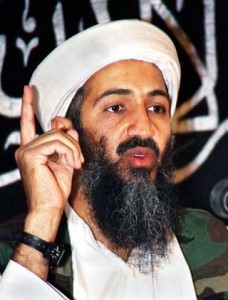
    On 1 May 2011 the world received the news that Osama Bin Laden was dead; gunned down in Pakistan by an elite team of US Navy Seals. Even before his death Bin Laden had become a legendary persona. Not only was he a terrorist leader responsible for the deaths of thousands of innocents but he functioned as a contemporary paradigm of the fanatical religious nutter who promotes hatred, violence and intolerance – much like the symbol Adolf Hitler was to earlier generations.

    Osama Bin LadenThe 9/11 terrorist attacks reinvigorated a fear that has lain dormant in the western psyche since at least the 17th century. This fear is encapsulated in an objection to belief in God known as the argument from historical atrocities. Many critics of religion refer to the religious wars that tore Europe apart during the 17th century, citing events such as the Inquisition and Crusades — although lately the Taliban have been the image of choice.

    Recently, whilst debating the viability of religious morality at the University of Notre Dame, best-selling author Sam Harris repeatedly cited the Taliban as a representative example of theological ethics. One need not read far into the literature of contemporary free thinkers to uncover this line of argument. Consider Jim Peron of the Institute for Liberal Values:

    “To admit religion into the “public arena” is “dangerous.” And long term the results will be just as bloody and violent as they were in the past. … To put religion into that sector is to ignore centuries of history and return to the conflict-ridden, bloody world of the Dark Ages.”

    Peron went on to refer to common motifs of the Inquisition: “crazy Puritans”, Servetus’ execution in Calvin’s Geneva and so on. Similar themes abound in the writings of Dawkins, Harris and Hitchens. The citation of historical cases is not in itself an argument so it is hard to discern the exact objection here. It appears to consist of two claims. Firstly, that some people who believe in God have committed atrocities against other people. Secondly, that if people who hold a belief commit atrocities then that belief is either false or should be avoided by liberal-minded people.

    Historians Ronald Numbers and David Lindberg point to recent research having discredited the portrayal of the early Middle Ages as “the Dark Ages” brought about by Christianity. Similarly, research into Inquisition archives reveal that while such tribunals did exist, many popular beliefs are based on embellishment, exaggeration and propaganda rather than a sober assessment of facts. The picture of the Inquisition that emerges from these studies is significantly more benign than has popularly been thought. Similarly, historian Leland Ryken’s studies on the Puritans have questioned many of the popular stereotypes Peron referred to.

    Take Peron’s allusion to the execution of Servetus. In his study on the life of Calvin, Oxford Theologian Alister McGrath argues (more…)

  • Contra Mundum: Stoning Adulterers

    Back in 2005 there was a minor furore when Labour MP Ashraf Choudhary stated he agreed with the Koran’s teaching that people who engaged in homosexual conduct or who committed adultery should be stoned to death. In the media spiral that followed, some commentators pointed out that it was not just Islam that held this view; Christians are committed to the same conclusion. Consider Deuteronomy 22:22 “If a man is found sleeping with another man’s wife, both the man who slept with her and the woman must die. You must purge the evil from Israel” or Leviticus 20:10 “If a man commits adultery with another man’s wife—with the wife of his neighbour—both the adulterer and the adulteress are to be put to death. Often passages like this motivate a rhetorical question “why don’t Christians today stone to death women who commit adultery? After all, this is what the Bible commands isn’t it?”

    Ten Commandments

    I’ll make two points in response to this. First, those who press this line of argument assume that these commands are addressed to contemporary Christians. This is a dubious assumption; the laws occur as part of a covenant or vassal treaty between the tribes of Israel and God. While some of the laws expounded in this treaty reflect rules of justice and equity applicable to all people, Gentiles were not parties to this treaty nor were gentile Christians required to be – something the New Testament spends a lot of time elaborating on.

    Second, and this will be my main focus, this line of argument assumes that these apparent laws function like modern statute law; the assumption is that they are literal and binding commands to kill people who had committed certain crimes. It is also assumed that the author of these laws expected them to be carried out. Interestingly, it is precisely this assumption which many scholars of these laws have questioned. Here I will spell out some reasons why they do so.

    Comparisons between Leviticus and Deuteronomy and other ancient Near Eastern (“ANE”) law codes suggest they are the same genre. One feature of such codes is seemingly harsh penalties. In old Babylonian law, the hand that assaults was severed; a man who kissed another’s wife was to have his lips cut off; a person who stole bees was to be stung by bees; a man who raped another’s wife would be sentenced to having his own wife or daughter raped; a negligent builder whose house collapsed and killed another’s son would be sentenced to having his own son killed, and so on.

    ANE expert Raymond Westbrook notes that these prescribed punishments are both inconsistent with the actual legal practice known to have occurred in these cultures and are often inconsistent with themselves. He notes, “some law codes impose physical punishments and others payments for the same offenses, while some codes have a mixture of the two.” The contradiction is only apparent because, “in highlighting one or the other alternative, the codes are making a statement as to their view of the gravity of the offence.” He argues that the laws “reflect the scribal compilers’ concern for perfect symmetry and delicious irony rather than the pragmatic experience of the law courts.” Westbrook concludes that the method used in ANE legal texts was “to set out principles by the use of often extreme examples.”

    A similar point is made by Old Testament scholar John Goldingay who suggests that many of these laws “were not intended to be enforced” but rather were “promulgated to indicate the moral and social priorities of the law giver.” They functioned to express certain ideals of behaviour, to denounce actions like adultery as really bad and intolerable rather than to define precise penalties for these actions.

    Westbrook points to the practice of (more…)

  • Contra Mundum: In Defence of Santa

    I grasped the sponge, water dripped down my wrist as I took aim. The man from the McGillicuddy Serious Party raised his voice and said “now throw!” The sponge flew through the air from my hand and struck Santa solidly on the chest soaking his red costume. Santa laughed and said “throw another one!”

    It was my second year at university and the McGillicuddies were running their annual “throw a sponge at Santa” event. This was done ostensibly to protest materialistic consumerism of which they saw Santa as a modern icon. I was simply sick of the whole hypocritical façade that was Christmas. An event that for many, myself included, has deeply religious significance was being trivialised by a fat man in a red suit from the north-pole. It really irked me.

    Years have passed since this event and with age comes (I hope) more reserve and wisdom. I have learned more about the cultural icon known as Santa and I have come to appreciate, at least from an historical perspective, why this icon exists. I agree that today the historical meaning of this icon has been forgotten. However I think that the solution to this forgetfulness is to re-awaken our cultural memory by addressing the theological and historical ignorance prevalent in our culture; attempts to cut ourselves off from the past even further are not the right approach.

    Nicholas of Myra

    The reference to Santa as an icon is apt because the original Santa, Nicholas of Myra, became an icon in religious art. In earlier times there was no printing press and illiteracy was widespread so vivid art became an important way of communicating a message. Characters had to be readily recognisable, in religious art Nicholas was represented by the figure of a man with a large white beard. Given that he was a Catholic bishop, he was portrayed in red robes. The figure of a white-bearded man in red robes became a symbol for an historical person, and the story of Nicholas was kept alive because of its immediate relevance for the present.

    Nicholas of Myra was probably (more…)

  • Contra Mundum: The Number of the Beast

    The OmenRecently TV3 screened The Omen. This classic horror is a about a boy called Damian who is the predicted anti-Christ and appropriately has the number 666 on his head. This film epitomises how the book of Revelation is understood in contemporary culture; apparently it predicts a future person, the beast or the anti-Christ who will take over the world. Associated with this is the number 666 which is literally inscribed into people’s heads or hands.  I think this pop-theology is mistaken.

    The relevant section in Revelation says:

    And the dragon stood on the shore of the sea. And I saw a beast coming out of the sea. He had ten horns and seven heads, with ten crowns on his horns, and on each head a blasphemous name. The beast I saw resembled a leopard, but had feet like those of a bear and a mouth like that of a lion. The dragon gave the beast his power and his throne and great authority… The whole world was astonished and followed the beast. Men worshiped the dragon because he had given authority to the beast, and they also worshiped the beast and asked, “Who is like the beast? Who can make war against him?” (Rev 13:1-2, 3b-4)

    The text proceeds:

    Then I saw another beast, coming out of the earth. He had two horns like a lamb, but he spoke like a dragon. He exercised all the authority of the first beast on his behalf, and made the earth and its inhabitants worship the first beast … He also forced everyone, small and great, rich and poor, free and slave, to receive a mark on his right hand or on his forehead, so that no one could buy or sell unless he had the mark, which is the name of the beast or the number of his name. This calls for wisdom. If anyone has insight, let him calculate the number of the beast, for it is man’s number. His number is 666. (Rev 13:11,16-18)

    Most English translations mention the number 666, (more…)

  • Contra Mundum: Pluralism and Being Right

    Recently I attended a lecture on science and religion at the University of Auckland. As is normal after such talks students stayed and discussed issues raised by the presentation. One student brought up a fairly common chestnut, he objected to the claim made by some Christians that their religion was true and that other religions were false. It was not the first time I have heard someone contend that it is arbitrary, dogmatic, irrational, bigoted, etc to claim that Christianity is true in the face of pervasive religious pluralism. Frequently I have been accused of these things for making similar claims.

    This objection is often exasperated by another stance I hold to. In an earlier column (“God, Proof and Faith,” Investigate, Oct 09) I argued that one is rational in accepting certain Christian beliefs even if one cannot prove that they are true to a sceptical inquirer. The fact that so many other people do not hold these beliefs, and often hold contrary beliefs, often attracts accusations of arrogance. Isn’t it arbitrary for Christians like the student at the talk and me to assume that our particular faith is true and everyone else’s worldview is incorrect?

    I think the answer is no.

    However, before I explain my reasons for this assessment let me first address one assumption that sometimes undergirds it. It is not unusual to hear that affirming that one’s position is right and that those who disagree are wrong is itself arrogant. However, this belief is not only mistaken, it is incoherent. My wife, Madeleine Flannagan, put it well in a blog post entitled “Of course I think I’m right!“

    “The statement, “you think you are right” is always asserted by someone who themselves thinks they are right to assert that I think I am right. However, if their objection is cogent, then I should reject their objection. This is because the person who objects that I think I am right is suggesting that I adopt an irrational stance, that I should believe something that I think is incorrect; but if I think it is incorrect then I am not going to believe it.

    No sane person holds to a belief they think is wrong or inferior to other viewpoints. I mean, why would you? You would hardly rank the differing views and then decide to hold the second or third most plausible view. You hold the view you think is the most plausible – the correct view – and by doing that you tacitly reject the other views.”

    So merely saying you are right and others are wrong by itself is unremarkable, we all do it.  I find though that objectors like those I encountered at the science and religion talk frequently want to say more than this. They contend that it is arbitrary, dogmatic, irrational, bigoted, etc to believe that your position is right, in the absence of proof, if numerous other people do not agree with you.

    I think there are two problems with this contention.

    First, note that the contention itself is one that many people do not hold to; hence, if the claim is true, it is arbitrary, dogmatic, irrational, bigoted, etc to believe it without proof. Further,  the proponent of this contention has not offered any proof  – simply asserting we should adhere to this contention is not proof – so it must be arbitrary dogmatic, irrational, bigoted, etc for the objector to accept this contention.

    Turning to the second problem, suppose I do accept this contention and I (wanting to avoid being arbitrary, dogmatic, irrational, bigoted, etc) cease to believe the Christian faith is correct. In doing so I will be adopting a stance that is contrary to that held by numerous other people – Christians.  It seems that I cannot escape the problem. Unless I can offer proof that Christianity is wrong, I will be being arbitrary, dogmatic, irrational, bigoted and so on.

    The reality is that in the pluralistic world we live in, a person cannot avoid taking a stance on ultimate questions, such as, “does God exist?” “What is the place of human beings in the cosmos?” What is ultimately real?” “Is there life after death?” “Is there such a thing as sin?” “Is there a highest good for human beings?” “What is it?” And so on. Even being agnostic or apathetic is to take up a stance towards these questions, it is to implicitly hold that they are unimportant or if they are important that one has insufficient grounds for getting an accurate answer. Not only is taking a stance unavoidable, it is also unavoidable that any stance taken will differ from that taken by numerous other people, and that any stance taken will be such that one cannot prove it from premises that all people accept. In this respect religious perspectives are no different from secular ones and it is arbitrary, dogmatic, irrational, bigoted to pretend that they are.

    I write a monthly column for Investigate Magazine entitled Contra Mundum. This blog post was published in the Nov 10 issue and is reproduced here with permission. Contra Mundum is Latin for ‘against the world;’ the phrase is usually attributed to Athanasius who was exiled for defending Christian orthodoxy.

    Letters to the editor should be sent to:
    editorial@investigatemagazine.DELETE.com

    RELATED POSTS:
    Contra Mundum: Abraham and Isaac and the Killing of Innocents
    Contra Mundum: Selling Atheism
    Contra Mundum: Did God Command Genocide in the Old Testament?
    Contra Mundum: Fairies, Leprechauns, Golden Tea Cups & Spaghetti Monsters
    Contra Mundum: Secularism and Public Life
    Contra Mundum: Richard Dawkins and Open Mindedness
    Contra Mundum: Slavery and the Old Testament

    Contra Mundum: Secular Smoke Screens and Plato’s Euthyphro

    Contra Mundum: What’s Wrong with Imposing your Beliefs onto Others?
    Contra Mundum: God, Proof and Faith
    Contra Mundum: “Bigoted Fundamentalist” as Orwellian Double-Speak
    Contra Mundum: The Flat-Earth Myth
    Contra Mundum: Confessions of an Anti-Choice Fanatic
    Contra Mundum: The Judgmental Jesus
  • Contra Mundum: Abraham and Isaac and the Killing of Innocents

    Since 9/11 a choir of commentators have claimed that the willingness to murder innocent people in the name of God stems from the progenator of the Abrahamic faiths. Abraham, the father of Christianity, Judaism and Islam is commended for attempting to kill his own son.

    The account of this episode is arguable the most infamous passage in the Hebrew Scriptures:

    Then God said, [to Abraham] “Take your son, your only son, Isaac, whom you love, and go to the region of Moriah. Sacrifice him there as a burnt offering on one of the mountains I will tell you about.” (Genesis 22:2)

    Now, as anyone who has read the story knows, God intervened and prevented Abraham from killing Isaac. In the Mosaic laws that follow this story, the Prophets, Psalms and the historical books, human sacrifice is unequivocally condemned. Notwithstanding these prohibitions, it appears inescapable that Abraham was acting on God’s commands. For this reason, it is not surprising that this story looms large in the criticisms of theological morality. The passage appears to show that God commanded someone to do something clearly and obviously immoral.

    Appearances can be deceiving. There are two issues here: the first is whether the text teaches that God commanded the killing of an innocent child, the second is whether commanding the killing of an innocent child is always immoral. For this objection to have force both these contentions must hold, I will examine each one in turn.

    Turning to the first, did God command the killing of an innocent child? I think the answer is yes, but in a specific context. Let me elaborate. In Gen 12:1-2, Abraham is told, by God, that he will be the father of an entire nation, one that will have its own country. An obvious implication of this is that Abraham believed he would have descendants, he would have a son who would live long enough to have children of his own. The text implicitly teaches here that Abraham knew, on the basis of a reliable source, that his son would live to adulthood.

    This point is reiterated in several other encounters between God and Abraham. In Gen 15 “the word of the LORD” came to Abraham “in a vision.” Abraham’s response was, “You have given me no children; so a servant in my household will be my heir.” God’s answer was emphatic, “This man will not be your heir, but a son coming from your own body will be your heir.” Abraham was told and hence knew, that his heir would be a son from his own body, a biological descendant.

    The text continues, “He took him outside and said, ‘Look up at the heavens and count the stars—if indeed you can count them.’ Then he said to him, ‘So shall your offspring be.’” Again, the narrative implies that Abraham knew that he would both, have a biological son and that this son would live at least long enough to have children. Moreover, the passage continues with God promising, as part of a covenant, that these things will be so. Abraham clearly had assurance that God would see that his son lived into adulthood.

    After this incident, Abraham made the mistake of sleeping with Hagar, which resulted in her giving birth to Ishmael. This lead to various domestic problems including rivalry between Hagar, Ishmael and Abraham’s wife Sarah. Abraham then had another encounter with God (Gen 17:2-14) and here again God promised that Abraham’s descendants would be numerous, again implying, very clearly, that Abraham’s son would live to adulthood. This promise was signified by a covenant marked by circumcision and it was reiterated by God changing his name from Abram (exalted father) as he was called at that point in the text to Abraham (father of many). God again promised and assured Abraham that his son would grow to adulthood.

    More specifics can be found, Gen 17:15-19 makes it crystal-clear that the promise of future descendants came through the line of  Isaac who would be born of Sarah. This seemed impossible to Abraham due to the fact that his wife was barren. God, however, was emphatic and changed his wife’s name from Sarai (my princess) to Sarah (mother of nations). So Abraham was again reassured that Isaac would be born and would live at least long enough to have children of his own. This promise is to be confirmed by a seemingly impossible event, a barren woman bearing a child.

    In chapter 18 the promise is again reiterated. Abraham is visited by three men who appear to represent God himself. The text records in verse 10, “Then the LORD said, ‘I will surely return to you about this time next year, and Sarah your wife will have a son.” Sarah will have Abraham’s child, this is the child that will live on to adulthood to have children of his own.

    If the point has not yet been be-laboured enough, when Isaac is born (Gen 21) God again makes it clear to Abraham on the day Isaac is weaned. Abraham is told in verse 12 “it is through Isaac that your offspring will be reckoned.” Again Abraham is reassured that Isaac will live to adulthood and have children of his own.

    This narrative of several chapters is the backdrop to the events described in Gen 22. To the astute reader reading the whole story as one block of text (note that chapter and verse divisions were not present in the original text, these were added centuries later) by the time a we to get to Gen 22 both Abraham and the reader should know that Isaac is not going to die, both the reader and Abraham know that Isaac will live beyond this day to rear children of his own. The text reminds us in verse 5, just before Abraham goes up the mountain to sacrifice Isaac Abraham states to his servants, “Stay here with the donkey while I and the boy go over there. We will worship and then we will come back to you.” Abraham expected Isaac to return alive.

    Further, the New Testament teaches that this is the correct way to understand this passage,

    By faith Abraham, when God tested him, offered Isaac as a sacrifice. He who had received the promises was about to sacrifice his one and only son, even though God had said to him, “It is through Isaac that your offspring will be reckoned.” Abraham reasoned that God could raise the dead, and figuratively speaking, he did receive Isaac back from death. (Hebrews 11:17-19)

    This is significant because Christians, at least, do not accept any and all interpretations of the Old Testament. Christians accept as authoritative the Old Testament as interpreted by the New Testament. If one attacks a different interpretation of the passage, one is attacking an interpretation Christians (should) reject and hence, one is not attacking anything Christians (should) believe or are committed to believing.

    The text teaches that God commanded Abraham to kill his son in a context where Abraham knew that his son would not die but would live on after the incident. God commanding killing, in this context, needs to be shown as immoral for the objection to gain traction.

    The brings us to the second question, is commanding the killing of an innocent always immoral? Here I think the answer is yes, provided a certain context is assumed.

    The applicability of many moral prohibitions depend in part on certain facts about the world. Hitting someone in the head is wrong because doing so causes pain and risks harming another. However, if the physical structure of the world was different, if hitting someone in the head did not harm people but instead advanced their health and improved their quality of life then it may be permissible to hit someone in the head. Of course, this does not show us that hitting people in the actual world is permissible because in the real world hitting people does cause harm but it does show that prohibitions rely on certain background assumptions about the effects of hitting. If these assumptions are not true then the prohibition will not hold.

    Yale philosopher John Hare develops this point in an interesting way. Hare asks us to imagine a world in which when people of a certain age are killed they immediately come back to life suffering no injury. He opines, quite plausibly, that if this were to be the case then killing people at this age would not be wrong or at least, not seriously wrong. One of the reasons that killing people is wrong in the world we live in is because people stay dead. If they were only unconscious for a split second and came back to life in full health then arguably killing a person would not be the serious wrong we believe it is. The answer to the question, is it wrong to kill an innocent then is yes, provided a certain context is assumed.

    The context where it is plausible to state that killing innocent people is seriously wrong is the very context in which the narrative shows that Abraham knew did not apply to Isaac. God commanded Abraham to kill his son in the highly unusual context where Abraham knew that he would not be deprived of an earthy life but would come down the mountain afterwards and live on to adulthood to father children of his own.

    At this stage I am sure some readers will scoff, they will contend that they do not believe these stories could be literally true, they do not think God appeared to Abraham and told him any of this or that he could not know these things for certain. This complaint is beside the point. Whether one believes the story or not, this is what the story says. If one seeks to argue that the text teaches something immoral or portrays God in a certain way then one needs to accurately portray what the text actually says. Misrepresenting what it says and using that distortion as the basis of an argument to a conclusion is not a valid criticism of the text or the faiths that hold to those texts.

    I write a monthly column for Investigate Magazine entitled Contra Mundum. This blog post was published in the Oct 10 issue and is reproduced here with permission. Contra Mundum is Latin for ‘against the world;’ the phrase is usually attributed to Athanasius who was exiled for defending Christian orthodoxy.

    Letters to the editor should be sent to:
    editorial@investigatemagazine.DELETE.com

    RELATED POSTS:
    Contra Mundum: Selling Atheism
    Contra Mundum: Did God Command Genocide in the Old Testament?
    Contra Mundum: Fairies, Leprechauns, Golden Tea Cups & Spaghetti Monsters
    Contra Mundum: Secularism and Public Life
    Contra Mundum: Richard Dawkins and Open Mindedness
    Contra Mundum: Slavery and the Old Testament

    Contra Mundum: Secular Smoke Screens and Plato’s Euthyphro

    Contra Mundum: What’s Wrong with Imposing your Beliefs onto Others?
    Contra Mundum: God, Proof and Faith
    Contra Mundum: “Bigoted Fundamentalist” as Orwellian Double-Speak
    Contra Mundum: The Flat-Earth Myth
    Contra Mundum: Confessions of an Anti-Choice Fanatic
    Contra Mundum: The Judgmental Jesus

  • Contra Mundum: Selling Atheism

    New Zealand motorists will have noticed a new genre of advertising billboards, those attempting to sell the concept that there is probably no God. These billboards are the collective efforts of the New Zealand Atheist Campaign, The Humanist Society and the New Zealand Association of Rationalist Humanists. Like all advertising campaigns, these billboards offer clever-sounding slogans, which are indicative of the philosophy of the seller – in this case three variants of popular ‘new-atheist’ arguments. Like any consumer, I want to read the product labelling a little deeper before I consider buying. So here I intend to unpack the slogans and take a look at the implicit reasoning behind each.

    Each billboard has the tagline “There’s probably no God. Now stop worrying and enjoy your life.” My first thought on seeing this was that authors must find atheism psychologically liberating. We do not have to worry that there is a God and that means that we can enjoy ourselves but why would the existence of God be something to worry about? Is it the moral accountability that goes with it? If God exists then we might have to worry that He has seen what we have done in secret, and being free from this worry enables us to enjoy our lives. If this is so then prima facie this suggests that guilt is a major motivation behind, at least some peoples, atheism.

    The tagline aside, let’s look at the three slogans currently affronting us as we navigate our cities. The billboard on Auckland’s Newton Rd states, “Good without God? Over One Million Kiwis Are. Source:2006 Census.”

    Good without god?

    Here we are told that one million kiwis are good without God because the census says so. Now a lot could be said about the appeal to the census here, I don’t recall a question on it asking me if I was good and even if it did I am not sure that we should take too much from self-reported assessments of people’s own integrity. Let’s assume, however, that the billboard makes a fair claim. The inference is still is fallacious. What the census shows is not that one million kiwis are good without God, rather, it shows that one million kiwis are good without believing in the existence of God. But to say that one can be good without believing in God is not the same as saying that one can be good without God. Many people throughout history have been able to live and breath without believing in the existence of hydrogen and oxygen atoms yet it does not follow that they could live without hydrogen and oxygen.

    I am still left wondering how the fact that people do not need to believe in something to do good deeds renders the belief false? For centuries people have done good deeds and lived good lives without believing in heliocentricism or quantum mechanics, should we conclude that these theories are therefore ‘probably false’? Surely we are not being asked to buy that the basis of our beliefs should be what is useful or helpful as opposed to what is true?

    Perhaps the sellers mean to convey something else. Some Christian thinkers such as William Lane Craig, Robert Adams, Stephen Layman, Alvin Plantinga, John Hare and Philip Quinn have argued that moral properties such as right and wrong depend on God for their existence. Atheist writers such as Paul Kurtz and Christopher Hitchens retort that this claim is falsified by the existence of morally upright atheists. I suspect something like this is meant by the slogan on the billboard, it repeats Hitchens’ and Kurtz’s retorts as though they said something insightful or clever.

    This retort misses the point. Craig, Adams, et al are not claiming that one needs to believe in God to be good – a point made several times in the literature (and particularly made so many times to Kurtz that it beggars belief that he keeps repeating it) rather, their claim is that moral properties, such as right and wrong, depend on God for their existence. This is not the same thing, we know that water depends for its existence on the existence of hydrogen and oxygen, this does not mean, however, that we need to believe in the existence of hydrogen and oxygen in order to effectively recognise and use water. Ancient and medieval people were drinking, washing in, swimming in and sailing on water centuries before the discovery of contemporary atomic theory.

    This is a fairly basic and elementary distinction in the literature. How exactly expressing a common philosophical confusion counts as reason for thinking “there probably is no God” is hard to see.

    Parnell Rise’s billboard informs us “In the Beginning Man Created God.”

    In the beginning man created god

    This one asserts that man created God. Now if one takes this statement in an absurdly literal manner (the way many sceptical organisations approach parables, hyperbole and poetry in the Bible) we find that atheists are telling us that God actually exists. I have no issue with the slogan at this juncture, however, the idea that God was created by human beings is clearly absurd. God is typically defined as an all-powerful, all-knowing, immaterial, necessarily-existent being who created the world and who sustains everything in it. Now if one is going to claim that humans actually created an all-powerful, all-knowing, immaterial, necessarily-existent who created and sustains the world, then they are contradicting themselves. Humans are part of the world and therefore cannot have created the being that created the world – otherwise humans would have to exist prior to their own existence.

    Of course to interpret this billboard in this way would be uncharitable. The authors of this billboard probably do not mean to say that humans actually created God, they do not think He exists after all. Their claim is that humans created the idea or concept of God and developed it. This is undoubtedly true. Of course, humans also invented the idea or concept of atoms as well – ancient Greek philosophers came up with the basics of this concept millennia ago – but this fact tells us nothing about whether or not the idea or concept humans developed actually corresponds to anything in reality. To assume that it tells us something about whether the idea or concept is true is a fairly obvious case of what logicians call the genetic fallacy.

    The last one is my favourite, “We Are All Atheists About Most Gods. Some of Us Just Go One God Further.”

    We are all atheistsTo see the problems with this slogan take out the term “God” in the sign and replace it with some other term such as “non-Christian perspective.” When we do this we get: “We all reject most non-Christian perspectives, some of us just reject one more.” This argument has true premises, do we now have, a knock-down argument for Christianity?

    Similarly, an analogous argument form with true premises gives us an argument for nihilism, the denial that humans have moral duties, the total denial of the existence of morality. “We are all nihilists about some conceptions of morality, some of us are just nihilistic about one more.”

    The same argument for also furnishes a refutation of secularism, “we all reject some secular perspectives on reality, some of us just reject one more.” I could go on.

    Taking a stand on any issue of philosophical substance, whether by affirming, denying or simply being sceptical of it, is to put oneself in opposition to any number of other people and groups who take a contrary stance. That’s life. Such pluralism hardly provides a reason for thinking “there probably is no God” any more than it gives us a reason to doubt any other perspective on the world.

    So what do the atheist billboards do? Well the first one tells us that some atheist groups conflate basic philosophical distinctions and do not really understand the debate they are contributing to. The second shows us that these groups think contradictions and obvious fallacies are some how savvy and smart. The last shows us that they think that invalid argument forms, forms from which you could infer the denial of anything and everything by substituting one true premise with another, are avant-garde. All in all, pretty accurate advertising for these groups.

    I write a monthly column for Investigate Magazine entitled Contra Mundum. This blog post was published in the Sept 10 issue and is reproduced here with permission. Contra Mundum is Latin for ‘against the world;’ the phrase is usually attributed to Athanasius who was exiled for defending Christian orthodoxy.

    Letters to the editor should be sent to:
    editorial@investigatemagazine.DELETE.com

    RELATED POSTS:
    Contra Mundum: Did God Command Genocide in the Old Testament?
    Contra Mundum: Fairies, Leprechauns, Golden Tea Cups & Spaghetti Monsters
    Contra Mundum: Secularism and Public Life
    Contra Mundum: Richard Dawkins and Open Mindedness
    Contra Mundum: Slavery and the Old Testament

    Contra Mundum: Secular Smoke Screens and Plato’s Euthyphro

    Contra Mundum: What’s Wrong with Imposing your Beliefs onto Others?
    Contra Mundum: God, Proof and Faith
    Contra Mundum: “Bigoted Fundamentalist” as Orwellian Double-Speak
    Contra Mundum: The Flat-Earth Myth
    Contra Mundum: Confessions of an Anti-Choice Fanatic
    Contra Mundum: The Judgmental Jesus