Author: MandM

  • A Godless Public Square: Do ‘Private’ Christian Beliefs Have a Place in Public Life? Part II Glenn Peoples – Philosophy

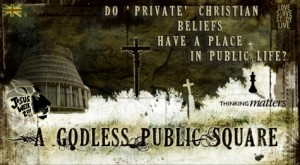
    A Godless Public Square: Do ‘Private’ Christian Beliefs Have a Place in Public Life? A few weeks ago, as part of Jesus Week at the University of Auckland, Thinking Matters and Evangelical Union hosted an event entitled A Godless Public Square: Do ‘Private’ Christian Beliefs Have a Place in Public Life? This event was a conversation between Theology, Philosophy and Law and featured Matthew Flannagan – Analytic Theologian, Glenn Peoples – Philosopher and Madeleine Flannagan – Legal Scholar. The video is still being edited and will be available soon but for now, this 3-part series comprises the written speeches of each speaker.

    Glenn Peoples – Philosophy

    Often the subject of religion and politics is alluded to by way of references to terrorism, vigilantism, totalitarianism and persecution, as though these are the only alternative to a public square stripped of religious conviction altogether. This is about as helpful and honest as the automatic association of secularism with the purges of Stalin. The truth is that the flourishing debate in the Western world over the legitimate role of religious convictions in our public decision making is set within the broad liberal democratic tradition. Within that tradition, taking for granted things like freedom of religion, freedom of speech, clear institutional separation of church and state, freedom of association and so on, we’ve seen that it is clearly possible to hold a variety of views on the proper place of religious belief in politics, policy, public lobbying, your own voting and so on. Of course, there are plenty of religious people in the world and in history who do not cherish liberty and mutual respect (as there are and have been non-religious people who do not cherish these things), but you and I do.

    Our popular level discussion here in New Zealand over the proper role of religion in a free society – in the media, in letters to the editor, on talkback radio, in religious speeches, could have been greatly benefited by an exposure to the way that this issue has been dealt with in philosophy, specifically in political philosophy, in ethics and philosophy of religion, which are the areas that really interest me. In particular the following issues need to be seen as central: What is the specific concern that justifies people in identifying religious convictions as an area of worry over and above other convictions? Are these concerns applied consistently and fairly when not thinking in terms of religious convictions? Are they the right concerns to have about public life generally? Secondly, should these concerns really cause us to reconsider the role of religious convictions at all? If so, then how?

    Why is religion singled out?

    Conflict and Polarisation
    Why is there an issue centred specifically around religion in the public square? We don’t hear much, if anything, about the worry of acting on our political beliefs or (usually) our ethical convictions or our scientific findings – at least not because they are political beliefs, ethical convictions scientific findings, yet there is a concern about religious beliefs in the public square, and that concern exists because the beliefs in question are religious. What makes religion special?

    Perhaps the more popular reason that people might have for wanting to see religion take a back seat when it comes to public reason is that, in their view, religious beliefs unleashed in public are dangerous in certain ways. American philosopher Robert Audi is not alone in voicing the concern that “religious disagreements are likely to polarize government” leading to irresolvable disputes and political stand-offs.[1] In order to avoid strong polarisation and the associated mischiefs that come with it (lack of co-operation, social unease and mutual suspicion, perhaps even rioting and acts of violence or terrorism as in Northern Ireland), let us keep our religious beliefs well away from our political reason.

    Matt has already said a thing or two about this, so I’ll just be brief. Is this fair? For starters, is it really true that as soon as we allow people to lobby, vote or even legislate in certain ways because of their religious convictions, we will witness intractable political stand-offs and social disorder? Not at all. We can easily imagine scenarios in which one person or group lobbies for a given policy because their religious convictions motivate them to do so, and another person or group lobbies for exactly the same policy with quite different motives. I think, for example, of the government’s role in marriage. I know of religious people who maintain that the state has no role in formalising marriage since this is, in brief, “God’s business” that the government should frankly stay out of as a matter of the purity of marriage as a holy institution. I also know of libertarians committed to the doctrine of self-ownership and the priority of personal liberty who also think, without any reference to God, that marriage properly belongs entirely to the private realm. So it can’t be the case that endorsing policies because of one’s religious convictions will inevitably or always lead to social or political polarisation and conflict.

    That said, it’s true that different religious convictions (more…)

  • A Godless Public Square: Do ‘Private’ Christian Beliefs Have a Place in Public Life? Part I Matthew Flannagan – Theology

    A Godless Public Square: Do ‘Private’ Christian Beliefs Have a Place in Public Life? A few weeks ago, as part of Jesus Week at the University of Auckland, Thinking Matters and Evangelical Union hosted an event entitled A Godless Public Square: Do ‘Private’ Christian Beliefs Have a Place in Public Life? This event was a conversation between Theology, Philosophy and Law and featured Matthew Flannagan – Analytic Theologian, Glenn Peoples – Philosopher and Madeleine Flannagan – Legal Scholar. The video is still being edited and will be available soon but for now, this 3-part series comprises the written speeches of each speaker.

    Matthew Flannagan – Analytic Theology

    Recently, many Christian ethicists have defended the central place of God’s commands in Theological ethics. In this talk I want to discuss one important objection to appeals to God’s commands; this is the claim that, while it is perfectly appropriate for believers to appeal to purported divine commands when regulating their private conduct or the conduct of voluntary religious communities who believe in such commands, it is morally wrong to appeal to theological beliefs of this sort in any discussion of social ethics. When doing Ethics as a public enterprise i.e. engaging in debates over social policy or offering criticism of cultural and social practices, Christian Ethicists are morally bound to only appeal to secular considerations. I will argue that this position, though widely accepted inside and outside of the church, is mistaken.

    The Objection
    So what is the problem with appealing to divine commands in social ethics? Christian theological convictions ought to impact the whole of life both in the private and public spheres; this is what is meant by the idea of an “undivided life”, where Jesus is Lord of all aspects of our lives.

    Yet this consequence of Christian faith conflicts with a pervasive contemporary attitude: the view that that religion is fundamentally a private matter. It is accepted that a Christian is free to utilise theological convictions when they make decisions about their own life but in a pluralistic society it is increasingly deemed inappropriate to bring such convictions into public discussions about morality, law, politics, economics, education, scholarship and so on. The desire to influence society with Christian ideals or to convert others to the faith is viewed by many as an intolerant desire to impose one’s private views onto others.

    It is widely accepted that theological convictions can govern churches and the private lives of believers yet we are told that the public square – government, public policy, the courts, the academy, education, business, arts, media, etc – should be secular only.The problem is nicely summarised by Stephen Carter Christian theological convictions ought to impact the whole of life both in the private and public spheres; this is what is meant by the idea of an “undivided life”, where Jesus is Lord of all aspects of our lives.

    Yet this consequence of Christian faith conflicts with a pervasive contemporary attitude: the view that that religion is fundamentally a private matter. It is accepted that a Christian is free to utilise theological convictions when they make decisions about their own life but in a pluralistic society it is increasingly deemed inappropriate to bring such convictions into public discussions about morality, law, politics, economics, education, scholarship and so on. The desire to influence society with Christian ideals or to convert others to the faith is viewed by many as an intolerant desire to impose one’s private views onto others.

    It is widely accepted that theological convictions can govern churches and the private lives of believers yet we are told that the public square – government, public policy, the courts, the academy, education, business, arts, media, etc – should be secular only.

    This event looks at this issue. The conversation will span Theology, Philosophy and Law led by a panel made up of Christian representatives from each discipline along with you the audience:

    “One good way to end a conversation – or start an argument – is to tell a group of well educated professionals that you hold a political position (preferably a controversial one such as being against abortion or pornography) because it is required by your understanding of God’s will. In the unlikely event that anyone hangs around to talk with you about it, chances are that you will be challenged on the ground that you are intent on imposing your religious beliefs on other people. And in contemporary political and legal culture, nothing is worse.”[1]

    Carter cites the objection that appealing to God’s commands in public moral debate involves imposing one’s religious beliefs onto other people, and points out that such impositions are morally wrong. Note that the objection is not that such divine commands do not exist or that it is irrational to believe that they do. The objection is a specifically moral one. It is morally wrong to appeal to such beliefs; doing so violates a moral obligation people have to not impose their religious beliefs onto others. Something like this moral objection is widely held, both inside and outside the church. In response to this I will make four points. (more…)

  • Jesus: The Cold Case a Guest Post by Glenn Peoples

    Glenn Peoples shares his thoughts on TV One’s recent episode Jesus: The Cold Case.

    Jesus: The Cold Case

    Like a number of others tonight I have just watched Jesus: The Cold Case on TV One, presented by Bryan Bruce. Here are my thoughts on what I have seen. First off, who is Bryan Bruce?

    Bryan Bruce

    Bryan Bruce is an award winning producer, writer & director who lives in Wellington, New Zealand. He has a MA in Sociology, Psychology & philosophy from Canterbury University. A former musician and schoolteacher, he began his television career in 1984 as front person and writer for a TVNZ arts show. Since then has won awards for Best Director and Best Factual Writer and his work has made the finals of several international festivals, including the New York Television Festival and the prestigious Banff Awards.

    The overarching message that Bryan Bruce is gravitating towards in this documentary is that the biblical and subsequent Christian message on who killed Jesus, namely, “the Jews” in some broad sense, is false, and what’s more it is responsible for centuries of great evil.

    Something that strikes the viewer quite early on is that Bruce quite simply doesn’t believe that the Gospels accounts are true in general terms. “Many,” he says, “now believe that the Gospels contain more fiction than fact.” Throughout the documentary we hear from a number of academics who lend their credibility to the various claims Bruce makes.

    One of the immediate worries about the presentation is that although we’re led to believe that the presenter is applying rigorous criminal investigation methods to the case, to those familiar with the world of biblical scholarship, his list of authorities suggests otherwise:

    • Emeritus Prof. Geza Vermes (Oxford)
    • Emeritus Prof John Dominic Crossan ( St Pauls)
    • Prof. Elaine Paigels (Princeton)
    • Bishop John Shelby Spong (USA)
    • Prof. Lloyd Geering (New Zealand)
    • Dr Helen Bond ( Edinburgh)
    • Prof . Israel Hershkovitz (Tel Aviv)
    • Dr Shimon Gibson (London)

    Does this read like the list a careful investigator consults if he wants a decent shot at getting to the unvarnished truth, rather than a somewhat partisan perspective?

    According to Vermes, Jesus was resurrected in the hearts of his followers, but not literally from the dead.

    Crossan claims that Jesus’ followers had a kind of spiritual visionary experience
    Paigels writes that early Christians didn’t believe in physical resurrection at all, seeking instead a state of spiritual knowledge and enlightenment Spong says that Jesus’ resurrection had nothing to do with him coming back to life, but with the subjective – but real – experiences in the hearts of his followers.

    Lloyd Geering, who himself does not believe in any such being as God, claims that the body of Jesus remained buried and that the story of his resurrection was a later story concocted on the basis of a re-reading of the Old Testament.

    Now of course this isn’t a documentary on the resurrection, but the pattern is somewhat striking. It looks fairly clearly as though the presenter has intentionally stacked the witness stand with those hostile to the Christian story. It will hardly come as a surprise that, given such a uniform and narrow sample, the testimony will (rather gleefully!) point away from the traditional version of events surrounding the death of Christ. We might just as easily consult the faculty of Dallas Theological Seminary and claim that using rigorous scrutiny, we have reached the conclusion that the biblical portrait of Jesus’ death is, well, inerrant! Given that those consulted would be placed at one extreme of the spectrum on whether or not we can generally trust the Gospel accounts or the teaching of the early Christian movement, the interests of balance would surely call for less radical voices, the likes of Craig Evans, James Dunn, Luke Timothy Johnson or N. T Wright. One example – Lloyd Geering is quoted as assuring viewers – completely unchallenged – that the details of the crucifixion was no more than what people “imagined” had probably taken place. When it comes to the story of the resurrection, Geering is explicit – Jesus was probably buried by the Romans and that was that. No tomb, no stone rolled away, and no angels. Geering laughs, “the very fact that you’ve got angels [in the story] shows that we’re dealing with myth, not history.” There was not a single challenge raised. Not even an innuendo that Geering’s view isn’t the scholarly consensus. This was said just minutes after the narrator told us that the Gospel was more fiction than fact.

    This type of concern rears its head among a more sceptical audience when the evangelical likes of Lee Strobel seeks to do just what Bryan Bruce is doing: Apply critical scrutiny to the facts concerning the life of Christ. And yet we frequently hear the complaint that Strobel consults only committed and usually conservative Christians, people who are unlikely to disagree strongly with each other – or with Strobel. I would hope, then, that this same type of sceptical, professedly critical audience will likewise regard Bruce’s offering as a biased, selective survey of a very thin slice of the scholarly community. For example (more…)

  • Guest Post: One Less God

    Bethyada from True Paradigm writes:

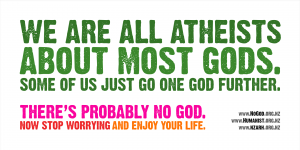
    I have read a few posts on the ‘one less god’ proposition. Stephen F Roberts originally put it,

    “I contend we are both atheists, I just believe in one fewer god than you do. When you understand why you dismiss all the other possible gods, you will understand why I dismiss yours.”

    elsewhere he says,

    “We are all atheists, some of us just believe in fewer gods than others.”

    I have read a few responses against this illogical claim.

    Some of us just go one god further

    One retort is to state that Christians do believe in several gods, it is just that the lesser gods are demons and Christians claim allegiance to the true God. Yahweh is not just a local deity (1Ki 20:23) but the true God, creator heaven and earth

    And Hezekiah prayed before the LORD and said: “O LORD, the God of Israel, enthroned above the cherubim, you are the God, you alone, of all the kingdoms of the earth; you have made heaven and earth. (2 Kings 19:15)

    the most high God,

    Abram said to the king of Sodom, “I have lifted my hand to the LORD, God Most High, Possessor of heaven and earth,…” (Genesis 14:22)

    Though there is truth to this, depending a little on how one defines God, I do not think this rebutal gets to the crux of the problem.

    Another response is to state that polytheists believe in gods for different reasons than monotheists believe in God. Polytheists believe X and monotheists believe Y, thus the monotheist’s refutation of X does not refute Y, which the atheist is claiming. In other words, the reason Christians reject other gods is not the same as the reason they accept the Christian God. This is logically true, and hints at the atheist error, but does not get to the heart of it. It is inadequate though because it is not immediately obvious that polytheists and monotheists have significantly different reasons for theism. Romans 1 suggests that there are some basic reasons why all people are theists, but our fallen nature means this may be distorted such that theism becomes polytheism or, as per Romans, animism and pantheism.

    A related response is to state that Christians see polytheism is a distortion of monotheism. As such, removal of the distortion does not remove the argument. The dismissal of the wrong elements of theism is not an argument against theism. This gets closer to the problem.

    The primary problem with the atheist position is that it makes a category error. The following analogy demonstrates this central issue. As such the analogy is useful, but for several reasons I think it is inadequate and could be improved upon. Nevertheless, if it illustrates the problem it is helpful.

    “Let’s say that people are debating the best colour for stop signs. One person may prefer red for stop signs. Another green. Still others think that any colour can be used and no standardisation is necessary, and others promote the use of all colours on every sign.

    The atheist response is like saying you can’t agree on what colour to use because there are in fact no colours. Colours do not exist.”

    Debating colour preference is not the same as debating the existence of colours. Dropping from one god to no gods is not a continuation of the number-of-gods argument, it is a completely different argument.

    Consider the deity set. It is either empty: atheism; or not empty: theism. The argument over the number of members in a non-empty theism set is unrelated to argument about whether or not the set is in fact empty.

    Douglas Wilson put it well in his response to Sam Harris,

    “You say, “Understand that the way you view Islam is precisely the way devote Muslims view Christianity. And it is the way I view all religions.” Well, no, not exactly. And well, actually, no, not at all.

    Suppose we are considering a phenomenon that is, by most accounts, inexplicable by an unsupervised occurrence—three of us attend a sophisticated party uptown, and halfway through the evening at the party we find a trout in the punch bowl. At this point, the three of us divide into three schools of thought. I think that Smith, a practical joker, put it there; our friend Murphy thinks that Jones, the avant-garde performance artist, put it there; and you think that it has simply shown up as the result of natural forces. My central point is not to interact with the truth or falsity of your naturalistic position—except perhaps through the use of this absurd example of the punchbowl—but rather to show that you are arguing for something completely different from what Murphy and I are arguing. We all have an explanation but your explanation is of a different kind altogether.

    The differences between two of us (between Murphy and me) concern who put the trout in the punchbowl. The difference between the both of us together and you iswhether someone put a trout in the punchbowl. And who and whether represent different questions entirely. Quite apart from who is right and who is wrong about this, it is important to note that we are not disagreeing in the same way or over the same kind of issue at all. Murphy and I are disagreeing over the relative behaviours of Smith and Jones, but not over whether the trout calls for an explanation. Maybe I am more hostile to Smith than I ought to be, and maybe Murphy is deeply prejudiced against Jones. Maybe we are both wrong about who put it there. But thinking someone’s explanation is inadequate (when we agree the phenomenon must be explained) is quite different from arguing with someone who says it calls for no outside explanation whatever.” (Letter from a Christian Citizen)

    RELATED POST:
    Selling Atheism

  • MandM and Friends UPDATED

    Recently we placed an advertisement on Facebook for contributors to MandM. We were looking for people with some training in analytic philosophy who are careful, articulate and interesting writers who can contribute to MandM in a complementary style to ours.

    Those we have chosen to add to our team should bring some variety to our pages and help us to contribute better towards an online “community where in we build upon the things we have in common and explore the things that make us different.”1

    Our new contributors are:

    Andre ZAndré Z is a student in the final year of undergraduate degrees in arts (philosophy) and science at the University of Auckland. André is particularly interested in the relationship between science and Christian faith and the challenges which the scientific project and our intuitive understanding of persons pose for naturalism. He intends to undertake post-graduate studies in science.

    Theologically André would describe himself as an evangelical Anglican. He is active in his local church and the wider Diocese. He is involved in a number of student clubs including leadership of a Tertiary Student Christian Fellowship-affiliated group. He has been known to occasionally contribute to ‘The Anglican’ magazine as well as his personal blog MetaEquilibrium and Thinking Matters.

    AndrewAndrew is a philosophy major at Auckland University with a particular interest in philosophical theology. His present study focuses around various cosmological and meta-ethical arguments for theism.

    Theologically, he’d describe himself as Evangelical but agnostic as to the question of Reformed or Arminian soteriology. A few of the thinkers who influence Andrew are: John Calvin, William Lane Craig, Paul Copan, Alvin Plantinga and Chris Tucker.

    Andrew’s other interests other interests include sailing, hiking and socializing and he too has been an occasional contributor to  Thinking Matters.

    Machine PhilosophyMachine Philosophy was first recognized in a graduate philosophy of religion textbook when he was a freshman in college, for being as familiar with the thought of a leading philosopher of religion, “as any living person”. He earned a BA in Philosophy and is currently pursuing a PhD in Philosophy.

    Machine Philosophy has edited textbooks in the philosophy of logic and classical Indian metaphysics. This year, he published a book of redacted quotations and is now working on a book on how the criterial assumptions of atheism imply a theistic God.

    His interests include atheism, theism, philosophy of mind, self-reference, naturalistic ethics, materialism, epistemology, a priori knowledge and artificial intelligence.

    ________________________________

    Please join us in welcoming our friends to MandM and keep an eye out for their blog posts.

    UPDATE:
    We have also added John Tertullian to the team:

    John TertullianJohn Tertullian (JT) posts regularly at the blog Contra Celsum. “John Tertullian” is a pseudonym, inspired by the Church Father, Tertullian who trenchantly emphasized the conflict between the Christian faith and all forms of unbelief. Unbelief was always religious; it was always idolatrous. So, Tertullian famously declaimed, “What has Jerusalem to do with Athens!”

    JT has a couple of post-grad degrees, for which he is thankful.  But, in truth, he finds the Scriptures to be more profound and instructive than a million books. And our Lord is peerless and His Kingdom has been found to be a pearl of great price.

    [1] Joel Watts The Future of Bibilo/Theoblogging? The Community Blog

  • William Lane Craig, Original Sin and Original Guilt

    A lot of people are up in arms at the moment about a paragraph in William Lane Craig’s answer to Question 193 “Overweening Ignorance.” Facebook, blogs, twitter and message boards are abuzz with Christians angrily attacking Craig with the charge that this paragraph shows he either does not hold to the doctrine of original sin or that he thinks it is not essential to Christianity. Here is what some are saying about the offending paragraph:

    “Craig denies that original sin is essential to the Christian faith.” Steve Hays

    In “Bible-optional Christianity” Hays sets out the offending sentences from the offending paragraph then puts them alongside Romans 5:12 and Corinthians 15:21-22, 45-49 (passages which speak of man’s sinful nature and the need for Christ’s salvation). The conclusion we are supposed to draw is that Craig is denying the truth of these passages and views these as “optional.”

    In “Hollywood Squares” Hays draws a ejusdem generis parallel between Craig’s paragraph and the writings of liberal scholars like Spong, Bultmann and The Archbishop of Canterbury.

    In the comments section of his third post on the paragraph “Rabbit Ears“, where he accuses Craig of making “a V-sign behind God’s head when God is speaking (the rabbit-ear gesture),” Hays writes:

    “Craig doesn’t seem to care what the Bible teaches about original sin. He simply absolves his correspondent of responsibility to believe what the Bible teaches on this subject, regardless.”

    On Facebook Dominic Bnonn Tennant wrote:

    “This is why, contrary to the objections of some, William Lane Craig not the world’s foremost apologist. The first duty of apologetics is to the truth. Not to unbelieving presuppositions. You can’t have good apologetics without good theology.”

    On Hays’ blog Bnonn Tennant wrote:

    “As I think someone has said already, the problem with Craig is that he starts with philosophy and only then worries about theology. That’s ass-backwards.”

    James R White of Alpha & Omega Ministries Apologetics Blog wrote:

    “this is not the first time WLC has made this statement. I have said repeatedly that WLC’s theology is way too hobbled to support biblical Christian theism, which is why he has to produce a much smaller theism to defend. And this is one of the manifestations of starting with philosophy and then crafting a theology to match your philosophical opinions.”

    Jonathan wrote:

    “Some apologists are eager to get people into the “Kingdom” anyway they can.”

    Saint and Sinner wrote:

    “I am so sick of minimalist Christianity”

    Peter Pike wrote:

    “Without Original Sin, there is no basis by which Christ’s blood can be applied to any sinner whatsoever. Craig should know this. He has a responsibility to teach this. I don’t care if ignorant, non-biblical “Christians” don’t hold to it–Craig is held to a higher standard, and his outright ignoring of this doctrine instead of teaching it in a way that someone can understand it simply neuters Christianity.

    You don’t defend Christianity by surrendering”

    William Lane Craig

    Apparently, Craig is not only affirming heresy but is a compromiser who is not committed to the truth, who denies that the existence of universal sinfulness and that the need for salvation is an essential Christian belief.

    This own goal demonstrates not just an alarming inability for many Christians to read in context but also some overweening ignorance about theology (not to mention an alarming lack of charity for the man who is internationally renowned and respected for publicly defending the faith by lay people and the academy alike.)

    Let us take a look at the offending paragraph (more…)

  • Christian Carnival CCCXII

    Welcome to MandM,  a New Zealand based philosophy of religion, ethics, theology, jurisprudence and social commentary blog and host of the CCCXXII edition of the Christian Carnival.

    This edition of the carnival features a great selection of Christian blog postings from the past week around the web, so take a look around, peruse what is on offer and enjoy!

    Enigman presents From the Incarnation to the Trinity posted at Enigmania.
    “The doctrine of the Trinity is strange. Some Christians even think of it as the product more of ancient Greek philosophy than of the Incarnation. Enigman tries to make some sense of it, but the glass he sees through is very dark. Perhaps someone out there has some conceptual window cleaner?”

    FMF presents The Prosperity Gospel posted at Free Money Finance.
    “Does God promise all Christians wealth and riches?”

    Bethyada presents The post-exilic chronology. Part 3: Is Darius Artaxerxes posted at True Paradigm.
    “Traditionally the completion of the Jewish temple is attributed to the decrees of 3 kings: Cyrus, Darius, and Artaxerxes. All major Bible versions translate Ezra 6 in this manner. Bethyada argues that there were in fact only 2 kings.”

    Dan Lower presents Week of Christian Unity: Day 3, Me (Dan Lower!) posted at keyboard theologians.
    “This post was the one I made as part of the Week of Prayer for Christian unity.”

    Rodney Olsen presents Compassion’s Tim Glenn live from Haiti posted at The Journey – Life : Faith : Family.
    “Rodney Olsen interviewed Tim Glenn, the Director of Child Advocacy for Compassion in the US, on the urgent relief effort in Haiti. Rodney provides a podcast of the interview.”

    Steven Demmler presents Historical Criticism and the Jesus Seminar posted at You Can’t Meant That!.
    “Steven offers some critical comments on the Jesus Seminar.”

    Barry Wallace presents A Challenging Pro-Life Sermon posted at Who Am I?.
    “My pastor preached one of the most challenging pro-life sermons I’ve ever heard for Sanctity of Human Life Sunday.”

    Marcus Maher presents Baptism, the Lord’s Supper, and Theological Method posted at Seeking the truth…
    “Are baptism and the Lord’s Supper sacraments or ordinances? In this post I examine how theological method affects the way we answer that question.”

    e-Mom presents Earthquakes & Eschatology posted at C h r y s a l i s.
    “Earthquakes & Eschatology: God Has Not Destined Us for Wrath. The mother of all quakes is coming! This article discusses God’s ultimate search & rescue operation and his plans for the most amazing airlift ever.”

    NCSue presents Do we “send the crowds away”? posted at In Him we Live and Move and Have our Being.
    “A reflection on a lesser noticed aspect of the feeding of the 5,000.”

    Brian Marchionni presents Surprised by Fasting posted at Boston Bible Geeks.
    “Brian Marchionni reflects on a few aspects of fasting that he did not expect.”

    Rey Reynoso presents Guest Blog: The Crux (Series Page) posted at The Bible Archive.
    “I hosted a guestblogger who did a five part series on his view of the redemptive work of God in history which winds up being a progressive dispensational model. This is the collection of those five posts.”

    April Feagley presents Reaching the Oasis posted at April in January.
    “April reflects on her week at a youth retreat and how moments of spiritual renewal have the power to refresh us in our walks.”

    Chris Brooks presents Weary in Doing Good 2 posted at Homeward Bound.
    “Thoughts for when we’re just tired of trying.”

    Ridge Burns presents United Airlines Flight 223, Part 1 posted at Ridge’s Blog.
    “Ridge reflects upon a harrowing experience he had on a recent flight and the selfless actions that he and some other passengers engaged in.”

    John presents The Strength of Uniqueness posted at Brain Cramps for God.
    “An examination of equality and the Body of Christ”

    Jeremy Pierce presents Basic Inerrancy posted at Parableman.
    “Inerrancy is a thinner view than is often thought, and that makes it a stronger claim to deny it than is often thought.”

    Rachel Stevenson presents Thoughts on Homesickness posted at Life, Lessons, and Ministry in the United Kingdom.
    “Thoughts on homesickness and the longing to be back home with God.”

    Christian Amit presents What is the Holy Spirit: Bible Doctrine posted at Bible Study Lessons & Topics.
    “A bible study, with notes, on the holy spirit.”

    Matthew Flannagan from this blog hoped to be able to bring you a followup to his post on Biblical Inerrancy from last week’s Carnival at Fish and Cans but our week has gotten away on us with pressing study deadlines and it isn’t quite edited. We’ll add a link when it is done on Friday.

    If you would like to feature in the next Christian Carnival write a blog post this week and then submit it to the next edition of the Christian Carnival using the carnival submission form. Past posts and future hosts can be found on the blog carnival index page.