A common objection to divine command theories of ethics (DCT) is that they make morality arbitrary. There are several ways this objection can be cashed out. The most common is what is called the ‘Horrendous deeds objection’. The Horrendous deeds objection can be formalised as follows: (1) If the DCT is true, then if God commanded […]
Entries Tagged as 'God and Morality'
God and Moral Grounding Power
October 6th, 2018 1 Comment
Tags: Divine Command Theory · God and Morality · Jason Thibodeau
Matthew Flannagan (MandM) and Jason Thibodeau (Secular Outpost) Debate God and Morality
September 24th, 2018 4 Comments
Yesterday, I had a long and enjoyable public discussion with Jason Thibodeau on the topic of The Euthyphro dilemma. Jason is a writer for the Secular Outpost and teaches philosophy at Cypress college in California. He also is the author of a recent article entitled “God’s Love is Irrelevant to the Euthyphro Problem” published in Sophia […]
Tags: Divine Command Theory · Euthyphro Dilemma · Jason Thibodeau
Matt’s book “Did God Really Command Genocide” on sale for $1.99
September 1st, 2018 Comments Off on Matt’s book “Did God Really Command Genocide” on sale for $1.99
As long-time readers of MandM will know, in 2014 I co-wrote a book with Paul Copan entitled Did God Really Command Genocide: Coming to Terms with the Justice of God. Yesterday Baker books have notified me that, for the month of September, Amazon, Barnes and Noble, and CBD, are running an ebook promotion on this […]
The Challenge of Moral Relativism: Three Problems with Relativism
June 25th, 2018 Comments Off on The Challenge of Moral Relativism: Three Problems with Relativism
This is the third of a series of posts on moral relativism. These talks are based on some talks I have given on the subject in the last few months. In the first post, I looked at what the basic issues are. The second post examines some of the reasons people offer for accepting relativism. This […]
Tags: Ethics · Moral Relativism
The Challenge of Moral Relativism: Arguments for Relativism
June 22nd, 2018 Comments Off on The Challenge of Moral Relativism: Arguments for Relativism
This post is based on a series of talks I have given on moral relativism. In my last post, I looked at what relativism and objectivism are. Here I examine some common reasons people accept or defend relativism I will offer critical commentary on these arguments. When examining any position in philosophy it is important […]
Tags: Ethical Theory · Moral Relativism · Tolerance
“Robust Ethics and the Autonomy Thesis” Now Online
April 3rd, 2018 Comments Off on “Robust Ethics and the Autonomy Thesis” Now Online
www.youtube.com/watch?v=6iVyVJAMiOY”>William
Recently, Philosophia Christi published Matt’s article “Robust Ethics and the Autonomy Thesis: A reply to Erik Wielenberg”. This article consisted of some critical commentary and responses to Erik Wielenberg’s book Robust Ethics: The Metaphysics and Epistemology of Godless Normative Realism. Since then Matt’s article has received a little bit of unexpected attention. One of my arguments […]
Tags: Autonomy Thesis · Divine Command Theory · Erik Wielenberg · God and Morality · Philosophia Christi · Publications · William Lane Craig
“Robust Ethics and the Autonomy Thesis” published in Philosophia Christi
February 3rd, 2018 Comments Off on “Robust Ethics and the Autonomy Thesis” published in Philosophia Christi
Matt’s article, “Robust Ethics and the Autonomy Thesis: A reply to Erik Wielenberg” has been published in the winter issue ( Vol 19 Num. 2 – Winter 2017) of Philosophia Christi. An overview of the contents of the full issue can be found here. The editor has given Matt permission to upload the article in […]
Tags: Divine Command Theory · Erik Wielenberg · God and Morality · Philosophia Christi

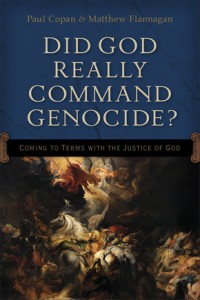 A common objection to belief in the God of the Bible is that a good, kind, and loving deity would never command the wholesale slaughter of nations. In the tradition of his popular Is God a Moral Monster?, Paul Copan teams up with Matthew Flannagan to tackle some of the most confusing and uncomfortable passages of Scripture. Together they help the Christian and nonbeliever alike understand the biblical, theological, philosophical, and ethical implications of Old Testament warfare passages.