
In Part One, I expounded the Psychopath objection to divine command meta-ethics (DCM) that has recently been defended by Erik Wielenberg. Wielenberg argues as follows: R1) If God commands a person S to do act A, this command imposes an obligation on S to do A, only if S is capable of recognising the requirement […]
Entries Tagged as 'God and Morality'
The Psychopath Objection to Divine Command Theory: Another Response to Erik Wielenberg (Part three)
October 8th, 2019 Comments Off on The Psychopath Objection to Divine Command Theory: Another Response to Erik Wielenberg (Part three)
Tags: C Stephen Evans · Erik Wielenberg · Psychopathy · Robert Adams
The Psychopath Objection to Divine Command Theory: Another Response to Erik Wielenberg (Part two)
September 11th, 2019 Comments Off on The Psychopath Objection to Divine Command Theory: Another Response to Erik Wielenberg (Part two)
In my last post, I expounded the Psychopath objection to divine command meta-ethics (DCM) that has recently been defended by Erik Wielenberg. To recap. Wielenberg suggests that my response to his earlier “reasonable unbeliever’s objection” relies on the following principle: R) God commands person S to do act A only if S is capable of […]
Tags: C Stephen Evans · Divine Command Theory · Erik Wielenberg · God and Morality · Wes Morriston
The Psychopath Objection to Divine Command Theory: Another Response to Erik Wielenberg (part one)
September 3rd, 2019 Comments Off on The Psychopath Objection to Divine Command Theory: Another Response to Erik Wielenberg (part one)
www.youtube.com/watch?v=6iVyVJAMiOY.
Recently, Erik Wielenberg has developed a novel objection to divine command meta-ethics (DCM). DCM “has the implausible implication that psychopaths have no moral obligations and hence their evil acts, no matter how evil, are morally permissible” (Wielenberg (2008), 1). Wielenberg develops this argument in response to some criticisms of his earlier work. One of the […]
Tags: C Stephen Evans · Divine Command Theory · Erik Wielenberg · God and Morality · Psychopathy · Robert Adams · William Lane Craig
FETICIDE IN CHRISTIAN MORAL THOUGHT (Part Four) : Feticide in the Reformed Protestant Tradition
May 28th, 2019 Comments Off on FETICIDE IN CHRISTIAN MORAL THOUGHT (Part Four) : Feticide in the Reformed Protestant Tradition
In our last post we saw how Medieval Christian’s adopted the same position on abortion we saw developed in Alexandrian Judaism and by Patristic theologians. We also saw how this position found its way into European and English law. Of course during the medieval period, Christian’s in Europe were Catholic. However, during the sixteenth and […]
Tags: Abortion · Feticide · John Calvin · Martin Luther · Melanchthon · Puritans · William Gouge
Brad Hooker and Philip Quinn
January 10th, 2019 6 Comments
Most versions of Divine command meta-ethics (DCM) contend that the property of being morally required is informatively identical with the property of being commanded by God.[1] A common objection to divine command meta-ethics is the horrendous deeds objection. We can formalise this objection as follows: [P1] If DCM is true, then if God commands unjust […]
Tags: Brad Hooker · Divine Command Theory · God and Morality · Philip Quinn

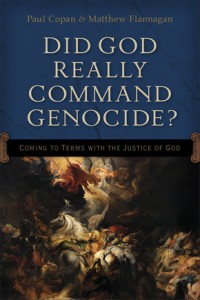 A common objection to belief in the God of the Bible is that a good, kind, and loving deity would never command the wholesale slaughter of nations. In the tradition of his popular Is God a Moral Monster?, Paul Copan teams up with Matthew Flannagan to tackle some of the most confusing and uncomfortable passages of Scripture. Together they help the Christian and nonbeliever alike understand the biblical, theological, philosophical, and ethical implications of Old Testament warfare passages.

IS A FETUS A HUMAN BEING? Part one: Viability
June 7th, 2019 1 Comment
This is one of a series of posts based on a class I teach for level 3 NCEA Religious Studies. In the last few posts we saw that most of the Christian religious tradition sketched the following argument against feticide; Premise [1] Killing a human being without justification violates the law of God. Premise [2] […]
Tags: Abortion · David Oderberg · Feticide · Michael Tooley · Peter Singer · Susan Sherwin · Viability